
Key facts
- 40% of travelers used AI tools for trip planning in 2025 according to Perk.com.
- 68% of travel searches start on mobile devices reported by Perk.com.
- 84% of consumers are drawn to brands with loyalty programs per Talon.One research.
- Travelers need 5+ follow-ups before rebooking, yet operators typically send none based on industry tracking.
- 63% of online travel bookings happen via mobile per Perk.com data.
- 76% of travelers book based on friends' recommendations per Talon.One research.
- 89% of business travelers were affected by travel disruptions in 2025 per Perk.com findings.
WANT RESULTS LIKE THIS?
Imagine a system doing all of this for your local business — every day, without you.
We build local businesses a custom website with a team of AI behind it: every lead captured and followed up, new content published monthly,customers finding you on Google — live in 7 days.
- 85+ pages at launch
- Every lead followed up, automatically
- Your whole business on one screen
The Silent Revenue Leak: Why Post-Tour Follow-Up Fails
The moment a tour ends, most operators hit pause. They’ve earned a customer’s trust, collected payment, and completed the experience—but instead of nurturing that relationship, they let it fade. This isn’t just a missed opportunity. It’s a revenue leak. Research shows travelers need at least five follow-ups before they’ll rebook, yet operators typically send none. The tools aren’t up to the task: fragmented CRMs, generic automation, and disjointed workflows leave post-tour engagement buried in spreadsheets and siloed inboxes. The result? Repeat revenue slips away before it can even be asked for.
What makes this failure so costly is how predictable it is. Travelers now expect instant, personalized communication across channels, yet operators are still relying on manual processes. Sixty-eight percent of travel searches start on mobile, and 40% used AI tools for trip planning in 2025—yet most operators don’t leverage AI to send a thank-you message that references a guest’s specific experiences. Meanwhile, 84% of consumers are drawn to brands with loyalty programs, but most tour operators haven’t automated how points are earned or rewards are redeemed after a tour. The disconnect isn’t just inefficient. It’s a failure to meet the moment.
- Fragmented tools mean follow-ups never happen. Generic CRMs lack travel-specific workflows for post-tour nurturing.
- Manual processes can’t scale. Operators lose repeat bookings because they can’t sustain consistent, timely outreach after the tour ends.
- Loyalty programs sit unused. Even when they exist, they lack automation to recognize completed tours, award points, or invite referrals.
The solution isn’t more tools—it’s the right infrastructure. A unified system that tracks every tour, triggers follow-ups automatically, and personalizes messages with trip highlights can turn a one-time experience into a recurring relationship. When everything works together—booking confirmation, thank-you, review request, loyalty points, and a nudge to rebook—the tour’s end becomes the relationship’s beginning. Operators who automate this sequence aren’t just keeping promises; they’re claiming the repeat revenue they’ve already earned the right to ask for.
What Travelers Now Expect: Mobile-First, AI-Personalized, Multi-Channel
Travelers don't just book differently now — they communicate differently. 68% of travel searches start on mobile, and 40% of travelers used AI tools for trip planning in 2025, according to aggregated industry data from Perk.com. Meanwhile, key markets like India run almost entirely on WhatsApp, where travelers expect inquiries, confirmations, and follow-ups in the same chat thread they use for everything else. A generic email sent three days after a tour ends doesn't just miss the moment — it misses the channel entirely.
- Mobile-first discovery means post-tour messages must render perfectly on a phone screen, not a desktop inbox
- AI-personalized content — referencing the specific cooking class, guide name, or sunrise hike — sets the baseline for relevance
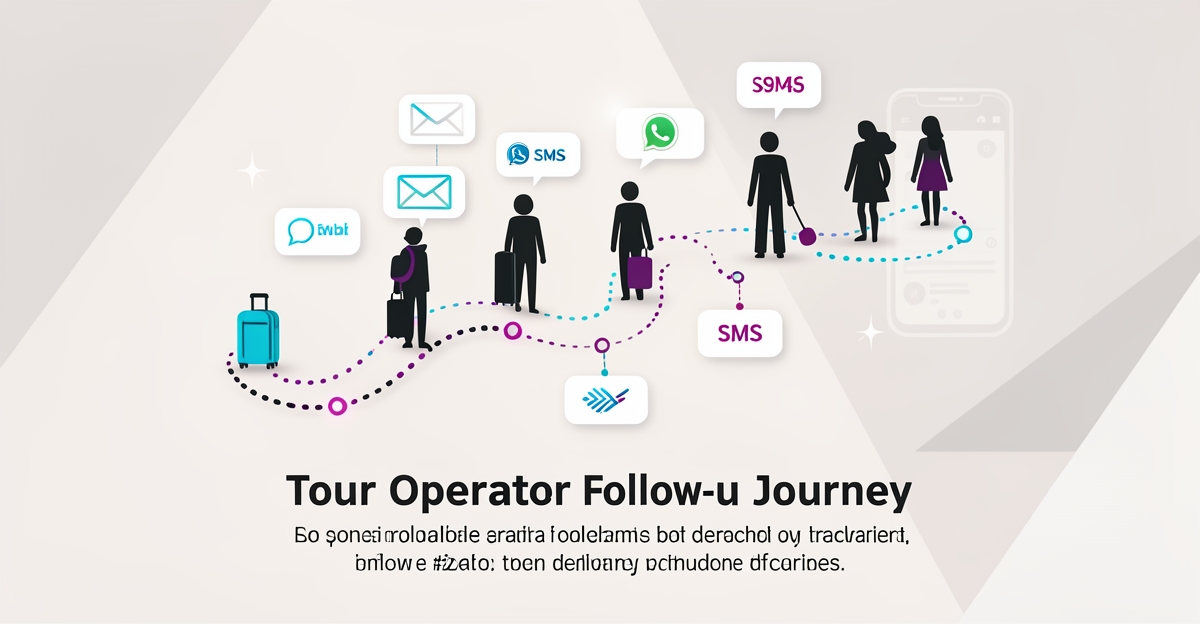
- Multi-channel delivery (email, WhatsApp, SMS) ensures the message lands where the traveler actually looks
- Timing within 24–48 hours of tour end captures the emotional peak before memories fade
Most operators still rely on manual email-only follow-up, if they follow up at all. That approach ignores how travelers actually behave: 63% of online travel bookings happen via mobile, and 28% of global travelers have already used AI tools like ChatGPT to plan trips. When a tour operator's post-tour communication feels less sophisticated than the tools travelers used to book the trip, the brand signal is clear — this company hasn't kept up.
AI Business Sites builds websites that handle this follow-up automatically. The platform's AI assistant generates personalized trip highlight messages grounded in the actual tour experience, then delivers them across email, WhatsApp, and SMS through a visual automation builder — no separate marketing tools, no manual copying between systems. The same system that captures the lead and manages the booking also nurtures the relationship after the tour ends, turning a one-time guest into a repeat traveler who refers friends and books again.
The Loyalty Lever Most Operators Ignore: Structured Programs with Experiential Rewards
The Loyalty Lever Most Operators Ignore: Structured Programs with Experiential Rewards
In the competitive world of tour operations, retaining customers is crucial, yet most operators fail to leverage one of the most potent loyalty drivers: structured programs with experiential rewards. While 84% of consumers prefer brands with loyalty programs and 66% say rewards influence their spending behavior, the tourism sector largely neglects post-tour engagement strategies that foster emotional bonds (Talon.One). Moreover, 76% of travelers book based on friends' recommendations, highlighting the potential of referral incentives often left untapped.
Experiential rewards, such as complimentary local activities or exclusive access to cultural events, outperform discounts in building lasting connections with travelers. Unlike generic discounts, these rewards enrich the traveler's experience, creating memorable moments that encourage repeat bookings and positive word-of-mouth. For instance, offering a free cooking class with a local chef after a tour can evoke a stronger emotional response than a monetary discount, fostering a deeper affinity for the tour operator.
Key Statistics Highlighting the Opportunity:
- 84% of consumers prefer brands with loyalty programs (Talon.One)
- 66% say rewards influence their spending behavior (Talon.One)
- 76% of travelers book based on friends' recommendations (Talon.One)
Operators can transform one-time guests into advocates by implementing the following:
- Automated Loyalty Enrollment and Reward Notifications: Immediately enroll customers in a loyalty program post-tour, with automated notifications highlighting their rewards and how to redeem them.
- Tiered VIP Perks: Offer escalating benefits (e.g., exclusive tours, early booking access) for repeat customers to enhance their sense of value and belonging.
- Referral Incentives with Experiential Rewards: Reward successful referrals with unique experiences (e.g., a free guided hike) rather than just discounts, reinforcing the operator's brand promise of memorable experiences.
By integrating such programs into their post-tour follow-up strategies, tour operators can significantly enhance customer retention. As highlighted in the research, travelers prioritize brands offering authentic, meaningful experiences, and experiential rewards align perfectly with this preference (Palisis). Furthermore, the seamless integration of these programs with automated follow-up tools (as offered by platforms like AI Business Sites) ensures that operators can efficiently nurture loyalty without adding to their operational workload.
Embracing Automation for Seamless Execution Platforms like AI Business Sites facilitate the implementation of these strategies through integrated CRM systems, automated email and WhatsApp follow-ups, and AI-generated content that personalizes the post-tour experience. For example, an AI system can automatically send a personalized thank-you message with trip highlights and loyalty program details within 48 hours of the tour's end, followed by strategic reminders and offers tailored to the traveler's interests.
By bridging the gap between the tour's end and the next engagement, tour operators can turn one-time customers into lifelong advocates, leveraging the power of experiential rewards and automation to drive repeat bookings and referrals.
Local business: doing this the old way?
One system replaces the whole pile.
All of it — the website, the follow-up, the content, the leads — built and run for you for $1,497 + $497/mo. Month-to-month, and you own everything.
See what your build includesFrom Chaos to Conversion: Consolidating Tools So Follow-Up Actually Fires
Juggling separate tools for CRM, email, WhatsApp, and analytics isn’t just messy—it’s costing you repeat bookings. When messages slip through the cracks between disconnected systems, even happy travelers walk away without another thought of returning. Research shows 63% of travel bookings happen on mobile, yet operators still lose leads to slow or missing follow-ups after the tour ends. The result? Tour operators who don’t centralize their workflows risk missing repeat revenue entirely—not because they’re doing anything wrong, but because their tools aren’t talking to each other.
One operator, Surfawhile, solved this by moving everything into a single system and saw almost triple the leads while cutting sales time by 40%. The difference? A unified platform where website, CRM, automation, content, and communications work as one—so every post-tour trigger fires automatically. No more toggling between apps, no missed hand-offs, and no forgotten thank-you emails. Instead of chasing gaps, you get a reliable sequence: AI-generated trip highlights within 48 hours, review requests timed to emotional peaks, loyalty points awarded automatically, and referral invites that feel personal, not robotic.
The chaos disappears when your entire follow-up pipeline lives in one place. Instead of relying on generic CRMs that weren’t built for travel, operators need systems that handle:
- Real-time journey updates triggered by tour completion
- Multi-channel outreach (WhatsApp for key markets, email for others)
- Loyalty points that auto-apply to future bookings
- AI-crafted messages that reference specific tour moments
This isn’t theory—it’s how platforms like Pipedrive and PHPTRAVELS help agencies track post-tour interactions and reduce missed repeat opportunities. When your website, CRM, and automation engine share the same source of truth, nothing falls through the cracks. For tour operators tired of duct-taping together tools that don’t work together, consolidation isn’t just tidy—it’s transformative.
Your 4-Step Post-Tour Automation Blueprint
A structured post-tour follow-up process can turn one-time guests into loyal advocates. Most travelers expect timely, personalized engagement after their trip ends, yet many tour operators miss this window due to fragmented tools and generic workflows. A travel-specific CRM with built-in automation solves this by centralizing guest data and triggering timely messages the moment a tour concludes. Travel-specific CRMs centralize leads, quotes, bookings, client history, and post-booking service notes in one place, eliminating the chaos of disconnected systems.
Within 48 hours of tour completion, AI-generated emails should reference specific highlights — like a guide’s name, a local cooking class, or a photo from a sunset hike — to rekindle the emotional connection. 40% of travelers used AI-based tools for trip planning in 2025, signaling openness to tech-enhanced communication that feels personal, not templated. These messages can include a review request and a loyalty points update, reinforcing value while the experience is still fresh.
For markets where email engagement is low — such as regions where travelers "live on WhatsApp" — operators should enable WhatsApp and SMS fallbacks directly from the same platform. Indian travelers expect inquiries, quotes, follow-ups, and vouchers via WhatsApp, making multi-channel outreach essential for timely engagement. Automated sequences can trigger thank-you messages, referral invites, or loyalty reminders across channels based on guest preference and response behavior.
Finally, launch a tiered loyalty program that awards points for completed tours, referrals, and social shares — redeemable for experiential perks like free local activities or partner hotel nights on future bookings. 84% of consumers are more drawn to brands that offer loyalty programs, and experiential rewards build stronger emotional bonds than discounts. When all of this runs automatically from one unified platform — the kind AI Business Sites builds into every custom website — operators stop losing repeat bookings and start nurturing long-term guest relationships.
Frequently Asked Questions
Why do tour operators often fail to secure repeat bookings?
What do travelers now expect from tour operators in terms of communication?
How can automated follow-up improve repeat booking rates for tour operators?
Why are loyalty programs crucial for tour operators, and what makes them effective?
What is the impact of using generic CRMs for tour operators?
How does consolidating tools into a unified platform benefit tour operators?
Key Takeaways
{ "title": "The Tour Ends. The Relationship Starts Now.", "content": "The data is clear: travelers need five or more touchpoints before they rebook, yet most operators send zero after a tour ends. That silence is a revenue leak — one that widens when follow-up is fragmented across tools, delayed
FOR local businesss — BUILT AND RUN BY US
Your website. Your content. Your leads. Your data.
$500 starts your build. Seven days later it's live — chat, booking, follow-up, and your Google presence all set up. Then we run it, every month. You do the work you actually get paid for.