
Key facts
- Automated emails generate 320% more revenue than manual sends despite representing only 2% of email volume.
- Welcome emails achieve 91% open rates and 26.9% click-through rates making them exceptionally effective.
- Personalized automated emails drive 20–41% higher engagement and 75-82% of consumers prefer tailored content according to consumer research.
- Mobile-optimized sequences are critical as 56% of emails are opened on smartphones per email marketing benchmarks.
- Segmented campaigns can produce up to 760% more revenue than generic blasts based on behavioral segmentation.
- Marketing automation delivers $5.44 in revenue for every $1 spent with 76% of companies seeing ROI within a year.
- AI-powered sequences reduce missed follow-ups by triggering emails on client actions like contract signing or payment completion without manual effort.
WANT RESULTS LIKE THIS?
Imagine a system doing all of this for your local business — every day, without you.
We build local businesses a custom website with a team of AI behind it: every lead captured and followed up, new content published monthly,customers finding you on Google — live in 7 days.
- 85+ pages at launch
- Every lead followed up, automatically
- Your whole business on one screen
The Onboarding Conundrum: Manual vs. Automated Engagement
Many small businesses still rely on manual email sequences for onboarding new clients, creating bottlenecks that slow engagement and increase the risk of missed steps. A sales representative might send a welcome note, then forget to follow up after a contract is signed or delay sharing key deliverables until prompted—turning what should be a smooth transition into a fragmented experience. This inconsistency not only frustrates clients but also wastes valuable time that could be spent on higher-value work.
Automated email sequences eliminate these gaps by delivering timely, personalized messages based on client behavior and milestone triggers. Research shows automated emails generate 320% more revenue than non-automated sends despite representing only 2% of total email volume, proving their outsized impact on engagement and conversion. Welcome emails alone achieve 91% open rates and 26.9% click-through rates, making them exceptionally effective for initial onboarding touchpoints. When personalized, these messages drive even stronger results—boosting unique opens by 29% and unique clicks by 41%—because clients respond to content that feels relevant to their journey.
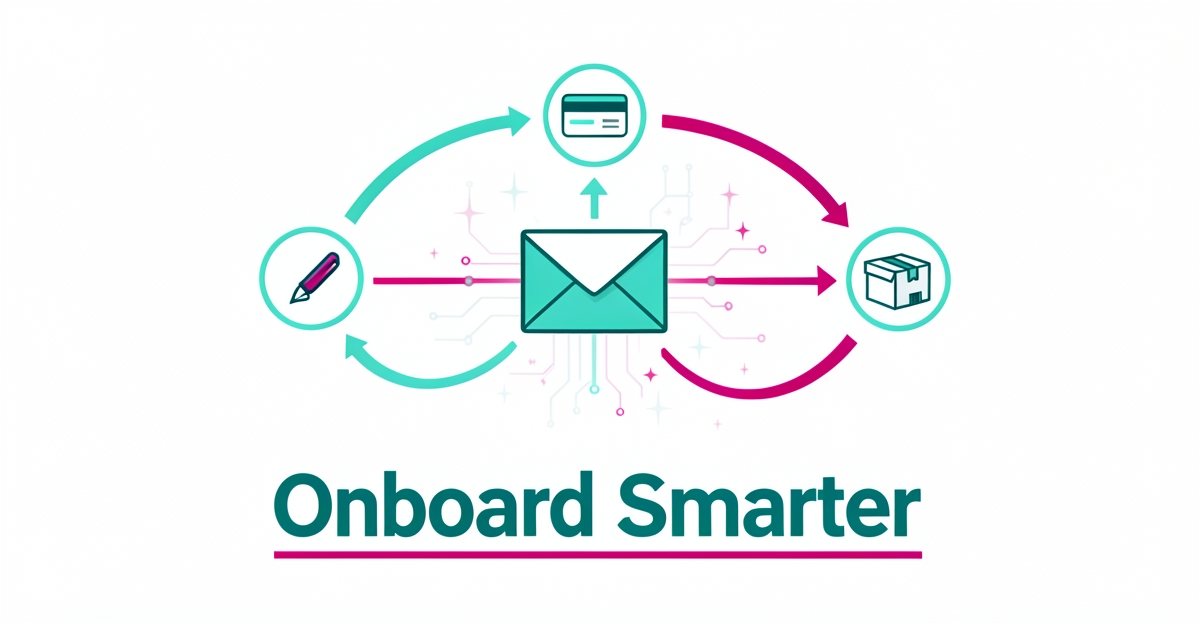
For service-based businesses, automation ensures no step falls through the cracks. Sequences can trigger on actions like contract signing, first payment receipt, or deliverable review, guiding clients smoothly through each phase without manual intervention. Segmented campaigns based on behavior or deal stage can produce up to 760% more revenue than generic blasts, while behavior-triggered nurturing emails achieve 8% CTR versus just 3% for standard sends. Mobile optimization is equally critical, as 56% of emails are opened on smartphones—meaning onboarding sequences must render flawlessly across devices to maintain engagement.
AI Business Sites integrates this capability directly into the website platform, allowing owners to set up intelligent onboarding sequences that adapt to client behavior, personalize, and send automatically—without requiring separate tools or constant oversight. By aligning messaging with real-time progress, businesses turn onboarding from a chore into a strategic advantage that builds trust, reduces drop-off, and accelerates time-to-value.
Automated Email Sequences: Backed by Data, Driven by AI
Automated email sequences aren’t just another tool in your marketing stack—they’re a data-backed growth engine. The numbers don’t lie: marketing automation delivers $5.44 in revenue for every $1 spent, and automated emails generate 320% more revenue than manual sends. When clients land on your website, their journey shouldn’t depend on a human remembering to hit send—it should be guided by intelligent sequences that respond in real time to their actions.
AI takes this a step further by building sequences that evolve with each client interaction. Instead of static, time-based messages, the system tracks milestones—contract signed, first payment processed, deliverable reviewed—and triggers the next email automatically. This isn’t just efficiency; it’s relevance. Personalized emails drive 20-41% higher engagement, and with 75-82% of consumers preferring tailored content, the difference between a generic follow-up and a behavior-triggered message can mean the difference between a stalled deal and a closed one. The AI doesn’t just schedule emails—it adapts them.
The results are measurable from day one. Welcome emails, a cornerstone of onboarding, achieve 91% open rates and 26.9% click-through rates, while segmented campaigns can generate up to 760% more revenue than one-size-fits-all blasts. Mobile optimization matters too—56% of emails are opened on mobile devices—so your sequence must adapt to screen size without extra effort. The fastest adopters recoup their investment in under six months and see 10%+ revenue growth within nine months, proving this isn’t a "nice-to-have" but a baseline requirement for businesses serious about scaling.
What sets AI-powered sequences apart from traditional automation:
- Behavioral triggers, not just timers: Emails adjust based on client actions like contract signing or payment completion, not just calendar dates.
- CRM-native personalization: Messages reference deal stage, lifecycle status, and past interactions—no manual segmentation needed.
- Real-time optimization: AI adjusts send timing and content based on open rates, click behavior, and device type.
- Two-way memory: Follow-ups reference prior conversations or uploaded documents, creating continuity without human handoffs.
For a website built to run itself, automated email sequences aren’t just a feature—they’re the backbone of a client experience that feels human-crafted but runs on autopilot. The AI handles the busywork so you don’t have to choose between speed and personalization.
Local business: doing this the old way?
One system replaces the whole pile.
All of it — the website, the follow-up, the content, the leads — built and run for you for $1,497 + $497/mo. Month-to-month, and you own everything.
See what your build includesPutting Automation into Practice: A Step-by-Step Onboarding Strategy
Ready to turn your website into a client-generating powerhouse? Machine learning can build intelligent email sequences that adapt to each client’s journey—sending the right message at the right moment without manual effort. The data proves this approach converts faster and nurtures stronger relationships: automated emails generate 320% more revenue than manual sends while achieving 91.5% higher open rates and 329.5% more clicks. Your AI assistant can track CRM milestones like contract signing or first payment, then trigger personalized sequences that guide clients toward each next step. No more missed follow-ups, no more inconsistent messaging—just a smooth path from inquiry to signed deal.
Start with three foundational sequences that work together:
- Instant welcome series delivered within minutes of signup, capitalizing on 91% open rates for first-time engagement
- Milestone-based progress updates tied to CRM stages—contract signed, deposit received, deliverable reviewed—using behavior triggers to keep content relevant
- Re-engagement touches for stalled onboarding, designed to re-capture attention before leads go cold
Personalize every touch using CRM intelligence: reference the client’s service choice, location, or pricing tier to boost engagement by 20–41%. Mobile optimization is non-negotiable—56% of emails open on phones, so your sequences must render flawlessly across devices. As clients move through your pipeline, your AI can adjust timing and tone based on their behavior, mirroring the 8% click-through rate achieved by lead nurturing emails versus 3% for generic broadcasts.
The best part? You can implement this in stages. Begin with the welcome series and milestone updates, measure open and click rates against the benchmarks above, then layer in predictive timing and AI-generated content as you refine. Within months, you’ll recoup your investment—most businesses recover automation costs in under six months—while seeing 10%+ revenue lifts within the first year. Your website doesn’t just attract leads anymore; it guides them smoothly to “yes.”
Frequently Asked Questions
How much more revenue do automated email sequences actually generate compared to manual sends?
Will automated onboarding emails feel impersonal to my new clients?
What kind of open and click rates can I expect from a welcome email sequence?
How long does it take to see ROI from automating client onboarding emails?
Do I need to worry about mobile optimization for onboarding emails?
What's the difference between basic automation and AI-powered sequences for onboarding?
Turn Onboarding Into Your Quiet Growth Engine
Automating your email sequences for new client onboarding isn't just about saving time—it's about creating a consistent, personalized experience that builds trust from the first welcome message to project kickoff. The data is clear: automated emails drive 320% more revenue than manual sends, welcome messages achieve 91% open rates, and behavior-triggered sequences can boost engagement by up to 41%. For service-based businesses, this means fewer missed steps, faster time-to-value, and stronger client relationships—all without adding to your daily workload. Start small: implement a welcome series and milestone-based updates tied to contract signing or first payment, then measure open and click-through rates against the benchmarks shared. As you see results, layer in AI-powered timing and segmentation to refine your approach. Your website shouldn’t just attract clients—it should guide them smoothly to 'yes.' See how AI Business Sites helps local service businesses automate onboarding and other critical workflows from one platform: Explore our services.
FOR local businesss — BUILT AND RUN BY US
Your website. Your content. Your leads. Your data.
$500 starts your build. Seven days later it's live — chat, booking, follow-up, and your Google presence all set up. Then we run it, every month. You do the work you actually get paid for.