
Key facts
- AI-powered local search like Google's Ask Maps is 30x harder to rank for than traditional Google results according to Search Herald
- AI assistants recommend only 1–11% of locations in local search results per Search Herald research
- Top-performing service websites convert at ~4.6% while average sites convert under 1% per FlashCrafter data
- Over 60% of local search traffic comes from mobile devices according to FlashCrafter
- Bounce probability increases 32% as page load time goes from 1 to 3 seconds per FlashCrafter benchmarks
- 75% of consumers regularly read reviews before choosing a local business per FlashCrafter research
- Your website remains the "source of truth" where final booking decisions happen even when AI surfaces your business first according to Search Herald
WANT RESULTS LIKE THIS?
Imagine a system doing all of this for your local business — every day, without you.
We build local businesses a custom website with a team of AI behind it: every lead captured and followed up, new content published monthly,customers finding you on Google — live in 7 days.
- 85+ pages at launch
- Every lead followed up, automatically
- Your whole business on one screen
Why Static Maps and Generic Pages Are Losing You Tour Bookings
Why Static Maps and Generic Pages Are Losing You Tour Bookings
Imagine a traveler searching for "best coastal kayak tours in Maine" or "private mountain hiking guides in Banff". If your tour website relies on static maps and generic location pages, you're likely losing bookings. Here's why:
The AI Local Visibility Gap AI-powered local search, such as Google’s Ask Maps (Gemini), is 30x harder to rank for than traditional Google results (https://searchherald.com/topic/local-search). Despite this, your website remains the "source of truth" where final booking decisions are made, even if AI assistants surface your business first (https://searchherald.com/topic/local-search).
The Static Map Shortcoming Static maps fail to dynamically highlight your service areas (e.g., specific coastal routes or mountain regions) in a way that resonates with conversational AI queries. Generic location pages lack the localized content (e.g., climate insights, regional highlights) needed to build trust and rank in organic results beyond the Local 3-Pack.
The Conversion Consequences Top-performing service websites convert at ~4.6%, while average sites convert at less than 1% (https://www.flashcrafter.ai/guides/best-website-builder-local-business-2026). Mobile traffic dominates ( 60%+ of local searches), yet static designs often neglect click-to-call buttons and instant quote forms above the fold, exacerbating low conversion rates.
Key Takeaways to Avoid Losing Bookings:
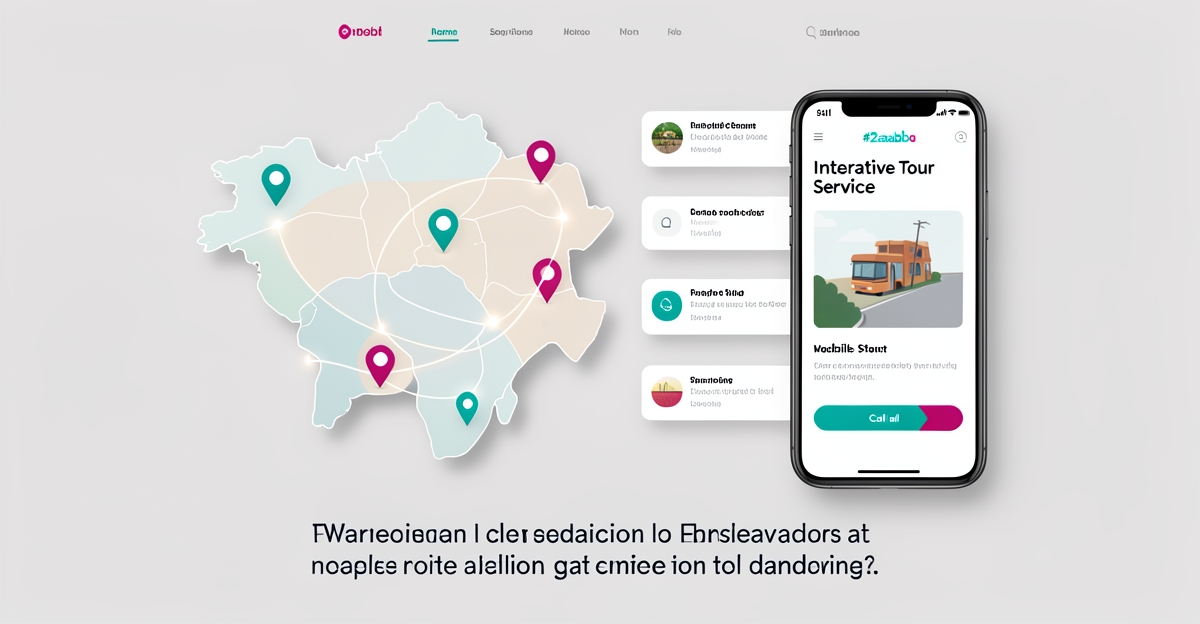
- Ditch Static for Dynamic: Use interactive maps highlighting specific tour routes and service areas.
- Localize Content: Create unique, region-focused pages (e.g., *"Coastal Kayak Tours in Maine"*) with testimonials and tailored offerings.
- Optimize for Mobile: Ensure Core Web Vitals compliance and prominently feature trust signals like reviews and certifications.
By addressing these shortcomings, you can transform your website into a 24/7 lead-capture and conversion machine, capitalizing on the critical role it plays in the booking decision process, even in an AI-driven local search landscape.
[Continue to the next section for actionable strategies to enhance your tour service website.]
How Dedicated Service Area Pages Boost Visibility and Trust
How Dedicated Service Area Pages Boost Visibility and Trust
In the competitive world of tour services, standing out online is crucial. A proven strategy to rank beyond the Local 3-Pack and build authority with Google and AI assistants is by creating unique Service Area Pages (SAPs) for each tour region, such as coastal routes or mountain zones. Here’s how localized content, schema markup, and clear CTAs can elevate your tour service website:
1. Rank Beyond the Local 3-Pack with SAPs
- Targeted Visibility: SAPs for specific regions (e.g., "Coastal Kayak Tours in Maine") help your website rank in organic results, signaling to Google and AI assistants that your business is an authority in those areas.
- Source: https://www.brightlocal.com/learn/service-area-pages/
2. Leverage Localized Content and Schema Markup
- Trust Builder: Unique, region-specific content (e.g., highlighting local challenges and testimonials) builds trust with potential travelers.
- Statistic: Websites with localized content and schema markup see a significant boost in conversions, with top performers converting at ~4.6% compared to less than 1% for average sites.
- Source: https://www.flashcrafter.ai/guides/best-website-builder-local-business-2026
- Schema Importance: Adding LocalBusiness and FAQ schema to each SAP enhances AI assistants' understanding of your offerings, improving visibility in conversational searches (e.g., "best hiking tours in Banff").
- Source: https://searchherald.com/topic/local-search
3. Drive Conversions with Clear CTAs and Mobile Optimization
- Actionable CTAs: Placing click-to-call buttons and instant quote forms above the fold on mobile-optimized SAPs capitalizes on the 60%+ of local search traffic coming from mobile devices.
- Statistic: A mere 1-3 second increase in load time can increase bounce probability by 32%.
- Source: https://www.flashcrafter.ai/guides/best-website-builder-local-business-2026
- Example:
"Book Your Guided Mountain Hike in Colorado Today" appears prominently on the page, encouraging immediate action.
Key Takeaways for Tour Service Websites:
- Create unique Service Area Pages for each tour region to enhance organic rankings.
- Embed localized content and schema markup to build trust and improve AI visibility.
- Optimize for mobile with clear, above-the-fold CTAs to boost conversions.
By implementing these strategies, tour service websites can not only outrank third-party directories but also establish a strong online presence that directly converts traveler interest into bookings, leveraging the website as the "source of truth" in AI-driven local search.
- Source: https://searchherald.com/topic/local-search
Local business: doing this the old way?
One system replaces the whole pile.
All of it — the website, the follow-up, the content, the leads — built and run for you for $1,497 + $497/mo. Month-to-month, and you own everything.
See what your build includesTurn Interest into Calls with Mobile-First Design and AI-Powered Tools
Turn Interest into Calls with Mobile-First Design and AI-Powered Tools
In the highly competitive tour service industry, converting interest into tangible calls is paramount. Top-performing tour service websites achieve conversion rates of ~4.6%, significantly outperforming the average of <1% by prioritizing mobile-first design and leveraging AI-powered tools (https://www.flashcrafter.ai/guides/best-website-builder-local-business-2026). Here’s how to bridge the gap:
- Click-to-Call Prominence: With over 60% of local search traffic coming from mobile (https://www.flashcrafter.ai/guides/best-website-builder-local-business-2026), ensure click-to-call buttons and instant quote forms are above the fold on every service area page, encouraging immediate action.
-
Core Web Vitals Optimization: A 32% increase in bounce probability occurs as load time moves from 1 to 3 seconds (https://www.flashcrafter.ai/guides/best-website-builder-local-business-2026). Prioritize speed to retain visitors.
-
Localized FAQs and Dynamic Content: Use AI to generate region-specific FAQs (e.g., "What to wear for a mountain hike in Banff?") and dynamic content highlighting unique aspects of each tour area, enhancing relevance and trust.
- AI Assistant for 24/7 Support: Integrate an AI assistant to answer queries in real-time, from "Do you offer private tours in Maine?" to "What’s the best season for coastal tours in Oregon?", ensuring no inquiry goes unaddressed.
- Mobile Optimization: Mandatory for the majority of your traffic.
- AI-Generated Content: For personalized, location-specific engagement.
- Speed Matters: Every second counts in preventing bounces.
By embracing a mobile-first strategy and harnessing the power of AI for dynamic content and instant support, tour operators can significantly boost conversion rates, turning mere interest into tangible, actionable calls. As highlighted by https://searchherald.com/topic/local-search, your website acts as the "source of truth" for AI assistants and travelers alike, making these optimizations crucial for success.
Frequently Asked Questions
What’s the difference between a static map and an interactive map for my tour website?
Do I really need separate pages for each tour location like 'Coastal Kayak Tours in Maine'?
How does a mobile-first design actually increase bookings for tour services?
What’s the easiest way to add local SEO content to my tour website without writing everything myself?
Why do I need schema markup on my tour service pages?
Can an AI assistant on my site really book tours for me?
Turn Your Tour Website Into a Lead-Generating Powerhouse—Starting Today
For tour operators, a website that merely *exists* is a booking opportunity lost. AI-driven local search may surface your business, but travelers still rely on your site as the final decision-maker—making static maps, generic location pages, and slow, unoptimized designs costly missteps. The evidence is clear: websites with localized Service Area Pages, dynamic maps, and mobile-first design convert at 4.6% versus under 1% for the average site, while AI assistants like Google’s Ask Maps demand hyper-specific, structured content to recommend your tours. The gap isn’t just about visibility; it’s about turning interest into calls—even when your business isn’t nearby. The fix starts with dedicated pages for each region (e.g., “Coastal Kayak Tours in Maine”), embedded with localized insights, schema markup, and CTAs that work on mobile. Pair this with interactive maps highlighting your routes, an AI assistant to answer questions 24/7, and a website that *runs itself*—from follow-ups to content updates—so you can focus on guiding tours, not managing tools. Your website isn’t just a digital brochure; it’s your 24/7 lead machine. Start small: pick one region, build its page, and watch the calls roll in.
FOR local businesss — BUILT AND RUN BY US
Your website. Your content. Your leads. Your data.
$500 starts your build. Seven days later it's live — chat, booking, follow-up, and your Google presence all set up. Then we run it, every month. You do the work you actually get paid for.