
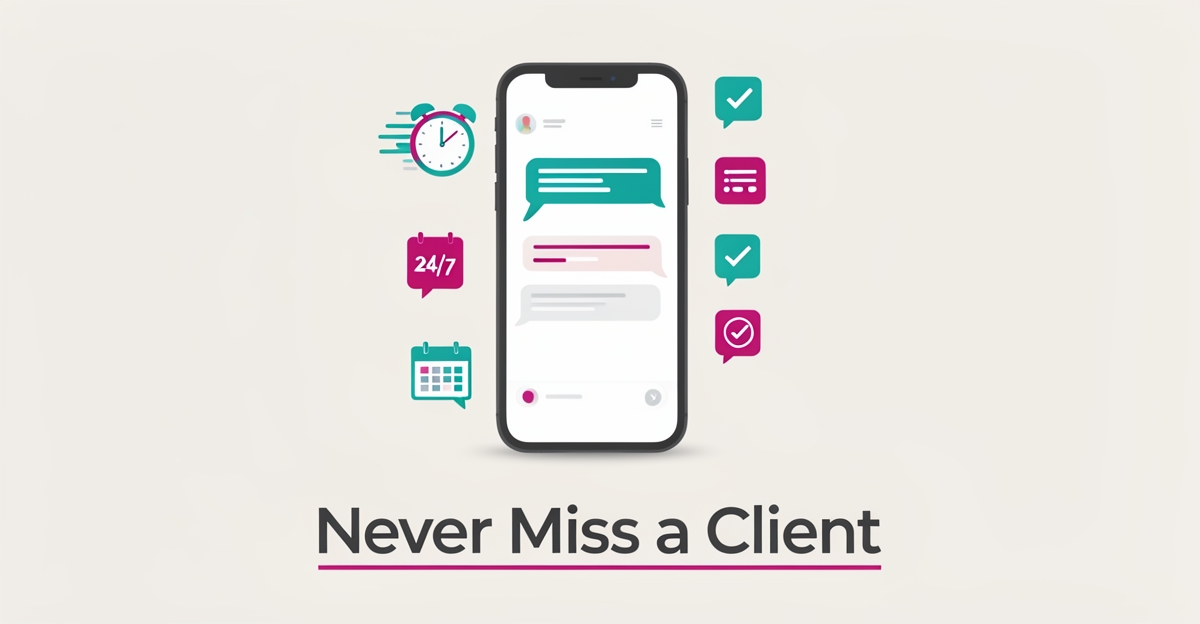
Key facts
- Improving client retention from 80% to 95% more than doubles monthly income from $2,172 to $4,692 according to retention benchmarks
- Higher retention slashes client acquisition costs from 33% of revenue down to just 16% per Practice Vital data
- The first psychology practice to respond to an inquiry is most likely to secure that client industry research confirms
- Optimal retention benchmarks target 95%+ for individual clients and 80-90% for couples therapy per Practice Vital
- AI-powered follow-up systems respond to every inquiry within minutes with personalized, empathetic messages experts recommend
- Therapists report balancing response speed with sustainability is a constant challenge during busy periods per Productive Therapist
- Missed messages compound hidden costs: lost first-mover advantage, higher acquisition spend, and team burnout from playing catch-up
WANT RESULTS LIKE THIS?
Imagine a system doing all of this for your local business — every day, without you.
We build local businesses a custom website with a team of AI behind it: every lead captured and followed up, new content published monthly,customers finding you on Google — live in 7 days.
- 85+ pages at launch
- Every lead followed up, automatically
- Your whole business on one screen
The Hidden Cost of Missing a Psychology Client’s First Message
The moment a potential client sends a message to your psychology practice, a silent countdown begins. Every unanswered email, missed call, or ignored web chat erodes trust—and trust is the foundation of every therapeutic relationship. Research shows that the first practice to respond is most likely to secure the client, yet many psychology practices operate with no system for real-time engagement. The cost of this oversight isn’t just hypothetical; it’s measured in lost revenue, wasted ad spend, and unpredictable income.
Retention benchmarks reveal that psychology practices with high retention rates—90% or higher—see a dramatic shift in financial stability. Practices that improve retention from 80% to 95% can increase monthly income from $2,172 to $4,692, while slashing client acquisition costs from 33% of revenue to just 16%. These gains vanish the moment a message sits unanswered. Delays often stem from human limits: therapists juggling sessions, administrative staff overwhelmed, or after-hours inquiries slipping through cracks. The result? A prospect who felt hopeful after visiting your website now feels invisible—and turns to the next name in their search results.
The operational strain doesn’t end with lost clients. Every missed message requires a costly recovery effort—follow-up calls, additional emails, or discounted sessions to win back trust. Therapists report that balancing speed with sustainability is a constant challenge, especially during busy periods. Without automation, the only way to scale responsiveness is to hire more staff, which isn’t always feasible for solo practitioners or small teams. The hidden cost compounds when practices realize their marketing budget is fueling competitors’ growth instead of their own.
- Lost first-mover advantage in securing new clients
- Increased client acquisition costs as referral pipelines dry up
- Diminished reputation from inconsistent communication
- Missed revenue opportunities from stalled intake processes
- Team burnout from playing catch-up on delayed responses
AI Business Sites builds websites that don’t just look professional—they act like a 24/7 front desk. An AI assistant on your site answers questions instantly, schedules appointments, and sends personalized follow-ups before a human could log in. Missed calls? The AI voice agent captures the lead and transcribes the message. Web chats? They’re responded to with context, not canned replies. Every interaction—web, phone, or form—lands in one system, tagged and routed automatically. The result: no prospect slips through the cracks, and your retention rates stay where they belong—at 95% or higher.
How AI Ensures No Client Message Goes Unanswered
How AI Ensures No Client Message Goes Unanswered
In the competitive landscape of psychology practices, the first response to a client inquiry often secures the client. Yet, delayed or missed responses can lead to lost leads, reduced income predictability, and increased client acquisition costs. AI-powered follow-up systems bridge this gap, providing instant, personalized engagement without human intervention.
Instant Engagement, Higher Conversion
Research highlights that being the first to respond to inquiries significantly increases the likelihood of securing a client (Therathink). AI-powered systems ensure psychology practices never miss this opportunity by automatically sending personalized responses to every inquiry within minutes. For example, an AI assistant can respond to a new client's email with a tailored welcome message, including relevant intake forms and scheduling links, all within seconds of the inquiry.
Key Statistics Driving the Need for AI Solutions
- Retention Benchmarks: Achieving a 95%+ retention rate for individual clients can increase monthly income from $2,172 to $4,692 and reduce client acquisition spending from 33% to 16% of revenue (Practice Vital).
- Urgency in Response: The first practice to respond to an inquiry is most likely to secure the client, emphasizing the critical need for immediate engagement (Therathink).
How AI-Powered Follow-Up Systems Work
- Immediate Response Mechanism: AI assistants are integrated into the practice's website and communication channels, enabling instant responses to inquiries across all platforms (e.g., email, chat, voice calls).
- Personalization: Leveraging the practice's knowledge base, AI crafts responses that are empathetic, clear, and personalized to the client's initial query.
- Follow-Up Automation: Beyond the initial response, AI systems can be programmed to send targeted follow-ups at optimal intervals, ensuring consistent engagement without manual intervention.
Benefits for Psychology Practices
- Enhanced Client Trust: Immediate, personalized responses foster a sense of being valued, leading to higher trust and retention rates.
- Operational Efficiency: Automation of follow-ups reduces administrative workload, allowing staff to focus on high-value tasks.
- Scalability: As the practice grows, AI-powered systems adapt seamlessly, ensuring no increase in missed messages or delayed responses.
Example in Action
A potential client, Jane, submits an inquiry on a psychology practice's website at 9 PM. Within minutes, an AI-powered system responds with a personalized message, including a link to schedule an appointment and a brief introductory video about the practice. The next morning, Jane books a session, illustrating how immediate engagement can secure clients efficiently.
Actionable Recommendation
Implement an AI-powered follow-up system to ensure immediate, personalized responses to all client inquiries, reducing the risk of lost leads due to delayed engagement. As recommended by industry insights, prioritize prompt responses and consider AI as a scalable, effective solution (We Are Kiku).
Sources (Inline Links)
- According to industry research, the first practice to respond secures the client.
- A recent study found significant financial benefits in improved retention rates.
- For tips on crafting perfect responses, see this guide.
The Psychology of Speed: Why First Response Wins Clients
The Psychology of Speed: Why First Response Wins Clients
In the competitive landscape of psychology practices, the first response to a client inquiry often secures the client. According to industry research (The Thinkery), being the first to respond gives practices a significant edge, underscoring the psychological impact of promptness on client trust and decision-making.
Effective responses must balance speed with empathy. Luci Carrillo (Productive Therapist) emphasizes that immediate, personalized responses enhance client trust, a crucial factor in retention. However, achieving this balance manually can be unsustainable for therapists, highlighting the need for AI solutions that mimic human warmth without sacrificing response time.
AI-powered follow-up systems offer a scalable solution, ensuring immediate engagement with leads. A recent post (Kiku) suggests AI can craft responses that feel personal, leveraging pre-defined empathy-driven templates. This not only saves therapists time but also ensures consistency in the quality of initial interactions.
- First Response Advantage: Secure clients by being the first to respond.
- Balance Speed and Empathy: Use AI for immediate responses with a human touch.
- AI Integration: Leverage AI for consistent, empathetic initial interactions, freeing up therapist time.
While direct financial data on missed messages in psychology practices is scarce, retention benchmarks (PracticeVital) illustrate the broader financial implications of poor response strategies. Practices with high retention rates (95%+ for individual clients) see significant income increases, from $2,172 to $4,692/month, and reduced client acquisition costs, from 33% to 16% of revenue. Delayed responses can inversely affect these metrics, emphasizing the indirect yet substantial cost of slow engagement.
By embracing AI for immediate, empathetic responses, psychology practices can mitigate the risks associated with delayed communication, fostering stronger client relationships from the outset.
Local business: doing this the old way?
One system replaces the whole pile.
All of it — the website, the follow-up, the content, the leads — built and run for you for $1,497 + $497/mo. Month-to-month, and you own everything.
See what your build includesStep-by-Step: Implementing AI Follow-Ups in Your Practice
Psychology practices lose nearly one in five potential clients simply because they don’t respond fast enough. The research shows that the first practice to reply is most likely to secure the client, making speed a decisive factor in a competitive market. For psychology practices juggling calls, emails, and new inquiries, that kind of responsiveness isn’t sustainable without support. That’s where your website can step in—not as a passive brochure, but as a 24/7 assistant that never misses a beat.
Start by setting up instant auto-responses for every lead source. Whether a visitor fills out your contact form at 2 p.m. or leaves a voicemail at midnight, your website’s AI assistant can greet them within seconds with a warm, personalized message. This isn’t just about being fast—it’s about consistency. The automation ensures no lead slips through the cracks while you focus on sessions or paperwork. According to recent insights, practices that prioritize prompt responses see higher retention and reduced client acquisition costs.
Next, map your follow-up workflow with pre-built automation templates. Choose the "New Lead Welcome Sequence" to send a thoughtful email within minutes of contact, or trigger a gentle reminder for leads who haven’t booked after 48 hours. Set up rules that automatically tag high-priority leads (e.g., urgent requests or referrals) so your team knows which inquiries need immediate attention. These automations can handle everything from booking confirmations to post-session check-ins, all without manual effort. In practice, this means your website doesn’t just capture leads—it nurtures them until they’re ready to commit.
Finally, monitor engagement and refine your approach in real time. Track open rates on your auto-responses and adjust tone or timing based on what resonates most. For example, if your audience responds better to concise emails than longer messages, tweak your templates accordingly. Over time, you’ll see which follow-ups drive the most bookings and which can be simplified. As your automation learns from each interaction, it becomes more effective—saving you hours while improving client satisfaction.
The goal isn’t to replace human connection, but to ensure it happens at the right moment. With AI handling the busywork, your practice can respond faster, retain more clients, and stay focused on what matters most: the work you do.
Beyond the First Reply: AI Systems That Keep Clients Engaged
Beyond the First Reply: AI Systems That Keep Clients Engaged
Responding promptly to initial inquiries is merely the first step in securing and retaining clients for psychology practices. The real challenge lies in sustaining engagement through personalized, empathetic follow-ups—a task where many practices falter due to resource constraints. AI-powered systems, integrated seamlessly into a custom website's backend, offer a transformative solution by automating nurture campaigns, streamlining review management, and enabling recurring task automation.
The Power of Automated Nurture Campaigns
- Data-Driven Engagement: AI systems can analyze initial inquiry data to craft tailored nurture campaigns, ensuring each client feels understood and valued. For instance, if a potential client inquires about anxiety counseling, the AI can send a series of personalized emails with relevant resources and testimonials from similar cases. (Source: AI's Role in Personalized Responses)
- Consistency Without Burnout: While therapists like Uriah Guilford emphasize the need for sustainable response practices (Productive Therapist), AI ensures follow-ups happen consistently without adding to staff workload.
- Example Campaign:
- Immediate Welcome with Resource Pack
- Weekly Checklist for Preparation
- Post-Session Feedback and Next Steps
Review Management Elevated by AI
- Prompt Response to Reviews: AI can monitor and draft responses to Google Business Profile reviews, ensuring timely, professional interactions that boost local search standings. (Source: The Rathink)
- Competitive Insight: Regular competitor review analysis helps practices refine their service offerings based on market feedback.
Recurring Task Automation for Seamless Operations
- Scheduled Check-Ins: AI systems can automate periodic check-ins with clients, reducing dropout rates and encouraging continuous engagement.
- Financial Impact: Improved retention, as highlighted by Practice Vital, can increase monthly income from $2,172 to $4,692, underscoring the value of consistent, AI-driven follow-ups.
By leveraging these advanced AI features, psychology practices can evolve from merely responding to inquiries to fostering long-term, meaningful relationships with their clients, all while streamlining operational workflows. AI Business Sites, with its integrated platform, empowers practices to achieve this balance seamlessly, focusing on what matters most—client care.
Turn Missed Messages into Missed Opportunities—How AI Keeps Clients Coming Back
In psychology practices, the first response to a client inquiry often determines whether that client ever walks through your door. Research shows practices that prioritize speed and personalization can see their monthly revenue jump from $2,172 to $4,692 while cutting client acquisition costs nearly in half. Yet, many practices still lose leads simply because a message sits unanswered for too long. The cost isn’t just hypothetical—it’s lost revenue, wasted ad spend, and unpredictable income streams that could have been secured with a single, timely reply. AI-powered systems eliminate this gap by ensuring every inquiry gets an immediate, personalized response, whether it arrives at 2 p.m. or midnight. With automation handling the busywork, your website becomes a 24/7 assistant that never misses a beat, letting you focus on what matters most: your clients. If your current system can’t guarantee a first response, it’s time to rethink how your practice engages with leads.
FOR local businesss — BUILT AND RUN BY US
Your website. Your content. Your leads. Your data.
$500 starts your build. Seven days later it's live — chat, booking, follow-up, and your Google presence all set up. Then we run it, every month. You do the work you actually get paid for.