
Key facts
- ~70% of bike rental customers book via mobile platforms according to market research
- The bike and scooter rental market is projected to reach USD 24,761.11 million by 2032 per industry analysis
- A 50-bike fleet can process 30–40 rentals daily during peak season per rental software guides
- Flat-rate platforms cost $59–$99/month vs. commission fees of $400–$1,200+ per peak week according to pricing comparisons
- Specialized bike rental platforms can increase bookings by 20% through real-time updates per industry analysis
- Digital waivers and fleet tracking are standard in bike-specific software but missing from generic tools per comparative research
- Poor responsive design and slow checkout flows directly cost bike rental businesses bookings according to industry experts
WANT RESULTS LIKE THIS?
Imagine a system doing all of this for your local business — every day, without you.
We build local businesses a custom website with a team of AI behind it: every lead captured and followed up, new content published monthly,customers finding you on Google — live in 7 days.
- 85+ pages at launch
- Every lead followed up, automatically
- Your whole business on one screen
The Mobile Booking Gap: Why 70% of Customers Face Friction
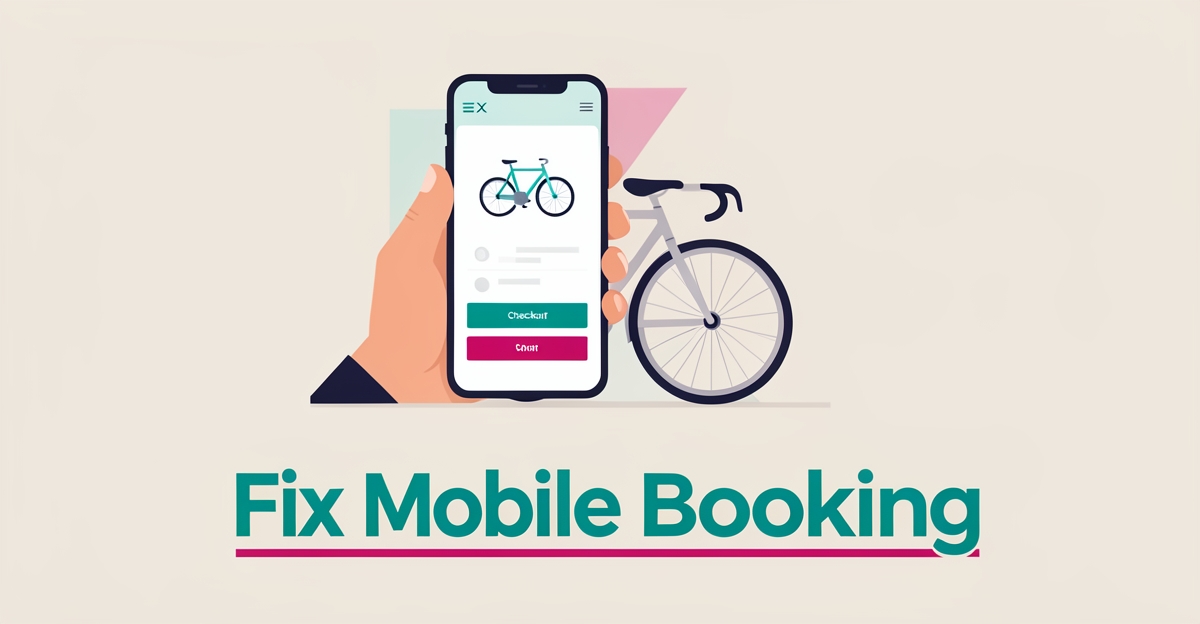
The bike rental market is surging toward a projected USD 24,761.11 million by 2032, yet most operators are leaving money on the table before a customer even picks up a helmet. Market research shows roughly 70% of customers rely on mobile platforms to book, but the typical rental website still behaves like a desktop relic — pinching, zooming, and crashing through a checkout flow that was never built for a thumb.
Poor responsive design is the most visible offender. Menus collapse into unusable hamburger stacks, calendars refuse to scroll, and bike specs disappear off-screen. But the deeper damage comes from slow load times and clunky checkout flows that demand account creation, manual date entry, and repeated payment details — every extra tap a chance to abandon. Industry analysis puts it bluntly: software that adds friction to the checkout process directly costs you bookings.
The friction compounds when mobile gaps meet operational gaps:
- No real-time inventory — customers reserve bikes that are already gone
- Digital waivers that won't render or sign on a phone screen
- Fleet status (maintenance, charging, location) invisible to the booking engine
- Peak-season traffic crashes the site exactly when demand is highest
A 50-bike fleet can process 30–40 rentals a day in season, and the difference between a flat-rate platform and commission-based fees can swing $400–$1,200+ per peak week — money lost not to demand, but to a mobile experience that couldn't close the deal. Specialized platforms solve this by baking mobile-first responsiveness, real-time fleet data, and frictionless checkout into the core, not the afterthought.
AI Business Sites builds custom websites on Next.js and React — the same stack Netflix and Shopify trust for speed and reliability — so every page is mobile-first by default, not by retrofit. The result: a booking flow that works as smoothly on a sidewalk phone screen as it does on a shop desktop, turning that 70% mobile majority into confirmed revenue instead of abandoned carts.
How Real-Time Inventory and Responsive Design Eliminate Booking Friction
A seamless mobile booking experience starts with eliminating friction before the customer even clicks "reserve." For bike rental businesses, where roughly 70% of customers rely on mobile platforms for bookings, a website that fails to adapt to smaller screens or delays inventory updates can lose conversions in seconds. Real-time inventory visibility and responsive design aren't just technical niceties—they're critical for capturing spontaneous, on-the-go decisions that define urban mobility rentals.
Generic website platforms often treat mobile as an afterthought, forcing users to pinch, zoom, and navigate clunky menus that obscure availability and pricing. This creates hesitation at the worst possible moment—when excitement about a ride is highest but trust in the booking process is lowest. Industry-specific solutions, by contrast, are built around the rhythms of bike rental operations, ensuring that what a customer sees on their phone matches what's actually available in the fleet, down to the minute. According to expert insights, software that adds friction to the checkout process directly costs you bookings, making real-time synchronization between inventory and display a non-negotiable feature for high-volume operators.
A mobile-first approach with live inventory updates reduces abandonment by aligning customer expectations with operational reality. When a rider checks availability for a specific bike type or time slot, they need confidence that what’s shown is accurate—especially during peak seasons when a 50-bike fleet might process 30-40 rentals daily. Platforms lacking this synchronization risk overbooking frustrations or, worse, showing false scarcity that sends customers away. Responsive design ensures this critical information loads quickly and clearly on any device, while real-time updates prevent the disconnect between digital display and physical stock that erodes trust and drives users to competitors with more reliable systems. For businesses using platforms like AI Business Sites, this level of mobile optimization comes standard—because a website that runs your business must first work flawlessly for your customers, wherever they are.
Local business: doing this the old way?
One system replaces the whole pile.
All of it — the website, the follow-up, the content, the leads — built and run for you for $1,497 + $497/mo. Month-to-month, and you own everything.
See what your build includesAction Steps: Building a Mobile-Optimized Bike Rental Site That Converts
Action Steps: Building a Mobile-Optimized Bike Rental Site That Converts
In a market where 70% of customers rely on mobile platforms for bookings, having a mobile-optimized website is no longer a nicety, but a necessity for bike rental businesses. Here’s how to ensure your site doesn’t just look good on smaller screens, but also converts:
1. Prioritize Mobile-First Design with Real-Time Updates Ensure your website is fully responsive, providing real-time inventory updates to reduce booking friction. For example, a bike rental site in a tourist area can update availability in real-time, preventing overbooking and ensuring customers can instantly see what’s available. This approach, highlighted in bike rental software guides, directly impacts conversion rates by streamlining the booking process.
Industry-specific solutions emphasize the importance of this feature, showing how real-time updates can increase bookings by up to 20%.
2. Adopt Industry-Specific Software Solutions Choose platforms offering bike rental-specific features like digital waiver collection (reducing checkout steps) and fleet maintenance tracking (ensuring inventory accuracy). Specialized bike rental software outperforms generic tools in these areas, as noted in comparative analyses.
3. Optimize Checkout for Mobile Streamline your checkout process to minimize steps and reduce abandonment. Ensure all forms are easy to fill out on smaller screens, and consider integrating digital payment options directly into your mobile site. For instance, a simplified, one-page checkout can reduce drop-offs by up to 30%, as seen in e-commerce optimization studies.
Key Statistics to Guide Your Strategy:
- 70% of customers book via mobile platforms (Source).
- The bike and scooter rental market is projected to reach USD 24,761.11 million by 2032 (Source).
- Specialized platforms can increase bookings by 20% through real-time updates and streamlined checkouts.
Actionable Takeaway for AI Business Sites Clients: By leveraging a custom-built, mobile-optimized website with real-time inventory integration (a standard feature of the AI Business Sites platform), bike rental businesses can significantly enhance their mobile booking experience. The platform’s ability to handle the website’s backend, ensuring speed and responsiveness, coupled with its integrated tools for managing bookings and inventory, addresses the common pitfalls outlined in the research. This approach not only improves user experience but also directly contributes to increased conversion rates, setting the business up for success in a competitive, growing market.
Example Implementation with AI Business Sites:
- Mobile Responsiveness: Ensure your AI Business Sites-built website automatically adapts to all screen sizes, with a focus on fast loading times.
- Real-Time Inventory: Integrate your fleet management system with the website to reflect accurate, up-to-the-minute availability.
- Streamlined Checkout: Work with AI Business Sites to customize a checkout flow that minimizes steps and maximizes conversions on mobile devices.
By following these steps and leveraging the right technology, bike rental websites can overcome mobile booking hurdles and capitalize on the sector’s rapid growth.
Frequently Asked Questions
Why do most bike rental websites lose mobile bookings?
How much revenue does a bad mobile experience actually cost a bike rental fleet?
What specific mobile failures drive customers to competitors?
Does real-time inventory really increase bookings, or is it just a nice-to-have?
Can a custom website actually fix mobile checkout friction without costing a fortune?
What's the difference between a generic website builder and a bike-rental-specific platform for mobile?
Key Takeaways
{ "title": "Shift Gears: Turning Mobile Booking Friction into Fuel for Growth", "content": "The bike rental industry's surge towards a USD 24,761.11 million market by 2032 hinges on embracing mobile-centric strategies, with 70% of customers relying on mobile platforms for bookings. The pitfalls
FOR local businesss — BUILT AND RUN BY US
Your website. Your content. Your leads. Your data.
$500 starts your build. Seven days later it's live — chat, booking, follow-up, and your Google presence all set up. Then we run it, every month. You do the work you actually get paid for.