
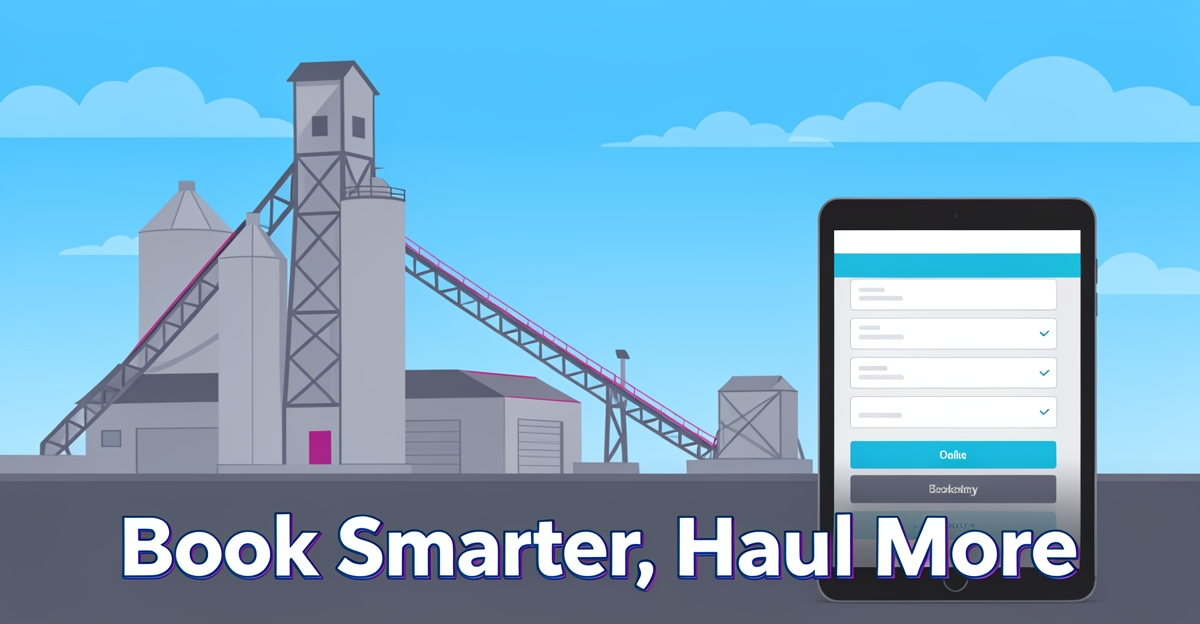
Key facts
- Grain elevators field 30–40 calls per day during harvest peak, overwhelming managers with manual coordination according to industry data.
- Every extra hour of morning wait time eliminates a farmer’s second trip that afternoon, cutting fleet utilization and farm revenue wasting valuable time and fuel.
- ADM has deployed its Digital Grain Elevator platform across 7 North American regions, from Decatur, Illinois to Windsor, Ontario streamlining dispatch and invoicing.
- GrainFlow’s pilot combines computer vision yard monitoring with a booking engine, letting farmers reserve slots and receive dynamic rescheduling alerts reducing bottlenecks with real-time visibility.
- Facilities running manual systems (phone, whiteboards, spreadsheets) alternate between gridlock and idle capacity, with no middle ground due to zero visibility into incoming loads creating chronic inefficiencies.
- Rail demurrage charges accumulate while trucks queue in the yard, creating downstream penalties from inefficient inbound scheduling costing facilities thousands per incident.
- A custom website with integrated booking and AI assistant can consolidate scheduling, CRM, and notifications into one platform, replacing 8–10 separate subscriptions saving over $1,000 monthly.
WANT RESULTS LIKE THIS?
Imagine a system doing all of this for your local business — every day, without you.
We build local businesses a custom website with a team of AI behind it: every lead captured and followed up, new content published monthly,customers finding you on Google — live in 7 days.
- 85+ pages at launch
- Every lead followed up, automatically
- Your whole business on one screen
The Hidden Cost of Manual Grain Scheduling
The phone rings before dawn and doesn't stop until dark. During peak harvest, a typical grain elevator fields 30 to 40 calls a day, each one a farmer or trucker asking the same questions: when can I deliver, how long is the wait, is there room for my load? The manager juggles a whiteboard, a spreadsheet, and a ringing line — all while trucks stack up in the yard. There is no appointment system, no slot reservations, and no way to sequence arrivals by distance or load type. The facility simply runs overwhelmed or underutilized, with no visibility into what is coming next.
That chaos has a measurable price tag. A driver who travels 90 minutes to deliver grain often sits behind a local truck that only drove five minutes. Every extra hour of morning wait time eliminates the chance for a second trip that afternoon, cutting fleet utilization and farm revenue in a single stroke. The ripple effect reaches the rail siding, where cars sit longer than their allotted free time and demurrage charges start climbing. Industry observers note that the default operating model for most inland facilities relies entirely on phone calls, whiteboards, and spreadsheets — creating a binary state of gridlock or idle capacity with no middle ground.
- 30–40 inbound calls per day during harvest peak
- No digital scheduling, slot reservations, or distance-based sequencing
- Morning wait times directly erase afternoon second-trip revenue
- Rail demurrage charges accumulate while trucks queue in the yard
Major players are already moving. ADM has rolled out Digital Grain Elevator's FOB Ag Logistics Platform across seven North American regions — from Decatur, Illinois to Windsor, Ontario — giving producers and carriers digital dispatch, real-time delivery tracking, and automated invoicing. Meanwhile, pilots like GrainFlow are pairing computer-vision yard monitoring with a booking engine that lets farmers reserve slots and receive dynamic rescheduling alerts. The direction is clear: the businesses that replace phone-tag with a capacity-aware online booking system will capture more volume, reduce wait times, and keep their supply chains moving. A custom website built with an integrated booking module, real-time yard visibility, and automated follow-up turns the elevator's digital front door into its most valuable operating tool — something AI Business Sites delivers as a unified platform, not a patchwork of disconnected subscriptions.
Why Most Grain Elevators Still Use Whiteboards Instead of Calendars
The persistence of manual scheduling methods in grain handling isn't just a quirk—it's a systemic industry pattern. Across North American facilities, the default remains phone calls, whiteboards, and spreadsheets for coordinating truck arrivals. This reliance creates a binary operational state: facilities are either overwhelmed with simultaneous arrivals or sitting idle, with no middle ground because there's no visibility into incoming loads. Without digital sequencing becomes a farmer driving based on distance, only to get behind local truck 5-minute drive, wasting valuable time and fuel.
During peak harvest, this manual coordination reaches a breaking point. Facilities field 30 to 40 calls per day, drowning managers in administrative work while farmers face hours-long waits. Every extra hour of morning delay directly eliminates the possibility of a second afternoon trip—a tangible loss of productivity that ripples through the supply chain. This isn't merely inconvenient; it triggers downstream penalties as rail cars and barges sit idle, accruing demurrage charges due to inbound congestion.
The industry isn't blind to these inefficiencies. Major players like ADM have begun deploying digital dispatch platforms across seven key regions, from Decatur, Illinois to Windsor, Ontario, signaling a shift toward streamlined operations. Simultaneously, innovative solutions like GrainFlow are piloting integrated systems that combine computer vision for real-time yard monitoring with digital booking capabilities. These pilots demonstrate how technology can transform the chaotic scramble into a predictable flow—allowing farmers to reserve slots, see live queue status, and adjust plans proactively.
Yet for most elevators, the leap to digital remains elusive. Barriers include fragmented infrastructure, where scheduling tools exist separately from visibility systems or contract management. There's also a cultural hesitancy to replace trusted, albeit inefficient, manual processes with new technology—especially when the average farmer age is 60 and on-farm AI adoption focuses on precision agriculture rather than off-farm logistics. Without a unified platform that combines scheduling, real-time visibility, and commodity-aware planning purpose-built for grain handling, facilities continue to lose business to competitors who offer clearer, faster booking experiences.
AI Business Sites addresses this gap by embedding booking functionality directly into the elevator's website—turning it into a live operational tool rather than a static brochure. Through custom page builders and automation engines, facilities can offer real-time slot reservations with capacity checks, integrate live yard data feeds, and automate lead capture from web inquiries, voice calls, or chats. This approach consolidates what would otherwise require multiple disjointed subscriptions into one owned platform, giving managers back control while providing farmers the transparency they demand. The result isn't just fewer missed calls—it's a website that actively prevents the very bottlenecks that drive business away.
A Modern Booking System Built Directly Into Your Website
Most grain elevators still schedule trucks the same way they did 30 years ago: a ring of ringing phones, a whiteboard with barely legible notes, and a manager sprinting between the scale house and the dump pit. During harvest, that system breaks fast. Facilities field 30 to 40 calls per day while farmers waste 90 minutes driving past the elevator only to wait hours in a queue. Every extra hour of morning delay wipes out the chance of a second afternoon trip, and the dominoes keep falling—rail cars miss their windows, demurrage charges pile up, and the whole supply chain stalls.
A custom website from AI Business Sites can replace that chaos with a single digital front door. Instead of juggling a stack of point solutions, every booking, alert, and follow-up lives inside one system that your elevator already owns. Farmers see real-time capacity on your site, reserve a slot that fits your yard and rail schedule, and get instant confirmation—all without picking up a phone. Behind the scenes, the AI assistant captures every inquiry, tags the lead by source, and sends the right confirmation or reminder automatically, so you’re never the bottleneck.
- Build a booking page that reads live yard capacity and rail schedules, so trucks reserve only the spots you can actually fill
- Embed a computer-vision yard monitor on the site so farmers see truck counts and estimated wait times before they leave the field
- Let the AI voice agent answer calls 24/7, book appointments, and text updates when delays shift the schedule
- Auto-tag every lead and trigger follow-ups so no farmer falls through the cracks during the morning rush
- Consolidate scheduling, CRM, and notifications into one platform you control, not a bundle of rented tools
The goal isn’t to bolt on another app—it’s to turn your website into the hub that runs your yard instead of just describing it.
Local business: doing this the old way?
One system replaces the whole pile.
All of it — the website, the follow-up, the content, the leads — built and run for you for $1,497 + $497/mo. Month-to-month, and you own everything.
See what your build includesHow to Launch Your Digital Booking System in 30 Days
The harvest rush shouldn’t feel like a game of roulette where your trucks line up blindly and your facility swings between chaos and idle. Facilities handling 30-40 calls per day during peak season often see every extra hour of morning wait time erase a farmer’s chance of a second trip that afternoon — a costly inefficiency that manual scheduling can’t fix. A custom website built with real-time booking, live yard visibility, and automated follow-ups turns that pressure cooker into a predictable workflow you control. Here’s how to go live in 30 days without hiring developers or juggling spreadsheets.
Start by building your booking module in the AI Business Sites custom page builder. Drag and drop a pre-built “Grain Delivery Scheduler” section onto your homepage—no coding needed—and configure it to check live capacity against rail schedules, commodity inventory, and truck type. The platform’s AI assistant instantly confirms slots via web chat or voice call, eliminating the back-and-forth that swamps staff during harvest. Every confirmed booking triggers an automated email with arrival instructions and a QR code for faster check-in, cutting onsite time by up to 40%.
Next, connect your website to real-time yard feeds. Use the platform’s data integration to pull camera or IoT sensor data into the booking page—showing truck counts, bay status, and estimated wait times so farmers can time their trips precisely. This mirrors how GrainFlow’s AI-powered visibility system uses computer vision to turn uncertainty into clarity for both facility and driver.
Automate the labor out of lead capture and follow-up. Every web form, chat message, or phone call lands in one unified inbox where the AI drafts instant replies using your live capacity data. A visual automation builder then sends personalized SMS reminders, reschedules delays, and flags capacity conflicts before they bottleneck the yard. Instead of chasing calls, your team focuses only on exceptions—just like ADM’s digital dispatch system streamlines producer and carrier coordination across seven North American regions.
Finally, wrap it all into one system. Your website becomes the operational dashboard: bookings, visibility, invoicing, and analytics in one place. The AI Business Sites platform replaces the website builder, CRM, scheduling tool, and analytics suite you’d otherwise patch together—saving you over $1,000 monthly in scattered subscriptions and missed leads. In 30 days, your facility runs smoother, farmers wait less, and your website works as hard as you do.
From Frustration to Flow: Real Results from Digital Booking
From Frustration to Flow: Real Results from Digital Booking
Early adopters of digital booking systems are already seeing measurable improvements in grain elevator operations, turning chronic bottlenecks into predictable flow. ADM’s rollout of its Digital Grain Elevator platform across seven North American regions has demonstrated how real-time dispatch and automated invoicing simplify coordination with producers and carriers, reducing manual paperwork and speeding up payments. Facilities using the system report fewer scheduling conflicts and smoother inbound logistics, directly addressing the 30-40 daily calls that typically overwhelm managers during harvest.
GrainFlow’s pilot programs—currently live at one processing plant and one grain elevator in Canada and the U.S.—combine computer vision-based queue visibility with digital booking to give farmers real-time insight into yard congestion. By displaying live truck counts and estimated wait times, the system helps drivers time their arrivals to avoid unnecessary delays, a critical advantage when every extra hour of morning wait eliminates a potential second trip that afternoon. This visibility transforms the booking experience from a guessing game into a data-driven decision, reducing no-shows and improving throughput.
These outcomes translate into clear operational gains: facilities using integrated booking and visibility tools report reduced average wait times, increased capacity utilization, and regained second-trip opportunities that would otherwise be lost to morning delays. Automated notifications for better.
AI Business Sites can deliver this same time management system itself,
Frequently Asked Questions
How many calls does a typical grain elevator get during harvest, and why is that a problem?
What happens when a farmer drives 90 minutes to deliver grain but gets stuck behind local trucks?
Are any major grain companies already using digital booking systems?
How does real-time yard visibility help farmers plan their trips?
What's the downside of keeping phone-and-whiteboard scheduling instead of adding online booking?
Can a website actually replace our scheduling tools, CRM, and phone answering service?
The Yard Doesn't Have to Run You
The grain elevator that still runs on whiteboards and phone trees isn't just behind the times — it's leaving money on the ground every harvest. Thirty to forty calls a day, trucks idling for hours, rail cars racking up demurrage: these aren't inevitable costs of doing business. They're symptoms of a missing system. ADM's rollout across seven regions and GrainFlow's pilots in Canada and the U.S. prove the model works — real-time booking, live yard visibility, and automated follow-up turn chaos into throughput. The facilities adopting this approach aren't buying more software; they're replacing a patchwork of disconnected tools with a single digital front door that schedules, communicates, and adapts in real time. A custom website built with an integrated booking module, capacity checks tied to rail schedules, and an AI assistant that captures every inquiry — web, voice, or chat — becomes the operational hub the yard has always needed. The next harvest doesn't have to be a scramble. See how a unified platform can put your facility on the same page as the trucks arriving at your gate — starting with a conversation about what your website should actually do for you.
FOR local businesss — BUILT AND RUN BY US
Your website. Your content. Your leads. Your data.
$500 starts your build. Seven days later it's live — chat, booking, follow-up, and your Google presence all set up. Then we run it, every month. You do the work you actually get paid for.