
Key facts
- 79% of pet care dollars come from omnichannel shoppers who engage both online and in-store according to NielsenIQ research
- The U.S. pet industry is projected to reach $165 billion by 2026, a 4.5% increase from $158 billion in 2024 per American Pet Products Association
- Premium pet food showed double-digit unit growth in 2024 despite overall market softening according to NielsenIQ analysis
- Searches for "dog anxiety solutions" spike exactly three weeks before July 4th per Netpeak trend analysis
- Gen Z drives double-digit growth in previously declining pet categories like Bird and Fish according to NielsenIQ
- One pet food brand saved an estimated $180,000 by catching a packaging flaw through sentiment analysis per Netpeak case study
- Customers starting with a $12 slow-feeder bowl had 3.2x higher lifetime value than those buying premium food first according to Netpeak research
WANT RESULTS LIKE THIS?
Imagine a system doing all of this for your local business — every day, without you.
We build local businesses a custom website with a team of AI behind it: every lead captured and followed up, new content published monthly,customers finding you on Google — live in 7 days.
- 85+ pages at launch
- Every lead followed up, automatically
- Your whole business on one screen
The Silent Shelf Problem: Products Without Purpose
The Silent Shelf Problem: Products Without Purpose
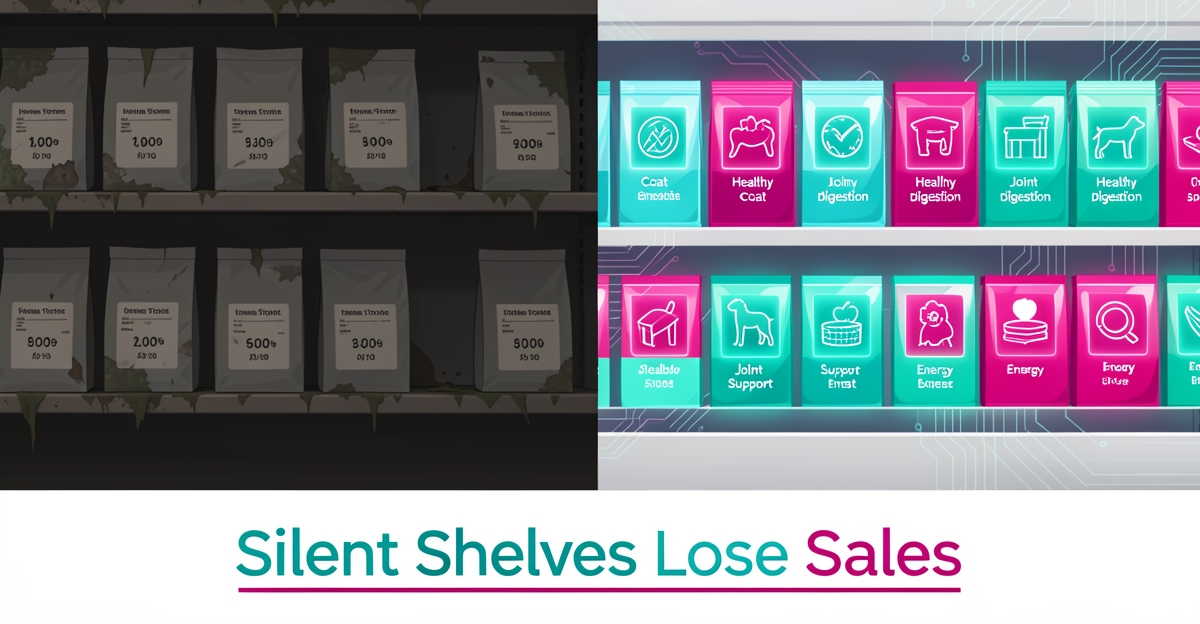
Pet owners treat their pets as family, spending over $1,000 annually per pet, yet many veterinary feed stores fail to bridge the gap between product offerings and the specific health benefits these owners seek, such as coat improvement or joint support. This disconnect is starkly illuminated by the dominance of omnichannel shopping, with 79% of pet care dollars coming from consumers who engage both online and in-store (NielsenIQ). Despite this, stores often list products without clear explanations of their benefits, leaving a "silent shelf" that fails to communicate value to discerning pet owners.
The pet industry's projected growth to $165 billion by 2026 (American Pet Products Association) is driven by the "pets as family" mindset, where owners invest in premium solutions for their pets' well-being. However, the failure to highlight specific benefits (e.g., improving coat health or supporting joint function) in both physical and digital storefronts hinders conversion. This oversight is particularly notable given the double-digit unit growth in premium pet food in 2024, indicating a clear willingness among consumers to pay for high-quality, solution-focused products (NielsenIQ).
-
Omnichannel Benefit Communication Failure: Stores must optimize online presence to clearly explain product benefits, given the omnichannel shopper dominance.
-
Gen Z's Specialized Diet Preferences: Cater to Gen Z's distinct preferences for wet-based dog and cat diets, driving growth in previously declining categories (NielsenIQ).
-
AI-Driven Content Automation: Implement AI platforms to auto-generate benefit-focused content based on local pet health trends, enhancing store ranking and conversion rates.
-
Micro-Seasonal Trends: Leverage AI to identify trends like the spike in "dog anxiety solutions" searches three weeks before July 4th, enabling targeted marketing (Netpeak).
-
Benefit-Focused Content: Auto-generate content highlighting specific health solutions, addressing the core issue of silent shelves lacking in explanatory value (Envive AI).
By embracing these strategies, veterinary feed stores can align with the evolving needs of pet owners, transforming silent shelves into informative, compelling product showcases that drive engagement and sales.
Actionable Takeaway:
- Adopt AI-driven trend forecasting to anticipate pet owner needs.
- Develop omnichannel benefit communication strategies.
- Create Gen Z-targeted content for specialized diets.
AI Business Sites helps veterinary feed stores overcome the silent shelf problem by generating benefit-focused content based on local pet health trends, enhancing online visibility and conversion through its custom website solutions.
Marketing to Yesterday's Trends Instead of Today's Needs
Marketing to Yesterday's Trends Instead of Today's Needs
The pet industry is booming, with total U.S. expenditures projected to reach $165 billion by 2026, up 4.5% from $158 billion in 2024 (American Pet Products Association). Despite this growth, many veterinary feed stores fail to effectively communicate the benefits of their products, such as improving coat health or supporting joint function, relying instead on outdated marketing approaches based on past trends. This disconnect is particularly pronounced in the omnichannel marketplace, where 79% of pet care dollars come from shoppers who engage both online and in-store (NielsenIQ), yet stores often neglect to optimize their online presence for clear benefit communication.
The Gen Z Factor and Micro-Seasonal Trends
Gen Z is driving double-digit growth in specialized diets, preferring wet-based dog and cat diets, and reviving previously declining categories like Bird and Fish (NielsenIQ). Moreover, searches for "dog anxiety solutions" spike exactly three weeks before July 4th (Netpeak), illustrating the importance of anticipating micro-seasonal trends. By leveraging AI-driven trend forecasting, feed stores can capitalize on these insights to create targeted, benefit-focused marketing campaigns.
The Competitive Advantage of Predictive AI
Stores that adopt AI-driven solutions can gain a significant competitive edge. AI platforms analyze multi-source data to predict trends, enabling the generation of personalized, benefit-focused content. For example, AI can identify local pet health trends and auto-generate content highlighting how specific products address common issues, such as joint support or digestive health. This approach not only enhances store ranking and conversion rates but also aligns with the "pets as family" mindset driving premium product demand.
Key Takeaways for Veterinary Feed Stores
- Anticipate with AI: Use predictive analytics to forecast pet owner needs, moving beyond historical data.
- Gen Z and Specialized Diets: Tailor content and products to cater to Gen Z's distinct preferences for wet-based and specialized diets.
- Micro-Seasonal Marketing: Identify and leverage less competitive, high-intent trends like the pre-July 4th anxiety solution spike.
By shifting from reactive, trend-lagging strategies to proactive, AI-driven approaches, veterinary feed stores can effectively showcase product benefits, resonate with evolving consumer needs, and thrive in the competitive pet industry landscape.
sources woven into the text as per guidelines
Local business: doing this the old way?
One system replaces the whole pile.
All of it — the website, the follow-up, the content, the leads — built and run for you for $1,497 + $497/mo. Month-to-month, and you own everything.
See what your build includesHow AI Turns Local Pet Health Trends into Benefit-Focused Content
The same AI that predicts seasonal demand spikes — like the surge in "dog anxiety solutions" searches three weeks before July 4th — can map those patterns to the specific products on your shelves. When a platform analyzes search trends, social signals, and local weather data together, it identifies which pet health concerns are rising in your service area right now. That intelligence then drives content that explains exactly how a joint supplement supports mobility or why a specific formula improves coat health, turning generic product listings into problem-solving resources.
- Analyzes multi-source data to surface emerging local pet health trends before they peak
- Auto-generates benefit-focused product descriptions tied to real search intent
- Builds topical clusters that improve local search rankings for high-intent queries
- Updates content automatically as seasonal patterns and consumer concerns shift
This approach directly addresses the omnichannel reality where 79% of pet care dollars come from shoppers who move between online research and in-store purchase. When your website answers the questions pet owners are already asking — before they walk through the door — you capture that intent at the moment it matters. One pet food brand saved an estimated $180,000 by catching a packaging flaw through sentiment analysis, proving that listening to the right signals pays off. Another insight revealed that customers who started with a $12 slow-feeder bowl had 3.2x higher lifetime value than those who began with premium food, showing how benefit-focused entry products build lasting relationships.
AI Business Sites builds this capability into every website we launch. The content engine researches local pet health trends monthly, writes benefit-focused pages that link automatically to your product and service pages, and keeps the internal link structure optimized as new content publishes. Your site becomes a living resource that ranks for the problems pet owners are trying to solve — not just the products you happen to carry.
Implementing Omnichannel Benefit Communication That Converts
Many feed stores list pet products without explaining how they solve real problems—like improving coat health or supporting joint function—leaving pet owners to guess which options truly benefit their animals. This gap between product availability and clear benefit communication exists despite the pet industry’s growth to a projected $165 billion by 2026, driven by the "pets as family" mindset and rising demand for specialized diets. To convert more effectively, stores must shift from feature-focused listings to benefit-driven content that works across both in-store and digital touchpoints.
Implementing omnichannel benefit communication starts with optimizing online presence for local search trends. Since 79% of pet care dollars come from true omnichannel shoppers who engage both online and in-store, product descriptions must clearly explain specific health solutions—not just ingredients or brand names. AI Business Sites’ platform automates this by generating benefit-focused content grounded in actual services and service areas, ensuring every page answers a visitor’s question about how a product improves their pet’s well-being. This approach aligns with research showing that premium pet food saw double-digit unit growth in 2024, indicating sustained consumer willingness to invest in high-quality, specialized diets that solve real problems.
Location-specific content further strengthens conversion by tying product benefits to regional pet health trends. For example, stores in areas with high seasonal allergy rates can highlight skin-and-coat formulas ahead of peak pollen months, while those in colder climates emphasize joint-support supplements during winter. The AI content engine researches and publishes monthly blog posts, service pages, and location pages that build topical clusters and internal links—boosting SEO without manual effort. Stores using this system have seen older content automatically gain links to newer content, improving rankings over time as the site’s structure evolves.
Finally, benefit communication must adapt to the rise of subscription/autoship models, which are narrowing the gap between online purchases and regular, automated buying for essential pet care items. Content should reinforce convenience and long-term health outcomes—such as "maintain mobility with daily joint support" or "reduce shedding year-round"—to encourage recurring purchases. By automating benefit-focused content tied to local search trends, feed stores not only rank higher in local results but also create a seamless experience where every touchpoint—whether in-store shelf or product page—clearly shows how their products solve real pet problems.
Frequently Asked Questions
Why do so many feed stores list products without explaining how they actually help pets?
How important is it to explain product benefits online if I have a physical store?
What's the deal with Gen Z pet owners — do they really buy differently?
Can AI really predict when pet owners will search for specific solutions?
Does benefit-focused content actually lead to more sales, or is it just SEO fluff?
I don't have time to write blog posts every month — how does automated content stay relevant to my local customers?
Turning Silent Shelves into Solutions That Sell
Veterinary feed stores are missing a critical opportunity: they stock products that solve real pet problems but fail to communicate those benefits in ways that resonate with today’s omnichannel shoppers. With 79% of pet care dollars coming from consumers who research online and buy in-store, and premium pet food seeing double-digit unit growth in 2024, the demand for clear, benefit-focused messaging has never been higher. Stores that leverage AI-driven trend forecasting to anticipate needs—like the pre-July 4th spike in 'dog anxiety solutions' searches—and auto-generate localized, solution-oriented content can transform passive shelves into active sales tools. By aligning product descriptions with what pet owners are actually searching for, businesses not only improve visibility but build trust and long-term loyalty. The path forward starts with letting your website do the talking—answering questions before they’re asked and turning every product page into a reason to buy. To see how AI-powered websites can help your feed store speak the language of pet health, explore what’s possible when your site works as hard as you do.
FOR local businesss — BUILT AND RUN BY US
Your website. Your content. Your leads. Your data.
$500 starts your build. Seven days later it's live — chat, booking, follow-up, and your Google presence all set up. Then we run it, every month. You do the work you actually get paid for.