
Key facts
- By 2026, 45% of consumers used AI to find local businesses, a 650% increase from 6% in 2025 according to NetRanks.ai.
- Pages without AI Overviews receive 2x the pageviews of those with Overviews per Kevin Indig's Growth Memo.
- 47% of US adults used an AI tool to find a local business in the past month as reported by Yext 2026 research.
- 97% of consumers rely on reviews to guide purchase decisions according to NetRanks.ai.
- 200 recent reviews can significantly outrank a practice with 40 older ones per iVET360.
- Local SEO content must explicitly declare What/Who/Where above the fold to train AI bots as emphasized by Pet Marketing Unleashed.
- AI citations are binary: a practice is either cited or not mentioned at all according to Tapir.vet.
WANT RESULTS LIKE THIS?
Imagine a system doing all of this for your local business — every day, without you.
We build local businesses a custom website with a team of AI behind it: every lead captured and followed up, new content published monthly,customers finding you on Google — live in 7 days.
- 85+ pages at launch
- Every lead followed up, automatically
- Your whole business on one screen
Why Exotic Animal Practices Are Invisible in AI-Driven Local Search
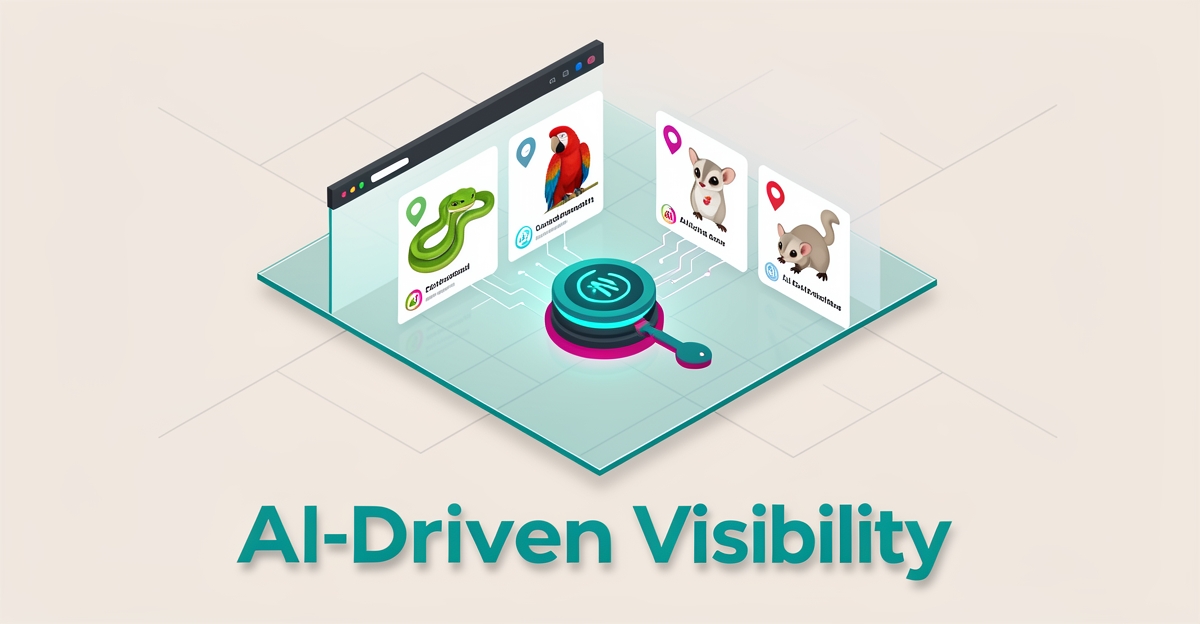
For many exotic animal practices, the biggest threat to growth isn't a lack of expertise, but a growing digital invisibility. As pet owners shift their habits, the traditional "search and click" model is being replaced by direct AI recommendations.
The scale of this shift is staggering. Research shows that the share of consumers using AI for local business discovery jumped from 6% in 2025 to 45% in 2026. For high-earning households, AI has already overtaken Google as the primary starting point for local searches.
This evolution introduces a new ranking factor: entity clarity. AI systems no longer just look for keywords; they evaluate what your practice is, what services you provide, and why you are a credible source. Generic veterinary pages that mention "all pets" fail to establish this specific authority.
When a pet owner asks an AI for a "reptile vet in Halifax," the system doesn't provide a list of ten links. AI citations are binary: your practice is either cited as a recommendation or it is not mentioned at all. If your site lacks species-specific depth, you are invisible at the exact moment the decision is being made.
To move from invisible to cited, practices must transition from traditional SEO to Generative Engine Optimization (GEO). This requires a shift in how the website is structured:
- Explicit "What/Who/Where" declarations placed above the fold to train AI bots.
- Q&A-style content that provides direct, authoritative answers for AI snippets.
- Structured Schema Markup that programmatically verifies veterinary specialties.
- Consistent brand authority across the website, reviews, and local directories.
There is currently a strategic window of opportunity because AI Overviews have not yet fully saturated local search. Early adopters who build deep, species-specific authority now can capture a dominant share of these niche queries.
At AI Business Sites, we build websites that solve this by auto-generating high-intent service pages for specific animals. By creating tailored content for reptiles, birds, and small mammals, your site stops being a digital brochure and starts acting as a data source that AI systems trust and cite.
This approach turns your website into a discovery engine. Instead of hoping a user scrolls to page two of Google, you ensure your practice is the direct answer provided by the AI assistant.
The Content Architecture That Gets Cited: Species Hubs, Q&A Depth, and Local Specificity
The content architecture that AI systems cite begins with clarity above the fold. Species-specific hub pages must explicitly declare what the practice offers, who it serves, and where it’s located—such as "We are Halifax Exotic Vet, a Halifax-based clinic specializing in reptile care including metabolic bone disease and respiratory infections"—to train AI bots on entity attributes for citation. This mirrors research showing that Google and AI favor businesses that clearly declare specific niches over vague pages, as inconsistent or missing identifiers reduce citation likelihood.
Condition pages should follow a Q&A format with direct answers in the first two sentences, then expand into clinical depth. For example, a page titled "What Causes Respiratory Infections in Pet Birds in Halifax?" opens with a concise answer about common causes and urgency, followed by species-specific symptoms, diagnostic approaches, treatment options, and local cost ranges. Research confirms this structure—using headings that mirror the question, leading with a direct answer, then adding detail and clinical perspective—is far more likely to be cited than thin, generic content, as AI systems prioritize authoritative, thorough pages that demonstrate genuine expertise.
Hyper-local clusters further strengthen authority by covering costs, emergencies, seasonal care, and environmental factors unique to the region. Each cluster links bidirectionally to the species hub, creating topical depth that rewards both Google rankings and AI visibility. AI Business Sites’ content engine automates this architecture, generating interconnected pages that build internal link structure over time—older content gains links to newer material, and vice versa—without manual effort. This approach aligns with findings that conversational, FAQ-driven content optimized for specific intent (e.g., "reptile vet Halifax metabolic bone disease") outperforms simple keyword pages in AI search environments, where citation replaces traditional ranking as the primary visibility metric. By grounding every page in local species concerns and clinical accuracy, practices position themselves as credible sources AI systems are trained to recommend.
Technical Foundations: Schema Markup, NAP Consistency, and Automated Internal Linking
Technical Foundations: Schema Markup, NAP Consistency, and Automated Internal Linking
Building a website that auto-generates species-specific local SEO content for exotic animal practices requires a robust technical layer. This foundation is crucial for visibility in both traditional and AI-driven search environments. Here’s how to lay this groundwork effectively:
Exotic animal practices, such as those catering to reptiles, birds, and small mammals, face unique challenges in online visibility. Their websites must be optimized to address specific, niche queries like "exotic bird vet near me" or "reptile care Halifax." By leveraging the right technical strategies, these practices can enhance their local SEO and ensure AI systems accurately understand and recommend their services.
-
LocalBusiness and VeterinaryCare Schema: Embedding these schema types on every species page (e.g., reptiles, birds) is identified as "one of the highest-impact improvements" for both Google rankings and AI visibility (Tapir.vet). For example, a page focused on "Reptile Care in Halifax" should include schema highlighting the practice's name, address, phone number, and specific reptile care services.
-
Implementation Insight: Ensure each species page includes structured data for practice name, address, phone, geo-coordinates, hours, price range, and services offered. This enables AI systems to extract and verify entity attributes programmatically.
-
Consistency Across Touchpoints: Inconsistent NAP (Name, Address, Phone) information causes AI systems to lose confidence in a practice as a reliable entity (Tapir.vet).
-
Statistic Highlight: 97% of consumers rely on reviews to guide purchase decisions, with consistency across online platforms being a silent validator of trust (NetRanks.ai).
-
Bidirectional Clustering: Automatically link new pages to relevant existing ones, building topical clusters that signal authority to Google and AI systems (AI Business Sites capability). For reptile care, this might involve linking from a "Metabolic Bone Disease in Bearded Dragons" page to a broader "Reptile Health Checks" hub and vice versa.
-
Data-Driven Impact: Pages without AI Overviews receive 2x the pageviews of those with Overviews, highlighting the importance of organic content strategies that internal linking supports (Kevin Indig / Growth Memo report via Pet Marketing Unleashed).
To ensure AI bots can programmatically extract practice attributes:
- Above-the-Fold Declarations: Lead each species page with clear "What/Who/Where" statements (e.g., "We are [Practice], a [City]-based veterinary practice specializing in [Species] care").
- Schema-Enabled Attributes: Use schema to highlight species-specific services, conditions treated, and geographic relevance.
- Implement LocalBusiness & VeterinaryCare Schema on all species pages to boost AI and Google visibility.
- Audit and Ensure NAP Consistency across all online touchpoints for trust signals.
- Activate Automated Internal Linking to build topical clusters and enhance authority.
By grounding your website in these technical foundations, you not only enhance your local SEO but also future-proof your practice against the evolving AI search landscape, ensuring your exotic animal veterinary services remain discoverable for niche queries.
Local business: doing this the old way?
One system replaces the whole pile.
All of it — the website, the follow-up, the content, the leads — built and run for you for $1,497 + $497/mo. Month-to-month, and you own everything.
See what your build includesEngineering Review Velocity and Descriptive Feedback for Each Species
Engineering Review Velocity and Descriptive Feedback for Each Species
In the realm of AI-driven local SEO for exotic animal veterinary practices, reviews emerge as the single most powerful trust signal, influencing both Google rankings and AI recommendations. According to industry research, 97% of consumers rely on reviews to guide their purchase decisions, with review recency and descriptive feedback playing crucial roles source. Moreover, 200 recent reviews can significantly outrank a practice with 40 older ones source, highlighting the importance of steady review flow.
- Volume and Recency: AI systems analyze not just the number of reviews but also their recency. A steady, ongoing flow of new Google reviews beats one-time bursts, as it signals consistent quality and relevance source.
- Themes and Sentiment: Reviews that mention specific species and conditions (e.g., "great with nervous bearded dragons") provide descriptive language AI systems use for recommendations, enhancing entity authority.
-
Personalized Responses: Responding to every review, especially with species-specific acknowledgments, reinforces the practice's entity authority and shows proactive engagement.
-
Immediate Post-Visit Survey:
- Prompt Example: "Help others find the right care! If you visited for your [reptile/bird/small mammal], please share your experience and mention your pet's species in your review."
-
Automation: Integrated into the website's AI assistant, triggering post-visit via email or in-app notification.
-
AI-Driven Review Analysis and Response:
- Analysis: AI identifies key themes (species, conditions treated) and sentiment.
- Response Template (Personalized):
<strong>Dear [Client],</strong> Thank you for your review highlighting our care for your [Species] with [Condition]. We're glad [Brief Personal Acknowledgment]. - Automation: Automated drafting with human approval before sending.
| Species | Prompt Template |
|---|---|
| Reptiles | "Share your experience with our reptile care, especially for [Condition, e.g., shedding issues] in your [Species]." |
| Birds | "How did we do in caring for your bird's [Condition, e.g., respiratory issue]? Your feedback matters!" |
| Small Mammals | "Tell us about your small mammal's [Condition, e.g., dental care] experience with our practice." |
- Review Prompt (Automated Email): ``` Subject: Your Recent Visit for [Pet's Name] the [Species]
Dear [Client],
Hope [Pet's Name] is doing well after the visit! Could you please share your experience on Google Reviews, mentioning the specific care [Species] received for [Condition]?
- AI-Generated Response to a Review:
Dear [Client],
Thank you for highlighting our tailored approach to your bearded dragon's metabolic bone disease. We're thrilled with the recovery progress!
```
By integrating these strategies, exotic animal veterinary practices can not only enhance their local SEO through relevant, species-specific content but also leverage the power of reviews to build trust with both humans and AI systems, ultimately driving more targeted leads.
According to Kevin Indig's Growth Memo report, pages without AI Overviews receive twice the pageviews compared to pages with AI summaries source, indicating a strategic window for niche practices to capture direct traffic with targeted content.
Moreover, with 47% of US adults using AI tools to find local businesses (Yext 2026 research) and the pet industry reaching $158 billion in 2025 source, the opportunity for practices leveraging AI-driven SEO and review strategies is substantial.
AI Business Sites, with its custom website solutions and integrated AI tools, supports this strategy by automatically generating species-specific content, managing reviews, and optimizing for local SEO, helping practices like yours rank for queries such as "exotic bird vet near me" or "reptile care Halifax".
Putting It All Together: An Automated System That Runs Without Daily Oversight
Putting It All Together: An Automated System That Runs Without Daily Oversight
Imagine a website that not only generates species-specific local SEO content monthly but also maintains schema markup, handles internal linking, manages review requests, and monitors AI citation visibility across platforms like ChatGPT, Gemini, and AI Overviews—all without needing daily human intervention. For exotic animal practices, this means ranking for niche queries like "exotic bird vet near me" or "reptile care Halifax" with ease.
Key Components of the Automated System
- Monthly Species-Specific Content Clusters: AI-powered generation of 14+ new SEO pages monthly, as seen with AI Business Sites' approach, tailored to local species and owner concerns. For example, a reptile care page might focus on shedding issues in bearded dragons in Halifax, leveraging local species data.
- Automatic Schema and Linking: Every new page is automatically linked to relevant existing content, building topical clusters (e.g., reptile care in Halifax), and includes LocalBusiness and VeterinaryCare schema markup for enhanced AI and Google visibility.
- Review Management: Systematic request and response management for Google reviews, focusing on steady, descriptive feedback (e.g., "Expert care for my sugar glider’s respiratory issue") to influence AI recommendations and Google rankings.
- AI Citation Visibility Monitoring: Continuous tracking across ChatGPT, Gemini, and AI Overviews to ensure the practice is cited for queries like "best exotic animal vet in [City]".
How It Works for Exotic Animal Practices
- Content Generation: The AI analyzes local search trends and common owner concerns for reptiles, birds, and small mammals in the practice's area, generating content clusters (e.g., condition pages, care guides, emergency advice) with direct, clinically informed answers.
Example Statistic: According to NetRanks.ai, 45% of consumers used AI to find local businesses in 2026, highlighting the need for AI-optimized content.
- Technical SEO Automation:
- Schema Markup: Automatically applies LocalBusiness and VeterinaryCare schema to each species page.
-
Internal Linking: Bi-directional linking within species clusters (e.g., linking a "Reptile Respiratory Infections" page to a "Halifax Reptile Vet" page) to reinforce topical authority.
-
Reputation Management:
- Review Requests: Post-visit sequences ask clients to mention the species treated and condition addressed.
-
Response Generation: AI drafts personalized, species-specific responses to reviews, subject to human approval.
-
Monitoring and Adjustment:
- AI Citation Tracking: Monthly reports on mentions in ChatGPT, Gemini, and AI Overviews for queries like "exotic animal care near me".
- Content Refinement: Based on citation data and search trends, the AI refines future content for better visibility.
The Outcome: A Self-Running Digital Asset
- Clinical Judgment, Not Busywork: Practice owners focus on high-value decisions while the website handles content creation, technical SEO, and reputation management.
- Scalable Visibility: Consistent, high-quality content and reviews enhance visibility in both traditional search and AI-driven discovery platforms.
Key Statistics Driving the Approach:
- 47% of US adults used an AI tool to find a local business in the past month (Yext 2026 research).
Embracing the Future of Local SEO
By leveraging an AI-powered website platform, exotic animal practices can future-proof their online presence, ensuring visibility in an increasingly AI-driven search landscape without sacrificing the personal touch that defines veterinary care.
Frequently Asked Questions
Why is my exotic animal practice invisible in AI search results?
How does AI search differ from traditional SEO for local veterinary practices?
What content structure gets cited by AI systems for exotic animal queries?
Is Schema Markup really necessary for AI visibility?
How do reviews affect whether AI recommends my practice?
Can an automated website really generate accurate species-specific content without daily oversight?
Key Takeaways
{ "title": "Your Website Should Be a Discovery Engine, Not a Digital Brochure", "content": "The shift from traditional search to AI-driven discovery isn't a trend to watch — it's a threshold to cross. Exotic animal practices that treat their websites as static brochures are already invisible to
FOR local businesss — BUILT AND RUN BY US
Your website. Your content. Your leads. Your data.
$500 starts your build. Seven days later it's live — chat, booking, follow-up, and your Google presence all set up. Then we run it, every month. You do the work you actually get paid for.