
Key facts
- Shops adopting AI-driven intake workflows see a 17% revenue increase according to collision repair industry data.
- AI-assisted intake processes deliver a 25% improvement in cycle time by reducing administrative lag per body shop business research.
- Mobile traffic dominates auto repair searches yet many sites still force visitors through clunky desktop-first forms industry research shows.
- Leads captured after hours often go unanswered until the next business day, causing shops to lose repair jobs to faster competitors.
- Disconnected tools — separate forms, email platforms, and spreadsheets — leave shops with no visibility into which marketing channels actually bring repair work.
- A well-designed site builds instant confidence and turns casual visitors into booked appointments notes auto repair SEO expert Paul Donahue.
- Integrating CCC ONE with Tekion bridges critical systems to streamline dealer body shop operations according to industry reporting.
WANT RESULTS LIKE THIS?
Imagine a system doing all of this for your local business — every day, without you.
We build local businesses a custom website with a team of AI behind it: every lead captured and followed up, new content published monthly,customers finding you on Google — live in 7 days.
- 85+ pages at launch
- Every lead followed up, automatically
- Your whole business on one screen
Why Your Current Website Is Losing You Repair Jobs
Most collision shop websites look professional on the surface, but underneath they function like a digital business card — static, passive, and disconnected from the actual work of running a shop. When a potential customer fills out a form at 8 p.m. on a Friday, that lead often sits untouched until Monday morning. By then, the driver has already booked with a competitor who responded faster.
According to industry research, mobile traffic dominates auto repair searches, yet many sites still force visitors through clunky desktop-first forms that don't capture enough detail to qualify the job. The result is a pipeline full of vague inquiries instead of actionable repair leads. Shops using disconnected tools — separate form builders, email platforms, and spreadsheets — lose visibility into where each lead came from and what stage it's in.
Data from collision repair forums shows that shops adopting AI-driven intake workflows see a 17% increase in revenue and a 25% improvement in cycle time by reducing administrative lag. Those gains come from closing the gap between a customer's first click and the shop's first meaningful response. Without integrated lead follow-up and CRM, every handoff between website, estimator, and front office introduces delay and human error.
- Leads captured after hours go unanswered until the next business day
- No automatic tagging or routing means high-value jobs get buried
- Follow-up is manual, inconsistent, or forgotten entirely
- Estimators re-enter data already submitted by the customer
- No visibility into which marketing channels actually bring repair work
Collision CRM specialists emphasize that tracking every repair lead from first click to final invoice requires a unified system — not a website that hands off to email, which hands off to a spreadsheet. AI Business Sites builds websites with that integration baked in, so the moment a lead arrives, it's tagged, routed, and followed up automatically. The shop owner sees the full pipeline in one view, and the customer gets an instant, personalized response — not a generic "we'll get back to you."
The Workflow-First Website: What Actually Moves the Needle
The Workflow-First Website: What Actually Moves the Needle
In the fast-paced world of auto repair, a website is no longer just a digital storefront; it's an operational heartbeat. For collision shops aiming to boost efficiency and revenue, the right website can be a game-changer. Research underscores the significance of integrating lead capture, CRM, automated follow-up, and UX design to turn visitors into booked repairs.
Leveraging AI for Operational Efficiency
Studies highlight that AI-assisted intake processes can lead to a 17% revenue increase and 25% faster cycle times source. This is particularly relevant for auto repair shops, where streamlined workflows directly impact customer satisfaction and profitability. By integrating AI-driven tools into their website, shops can automate tasks such as lead follow-up, estimating, and intake, reducing administrative lag.
Essential Features of an Operational Website
-
Integrated Lead Capture & CRM: Seamlessly track leads from first click to final invoice, ensuring no opportunity falls through the cracks. For example, a custom-built CRM can automatically assign leads to specific managers based on service area or type.
-
Automated Follow-Up: Instant, personalized responses to leads, backed by a visual automation builder that handles the busywork. This can include automated email sequences for new leads and scheduled follow-ups for pending bookings.
-
UX Design for Conversion: Mobile-optimized, simple navigation, and clear CTAs that guide users efficiently through the booking process. As noted by Paul Donahue source, a well-designed site builds instant confidence and encourages engagement.
-
Local SEO Optimization: Beyond aesthetics, ensure the website is built from the ground up for local search performance, with optimized page structure and schema markup.
Actionable Insights for Collision Shops
-
Prioritize Integration: Ensure your website seamlessly integrates with lead management and CRM tools. For instance, integrating CCC ONE with Tekion can bridge critical systems, streamlining operations source.
-
Adopt AI-Driven Solutions: For tasks like estimating and follow-up to enhance efficiency. AI can automate routine communications, freeing staff to focus on high-value tasks.
-
Focus on Mobile: Given the dominance of mobile traffic, ensure your site is not just mobile-friendly but mobile-first.
Making the Shift
For collision shops, the shift to a workflow-first website is not just about technology; it's about transforming operational efficiency. By focusing on integrated lead management, automated workflows, and design that converts, shops can see tangible improvements in revenue and customer satisfaction. As the automotive industry continues to embrace digital transformation source, the right website strategy can be a decisive competitive advantage.
At AI Business Sites, we build websites that do more than just exist online—they run your business. With custom designs, integrated CRMs, and AI-driven automation, our solutions are tailored to turn your website into an operational powerhouse.
Key Takeaways
- Integrate lead capture and CRM for seamless tracking.
- Automate follow-ups for prompt, personalized responses.
- Prioritize UX design for high conversion rates.
By grounding your website strategy in these principles, you're not just building a digital presence—you're engineering a workflow engine that drives real business outcomes.
Local business: doing this the old way?
One system replaces the whole pile.
All of it — the website, the follow-up, the content, the leads — built and run for you for $1,497 + $497/mo. Month-to-month, and you own everything.
See what your build includesHow to Build a Website That Runs Your Shop (Not the Other Way Around)
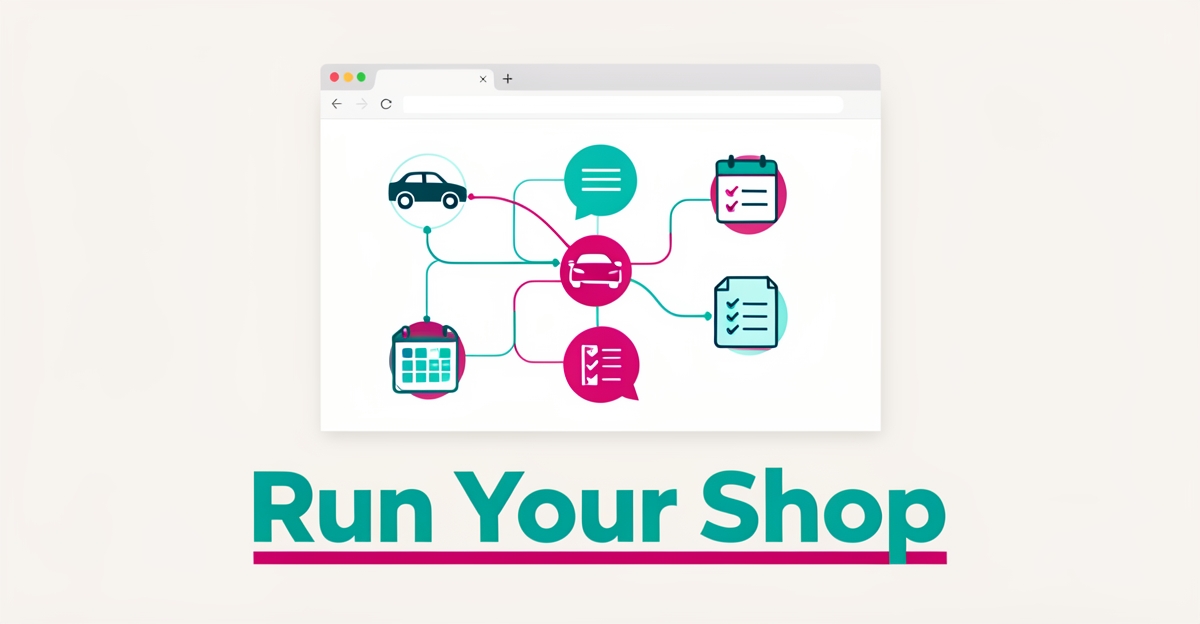
Most shop owners treat their website like a digital business card — something that sits there looking professional. But the shops growing fastest are using their site as an operational tool that captures leads, schedules work, and follows up automatically while they're under a hood.
Research shows that shops adopting AI-driven intake workflows see a 17% increase in revenue and a 25% improvement in cycle time by cutting administrative lag. Mobile traffic dominates for local repair searches, so a site that loads fast on a phone and converts visitors into booked appointments isn't optional — it's the front door.
- Prioritize mobile-first UX with clear CTAs that route visitors straight to a booking form or click-to-call button
- Integrate lead capture with a CRM so every form fill, chat, and call lands in one pipeline — no missed follow-ups
- Automate instant, personalized responses to new leads so you reply in seconds, not hours
- Build service and location pages structured for local SEO so you show up when someone searches "collision repair near me"
- Use AI to handle routine questions, scheduling, and follow-up sequences while you focus on the shop floor
As Paul Donahue notes, a well-designed site builds confidence instantly and turns casual visitors into booked appointments. The same principle applies to the backend: when your website, CRM, and automation work as one system, you stop managing software and start managing the business. AI Business Sites builds custom websites on Next.js and React that come with this operational layer built in — lead capture, CRM, AI follow-up, local SEO content, and project tracking all connected from day one.
Frequently Asked Questions
Why does my current collision shop website lose me repair jobs?
How much revenue can AI-driven intake workflows actually add to my shop?
Is a mobile-first website really that important for collision repair?
What's the difference between a standard website and one with integrated CRM and automation?
Do I need separate tools for CRM, scheduling, email marketing, and project management?
How does local SEO fit into a website that manages workflow?
Key Takeaways
{ "title": "From Static to Dynamic: Unlocking Your Shop's Full Potential", "content": "In the fast-paced world of auto repair, a website is more than a digital footprint—it's a critical operational tool. As highlighted, static websites cost shops valuable leads and efficiency, while integrated, AI-d
FOR local businesss — BUILT AND RUN BY US
Your website. Your content. Your leads. Your data.
$500 starts your build. Seven days later it's live — chat, booking, follow-up, and your Google presence all set up. Then we run it, every month. You do the work you actually get paid for.