
Key facts
- Fleet operators typically juggle 5-6 different apps for CRM, billing, booking, and operations before consolidating as reported by fleet operators
- Pitstop clients save 20 hours per week by automating data passing between telematics and maintenance systems per documented case studies
- AI-driven predictive maintenance reduces breakdowns by 70% and cuts maintenance costs by 25% per fleet management studies
- Predictive maintenance increases productivity by 25% according to Deloitte research cited in industry analysis
- 40% of AI-using fleets reported at least 50% improvement in fuel savings, operational expenditures, and route efficiency per Penske's 2025 survey
- UPS's ORION AI system saves over 100 million miles driven annually and 10 million gallons of fuel per fleet management case studies
- Multi-vendor fleet platforms are the fastest-growing segment at 20.9% CAGR through 2032 per market forecasts
WANT RESULTS LIKE THIS?
Imagine a system doing all of this for your local business — every day, without you.
We build local businesses a custom website with a team of AI behind it: every lead captured and followed up, new content published monthly,customers finding you on Google — live in 7 days.
- 85+ pages at launch
- Every lead followed up, automatically
- Your whole business on one screen
The Fragmented Fleet Management Nightmare
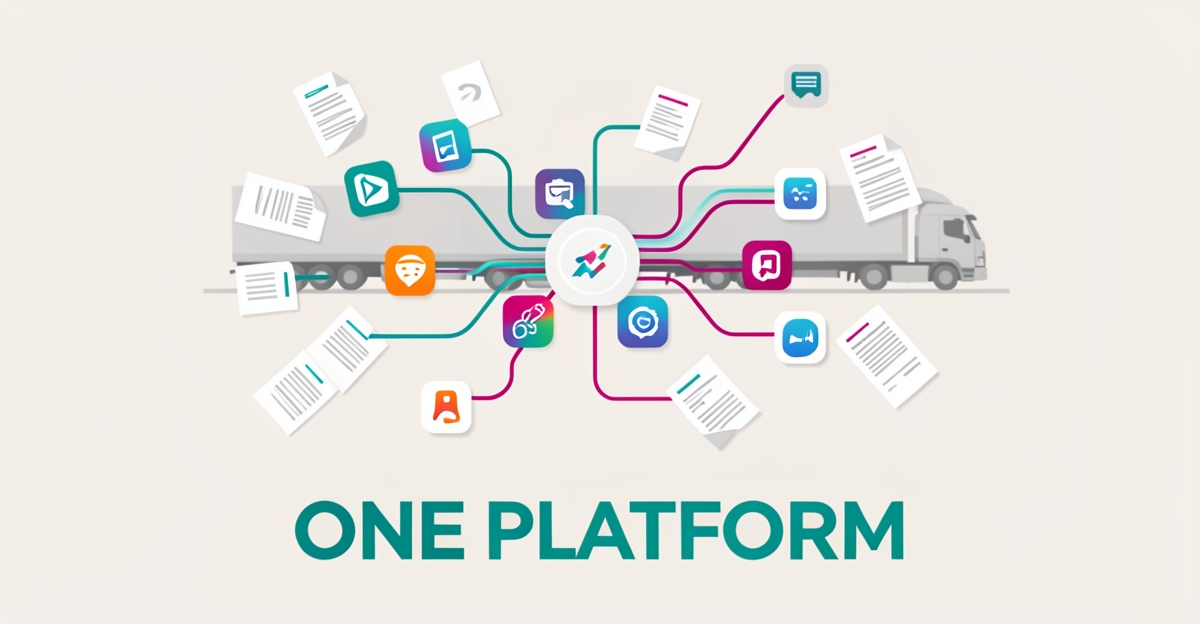
Most fleet operators don't set out to build a fragmented tech stack — it happens one subscription at a time. A CRM for leads, a billing platform for invoices, a booking tool for appointments, a separate system for maintenance tracking, and something else entirely for client communication. Before long, you're toggling between five or six applications that don't talk to each other, manually copying data from one to the next, and wondering why work orders fall through the cracks.
The market data confirms this isn't an isolated problem. The fleet management software market is expanding from $24.04 billion in 2024 to a projected $53.16 billion by 2029, driven largely by operators trying to solve the very fragmentation they've inherited according to industry research. Meanwhile, the broader smart fleet management market is on track to reach USD 798.5 billion by 2032 per market analysis. The growth isn't just about more software — it's about the desperate need for software that actually works together.
- Data silos that prevent a single view of each client and vehicle
- Manual handoffs between sales, operations, and billing that introduce errors and delays
- Missed follow-ups because leads land in one system while work orders live in another
- Inability to track the full customer lifecycle from first inquiry to repeat service
- Wasted hours each week reconciling information across disconnected platforms
Pitstop, a fleet-focused work order platform, notes that their clients typically juggle 5-6 different apps for CRM, billing, booking, and operations before consolidating as reported by fleet operators. One customer reported saving 20 hours per week just by automating the data passing between telematics and maintenance systems per documented case studies. That's half a workweek recovered from administrative drag.
The industry is responding. Multi-vendor fleet platforms — systems designed to unify operations across different hardware and software ecosystems — are the fastest-growing segment at 20.9% CAGR according to market forecasts. The shift isn't toward more tools; it's toward fewer, better-integrated ones.
AI Business Sites was built on this same principle: a custom website that includes CRM, automated work order generation, client communication (chat, voice, email), project tracking, and approval portals — all in one system that you own. When the website captures a lead, it can instantly create a work order, notify the right person, and start the follow-up sequence without anyone copying data between apps. The fragmentation isn't inevitable. It's a choice — and increasingly, an expensive one.
The All-in-One Solution: Key Features Backed by Research
Fleet operators today juggle five or six separate apps just to handle CRM, billing, booking, and maintenance tracking — a fragmented stack that creates data silos and manual handoffs. The market is converging on unified, AI-enabled platforms that combine work order management, client communication, predictive maintenance, and business automation in a single system. According to industry research, the fleet management software market is projected to reach $53.16 billion by 2029, growing at 17.1% annually as e-commerce expansion and regulatory pressures accelerate adoption.
- AI-driven predictive maintenance that analyzes telematics and historical data to auto-generate work orders 14–30 days before failures — reducing breakdowns by 70% and cutting maintenance costs by 25%
- Integrated CRM with two-way communication (chat, voice, email) so every client interaction lands in one place and nothing falls through the cracks
- Vendor-agnostic integration with existing telematics, ERP, and CMMS systems — unified data flows without hardware replacement
- Human-in-the-loop AI safety controls for client-facing communications, with configurable approval thresholds
- Real-time analytics with historical data visibility, replacing spreadsheets and reactive reporting
Research from Deloitte confirms that predictive maintenance increases productivity by 25% while Penske's 2025 survey found 40% of AI-using fleets reported at least 50% improvement in fuel savings, operational expenditures, and route efficiency. AI Business Sites builds custom websites with this consolidated approach — one platform that replaces the typical 8–10 separate subscriptions (CRM, automation, scheduling, analytics, project management, and more) with a single system where the AI assistant handles work order generation, client follow-ups, approval workflows, and predictive alerts through natural conversation. The result: fewer tools to manage, faster response times, and a website that actively runs fleet operations instead of just representing them.
Implementing the Solution: Practical Steps for Fleet Operators
Managing fleet work orders and client communication efficiently is crucial for business growth. As the fleet management software market expands, expected to reach $53.16 billion by 2029 with a 17.1% CAGR source, fleet operators must adapt. Here are practical steps to select and implement an all-in-one fleet management website:
Select a platform that integrates lead capture, CRM, automated work order generation, client communication (chat, voice, email), billing, and project tracking. This eliminates the need for 5-6 separate tools, reducing data silos and manual handoffs. For example, a platform like AI Business Sites can consolidate these functions, streamlining operations and reducing the complexity of managing multiple subscriptions.
Choose a platform with built-in AI that analyzes telematics and historical maintenance data to predict failures 14-30 days in advance with 89-90%+ accuracy source, reducing breakdowns by 70% and maintenance costs by 25%. Verify the vendor's predictive accuracy benchmarks and relevant ROI case studies.
Verify the platform offers pre-built connectors or open APIs for your current telematics provider, ERP, and maintenance systems. This ensures vendor-agnostic data ingestion, avoiding hardware replacement. For instance, integrating with existing telematics systems can automate data flow, as seen with Pitstop clients who save hours weekly by automating data passing between systems source.
Select a platform where AI-generated client communications (work order updates, approvals, invoices) require explicit approval or operate within configurable confidence thresholds. This ensures trust in automated client communication.
Compare the all-in-one platform cost against your current spend on separate tools, factoring in integration maintenance, training overhead, and revenue leakage from missed leads. Entry-level cloud AI platforms start at $15-35 per vehicle/month source, but consolidated solutions often provide better long-term value.
- Data Ownership: Ensure you own your data, avoiding lock-in. AI Business Sites, for example, grants full ownership of code, content, and data.
- Scalability: Choose a platform that grows with your fleet, supporting multi-vendor equipment.
- User Adoption: Prioritize intuitive interfaces to minimize training and maximize adoption.
By following these steps, fleet operators can effectively implement an all-in-one fleet management website, enhancing operational efficiency, reducing costs, and improving client satisfaction. As seen with UPS's ORION AI system, which saves over 100 million miles driven annually and 10 million gallons of fuel source, the right platform can drive significant operational improvements. AI Business Sites, with its integrated CRM, AI assistant, and project management, can help fleet operators streamline their workflow and focus on growth.
Local business: doing this the old way?
One system replaces the whole pile.
All of it — the website, the follow-up, the content, the leads — built and run for you for $1,497 + $497/mo. Month-to-month, and you own everything.
See what your build includesOvercoming Adoption Barriers with the Right Platform
Overcoming Adoption Barriers with the Right Platform
Adopting an all-in-one website to manage fleet work orders and client communication can be daunting, with common barriers including cost, complexity, and security concerns. However, the right platform can mitigate these challenges while offering control, transparency, and scalability.
Cost: Consolidation Over Fragmentation The total cost of ownership for fragmented tool stacks (5-6 separate apps for CRM, billing, booking, etc.) often outweighs the investment in an all-in-one platform. For instance, entry-level cloud AI platforms start at $15-35 per vehicle/month, but consolidating tools can reduce overall spend. A single platform replaces the need for multiple subscriptions, integration maintenance, and training overheads, offering a more streamlined Total Cost of Ownership (TCO). According to market research, the fleet management software market is expected to grow from $24.04 billion in 2024 to $53.16 billion by 2029, driven by the consolidation of fragmented tools industry-wide.
Complexity: Intuitive Integration and AI Safety Fear of complexity can be alleviated with platforms offering pre-built connectors for existing telematics, ERP, and CMMS systems, ensuring seamless data flow without hardware replacement. Moreover, human-in-the-loop AI safety controls for client-facing communications (e.g., approval requirements for AI-generated updates) provide trust and oversight. For example, fleets using AI report a 70% reduction in breakdowns and 25% decrease in maintenance costs through predictive maintenance as seen in industry case studies.
Security and Transparency: Data Ownership and Visibility Secure platforms ensure full data ownership for the fleet operator, with transparent, real-time analytics offering insights into operations, finance, and client interactions. This visibility, coupled with vendor-agnostic integration, future-proofs the investment. The market emphasizes the importance of predictive maintenance driven by AI, which not only reduces costs but also increases productivity by 25% according to Deloitte research.
Key Solutions for Fleet Operators:
- Predictive Maintenance: AI-driven work order generation to prevent failures, with a proven 89-90%+ accuracy rate in predicting equipment failures cited in fleet management studies.
- Unified Platform: Consolidates CRM, billing, booking, and work order management to reduce data silos and manual handoffs.
- Flexible AI Controls: Human oversight for client communications to ensure trust and accuracy in automated updates and approvals.
By addressing these barriers head-on, the right all-in-one website platform not only streamlines fleet operations but also positions businesses for scalable, data-driven growth in a rapidly evolving market. As the fleet management market converges on integrated, cloud-based solutions driven by e-commerce and digitization, adopting the right platform is crucial for staying competitive.
Future-Proofing Your Fleet with the Latest Trends
The fleet management landscape is shifting fast — operators who still rely on calendar-based maintenance and disconnected apps are already falling behind on every measurable KPI. The market is converging on unified, AI-enabled platforms that combine work orders, client communication, predictive analytics, and business automation in a single system, with multi-vendor fleet platforms growing at 20.9% CAGR through 2032. An integrated website built on this architecture doesn't just solve today's fragmentation — it positions your operation to absorb whatever comes next without another rip-and-replace cycle.
AI-driven predictive maintenance has moved from experimental to baseline. Deloitte research shows it reduces breakdowns by 70%, cuts maintenance costs by 25%, and predicts failures 14–30 days in advance with 89–90% accuracy. UPS reports its ORION AI system saves over 100 million miles and 10 million gallons of fuel annually. When your website ingests telematics data and auto-generates work orders before assets fail, you're not chasing breakdowns — you're running a proactive operation that clients trust.
The next wave is already visible: multi-vendor robotic fleets, advanced AI analytics that turn raw sensor data into routing and utilization decisions, and client-facing portals where approvals, signatures, and status updates happen without a single phone tag. Fleets using AI report 200–500% annual ROI through combined savings, and 40% of AI-adopting fleets saw at least 50% improvement in fuel savings, OpEx, and route efficiency.
An integrated website future-proofs your fleet by consolidating what used to require 5–6 separate tools:
- Automated work order generation from every lead source — web, voice, email, referral
- AI that drafts client updates, approval requests, and invoices for your review before sending
- Predictive maintenance alerts that create jobs before breakdowns occur
- Real-time analytics with historical visibility so you spot trends, not just today's numbers
- Vendor-agnostic data ingestion so you're never locked into one telematics ecosystem
AI Business Sites builds custom websites that run on this exact architecture — your website becomes the operational hub where leads turn into work orders, AI handles the follow-up, and every client interaction lives in one searchable timeline. The platform replaces the fragmented stack most fleets cobble together, and because you own the code and data, you're not renting your operation from a vendor who can change terms or sunset features. The fleets winning the next decade won't have the most trucks — they'll have the system that turns every signal into action before the competition even sees it.
Frequently Asked Questions
How many different apps does the average fleet operator currently juggle for CRM, billing, booking, and maintenance tracking?
What kind of ROI can we expect from switching to an AI-driven predictive maintenance system?
Will an all-in-one platform actually work with our existing telematics and ERP systems, or do we have to replace our hardware?
Is it safe to let AI handle client-facing communications like work order updates and approval requests?
How does the cost of an all-in-one fleet management website compare to maintaining our current stack of separate tools?
What happens to our data if we decide to switch platforms later — do we own it or does the vendor?
Key Takeaways
{ "title": "From Fragmented Tools to One System That Works", "content": "The math is straightforward: fleet operators running on five or six disconnected apps are losing hours every week to manual data entry, missed follow-ups, and work orders that fall through the cracks. The market has already
FOR local businesss — BUILT AND RUN BY US
Your website. Your content. Your leads. Your data.
$500 starts your build. Seven days later it's live — chat, booking, follow-up, and your Google presence all set up. Then we run it, every month. You do the work you actually get paid for.