
Key facts
- A custom website with 85+ pages can launch in just 7 days, according to industry analysis.
- Custom websites reduce long-term costs by avoiding expensive migrations and structural modifications, unlike template sites that often require rebuilds as businesses scale, research shows.
- Custom sites are planned from the outset to support content expansion and campaign-specific landing pages, while templates offer only basic SEO with constrained URL structures, according to digital agency insights.
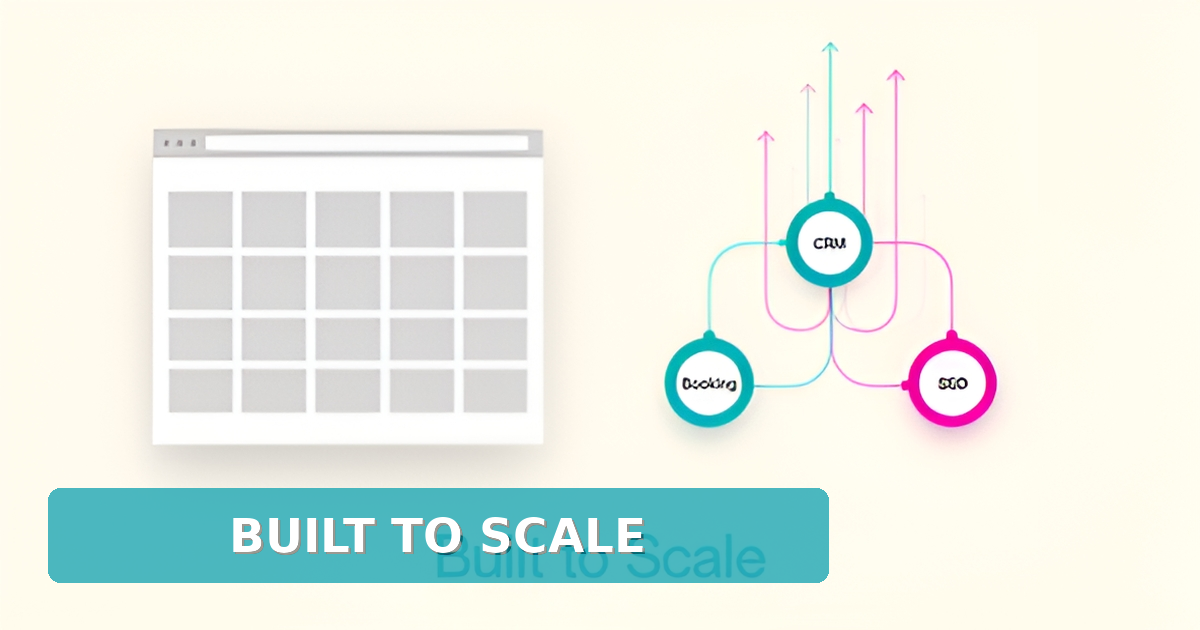
- Custom websites enable direct integration with business systems like CRM and booking platforms, transforming the site into an active operational tool, per industry research.
- Custom websites strengthen professional credibility and customer trust by signaling investment in the business, particularly influential in competitive industries, expert analysis notes.
- AI Business Sites delivers custom builds with 85+ pages live at launch and 14+ new SEO pieces per month, including 25–30 hand-crafted core pages with individual schema markup.
- Designhill reports over 3 million satisfied clients and 5 million designs created, reflecting strong demand for tailored digital presence, according to platform metrics.
WANT RESULTS LIKE THIS?
Imagine a system doing all of this for your local business — every day, without you.
We build local businesses a custom website with a team of AI behind it: every lead captured and followed up, new content published monthly,customers finding you on Google — live in 7 days.
- 85+ pages at launch
- Every lead followed up, automatically
- Your whole business on one screen
The Real Cost of a Template Website That Can't Grow With You
A template website looks cheap on the first invoice and expensive on the fifth year. The upfront price hides structural limits that force a rebuild just as you’re ready to grow.
Template sites follow predefined structures that limit customization and scalability. That structural difference makes it hard to integrate new services, markets, and systems without major rework, whereas custom sites are designed around specific business processes and customer journeys digital agency analysis. As businesses expand, template flexibility constraints become apparent over time, turning what felt like savings into a growth bottleneck custom vs template growth research.
The first hidden cost is migration. Template sites often require significant rework when expanding, and custom websites reduce long-term costs by avoiding expensive migrations and structural modifications ready-made versus custom comparison. SEO architecture is also locked in. Custom websites are planned from the outset to support content expansion and campaign-specific landing pages, while template sites provide only basic SEO support with URL and category structures constrained by themes SEO architecture insights.
Integration is where templates force workarounds. Custom sites enable direct integration with business systems like CRM, sales dashboards, and booking platforms, turning the website into an active operational tool operational integration analysis. Template sites typically rely on plugins and third-party tools for such connections, creating fragile stacks that break on updates.
When you add services or locations, the limits show up fast:
- Service pages must fit a preset layout instead of matching how your customers decide
- Location expansion requires duplicate template pages with thin, repetitive content
- CRM, booking, and invoicing integrations become plugin chains rather than native workflows
- Brand differentiation erodes because the design signals a generic template, not investment in the business
Brand differentiation matters because custom websites strengthen professional credibility and customer trust by signaling investment, which is particularly influential in competitive industries brand trust research. Polished, modern websites signal trustworthiness, and customers often judge professionalism by digital presence expert opinion on website credibility.
The industry scale of this problem is visible in market activity. Designhill reports 3M+ satisfied clients and 5M+ designs created, reflecting demand for tailored digital presence design platform metrics. Pixelcarve notes approximately 2 million people experience their websites annually, underscoring how custom builds are used to showcase unique brands and drive action agency traffic data.
AI Business Sites approaches this by building custom from day one, with 85+ pages live at launch and ongoing content generation that grows with new services and locations without a rebuild. The site is built as a strategic business asset, not a brochure, so adding offerings stays an update, not a migration.
Why Custom Websites Function as Business Systems, Not Digital Brochures
Most small business websites sit online like digital brochures—displaying services, listing contact information, and hoping someone calls. But the most effective websites don't just present information; they actively capture leads, manage customer relationships, and trigger follow-up sequences that turn visitors into revenue.
The difference lies in integration depth. According to industry research, custom websites function as digital business platforms that connect marketing, sales, and internal data management within a single system. Template sites, by contrast, typically rely on third-party plugins and external tools to approximate this connectivity—creating friction where data should flow seamlessly.
When a website integrates directly with your CRM, booking platform, and operational tools, it transforms from a static marketing asset into an active business system. Analysis of custom versus template approaches shows that custom sites are designed around how specific customers make decisions, turning visitors into leads through intentional user-centered design rather than generic contact forms.
This operational integration delivers concrete capabilities:
- Lead capture that feeds directly into your CRM with source tracking and instant automated responses
- Booking systems that sync with your calendar and trigger confirmation sequences without manual intervention
- Customer data that flows between marketing, sales, and service delivery without export-import cycles
- Automated follow-up sequences that activate based on specific visitor behaviors or form submissions
The website becomes the business system, not just its digital storefront. This shift matters because template architectures often require significant rework to achieve similar integration depth, according to comparative analysis. Custom builds accommodate these connections from the foundation up, allowing new tools and workflows to integrate without structural modifications.
Businesses using custom platforms report that this connectivity supports long-term growth without the migration costs that plague template users. As one industry analysis notes, custom websites generate returns through better conversion rates and operational efficiency—essentially paying for themselves continuously rather than requiring expensive rebuilds as you scale.
At AI Business Sites, this systems approach defines our custom AI build methodology. Rather than handing you a template with plugin recommendations, we architect the entire platform—CRM, booking, content management, and automation—as one integrated system from day one. The result isn't a website that describes your business; it's a business tool that actively runs critical workflows while you focus on service delivery.
How Custom Builds Support SEO and Brand Authority in Competitive Markets
In competitive markets, customers decide credibility in seconds, and a website that looks interchangeable costs more than it saves. Custom builds are designed as strategic business assets around specific processes and customer journeys, while template sites follow predefined structures that limit customization and scalability.
That structural difference shows up first in SEO architecture. Custom websites are planned from the outset to support content expansion and campaign-specific landing pages, while template sites provide only basic SEO support with URL and category structures constrained by themes. According to industry research, custom development enables flexible URL structures and schema markup that templates can't match, allowing planned growth without major rebuilds.
Operational integration is the second advantage. Custom sites enable direct integration with business systems like CRM, booking platforms, and sales dashboards, transforming the website into an active operational tool. Digital Agency Bangkok positions custom websites as digital business platforms that connect marketing, sales, and internal data management within a single platform, rather than relying on plugins and third-party tools.
Brand authority is where the gap becomes visible to prospects. In competitive industries where purchasing decisions are affected by digital presence, a polished, modern website signals trustworthiness. Expert analysis notes that custom websites strengthen professional credibility and customer trust by signaling investment in the business, particularly influential when customers judge professionalism by digital presence.
Template sites create a differentiation trap. When competitors use the same themes, the ability to stand out disappears. Custom development reflects business identity through structure, tone, and visuals — not just colors and fonts — and is built to tell the business's story in the owner's preferred way. Growth-focused guidance emphasizes that custom sites are designed around how specific customers make decisions, improving conversions by turning visitors into leads through intentional user-centered design.
Custom architecture also controls long-term cost. Despite higher initial investment, custom websites reduce expenses related to migrations, theme changes, and structural modifications. Research on ready-made vs custom finds template sites may incur higher long-term costs when scaling due to these limitations.
For small businesses that need to scale without re-platforming, the build matters. AI Business Sites delivers that approach with a done-for-you custom AI-powered platform. The offering launches with 85+ pages live at launch, including 25–30 hand-crafted core pages with individual schema markup and 60 AI-generated SEO pages for services, locations, and comparisons.
The SEO advantages of a custom build include:
- Planned content expansion with flexible URL structures that support new services and markets
- Flexible schema markup on every core service page for richer search results
- Direct system integration with CRM, booking, and content engine without plugin dependency
In markets where trust is the differentiator, a website that looks custom signals professionalism and builds authority templates cannot replicate.
Local business: doing this the old way?
One system replaces the whole pile.
All of it — the website, the follow-up, the content, the leads — built and run for you for $1,497 + $497/mo. Month-to-month, and you own everything.
See what your build includesThe Long-Term ROI: Why Custom Pays for Itself While Templates Cost More Over Time
The Long-Term ROI conversation around websites often starts with upfront cost, but the real story unfolds over time. Custom websites demand a higher initial investment, yet they consistently outperform templates when measuring total cost of ownership and business impact. This isn’t just about avoiding future headaches—it’s about building an asset that actively contributes to growth.
Template sites may launch quickly and cheaply, but they accumulate hidden expenses as businesses evolve. Each time you need a new feature, integration, or structural change, templates often require costly workarounds, plugin subscriptions, or full rebuilds. Research confirms that template sites frequently incur higher long-term costs due to migrations and structural modifications needed when scaling, while custom architectures are designed to absorb growth without major rework. Industry analysis shows that custom development reduces long-term expenses by eliminating the need for expensive theme changes and platform migrations as service offerings or geographic reach expand.
Beyond cost avoidance, custom sites generate returns through superior performance in areas that directly impact revenue. Their tailored SEO architecture supports content expansion and campaign-specific landing pages from day one—something template themes constrain with rigid URL and category structures. This foundation enables better search visibility over time, driving more qualified traffic without constant reinvestment in technical fixes. Expert insights emphasize that custom websites are long-term investments that "pay for themselves—not just once, but continuously" through improved SEO visibility, higher conversion rates, and stronger customer trust.
The operational advantages compound these gains. Custom development allows direct integration with business systems like CRM, booking platforms, and sales dashboards—turning the website into an active tool rather than a passive brochure. Template sites typically rely on fragmented plugins for such connections, creating maintenance overhead and compatibility risks. When your site seamlessly captures leads, schedules jobs, and follows up automatically—as included in the AI Business Sites platform—you reduce manual work and improve response speed, directly boosting conversion efficiency. This transforms the website from a cost center into a growth engine that delivers measurable ROI month after month.
What to Look for When Choosing a Custom Website Partner
Choosing a custom website partner is a business decision, not a design preference. The right team will protect your assets, grow with you, and keep the system running without forcing you to become a technical operator.
Ownership of code and content should be non-negotiable. Custom websites are strategic business assets designed around specific processes and customer journeys, while template sites follow predefined structures that limit customization and scalability according to industry analysis. A partner should deliver full ownership of code, content, data, domain, and media so you can leave with everything. AI Business Sites builds with this as a core selling point, pushing the complete React/Next.js site to your GitHub and exporting the database on request.
Scalability without rebuilds separates a true custom build from a dressed-up template. Custom sites are planned from the outset to support content expansion and campaign-specific landing pages, while template sites provide only basic SEO support with URL structures constrained by themes as noted in web development research. That architecture lets you add services, locations, and integrations later without major rework. Template sites often require significant rework when expanding, which drives hidden long-term costs.
Integrated business tools turn a website into an operating system. Custom sites enable direct integration with business systems like CRM, sales dashboards, and advertising platforms, transforming the site into an active operational tool per digital agency guidance. Look for a partner who bakes in lead capture, CRM, booking, payments, and automations from day one rather than relying on plugins.
Ongoing support and content are where growth actually happens. Templates offer speed and affordability for short-term needs, but they become limiting factors as businesses grow according to growth-focused analysis. A done-for-you partner should manage hosting, maintenance, and continuous publishing. For example, AI Business Sites delivers 85+ pages live at launch and 14+ new SEO pieces per month as part of managed care.
Transparent pricing protects you from per-seat fees and surprise add-ons. Evaluate partners on clear setup and monthly fees, month-to-month terms, and what is included in the base price.
- Code and content ownership with domain in your name and full exportability
- Scalable architecture that adds services and locations without rebuilds
- Built-in CRM, booking, payments, and automations, not plugin stacks
- Ongoing content engine and technical management included monthly
- Transparent, flat pricing with no long-term contract lock-in
A partner that meets these criteria delivers a custom build with 85+ pages in 7 days, $497/month managed care, and full ownership, which mirrors the done-for-you standard AI Business Sites uses for small business growth and support.
Frequently Asked Questions
Will a template website cost me more later when I want to grow?
Can I get good SEO from a template site or do I need custom?
Can a template site connect directly to my CRM and booking system?
Do customers actually trust custom websites more than templates?
Is a custom site really better for adding new services or locations?
What’s the main downside of sticking with a template as a small business?
Your Website Should Work As Hard As You Do
As we've seen, template websites may seem like a quick fix, but they often become costly roadblocks when it's time to grow—limiting scalability, forcing expensive rebuilds, and weakening your brand's ability to stand out. Custom websites, by contrast, are built as living business systems: they integrate with your CRM, booking tools, and automations from day one, support SEO-friendly content expansion, and signal professional investment that builds trust in competitive markets. The real value isn't just in what the site looks like, but in how it actively works for you—capturing leads, managing jobs, and generating content without constant manual effort. If you're ready to move beyond a digital brochure and toward a website that truly runs part of your business, the next step is simple. Book a free strategy call to see how a custom AI-powered build could fit your goals—no obligation, just a clear conversation about what's possible for your growth.
FOR local businesss — BUILT AND RUN BY US
Your website. Your content. Your leads. Your data.
$500 starts your build. Seven days later it's live — chat, booking, follow-up, and your Google presence all set up. Then we run it, every month. You do the work you actually get paid for.