
Key facts
- Over 55% of service-oriented businesses now rely on online booking systems to improve workflow and customer accessibility according to market data
- More than 60% of users favor booking systems offering real-time updates and self-service options per market research
- Nearly 48% of businesses prioritize integration with payment systems and CRM tools when selecting booking software in the same report
- The online booking software market is projected to reach $320.3 billion by 2030 with a 21% CAGR from 2025 to 2030 according to industry research
- Over 52% of new implementations now use cloud-based platforms for remote access and real-time syncing in new market analysis
- AI Business Sites delivers a complete booking system live in 7 days from kickoff with 85+ pages including booking functionality from the platform documentation
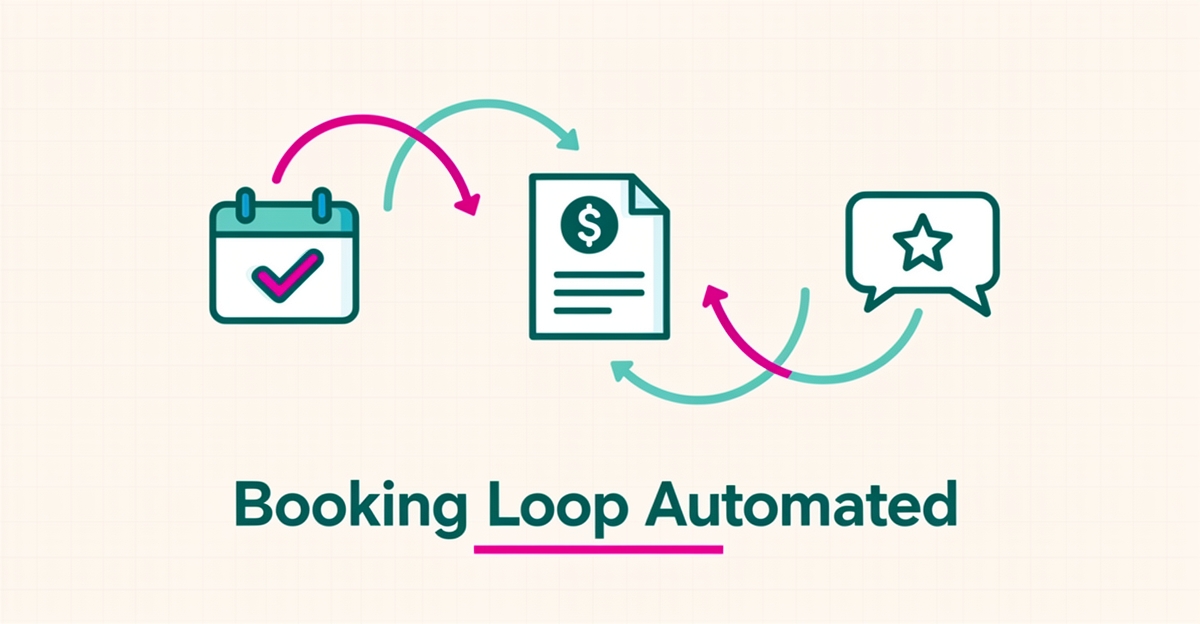
- The Jobs & Estimates module executes the Quote → Job → Schedule → Invoice → Payment → Review request loop included in the $497/month managed service per the AI Business Sites master brief
WANT RESULTS LIKE THIS?
Imagine a system doing all of this for your local business — every day, without you.
We build local businesses a custom website with a team of AI behind it: every lead captured and followed up, new content published monthly,customers finding you on Google — live in 7 days.
- 85+ pages at launch
- Every lead followed up, automatically
- Your whole business on one screen
Why Most Booking Systems Fail Small Businesses
Despite the surge in online booking adoption—over 55% of service-oriented businesses now rely on these systems—many small businesses still struggle with generic tools that fail to address their core operational needs. Market research confirms that while adoption is widespread, persistent gaps in integration and usability continue to undermine effectiveness. The issue isn't lack of access to booking technology, but rather a mismatch between what off-the-shelf platforms offer and what service businesses actually require to run smoothly.
Most generic booking tools treat scheduling as an isolated function, ignoring the full service delivery cycle that tradespeople, contractors, and local providers depend on. These systems often lack real-time availability syncing across teams, fail to integrate payments directly into the booking flow, and omit critical automation like quote-to-invoice generation or post-service review requests. As a result, owners end up manually bridging gaps between disconnected tools—copying quotes into invoices, chasing payments separately, and begging customers for reviews—turning what should be a streamlined process into administrative overhead.
What service businesses truly need is a closed-loop system where every step flows into the next: a customer inquiry triggers an AI-drafted quote, online approval converts it into a scheduled job, completed work auto-generates an invoice with one-click payment, and payment triggers a review request—all without manual intervention. Over 60% of users favor systems with real-time updates and self-service options, yet few basic booking platforms deliver this level of seamless automation. Meanwhile, nearly 48% of businesses prioritize integration with payment systems and CRM tools when selecting software—capabilities frequently absent in low-cost or DIY booking solutions.
This disconnect explains why so many small businesses invest in booking software only to abandon it or layer on additional subscriptions just to achieve basic functionality. The market may be growing—projected to reach $320.3 billion by 2030—but value isn't just in having a booking button on a website. It's in having a system that works like an extension of the business itself: anticipating needs, reducing friction, and turning every booking into a completed job, paid invoice, and verified review. Until generic tools evolve beyond basic calendars, this gap will continue to leave service businesses paying for software that doesn’t truly work for them.
The Modern Booking Stack: What Research Shows Works
The online booking market is projected to reach $320.3 billion by 2030 with a 21% CAGR, driven by demand for systems that work where users already are. Over 55% of service-oriented businesses now rely on online booking, with more than 60% prioritizing real-time self-service options and nearly 48% requiring seamless integration with payment, CRM, and calendar tools. These trends define what a modern booking stack must deliver to stay competitive.
The essential components reflect these user and market shifts: cloud-based infrastructure for remote access and real-time syncing, mobile-first design to capture on-the-go bookings, and AI-driven conversational interfaces that let customers schedule through natural language—like texting or voice—without navigating complex forms. Native integrations with Stripe for payments, CRM systems for lead tracking, and calendar apps for scheduling eliminate manual data entry and reduce no-shows. Automated follow-up loops—such as confirmation reminders, post-service review requests, and re-engagement messages—turn one-time bookings into ongoing relationships.
For service businesses, AI Business Sites builds this stack directly into its platform, combining booking with quotes, jobs, invoicing, and review requests in an automated loop. The system goes live in 7 days, owned entirely by the client, and managed continuously—so the booking engine runs without constant oversight, letting owners focus on delivering service instead of managing software.
Three Ways to Build — And Why Done-For-You Wins for Service Businesses
Building a booking system can stall a service business for months if you pick the wrong path. The market is growing fast, with the reservation and online booking software market valued at $119.76 billion in 2025 and projected to reach $320.3 billion by 2030 according to industry research, yet how you build matters more than how fast the market moves.
DIY development gives you full control but creates long-term drag. You own the code, but you also own hosting, security, API maintenance, and every integration with payments, CRM, and calendar. Setup time stretches from weeks to quarters, and technical debt accrues every time a payment provider updates or a browser changes. Over 52% of new implementations now use cloud-based platforms in new market analysis because self-hosted stacks are hard to keep current.
No-code AI builders lower the barrier. Taskade Genesis enables users to create a booking system through a single natural language prompt, eliminating the need for coding or manual setup on the Taskade platform. These tools combine AI agents and automations in a unified workspace, allowing booking systems to be built, deployed, and managed as living apps with persistent memory and real-time updates. You can add Stripe payments and automated reminders quickly, but ownership is limited to the workspace, and the quote→job→schedule→invoice→review loop rarely exists out of the box.
A fully managed platform closes the loop. AI Business Sites builds and runs the entire AI-powered business presence, with booking functionality included in the managed subscription. The Jobs & Estimates module executes the operational loop every service business runs: Quote → Job → Schedule → Invoice → Payment → Review request. More than 60% of users favor systems offering real-time updates and self-service options per market research, and integration with essential tools is a top priority for nearly 48% of businesses in the same report.
The three approaches compare on the factors owners care about:
- Setup time: DIY = months; no-code AI = days to weeks; done-for-you = live in 7 days
- Technical debt: DIY = you maintain it; no-code = vendor-dependent; managed = team runs it
- Ownership: DIY = full code ownership; no-code = workspace lock-in; managed = you own code, content, data, domain
- End-to-end loop: DIY = build each piece; no-code = assemble; managed = quote to review automated
Over 55% of service-oriented businesses now rely on online booking systems to improve workflow and customer accessibility according to market data. For owners who quote and schedule work for a living, the difference is not just a calendar. It is whether the system drafts the quote from a call transcript, turns approval into a scheduled job, collects payment, and requests a review without manual handoffs. That integrated flow is why done-for-you wins for service businesses that need to run, not build.
Local business: doing this the old way?
One system replaces the whole pile.
All of it — the website, the follow-up, the content, the leads — built and run for you for $1,497 + $497/mo. Month-to-month, and you own everything.
See what your build includesHow AI Business Sites Automates the Full Booking Lifecycle
Service businesses can’t afford a booking loop that leaks leads at every handoff. The market is moving fast, and owners need a system that captures, schedules, and closes work without adding another dashboard to babysit.
The online booking software market was valued at $119.76 billion in 2025 and is projected to reach $320.3 billion by 2030, representing a CAGR of 21% from 2025 to 2030. Industry research shows demand is driven by digital transformation and the need for real-time, self-service experiences. Over 55% of service-oriented businesses now rely on online booking systems to improve workflow and customer accessibility. Market analysis also finds more than 60% of users favor systems offering real-time updates and self-service options.
That pressure for seamless integration is real. Nearly 48% of businesses consider integration with payment systems, CRM platforms, and communication channels a top priority when selecting booking software. Research on adoption drivers confirms cloud-based deployments dominate new implementations, with over 52% leveraging cloud infrastructure for remote access and real-time syncing.
AI Business Sites automates the full booking lifecycle inside a done-for-you AI business operating system, live in 7 days with full data ownership. The Jobs & Estimates module is included in the $497/month managed service and closes the quote-to-review loop without per-seat fees.
The automation works as a continuous flow:
- AI-drafted quotes from call transcripts or chat threads, with line items, tax and valid-until date, owner approval from a phone
- One-tap client approval with e-signature on a public mobile-first page, viewed tracking and live total updates
- Auto-job creation on the Jobs board and calendar, with drag-drop visits, tech color-coding and My Day view
- Stripe-powered invoicing with public pay page, tips and automated day-3/7/14 reminders
- AI-drafted review requests after completion or payment, owner approval then Google review link delivery
Approval creates the job automatically and inherits project features like checklists, photos, time tracking and client portal access. Scheduling is day/week calendar based with time windows and overbook protection. The tech’s My Day view surfaces Start, On My Way and Finish actions that trigger customer notifications.
Conversational ops tie it together. The AI assistant can answer “what’s on today?”, “has Sarah viewed the quote?” or “draft a quote for yesterday’s call” and move jobs between dates. Invoices pre-fill from the quote or job and collect via the client’s own Stripe account, so money flows directly to the owner.
Because the team manages setup, monitoring and improvement, the business owner gets a working AI team operating the business behind it without touching technical tools. The site, booking, CRM, content engine and automations are run for them, with code, content, leads and domain owned by the client.
Implementation Checklist: From Decision to Live Bookings
Implementation Checklist: From Decision to Live Bookings
Creating a functional booking system requires careful planning and execution to ensure it meets both business needs and customer expectations. According to market research, over 55% of service-oriented businesses now rely on online booking systems to improve workflow and customer accessibility, with more than 60% of users favoring systems offering real-time updates and self-service options. The process begins with clearly defining your service types and pricing structure, as this foundation determines how your booking calendar will operate and what information customers need to provide when scheduling.
Next, evaluate whether to build, buy, or opt for a managed solution like AI Business Sites, which delivers a complete booking system as part of its platform—live in 7 days from kickoff with 85+ pages including booking functionality. This approach eliminates the technical burden of hosting, maintenance, and ongoing updates while ensuring seamless integration with payment processing and CRM tools, a priority for nearly 48% of businesses selecting booking software. Once your foundation is set, configure availability rules, payment requirements, and cancellation policies to align with your operational workflow and protect revenue.
Connect your booking system to CRM and review automation to close the customer journey loop—automatically capturing leads, tracking interactions, and triggering post-service feedback requests. Finally, launch with test bookings to validate the end-to-end experience before going live, ensuring payments process correctly, calendars update in real time, and automated communications fire as intended. For businesses seeking a faster path, AI Business Sites offers a 7-day done-for-you deployment that handles setup, configuration, and integration, allowing you to focus on serving customers rather than managing technology.
Frequently Asked Questions
How long does it take to get a booking system live with AI Business Sites?
What makes AI Business Sites different from DIY or no-code booking builders?
Do I need to integrate Stripe or CRM tools separately with AI Business Sites?
What percentage of service businesses prioritize real-time updates and self-service booking options?
Can I own my website and data if I use AI Business Sites?
Is the Jobs & Estimates module for quotes, invoicing, and review requests included in the base price?
Turn Bookings into Business, Not Busywork
Creating a booking system that truly works for your service business means moving beyond basic scheduling to a closed-loop flow where every step—from quote to review—happens automatically. As we’ve seen, generic tools often leave owners manually bridging gaps between disconnected systems, turning what should be streamlined into administrative overhead. The real value lies in a system that anticipates needs, reduces friction, and turns every booking into a completed job, paid invoice, and verified review—all without constant oversight. For businesses ready to stop managing software and start serving customers, AI Business Sites delivers this integrated loop as part of its done-for-you platform, live in 7 days with full ownership. If you're looking to replace manual handoffs with seamless automation, book a free strategy call to see how it works for your specific trade—no obligation, just a real conversation about what you need.
FOR local businesss — BUILT AND RUN BY US
Your website. Your content. Your leads. Your data.
$500 starts your build. Seven days later it's live — chat, booking, follow-up, and your Google presence all set up. Then we run it, every month. You do the work you actually get paid for.