
Key facts
- Nova Scotia's commercial solar market surged 82% in 2025, with 99 new installations according to ConstructConnect.
- Solar represents only ~1% of Nova Scotia Power's energy mix, despite renewables reaching 42% overall as reported by The Globe and Mail.
- Residential solar capacity (~110 MW) dwarfs commercial capacity at a 6:1 ratio per ConstructConnect.
- Solar panel efficiency drops ~0.5% per 1°C temperature rise, validated in a Nature study.
- AI-enhanced solar systems achieve 41.4% higher annual energy yield than conventional setups as found in Nature.
- Nova Scotia's solar market lacks public studies correlating weather patterns with search demand, highlighting a significant intelligence gap.
WANT RESULTS LIKE THIS?
Imagine a system doing all of this for your local business — every day, without you.
We build local businesses a custom website with a team of AI behind it: every lead captured and followed up, new content published monthly,customers finding you on Google — live in 7 days.
- 85+ pages at launch
- Every lead followed up, automatically
- Your whole business on one screen
The Intelligence Gap: Solar Companies Are Flying Blind on Seasonal Search Demand
Nova Scotia's commercial solar market surged 82% in 2025 with 99 new installations, yet not a single public study connects the province's distinct weather patterns to when homeowners and businesses actually search for solar solutions. That blind spot is costing installers visibility during the exact windows when demand spikes.
Solar represents only ~1% of Nova Scotia Power's energy mix despite renewables hitting 42% overall, and residential capacity (~110 MW) dwarfs commercial at a 6:1 ratio. Most installers are fighting for the same homeowner queries year-round, optimizing for generic "solar installation" keywords while ignoring the proven seasonal complementarity where solar dominates summer days and wind dominates winter nights. Search intent follows that same rhythm — but without weather-correlated keyword data, companies publish the same content in January as they do in July.
The intelligence gap shows up in three ways:
- Zero Nova Scotia-specific research correlates temperature, irradiance, or storm events with search volume spikes
- Local SEO guides recommend geo-tagged photos and GBP updates but offer no seasonal publishing calendar tied to production cycles
- Technical studies confirm panel efficiency drops ~0.5% per 1°C rise, yet no installer content strategy adapts to real-time climate conditions
AI Business Sites closes this gap by automatically updating location-specific pages with live climate data and seasonal energy tips — so a "Halifax Solar Production" page surfaces summer irradiance forecasts in June and winter storage strategies in November, without manual intervention. The platform's content engine publishes on a schedule aligned to Nova Scotia's actual production peaks, not a generic marketing calendar.
What the Data Actually Tells Us: Production Seasonality as a Proxy for Search Intent
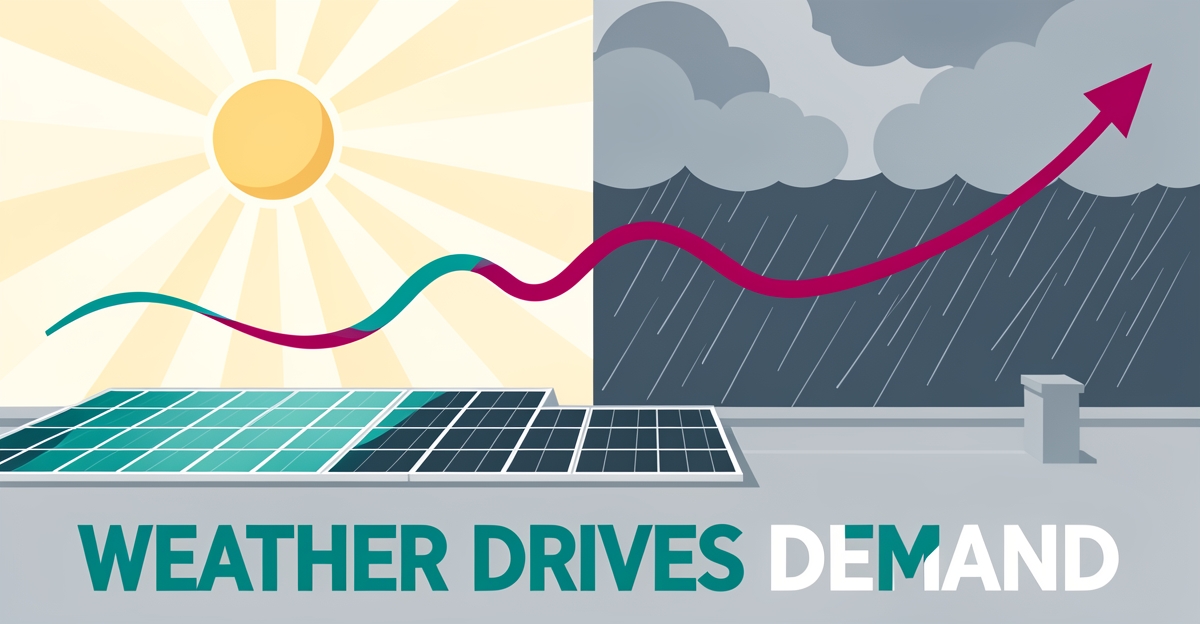
The disconnect between when solar panels produce the most energy and when customers actually search for them creates a visibility gap most installers never see coming. Solar output peaks in summer, but the buying journey starts months earlier — typically late winter through spring — as homeowners and businesses research before the high-production season arrives. Understanding this lag turns seasonal production data into a predictive search calendar.
Expert analysis confirms the core dynamic: "winds are typically stronger overnight and in the winter, while solar is obviously more productive during the day and in the summer." This complementarity means winter search intent often shifts toward hybrid solar-plus-storage or wind solutions, while spring queries focus on maximizing summer yield. Commercial buyers add another urgency layer — the 1 MW net-metering limit expansion (ten times the previous cap) and the 30% federal tax credit introduced in 2023 have compressed decision timelines for businesses evaluating 2025 installations.
Technical reality sharpens the content opportunity. Panel efficiency drops roughly 0.5% for every 1°C temperature rise, a figure validated in peer-reviewed research on silicon PV performance. That means a 30°C summer day can cut output by 10–15% versus rated capacity — a concern homeowners Google before they call. Pages addressing "summer performance in Halifax heat" or "temperature coefficient explained for Nova Scotia climates" capture that anxiety-driven search traffic before competitors do.
- Publish "Maximize Summer Production" location pages in March to intercept early research
- Launch "Winter Resilience with Solar + Storage" content by October for seasonal pivot
- Target commercial property owners with 1 MW net-metering and tax credit deadline guides
- Embed real-time temperature and irradiance data on service-area pages to demonstrate live relevance
AI Business Sites builds this seasonal intelligence directly into location and service pages, updating content automatically as climate conditions shift — so your site answers the questions customers are asking right now, not last season.
Local business: doing this the old way?
One system replaces the whole pile.
All of it — the website, the follow-up, the content, the leads — built and run for you for $1,497 + $497/mo. Month-to-month, and you own everything.
See what your build includesBuilding a Weather-Responsive Content Engine That Captures Demand in Real Time
Building a Weather-Responsive Content Engine That Captures Demand in Real Time
As Nova Scotia's solar market surges ahead with an 82% commercial capacity increase in 2025, driven by legislative changes and federal incentives, solar installers must align their online strategies with the region's distinct seasonal energy demands. By harnessing the capabilities of the AI Business Sites platform, solar companies can create a dynamic, weather-responsive content engine that captures demand in real time.
Seasonal Content Calendars: Aligning with Solar Production Peaks
Given solar's higher productivity during summer months, a strategic content calendar should focus on publishing educational content, case studies, and promotional pages between February and April. For example, "Maximizing Summer Solar Production in Halifax" pages, auto-generated by the AI content engine, can be live by March, capturing rising search intent before peak production seasons. Conversely, October should see the rollout of "Winter Energy Resilience with Solar + Storage" content, leveraging the platform's ability to auto-link new pages to relevant existing ones, such as policy updates on the new 1 MW net-metering limit.
Embedding Real-Time Climate Data for Location Pages
Utilizing the "Live Data Makes Your Location Pages Rock" feature, solar installers can embed real-time temperature and irradiance data on service-area pages. For instance, a page for Yarmouth could display current weather conditions alongside tailored energy usage tips, directly addressing how temperature affects panel efficiency (a ~0.5% drop per 1°C rise, as noted in a Nature study). This approach not only enhances user experience but also positions the website as a go-to resource for weather-informed solar solutions.
Automating Geo-Tagged Project Showcases for Local SEO
To dominate Local Pack rankings, the AI Business Sites platform can auto-generate geo-tagged project galleries and video testimonials for each completed installation. For example, a project in Dartmouth could be showcased with a video explaining how solar + storage solutions ensure winter resilience, a key differentiator given Nova Scotia's seasonal energy patterns. The AI assistant can manage recurring content schedules, ensuring a steady stream of fresh, location-specific content that boosts SEO authority.
Key Implementation Strategies:
- Seasonal Content Scheduling: February–April for summer-focused content, October for winter resilience pages.
- Real-Time Data Integration: Embed live weather data on location pages to offer timely energy tips.
- Auto-Generated Project Showcases: Enhance Local SEO with geo-tagged, AI-created content.
By executing this strategy, solar installers in Nova Scotia can ensure their website not only adapts to but anticipates the weather-driven demands of their market, setting a new standard for relevance and responsiveness in the region's burgeoning solar sector.
Differentiating with Hybrid Positioning Before the Market Shifts
As Nova Scotia’s energy landscape evolves with 150 MW of utility battery storage planned by 2026 and offshore wind potential reaching 40 GW, solar-only messaging faces a narrowing window of relevance. Installers who wait to adapt risk being outpaced by competitors who position solar+storage as the immediate solution for winter resilience — a narrative that aligns with seasonal search spikes during storm seasons. The research confirms solar and wind are complementary: winds are stronger overnight and in winter, while solar peaks during daytime and summer months, creating a clear opportunity to fill the seasonal gap with storage-enabled systems.
AI Business Sites enables solar companies to act now by turning every installation into a geo-tagged authority signal through AI-generated media. Without needing design tools, the platform creates professional explainer videos, seasonal campaign content, and testimonial videos that highlight how solar + battery storage powers homes through Nova Scotia’s winter storms. These assets automatically embed location-specific data, reinforcing local SEO while addressing the energy security intent that surges when extreme weather drives residents to search for reliable backup power.
By leveraging the platform’s AI content engine to publish location pages like “Winter Energy Resilience with Solar + Storage” in October — timed to precede peak storm-season search behavior — installers capture intent before the market shifts. Real-time climate data integration further strengthens relevance, showing how adaptive systems maintain efficiency despite temperature-related panel losses of ~0.5% per 1°C rise. This approach doesn’t just respond to trends; it uses automation to stay ahead of them, turning seasonal demand into a consistent lead pipeline.
Frequently Asked Questions
When do Nova Scotia homeowners actually search for solar — is it during summer when panels produce the most?
How much does heat actually hurt solar panel performance in Nova Scotia?
Is commercial solar growing faster than residential in Nova Scotia right now?
What's the real opportunity for solar installers during Nova Scotia's winter storm season?
Do I need different SEO content for each Nova Scotia community I serve?
How much of Nova Scotia's electricity actually comes from solar right now?
Key Takeaways
{ "title": "Weather the Peak: Aligning Solar Strategy with Nova Scotia's Shifting Skies", "content": "As Nova Scotia's solar market surges, companies must navigate the uncharted territory of weather-driven search trends to stay visible. Key takeaways reveal a critical intelligence gap: solar p
FOR local businesss — BUILT AND RUN BY US
Your website. Your content. Your leads. Your data.
$500 starts your build. Seven days later it's live — chat, booking, follow-up, and your Google presence all set up. Then we run it, every month. You do the work you actually get paid for.