
Key facts
- AI in crop monitoring market to grow at 14.8% CAGR to $1.921B by 2030 according to Knowledge Sourcing
- Precision agriculture with AI cuts water use by 35% and improves yield forecasts by ~30% as per the report
- Neural networks achieve 95% success rate in identifying crop diseases like apple scabs research shows
- India loses 30-33% of annual crops to pests, highlighting the need for AI monitoring stated in the study
- Bayer's E.L.Y. GenAI pilot trains agronomists to respond 'more quickly and correctly' to farmer inquiries as noted
- India's NPSS provides farmers with real-time, personalized pest-control recommendations via mobile highlighted in the research
WANT RESULTS LIKE THIS?
Imagine a system doing all of this for your local business — every day, without you.
We build local businesses a custom website with a team of AI behind it: every lead captured and followed up, new content published monthly,customers finding you on Google — live in 7 days.
- 85+ pages at launch
- Every lead followed up, automatically
- Your whole business on one screen
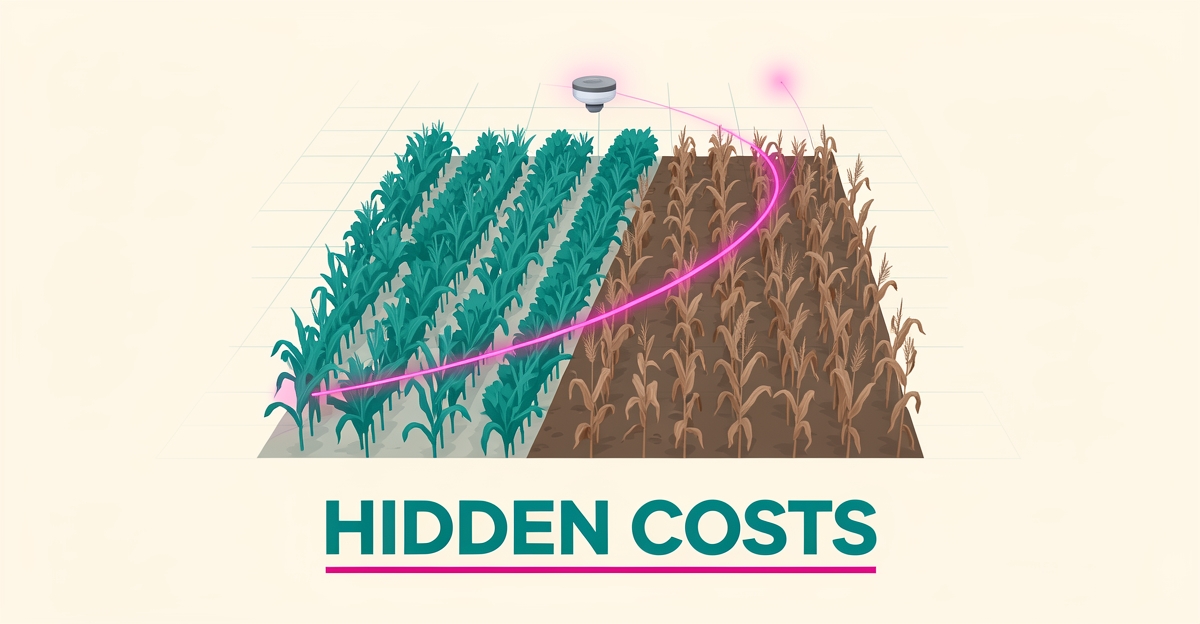
The Hidden Cost of Slow Crop Health Responses
As the world grapples with 30-33% annual crop losses to pests in major agricultural economies like India (India's loss stats via knowledge-sourcing), and climate variability renders traditional monitoring ineffective, the stakes for timely crop health responses have never been higher. Every hour of delayed response to a farmer's disease or pest inquiry directly increases the probability of preventable yield loss, making response speed an economic imperative.
The economic impact of these delays, though not directly quantified in existing research, can be inferred from the proven benefits of AI-driven monitoring. For instance, precision agriculture integration with AI, IoT sensors, drones, and satellite imagery has demonstrated a 35% reduction in water consumption and a nearly 30% improvement in yield forecasts (precision ag stats via knowledge-sourcing). Delayed responses would likely erode these gains, as the agility provided by AI in identifying issues (with neural networks achieving 95% success rates in disease identification, disease detection stat via knowledge-sourcing) and prompting timely interventions is critical.
- Forfeited Efficiency Gains: Slow responses negate the water and yield benefits of precision agriculture.
- Climate Vulnerability: Delays exacerbate losses in a climate-volatile environment where pest and disease outbreaks escalate rapidly.
- Reputational and Revenue Loss: Though unquantified, the logical inference is that delayed, inefficient responses would lead to dissatisfaction among farmers, potentially driving them to more responsive advisory services.
Initiatives like Bayer's 2024 "E.L.Y." GenAI pilot and India's National Pest Surveillance System (NPSS) underscore the market's shift towards immediate, data-driven responses. These platforms train agronomists to answer queries "more quickly and correctly" (Bayer pilot via knowledge-sourcing) and provide farmers with real-time, personalized pest-control recommendations via mobile uploads (NPSS via knowledge-sourcing).
For agricultural businesses, especially those leveraging platforms like AI Business Sites for integrated website, AI monitoring, and CRM solutions, the message is clear: investing in AI-driven, instant response systems is not just a service enhancement, but a strategic move to mitigate the hidden, yet significant, costs of delayed crop health responses. By ensuring immediate, accurate responses to farmer inquiries, these businesses can protect yield, enhance efficiency, and build trust in a highly competitive, climate-pressured market.
What the Market Leaders Are Betting On: Speed and Accuracy
What the Market Leaders Are Betting On: Speed and Accuracy
As the agricultural industry navigates the challenges of climate variability and escalating crop losses, market leaders are doubling down on AI-powered monitoring systems that prioritize response speed and accuracy. This strategic bet is underscored by two notable deployments in 2024: Bayer's "E.L.Y." GenAI pilot and India's National Pest Surveillance System (NPSS).
Bayer's Quest for Quicker, More Accurate Responses Bayer's innovative "E.L.Y." GenAI pilot is retraining agronomists to answer farmer inquiries "more quickly and correctly" source. This move reflects the company's recognition of the direct link between rapid response times and farmer satisfaction, ultimately influencing brand loyalty and revenue.
India's NPSS: Real-Time Expertise at Farmers' Fingertips Launched in August 2024, NPSS enables farmers to upload images of pests or infested crops via mobile devices and receive real-time, personalized pest-control recommendations source. This initiative by the Indian government highlights the public sector's commitment to leveraging AI for timely interventions, crucial for mitigating crop losses.
Why Speed Matters: The Broader Market Context
- Market Growth: The AI crop monitoring market is projected to grow at a 14.8% CAGR from 2025 to 2030, with precision agriculture driving this surge source.
- Quantifiable Gains: Integration of AI with IoT sensors has demonstrated a 35% reduction in water consumption and a ~30% improvement in yield forecasts source, emphasizing the value of timely data-driven decision-making.
- Disease Detection Accuracy: Neural networks have achieved a 95% success rate in identifying diseases like apple scabs source, underscoring the precision of AI-driven responses.
Key Takeaways for the Industry
- Prioritize Response Speed: Delayed inquiries can forfeit a significant portion of the 35% water savings and 30% yield improvements enabled by precision agriculture.
- Embrace AI for Accuracy: Leverage AI's high disease detection accuracy (up to 95%) to ensure responses are not only quick but also correct.
- Learn from Leaders: Bayer and India's NPSS exemplify how market leaders are already betting on speed and accuracy, setting a benchmark for the industry.
By aligning with these strategies, agricultural businesses can mitigate the real costs of delayed crop health responses, ensuring they remain competitive in a rapidly evolving market landscape. For small businesses, especially those in local service industries, integrating AI-driven solutions like those offered by AI Business Sites can significantly enhance their response capabilities, bridging the gap between inquiry and action efficiently.
The Precision Agriculture Value Chain Depends on Timely Data
The precision agriculture value chain doesn't run on data alone — it runs on data that arrives in time to act. Research shows that AI and IoT integration delivers a 35% reduction in water consumption and a ~30% improvement in yield forecasts, but those gains assume insights move from sensor to decision-maker without friction. When a soil moisture alert, nutrient deficiency signal, or pest detection sits unanswered, the ROI of the entire precision system degrades in real time.
- Neural networks identify diseases like apple scabs with 95% accuracy, but that accuracy only creates value if the farmer receives the insight before the infection spreads
- India's National Pest Surveillance System, launched in August 2024, lets farmers upload crop images and receive personalized pest-control recommendations from real-time inputs
- Bayer's 2024 "E.L.Y." GenAI pilot explicitly retrains agronomists to answer farmer queries more quickly and correctly
The pattern is clear: major enterprises and governments are deploying AI specifically to collapse the time between detection and action. Climate variability makes this urgency non-negotiable — traditional monitoring methods are becoming ineffective as pest and disease outbreaks accelerate faster than manual workflows can track. Every hour a crop health inquiry goes unanswered is an hour where preventable loss compounds, especially in regions already losing 30–33% of annual yield to pests.
AI Business Sites applies this same logic to the business side of agriculture. When a grower or advisor submits a question through your website — about a disease alert, an irrigation schedule, or a nutrient plan — the AI assistant answers instantly using your knowledge base, not a generic script. The inquiry never sits in an inbox waiting for human availability. That speed protects both the farmer's yield and your reputation as a responsive partner.
Local business: doing this the old way?
One system replaces the whole pile.
All of it — the website, the follow-up, the content, the leads — built and run for you for $1,497 + $497/mo. Month-to-month, and you own everything.
See what your build includesWhy Human-Only Response Fails in a Climate-Volatile Environment
In the face of escalating climate variability, traditional human-only responses to crop health inquiries are becoming increasingly ineffective. As 30-33% of annual crop losses in India alone can be attributed to pests source, the urgency for timely intervention cannot be overstated. Outbreaks of pests and diseases spread exponentially faster than manual monitoring can track, leaving a narrow window for effective action.
- Exponential Spread: The time lag in human responses allows pests and diseases to spread unchecked. For instance, delayed identification of diseases like apple scabs, which neural networks can detect with 95% accuracy source, results in irreversible damage.
- After-Hours and Seasonal Surge Inquiries: Human operators are unable to handle the surge in inquiries during peak seasons or after hours, leading to missed opportunities for prevention. Bayer's E.L.Y. GenAI pilot source and India's NPSS source exemplify the shift towards AI for quicker, more accurate responses.
- Compounding Risk: The cost isn’t just in missed leads but in the compounding risk of delayed action. Every hour of delay in responding to a crop health inquiry potentially forfeits a portion of the 35% water reduction and ~30% yield forecast improvement achievable through precision agriculture source.
- Inability to Scale: Human responders cannot match the volume and speed required during outbreak seasons.
- Limited Expertise: The breadth of knowledge required to address diverse crop health issues is challenging for human operators to maintain.
- Off-Hours Inactivity: Critical inquiries received outside business hours are left unattended, exacerbating potential losses.
Given these challenges, AI-driven monitoring and response systems are no longer a luxury but a necessity. By leveraging AI, agricultural support services can:
- Respond Instantly: To every inquiry, regardless of volume or time of day.
- Provide Accurate Insights: Utilizing the latest data and research for precise advice.
- Scale with Climate Variability: Adapt to the increasing unpredictability of weather patterns and pest outbreaks.
For small businesses in the agricultural sector, integrating an AI-powered website platform (like those designed by AI Business Sites) can be transformative. Such platforms not only provide instant, accurate responses to customer inquiries but also manage leads, automate follow-ups, and enhance overall customer satisfaction — key factors in maintaining a competitive edge and ensuring long-term profitability in a volatile climate.
In a climate-volatile environment where traditional methods are rendered ineffective, the adoption of AI monitoring is not just beneficial but crucial for minimizing losses and maximizing yields. The shift towards AI is backed by major enterprises and governments, underscoring its role in the future of precision agriculture.
Closing the Response Gap Without Adding Complexity
Closing the Response Gap Without Adding Complexity
In the high-stakes world of agricultural troubleshooting, every minute counts. Delays in responding to crop health inquiries can exacerbate issues, leading to significant yield losses and reputational damage. For instance, the 30-33% annual crop loss to pests in India source highlights the urgency of timely interventions. AI-driven solutions are transforming this landscape, but many agricultural businesses face infrastructure and complexity barriers, especially in developing regions.
The AI Business Sites Advantage
AI Business Sites offers a groundbreaking, all-in-one platform designed to bridge this response gap without adding operational complexity. By integrating a custom website, an AI assistant, CRM, and automation tools into a single, user-friendly system, agricultural businesses can:
- Own Everything: From code and content to data and domain, ensuring no lock-in.
- Deploy Rapidly: Achieve an 85+ page website in just 30 days, streamlining the setup process.
- Consolidate Tools: Replace 8-10 separate subscriptions (e.g., website builder, CRM, automation tool, content writer) with one cohesive system.
Instant Responses, Enhanced Satisfaction
The platform's AI assistant is pivotal, answering crop health inquiries instantly, 24/7, leveraging the business's own knowledge base. This not only reduces customer frustration but also improves long-term profitability by ensuring timely, accurate support. For example, Bayer's E.L.Y. GenAI pilot source demonstrates how AI can enable quicker and more accurate responses to farmer queries, setting a precedent for the value of rapid response systems.
Overcoming Adoption Barriers in Developing Regions
For agricultural businesses in developing regions, where infrastructure gaps and technological complexity often hinder AI adoption, AI Business Sites' platform is uniquely positioned as a solution. By providing an enterprise-grade response capability without the need for extensive infrastructure or technical expertise, it lowers the barriers to entry. This aligns with the market's need for more accessible solutions, as highlighted by the rapid growth of the AI in crop monitoring market (projected to reach USD 1,921.2 million by 2030 at a 14.8% CAGR source).
Key Benefits at a Glance
- Ownership and Control: Full ownership of all assets.
- Rapid Deployment: Quick setup to fast-track operational benefits.
- Simplified Operations: Consolidation of multiple tools into one platform.
- Enhanced Customer Experience: Instant, knowledgeable responses to inquiries.
By embracing AI Business Sites' integrated approach, agricultural businesses worldwide, especially in previously underserved regions, can close the critical response gap, ensuring they not only keep pace with the demands of modern agriculture but also thrive in a data-driven, increasingly competitive market.
Frequently Asked Questions
How much crop loss can pests cause annually in major agricultural economies like India?
What measurable benefits does precision agriculture with AI and IoT integration provide?
How accurate are neural networks in identifying crop diseases like apple scabs?
Why are human-only responses to crop health inquiries becoming ineffective in today's climate?
How does delayed response to crop health inquiries impact the ROI of precision agriculture systems?
What real-world examples show market leaders prioritizing speed and accuracy in crop health responses?
Key Takeaways
{ "title": "Harvesting Timely Insights: The Business Imperative of AI-Driven Crop Health Responses", "content": "The agricultural industry's embrace of AI for crop health monitoring underscores a stark reality: every delayed response to a farmer's inquiry exacerbates preventable yield losses, fu
FOR local businesss — BUILT AND RUN BY US
Your website. Your content. Your leads. Your data.
$500 starts your build. Seven days later it's live — chat, booking, follow-up, and your Google presence all set up. Then we run it, every month. You do the work you actually get paid for.