
Key facts
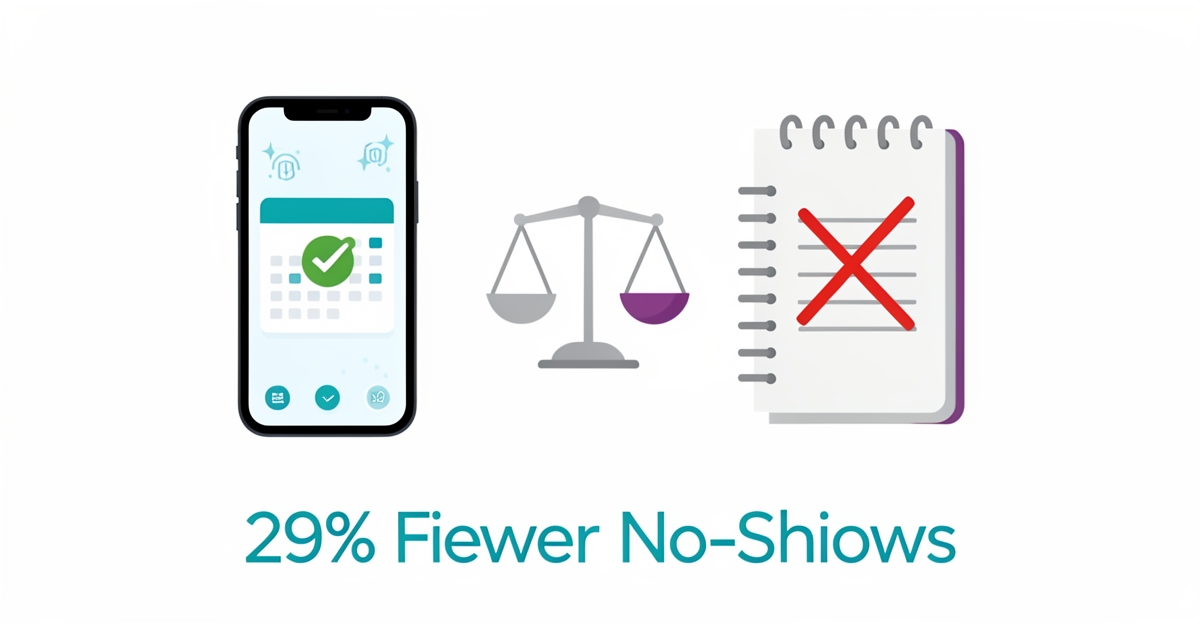
- Self-scheduling tools reduce patient no-shows by 29% according to Kyruus Health research
- Solo physician practices lose an average of $150,000 annually to missed appointments per healthcare industry data
- The global online weight loss programs market is projected to reach $4.7 billion by 2034 growing at 7.3% CAGR
- Patients who miss one appointment are 70% more likely to never return within 18 months creating long-term retention risks
- Over 70% of healthcare searches now happen on mobile devices making mobile-first booking essential
- Three no-shows in an eight-hour shift can reduce clinic productivity by 12.5% disrupting operations and revenue
- The U.S. healthcare system loses over $150 billion annually to patient no-shows highlighting the scale of the problem
WANT RESULTS LIKE THIS?
Imagine a system doing all of this for your local business — every day, without you.
We build local businesses a custom website with a team of AI behind it: every lead captured and followed up, new content published monthly,customers finding you on Google — live in 7 days.
- 85+ pages at launch
- Every lead followed up, automatically
- Your whole business on one screen
The No-Show Conundrum: Challenges in Weight Loss Clinic Scheduling
Missed appointments aren’t just an inconvenience—they’re a silent drain on a weight loss clinic’s bottom line and patient relationships. Research from Kyruus Health reveals that patient no-shows disrupt schedules, slash revenue, and can erase up to 14% of a medical group’s daily income, costing solo practices an average of $150,000 per year. Every no-show isn’t just a lost hour on the calendar; it’s a missed opportunity to guide someone toward their health goals.
The ripple effects go deeper than lost hours. Studies show patients who skip one appointment are 70% more likely to never return within 18 months, creating a ripple effect that weakens trust and continuity of care. When patients disappear, clinics lose not only immediate income but also the chance to nurture long-term relationships built on consistency and progress. A single no-show can cascade into a pattern of disengagement, leaving providers scrambling to rebuild momentum with patients who’ve slipped through the cracks.
What makes no-shows so costly isn’t just the lost revenue—it’s the operational chaos they trigger. Three missed appointments in an eight-hour shift can reduce productivity by 12.5%, forcing staff to scramble for last-minute fill-ins or leave gaps in the schedule. Clinics end up spending hours making calls, rescheduling, and communicating delays, pulling providers and coordinators away from patient care. Even small clinics feel the strain, with every unfilled slot creating a domino effect that echoes through staffing, morale, and even treatment outcomes.
Behind the numbers lies a deeper challenge: patient behavior isn’t always rational. While convenience and commitment matter, missed appointments often stem from stress, forgetfulness, or hesitation about the program itself. Skepticism toward weight loss solutions runs deep, fueled by past experiences with fad diets and misleading claims. For clinics, this means no-shows aren’t just about logistics—they’re tied to trust, clarity, and the ability to reduce friction at every touchpoint.
The good news? Clinics can fight back with tools that put control in patients’ hands. Kyruus Health found that self-scheduling systems cut no-shows by 29%, giving patients the flexibility to book when it suits them while keeping appointments top-of-mind through automated reminders. When patients control their scheduling, they’re more likely to follow through—especially when those reminders arrive via their preferred channel, whether text, email, or voice call. The result isn’t just fewer empty chairs; it’s a smoother flow of care, happier staff, and a healthier bottom line.
Digital Solution: Leveraging AI-Driven Online Booking for Reduction in No-Shows
For weight loss clinics, no-show appointments aren’t just an operational headache—they’re a revenue killer with real patient consequences. Research shows that solo physician practices lose around $150,000 annually to missed appointments, while the broader healthcare system hemorrhages over $150 billion each year across the U.S. alone. The good news? A straightforward shift to AI-driven online booking can cut no-shows by 29%, giving clinics a powerful way to protect both their schedules and their bottom line.
Self-scheduling tools address the root causes of patient absences by putting control in the hands of your clients. Instead of relying on back-and-forth phone calls or manual calendar coordination, patients can book, reschedule, or confirm appointments in real time—whenever it’s convenient for them. The system doesn’t just make scheduling easier; it actively reduces forgetfulness with automated reminders that hit multiple channels. Text messages, emails, and even voice calls keep your clinic top of mind, accommodating different communication preferences and increasing the likelihood that patients follow through.
- Real-time availability syncs directly with your staff’s calendar, eliminating double bookings and last-minute scrambles
- Digital intake forms preload patient information before visits, cutting waiting room time and improving first impressions
- Pre-payment options can be embedded during booking, adding a layer of financial commitment that boosts attendance
- Integration with your CRM ensures every booking automatically updates the patient’s record without manual entry
Clinics that adopt these systems aren’t just modernizing their workflows—they’re aligning with a market that increasingly expects digital solutions. The global online weight loss programs market is expanding at a 7.3% annual clip, reaching nearly $4.7 billion by 2034. Patients searching for weight loss support are already turning to their phones for answers, with over 70% of healthcare queries happening on mobile devices. And while skepticism toward online programs persists, clinics that pair efficient booking with transparent, evidence-based care stand to gain trust—and a fuller schedule.
For clinics using AI Business Sites, the transition is seamless. The platform’s AI assistant doesn’t just answer questions; it manages your calendar, sends reminders, and syncs with your intake workflow to ensure no lead slips through the cracks. The result is a practice that runs smoother, patients who feel more in control, and a schedule that stays full—without the usual administrative overhead.
Local business: doing this the old way?
One system replaces the whole pile.
All of it — the website, the follow-up, the content, the leads — built and run for you for $1,497 + $497/mo. Month-to-month, and you own everything.
See what your build includesPractical Implementation: Tips for Weight Loss Clinics to Optimize Scheduling
Practical Implementation: Tips for Weight Loss Clinics to Optimize Scheduling
In the competitive landscape of weight loss clinics, where the global online market is projected to reach USD 4.7 billion by 2034 (growing at a CAGR of 7.3% from 2025 to 2034) Market Growth Insights, streamlining scheduling is crucial for patient retention and operational efficiency. Here are actionable strategies combining online booking with digital tools for improved engagement:
Weight loss clinics face unique challenges, including high no-show rates and patient skepticism toward digital solutions. However, by leveraging technology, clinics can address these concerns. For instance, self-scheduling tools reduce no-shows by 29% in healthcare settings No-Show Reduction, a valuable metric for weight loss clinics aiming to improve attendance.
- Implement AI-driven online booking systems with real-time availability and automated reminders to reduce no-shows, a strategy that aligns with the 70%+ of healthcare searches happening on mobile devices Mobile Healthcare Searches.
-
Ensure mobile-first design for ease of use, catering to the dominant mobile user base.
-
Combine online booking with digital intake forms to minimize waiting room time and reduce administrative burdens.
-
Offer pre-payment options within the booking system to increase patient commitment to appointments.
-
Optimize your website for local search (e.g., Google Business Profile, location-specific content) to capture high-intent local traffic, given local map pack clicks outperform organic and paid results combined Local Search Dominance.
- Ensure HIPAA compliance and mobile accessibility for all online interactions.
- Segmented Follow-Ups: Use automated systems to send personalized follow-ups after missed appointments, offering easy rescheduling options.
- Evidence-Based Programming: Highlight partnerships with credible weight loss programs (e.g., Mayo Clinic Diet) to build trust among skeptical consumers Market Trends.
- Localized Content: Create service-specific, location-targeted content to improve search rankings and attract local patients seeking weight loss solutions.
By integrating these strategies, weight loss clinics can not only enhance patient convenience and reduce operational inefficiencies but also build trust in a market where consumer skepticism is prevalent. As the market continues to grow, clinics that adopt seamless, patient-centric scheduling systems will be better positioned for success. AI Business Sites, with its expertise in building custom, SEO-optimized websites for local services, can help clinics implement these strategies effectively, ensuring a strong online presence that drives engagement and retention.
Frequently Asked Questions
How much do no-shows cost a typical weight loss clinic annually?
What percentage of patients are less likely to return after missing one appointment?
Can online booking systems reduce no-show rates in weight loss clinics?
What is the projected growth rate of the global online weight loss programs market from 2025 to 2034?
How do automated reminders in online booking systems impact patient attendance?
What percentage of healthcare queries happen on mobile devices?
Key Takeaways
{ "title": "Scheduling Smarter: The Future of Weight Loss Clinics", "content": "The weight loss clinic landscape is at an inflection point, where embracing digital solutions like AI-driven online booking can be the catalyst for operational efficiency and patient retention. By acknowledging the $150,
FOR local businesss — BUILT AND RUN BY US
Your website. Your content. Your leads. Your data.
$500 starts your build. Seven days later it's live — chat, booking, follow-up, and your Google presence all set up. Then we run it, every month. You do the work you actually get paid for.