
Key facts
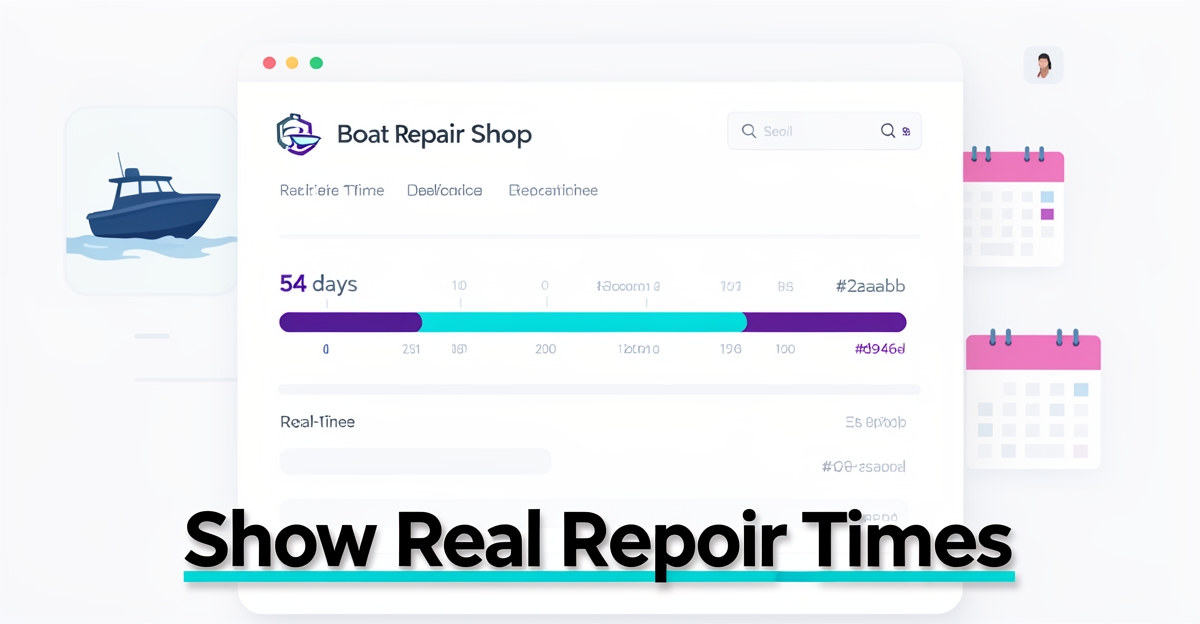
- The average boat repair cycle takes 54 days, while warranty repairs stretch to 70.5 days according to MRAA industry data
- Parts procurement alone adds 30 days before ordering plus 7+ days for delivery per MRAA repair cycle tracking
- The marine repair market is projected to reach $12.67 billion by 2030 according to Research and Markets
- MRAA President Matt Gruhn states reducing cycle times leads to greater revenue, higher margins, and happier customers through operational improvements
- Streamlining operations with software can increase jobs completed by 25% and reduce administrative costs by 30-40% per DockMaster research
- AI Business Sites automatically populates real-time repair turnaround times onto service pages without manual updates
- The platform triggers personalized follow-up messages that adapt to service type, timeline, and customer location to keep leads engaged
WANT RESULTS LIKE THIS?
Imagine a system doing all of this for your local business — every day, without you.
We build local businesses a custom website with a team of AI behind it: every lead captured and followed up, new content published monthly,customers finding you on Google — live in 7 days.
- 85+ pages at launch
- Every lead followed up, automatically
- Your whole business on one screen
The Trust Gap Created by Unknown Repair Timelines
Boat owners face real anxiety when they can't see how long a repair will take. Without clear turnaround times on a shopperspective customers in touch base timeline, and they start to wonder: Is this shop overwhelmed? Are they even capable of handling my repair? This uncertainty builds a quiet but powerful trust gap that pushes many to look elsewhere before they even book.
Research shows the average repair cycle for all boat repairs is 54 days, and warranty jobs stretch even longer to 70.5 days due to parts delays and processing bottlenecks. When a website doesn’t display these timelines, owners are left guessing whether their repair will take weeks or months. That lack of clarity doesn’t just frustrate—it actively erodes confidence. In service industries, transparency around timing is directly tied to customer retention, and when that information is missing, inquiries drop off and booked jobs fall through.
Without visible turnaround times, boat repair shops lose leads at the first point of contact. Owners who can’t quickly assess how long their hull or gelcoat job will take often abandon the inquiry entirely, choosing competitors who make the process feel predictable. This isn’t just about convenience—it’s about reducing the mental load of planning around an unknown repair window. When shops fail to communicate timing upfront, they force customers into a position of risk, and most will walk away rather than gamble on an open-ended timeline.
AI Business Sites helps close this gap by automatically populating accurate repair turnaround times into service pages and triggering follow-up messages that keep leads engaged. By making timing visible and predictable, shops reduce no-shows, increase booking rates, and build the kind of trust that turns one-time repairs into ongoing relationships. In a market where the average repair already takes nearly two months, clarity isn’t a luxury—it’s what keeps the boat in the water and the shop busy.
Why Displaying Turnaround Times Directly Increases Bookings
When a boat owner lands on your website with a cracked hull or faded gelcoat, their first question isn't about price — it's about time. Every day without a clear answer is a day they're calling your competitor.
The numbers back this up. Marine repair shops average 54 days for standard repairs and 70.5 days for warranty work, according to MRAA industry data tracking repair cycle times across the industry. Parts procurement alone eats 30 days before an order is even placed, plus another week for delivery before parts arrive at the shop. Customers know this. They've heard the horror stories. When your website stays silent on timelines, they assume the worst.
Transparency flips that dynamic. Displaying real-time turnaround estimates — based on your actual workload, parts pipeline, and crew capacity — does three things at once:
- Filters out customers who can't wait, saving your team unqualified calls
- Builds trust before the first conversation, reducing no-shows on estimates
- Gives prospects a reason to book now instead of "thinking about it"
MRAA President Matt Gruhn notes that shops reducing cycle times see greater revenue, higher margins, and happier customers through operational improvements. The same principle applies to information flow. When your website shows a hull repair takes 10–14 days right now — and updates automatically when that shifts — you're not just answering a question. You're proving you run a tight operation.
AI Business Sites builds this directly into service pages, pulling live data from your workflow so the timeline a customer reads today matches the reality on your shop floor. The same system triggers follow-up messages that keep leads engaged while they wait, so a "maybe next month" inquiry doesn't go cold. In a market projected to hit $12.67 billion by 2030 as marine repair demand grows, the shops that win aren't just the fastest — they're the ones who make the wait feel managed.
Local business: doing this the old way?
One system replaces the whole pile.
All of it — the website, the follow-up, the content, the leads — built and run for you for $1,497 + $497/mo. Month-to-month, and you own everything.
See what your build includesHow AI Business Sites Automates Turnaround Time Tracking Without Extra Work
Boat owners don’t just want their hulls or gelcoats restored—they want certainty. When a repair shop’s website leaves turnaround timelines blank, it quietly erodes trust at the exact moment customers need confidence most. The result? Lost leads, frustrated phone calls, and appointments booked elsewhere where transparency isn’t an afterthought.
For many boat repair shops, the gap between promise and practice is wide. Industry data shows the average repair cycle stretches to 54 days, while warranty repairs drag even longer at 70.5 days—a timeline shaped by parts procurement delays and processing bottlenecks rather than needless bureaucracy. With supply chains already stretched, customers aren’t willing to wait in the dark. A website that fails to show realistic timelines doesn’t just miss a detail; it broadcasts an uncertainty that turns browsers into dead ends.
AI Business Sites closes that trust gap automatically, without adding another tool to your stack. The platform pulls your real-time repair schedules directly from your workflow and populates them onto every relevant service page—so visitors see an accurate estimate before they even ask. No manual updates. No outdated guesses. No missed opportunities while you’re busy running the shop.
Behind the scenes, the system does more than display numbers. It keeps leads warm with personalized follow-ups triggered by their inquiry. If a customer lands on the fiberglass repair page and sees a 21-day timeline, they might hesitate—until an automated message arrives the next morning: “Your repair is scheduled for June 12. Need help arranging a rental boat while you wait? Reply YES to get our local partner list.” This isn’t a generic autoresponder. The content adapts to the service, the timeline, and the customer’s location, using your own project data to sound human, not robotic.
For boat owners researching multiple shops, consistency matters. The platform ensures every page—from gelcoat polishing to engine diagnostics—displays current turnaround times pulled from your active jobs. If a job gets delayed due to a backordered part, the estimate updates across the site in real time. No spreadsheets. No frantic calls to update the web team. Your website stays accurate, your reputation stays intact, and your sales pipeline stays full of qualified leads who no longer need to guess.
The alternative isn’t just slower conversions—it’s lost revenue. When repair cycles routinely exceed 54 days, every unanswered question on your website becomes a reason to walk away. With AI Business Sites, the answer is always there. And when the estimate feels real, the booking feels inevitable.
Frequently Asked Questions
How long does a typical boat repair take?
Why don't repair shops show turnaround times on their websites?
How can showing turnaround times help my repair shop get more bookings?
What happens if a repair shop doesn’t have turnaround times on their website?
Can turnaround times change after I book a repair? How do customers stay updated?
Isn’t displaying turnaround times risky if delays happen often?
Key Takeaways
{ "title": "Don’t Let Uncertainty Sink Your Leads: The Power of Transparency in Boat Repair", "content": "The absence of clear repair turnaround times on a boat repair shop’s website is more than an oversight—it’s a silent trust breaker, pushing anxious boat owners towards competitors who offer pred
FOR local businesss — BUILT AND RUN BY US
Your website. Your content. Your leads. Your data.
$500 starts your build. Seven days later it's live — chat, booking, follow-up, and your Google presence all set up. Then we run it, every month. You do the work you actually get paid for.