
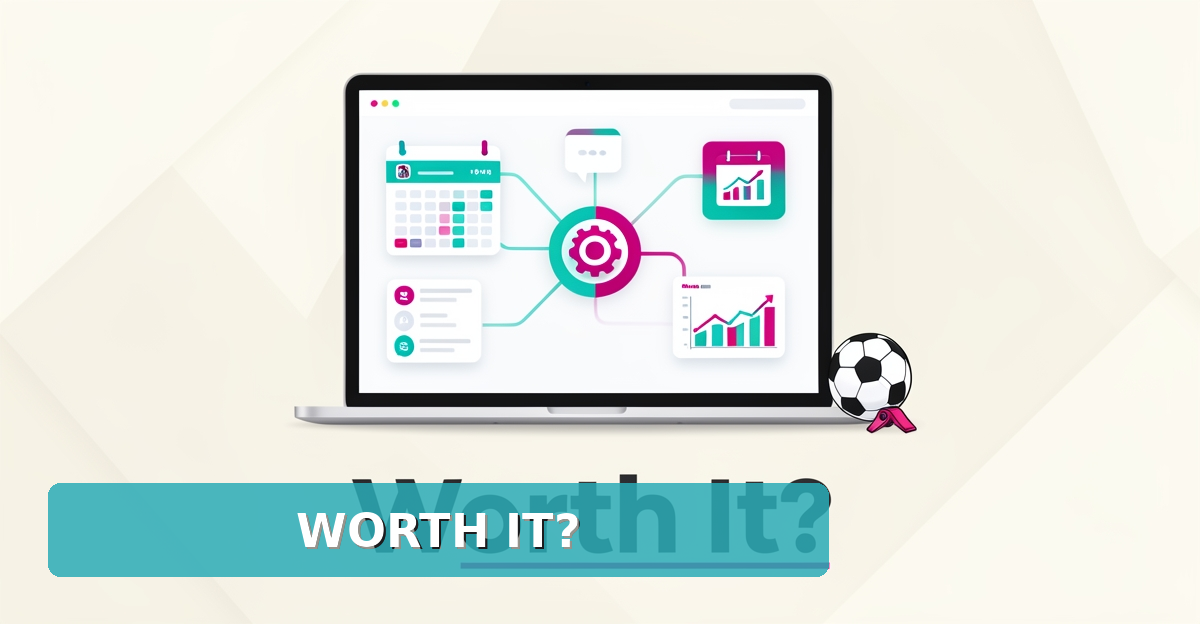
Key facts
- Almost 60% of U.S. small businesses now use AI for operations, up from less than 30% in 2023 according to the U.S. Chamber of Commerce.
- 91% of small businesses using AI report revenue growth, and 87% see operational scaling benefits as found by M4 Worldwide.
- Over 50% of businesses measure AI success by 'general feeling' rather than specific metrics, as highlighted in a Forbes article.
- A custom AI website can reclaim 3-5 hours/week for sports academies by auto-responding to leads and automating schedules as per the research.
- AI-driven marketing delivers 34% more clicks at 22% lower cost per click, according to M4 Worldwide's case study.
WANT RESULTS LIKE THIS?
Imagine a system doing all of this for your local business — every day, without you.
We build local businesses a custom website with a team of AI behind it: every lead captured and followed up, new content published monthly,customers finding you on Google — live in 7 days.
- 85+ pages at launch
- Every lead followed up, automatically
- Your whole business on one screen
The Hidden Cost of a Website That Just Sits There
Most DIY sports academy websites look the part—clean template, team photos, maybe even a “Book Now” button—but they come with a hidden tax: the daily grind of administrative work that never shows up in the budget. Missed leads after 5 p.m. because no one’s answering the contact form. Manual follow-ups on every inquiry while you’re coaching a session. Schedule changes that live in three different places. Content that was perfect for last season’s camp but still says “Summer 2024” in May. And if you’re measuring success by “general feeling” instead of hard numbers, you’re likely leaving money on the table without realizing it—over half of small businesses do just that.
- 77% of small businesses now use AI regularly, yet more than half still rely on gut feel to judge results
- Nearly 60% of U.S. small businesses now use AI for operations, up from less than 30% in 2023
- 91% of AI-using small businesses report revenue growth, and 87% see operational scaling benefits
Your website should be handling that routine work instead of adding to it. A custom-built AI site doesn’t just sit there—it answers questions, routes leads, syncs schedules, and pushes fresh content, freeing you to focus on coaching rather than clerical catch-up. The hidden cost isn’t the monthly fee; it’s the unpaid administrative hours slipping through every missed call and late follow-up, eating margin before you ever see it.
What the Data Says About AI Websites and Revenue
For sports academies, the off-season lull between tournaments and training cycles can drain momentum and revenue—unless your website works as hard as your coaches do. AI-powered platforms are changing that dynamic by automating the quiet work that keeps members engaged and pipelines full, even when the fields are empty. This isn’t just about having a site that looks good; it’s about one that actively fills gaps in your seasonal revenue cycle.
The data shows a clear pattern: 91% of small businesses using AI report revenue growth, and 87% see measurable improvements in operational scaling. For sports academies, this translates into practical advantages like automated membership workflows that nurture leads during slow periods, dynamic schedule adjustments that reflect weather changes or tournament updates in real time, and fan engagement journeys that maintain connections without manual rebuilding. These capabilities directly address the "between-seasons silence" that often leads to dropped enrollment and missed renewal opportunities.
AI also sharpens the tools you already use to attract new athletes. Marketing efforts powered by AI deliver 34% more clicks while reducing cost-per-click by 22%, making every dollar spent on promotion work harder to fill summer camps or winter clinics. When combined with a website that captures leads instantly and follows up automatically—day or night—this creates a self-reinforcing cycle where visibility drives interest, and automation converts it into sign-ups. For academies juggling seasonal demand, that efficiency isn’t just helpful; it’s essential for sustaining growth year after the business through natural ebbs and flows.
Why Consolidation Beats the Patchwork Approach
Most sports academy owners don't set out to build a software stack — they just need a website. Six months later, they're paying for a DIY builder, a separate CRM, a booking tool, an email platform, a chat widget, analytics, a project board, and someone to write content. That's eight to ten subscriptions that don't talk to each other, each with its own login, billing cycle, and integration headache.
Research from the U.S. Chamber of Commerce shows almost 60% of U.S. small businesses now use AI for operations, yet most are still stitching together disconnected tools. Squarespace's own fitness-builder comparison reveals that entry-level competitors lack group class capacity, waitlists, CRM, or staff management without expensive upgrades — forcing academies to either overpay or compromise on core functionality.
The cost isn't just monthly fees. It's the lead that slips through because the chat tool doesn't create a contact in the CRM. It's the parent who books a trial but never gets a confirmation email because the booking system doesn't trigger the automation. It's the hours spent copying data between platforms instead of coaching athletes. Over 50% of businesses measure AI success by "general feeling" rather than specific metrics — and the same blind spot applies to tool sprawl. You feel busy, but you can't point to what's actually working.
- A DIY site plus separate CRM, booking, email, chat, analytics, content, and project tools
- Integration gaps that drop leads, duplicate work, and create blind spots
- Time spent managing software instead of running programs
- Seasonal sign-ups lost because follow-up wasn't automatic
A custom platform consolidates all of this — website, CRM, automation, content engine, newsletter, scheduling, analytics, and project management — into one system where every interaction feeds the same database. When a parent chats on your site, books a session, and gets an instant confirmation, that's not three tools working. It's one system doing what it was built to do.
Local business: doing this the old way?
One system replaces the whole pile.
All of it — the website, the follow-up, the content, the leads — built and run for you for $1,497 + $497/mo. Month-to-month, and you own everything.
See what your build includesA 30-Day Measurement Framework Before You Commit
More than half of small businesses judge their AI investments by gut feel rather than hard numbers. Before you sign off on a custom AI website, run a simple 30-day test to see if it actually pays for itself.
Start by timing how long your team spends on four high-impact tasks: responding to new leads, publishing practice schedules, creating social posts, and following up with trial sign-ups. These are the exact bottlenecks that drain owner time between seasons. Record a baseline average for each task over seven days, then install your AI website and measure the same workflows for another 30 days.
Track four metrics that turn “it feels faster” into clear ROI. First, log time saved per task—most sports academies reclaim 3–5 hours a week when leads auto-respond and schedules push to social feeds automatically. Second, count every AI-assisted lead that converts within 48 hours; 91% of AI adopters see revenue growth when automation handles the first reply. Third, record errors prevented, like double-bookings or missed replies to weekend inquiries; these small fixes compound during peak registration months. Finally, divide the monthly platform cost by the value of time saved plus new sign-ups. If the quotient is below your hourly rate, the AI site is paying for itself.
- Time saved: compare baseline hours to AI-run hours
- Revenue per AI action: auto-responded leads that turn into booked trials
- Error reduction: schedule conflicts, missed emails, and double entries eliminated
- Net cost vs. value: platform fee divided by hours freed plus new bookings
Most owners skip the math because it looks technical, yet over 50% of businesses judge AI success by “general feeling.” A disciplined 30-day sprint closes that gap without spreadsheets or data teams. Run the test once, review the numbers, and decide with data—not hype.
What to Look for in a Custom AI Website Partner
Not all "AI websites" deliver what they promise. Many are just templates with a chatbot bolted on — leaving you to stitch together CRM, scheduling, content, and analytics tools on your own. The research shows that over 50% of small businesses measure AI success by "general feeling" rather than hard metrics, which makes choosing the right partner critical. A true custom AI website should consolidate your stack, not add to it.
- Search presence included at launch — Google Business Profile and Bing setup configured from day one, not sold as an add-on
- Full ownership of code, content, and data with no lock-in — you can walk away in 30 days
- Live pages within 30 days, not months — 85+ pages deployed fast so seasonal sign-ups don't wait
- Human-in-the-loop AI safety — every email, tag, and deal change waits for your approval before it reaches a customer
- Built and maintained by the engineering team that created it, not a reseller layer
The numbers back this approach: 91% of small businesses using AI report revenue growth, and AI-driven marketing delivers 34% more clicks at 22% lower cost per click. But those gains only materialize when the platform measures what matters — leads captured, response time, content published, seasonal registrations — and lets you verify the results yourself. AI Business Sites builds custom websites that include search setup, CRM, automation, content generation, and newsletter tools in one system, with a 30-day notice cancellation so the risk stays on us. Yes, it's worth upgrading — if you choose a partner that consolidates your stack, measures what matters, and lets you walk away in 30 days if the numbers don't work.
Frequently Asked Questions
How much time can an AI-powered website save me on administrative tasks each week?
What percentage of small businesses using AI report revenue growth, and how does that apply to sports academies?
Is it better to use a DIY website builder with separate tools or a custom AI website that consolidates everything?
How do I know if an AI website is actually paying for itself before committing long-term?
Will I lose ownership of my website or data if I use an AI-powered platform?
Can an AI website help me stay visible and attract students during the off-season?
Key Takeaways
{ "title": "Your Website Should Work as Hard as Your Coaches Do", "content": "A website that only looks professional is no longer enough — not when 91% of small businesses using AI report revenue growth and 87% see measurable operational scaling. The real cost isn't the monthly fee for a smarter
FOR local businesss — BUILT AND RUN BY US
Your website. Your content. Your leads. Your data.
$500 starts your build. Seven days later it's live — chat, booking, follow-up, and your Google presence all set up. Then we run it, every month. You do the work you actually get paid for.