
Key facts
- Client portals reduce operational costs by 58% and free up nearly 10 hours per week from administrative work according to implementation results
- Nearly a third of consumers stopped buying from a brand due to poor customer experience per industry analysis
- Organizations using AI and automation extensively reduce average breach costs by over $2 million per recent studies
- Verizon's DBIR shows 68% of breaches involve a human element, with stolen credentials appearing in roughly one-third of breaches over the past decade
- Over 50% of surveyed customers report feeling exhausted when dealing with customer support due to fragmented experiences
- Six out of 10 support executives blame lack of unified customer data for negative customer experiences per survey data
- Websites from Greyrock Studios start at $3,500 one-time, while web apps including client portals start at $6,900 one-time plus HST
WANT RESULTS LIKE THIS?
Imagine a system doing all of this for your local business — every day, without you.
We build local businesses a custom website with a team of AI behind it: every lead captured and followed up, new content published monthly,customers finding you on Google — live in 7 days.
- 85+ pages at launch
- Every lead followed up, automatically
- Your whole business on one screen
Why Your Website Isn't Enough for Client Work
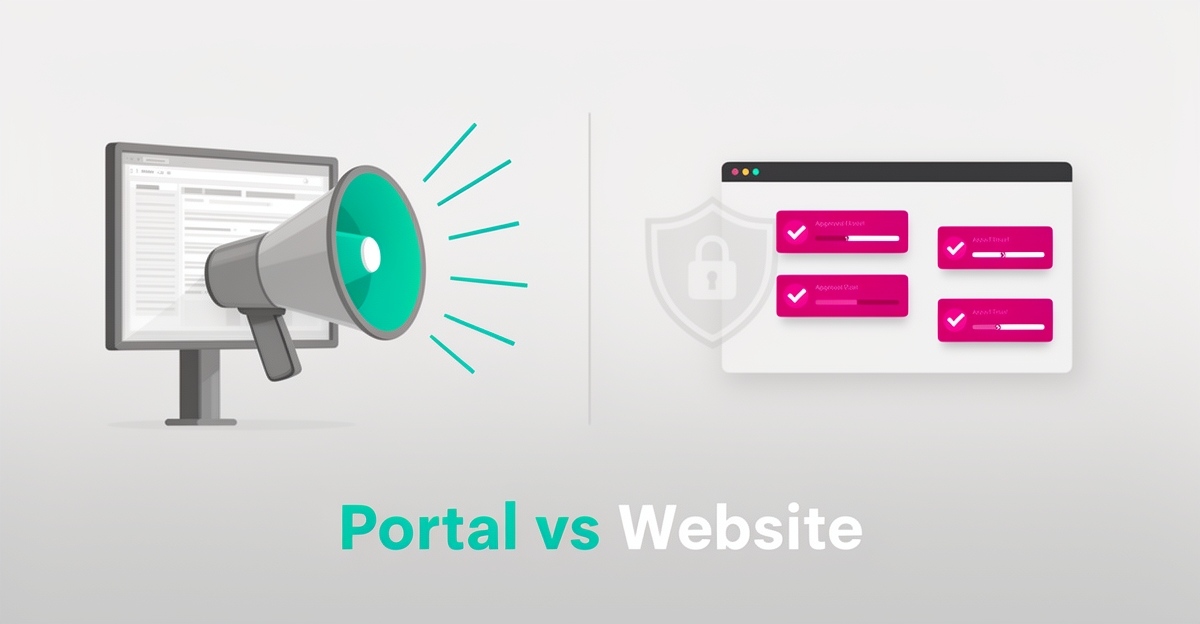
A website tells the world what you do. A client portal is where specific clients actually do things with you. That confusion costs businesses time, security, and trust.
Websites are built for broad audiences without authentication. Industry research consistently emphasizes portals provide secure, personalized access for registered users, while websites deliver information to the public. Portals almost always require secure login credentials to protect sensitive information, whereas websites typically do not require login for content viewing.
When approvals and file sharing happen by email or on a public-facing site, the friction shows. A client portal is defined as a secure online workspace where businesses and clients can share files, send messages, manage tasks, track project progress, approve work and access important information. That is task-oriented, not marketing-oriented.
The pain is measurable. Nearly a third of consumers stopped buying from a brand due to poor customer experience, and over 50% of surveyed customers report feeling exhausted when dealing with customer support. Six out of 10 support executives blame lack of unified customer data for negative customer experiences. Email chains and public links create that exhaustion.
Portals replace fragmented channels with centralized, secure spaces. Clients can access updates, files, and workflows without contacting business teams directly, while businesses maintain security and professionalism through branded experiences. Built-in approval systems make it easier to collect feedback and reach final project stages, with clients viewing, editing, and approving content directly within the portal.
Security is not optional for this work. Security professionals note that weak authentication is the most common entry point for data breaches, making robust authentication essential for portals handling sensitive information. Verizon’s DBIR data shows 68% of breaches involve a human element, with stolen credentials appearing in roughly one-third of breaches over the past decade.
The efficiency gain is real when portals are done right. One agency achieved a 58% reduction in operational costs and freed up nearly 10 hours per week from administrative work through client portal implementation. AI-driven automation can extend that value by reducing operational overhead through automation of routine tasks, approval processes, and self-service functions.
At AI Business Sites, portals with approvals are delivered as part of the managed AI site, not as a separate DIY project. The website serves the public for lead generation and brand awareness, while the secure portal layer handles the private work: approvals, file sharing, messaging, and task completion for registered clients. That hybrid approach combines public outreach with private collaboration, which is now a best practice for organizations needing both.
The result is a system that is secure, personalized, and task-oriented instead of a brochure with attachments. Businesses stop chasing approvals in email and start closing work in one branded, auditable place.
Common signs your website is not enough for client work:
- Approvals live in email threads and versioned file names
- Clients ask for access to documents you have to send manually
- You are sharing sensitive files through public links or guest access
- Follow-up is repetitive because there is no single source of truth for a client
A public website builds trust with strangers. A client portal builds momentum with the clients you already have.
The Authentication Divide: Public vs Private Access
A website invites the world in. A client portal locks the door and hands out keys.
The divide starts with access. Websites are public-facing platforms built for information delivery and lead generation for broad audiences without requiring authentication. Portals are secure, authenticated web applications designed for personalized, task-oriented interactions with registered users only.
That authentication requirement is not cosmetic. Security professionals emphasize that weak authentication is the most common entry point for data breaches, making robust authentication systems essential for portals handling sensitive information. According to industry security analysis, Verizon's DBIR shows 68% of breaches involve a human element, with stolen credentials appearing in roughly one-third of breaches over the past decade.
Portals almost always require secure login credentials to protect sensitive information, whereas websites typically do not require login for content viewing. The distinction is reinforced across multiple sources that portals provide secure, personalized access to specific resources for registered users, while websites deliver information to broad public audiences.
Because portals host approvals, file sharing, messaging and transactional capabilities, role-based permissions become critical. The most effective portals implement fine-grained permissions at user/company/record levels to ensure appropriate access controls. SSO and MFA are standard expectations, not upgrades, when client data lives behind the login.
At AI Business Sites, this authentication divide shapes how portals with approvals are delivered as part of the managed AI site. The public website handles discovery and lead capture, while the private portal space handles the work that should never be public.
Portals that get this right typically build:
- Secure login with SSO and MFA as the default entry point
- Role-based access that limits what each client, user or partner can see and do
- Approval workflows and self-service tasks kept behind authentication
- Audit trails and session controls for sensitive data access
The business case is clear. Public access belongs on the website. Private work belongs in the portal. Keeping them separate protects brand trust and reduces risk where human error and stolen credentials are already the dominant threat vectors.
Hybrid solutions that combine a public website for outreach with a secure client portal for ongoing collaboration are emerging as best practice for organizations needing both.
Beyond Information: Portals as Workflow Engines
Beyond static information delivery, client portals function as secure workspaces where businesses and clients collaborate on core operational tasks. Unlike public websites focused on marketing and lead generation, portals require authentication and enable actions like approvals, file sharing, payments, and project tracking—functions that transform them from brochures into workflow engines. This distinction is critical for service businesses seeking to streamline client interactions while maintaining security and professionalism.
AI-driven automation amplifies this capability, with research showing extensive use of AI in organizational workflows reduces average breach costs by over $2 million and significantly cuts operational overhead through task automation. The integration of AI enables portals to intelligently route approvals, send payment reminders, and manage knowledge bases without constant manual intervention, turning routine processes into self-service experiences that free up staff for higher-value work.
The Strupek case study exemplifies this impact: implementing a client portal led to a 58% reduction in operational costs and freed up nearly 10 hours per week from administrative work through automated approval workflows and self-service features. Within the AI Business Sites managed AI service, this same workflow engine is included—handling quote approvals, job scheduling, invoicing, and review requests—all secured behind authenticated access and powered by the same AI back office that runs the website. Portals aren’t just about sharing information; they’re about getting work done, securely and efficiently.
Local business: doing this the old way?
One system replaces the whole pile.
All of it — the website, the follow-up, the content, the leads — built and run for you for $1,497 + $497/mo. Month-to-month, and you own everything.
See what your build includesThe Hybrid Approach: Website + Portal Integration
The most effective digital strategies today blend public visibility with private collaboration. A hybrid approach combines a marketing website for broad reach with a secure client portal for personalized workflows, giving businesses both lead generation and operational efficiency in one system. This model addresses the core limitation of standalone websites: they excel at attracting visitors but fall short when clients need to approve quotes, access files, or complete transactions securely.
Research shows that nearly a third of consumers abandon brands due to poor experiences, often stemming from disjointed tools that force clients into inefficient processes like email chains or phone tag according to industry analysis. Meanwhile, organizations using AI and automation extensively reduce average breach costs by over $2 million, highlighting the value of secure, streamlined workflows per recent studies. By integrating a portal with a website, businesses create a seamless journey where prospects discover services publicly and then transition to a protected space for approvals, payments, and ongoing collaboration—all without leaving the branded domain.
This integration delivers measurable gains across sectors. E-commerce sites use public pages to showcase products while portals handle order tracking and returns. Healthcare providers separate general health information from patient portals for appointment scheduling and record access. Professional services firms publish thought leadership on their websites while enabling clients to review contracts, sign off on deliverables, and communicate securely through the portal. AI Business Sites implements this hybrid model by default: every site includes both a public-facing website for SEO and lead capture and a secure client portal for tasks like quote approvals and job tracking—delivered as part of the managed AI business operating system.
- Public websites attract traffic through SEO-optimized content and service pages
- Secure portals enable authenticated actions like approvals, file sharing, and payments
- AI-driven automation reduces manual work in portal workflows by over 50%
- Clients access portals via branded, token-secured links—no separate login needed
- All data synchronizes between website interactions and portal activities in real time
The result is a unified system where marketing efforts feed directly into client workflows. When a visitor books a service or requests a quote through the website, that action triggers portal-based processes—such as AI-drafted estimates requiring client approval—without manual handoffs. This eliminates the friction of switching between disconnected tools and ensures every touchpoint reinforces brand consistency. For businesses seeking both growth and operational control, the website-plus-portal model isn’t just convenient—it’s becoming the standard for professional, scalable client engagement.
Getting Both Without the Headache
Building a client portal from scratch is a technical project most businesses don't have time for. Custom web applications that include secure portals start at $6,900+ and take 3–8 weeks to deliver, compared to 2–5 weeks for a standard website according to development benchmarks. That timeline assumes you have developers ready to handle authentication, role-based permissions, approval workflows, and integrations with your CRM or invoicing tools — all before a single client logs in.
- Secure authentication and granular access controls
- Approval workflows with e-signature and viewed-tracking
- File sharing, messaging, and task management in one place
- Integration with quoting, invoicing, and payment systems
- Branded experience on your own domain
AI Business Sites takes a different approach. The portal — complete with approval workflows, client-facing status pages, and secure token links that require no login — ships as part of the managed platform. The entire system goes live in 7 days, including the website, CRM, content engine, and the Jobs & Estimates module that turns approved quotes into scheduled jobs and paid invoices automatically. Research shows organizations using AI-driven automation in workflows reduce operational costs by over 50% and free up nearly 10 hours per week in administrative time. Instead of stitching together tools, you get one system that runs the loop from quote to review request — managed by us, owned by you.
Frequently Asked Questions
What is the main difference between a client portal and a website?
Why can't I just use my website for client approvals and file sharing?
Do client portals require login credentials, and why is that important?
How much time and money can a client portal save my business?
Is a client portal worth the investment compared to building a website alone?
Can I have both a public website and a secure client portal without managing two separate systems?
Key Takeaways
{ "title": "Where Your Website Ends and Real Work Begins", "content": "A website introduces your business to the world, but a client portal is where the actual work happens—securely, efficiently, and without the friction of email chains or public links. As we’ve seen, portals transform fragmente
FOR local businesss — BUILT AND RUN BY US
Your website. Your content. Your leads. Your data.
$500 starts your build. Seven days later it's live — chat, booking, follow-up, and your Google presence all set up. Then we run it, every month. You do the work you actually get paid for.