
Key facts
- Memory care facilities waste 5–10 hours monthly on manual website updates, equivalent to one full workday diverted from resident care per IlluminAge.
- Senior care websites need WCAG accessibility compliance, mobile optimization, and trust signals like authentic imagery to influence families' placement decisions per Distinctive Dev.
- AI-powered platforms automate monthly blog posts, activities calendars, and 24/7 inquiry responses—tasks already handled by voice assistants in clinical settings per Senior Housing News.
- Agency websites deliver a 356% increase in SEO conversions and a 400% lead boost for new communities within a year per Digital Seniority.
- Small memory care facilities prioritize cost-saving redevelopment over new builds, reflecting tight budget constraints that extend to technology decisions per Senior Housing News.
- AI automation of content updates, staff scheduling, and resident engagement is a defining 2025 trend in memory care operations per HCM Design.
- Professional agencies report 100% occupancy within a year for facilities after launching accessibility-compliant, trust-building websites per Digital Seniority case studies.
WANT RESULTS LIKE THIS?
Imagine a system doing all of this for your local business — every day, without you.
We build local businesses a custom website with a team of AI behind it: every lead captured and followed up, new content published monthly,customers finding you on Google — live in 7 days.
- 85+ pages at launch
- Every lead followed up, automatically
- Your whole business on one screen
The Overlooked Dilemma: Website Management in Resource-Constrained Memory Care Facilities
Small memory care facilities face a hidden burden no one talks about: keeping their website updated, compliant, and engaging while juggling tight budgets and understaffed teams. For facilities managing complex care needs and family inquiries, a neglected website isn’t just an aesthetic issue—it’s a missed opportunity to build trust with adult children researching care options or residents looking for daily activities. The challenge isn’t just technical; it’s operational. Erica Zoren of HCM Design highlights how AI is already automating routine tasks in memory care settings, freeing staff to focus on resident care rather than administrative busywork.
Yet when it comes to website management, small facilities often default to in-house solutions out of necessity, only to find themselves trapped in a cycle of manual updates, broken links, and outdated content. Cynthia Shonaiya of Hord Coplan Macht notes that tools like Alexa and Google Voice already handle repetitive resident questions, reducing staff burden and resident anxiety—so why shouldn’t the same logic apply to website content? Senior care websites demand constant refreshes: dynamic calendars, fresh blog posts, and updated service pages to reflect changing programs and amenities. Without automation, these updates become a low-priority task, slipping down the to-do list behind admissions and care planning.
This is where the cost becomes invisible but real. A facility might spend 5–10 hours monthly updating content, responding to form submissions, and managing basic inquiries—time that could be spent on resident engagement or family consultations. For a 30-bed memory care facility, that’s the equivalent of one full day per month diverted from core operations. And even with those hours invested, the results often fall short. Senior care websites must meet strict accessibility standards (WCAG compliance), build trust through authentic imagery and testimonials, and optimize for mobile users—typically adult children making high-stakes decisions. A 2024 study by IlluminAge found that trust signals and mobile optimization are decisive factors in families’ choices, yet these are rarely priorities for overburdened staff.
- In-house website management often leads to inconsistent content updates that hurt SEO performance
- Staff time spent on manual updates could be redirected to resident care or family engagement
- Senior care websites require specialized accessibility features, dynamic content, and mobile optimization
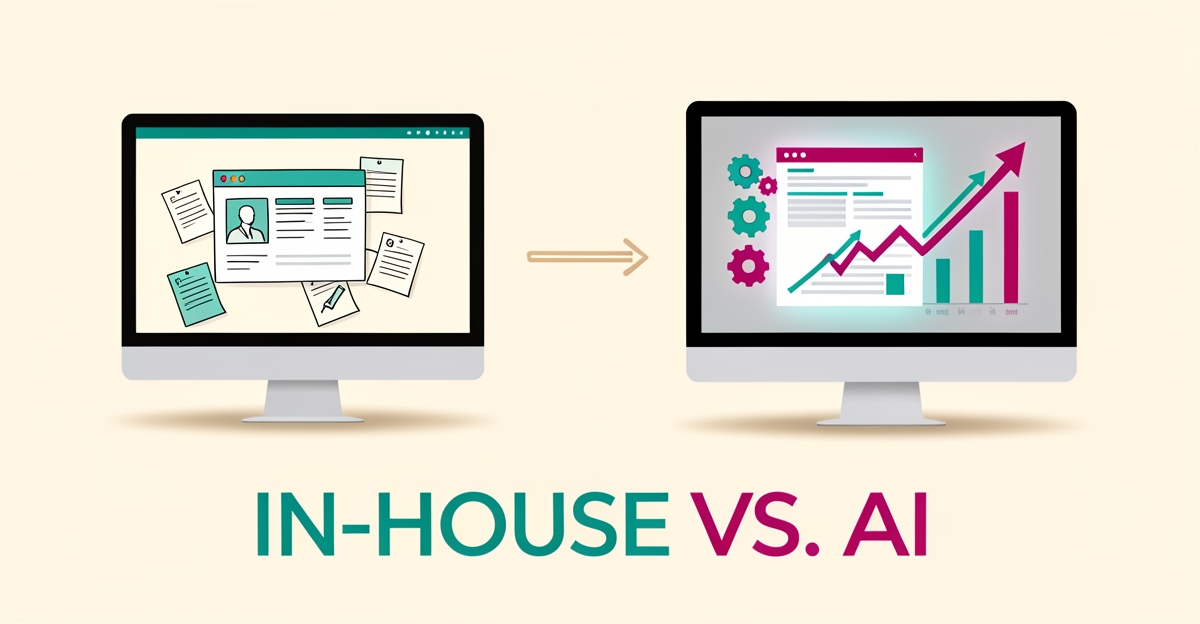
AI-powered platforms offer a compelling alternative by automating content generation, lead capture, and even basic inquiries—functions already being adopted in clinical settings. HCM Design’s 2025 trends report confirms that AI is transforming memory care operations by handling routine tasks like content updates and resident engagement, allowing staff to focus on what matters most. For a small facility, this could mean replacing hours of manual work with an automated system that publishes monthly blog posts, updates the activities calendar, and responds to inquiries 24/7. The question isn’t whether these tools can automate website management—it’s whether they do it in a way that aligns with the facility’s care-first mission and budget constraints. Without concrete case studies or cost data specific to memory care, the decision remains a leap of faith—but one that’s increasingly worth taking.
Leveraging AI Automation: A Solution Aligned with Industry Trends
Memory care operators are already comfortable letting AI handle repetitive questions — voice assistants like Alexa and Google Voice now answer residents' recurring queries, reducing anxiety and freeing staff for deeper interactions, according to Senior Housing News. That same openness extends naturally to the website, where families ask the same questions about availability, pricing, and daily programming. HCM Design identifies AI automation of content updates, staff scheduling, and resident engagement as a defining 2025 trend, noting it "frees up staff to focus on high-value care" (HCM Design).
- Activities calendars and blog posts that publish themselves each month
- Instant, personalized responses to every inquiry — web form, chat, or phone
- Lead follow-up sequences that run without manual effort
- Internal linking and SEO structure that improves automatically
Specialized agencies report measurable results: a 356% increase in SEO conversions and 400% lead growth for new communities. AI-powered platforms aim to deliver comparable outcomes by automating the content velocity and response speed that drive those numbers — without the agency retainer. For small facilities navigating budget constraints and staffing shortages, the question shifts from whether to adopt AI to which tasks deserve automation first. The website, often the first conversation a family has with your community, is a logical place to start.
Implementation Strategy: Piloting AI-Powered Solutions for Informed Decision Making
Given the industry's rapid adoption of AI for clinical operations — from voice assistants that answer repetitive resident questions to fall sensors and circadian lighting — extending that same automation to your website is a logical next step. HCM Design identifies AI-driven content updates, staff scheduling, and resident engagement as a defining 2025 trend for memory care facilities. Yet no published research directly compares in-house website management against AI-powered platforms for this sector. The only way to close that evidence gap is to run your own controlled pilot.
Start by isolating a single, high-impact service line — such as "memory care activities" or "family communication" — and deploy an AI-powered microsite on a subdomain while your main site remains unchanged. This approach mirrors the industry's shift toward cost-conscious redevelopment over new construction, letting you test without full commitment. Track these core metrics over 90 days:
- Lead volume and source attribution compared to the main site
- Content freshness score — frequency of calendar updates, blog posts, and FAQ revisions
- Staff hours saved on website administration and family inquiry response
- Family engagement rates (time on page, return visits, form completions)
- Accessibility compliance checks against WCAG standards for aging audiences
Professional senior living agencies report 356% SEO conversion increases and 400% lead growth within a year — benchmarks any solution must approach to justify investment. During the pilot, evaluate whether the AI platform automatically generates location-specific service pages, maintains internal linking structures, and produces authentic imagery and testimonials that build trust with adult children making placement decisions. These are non-negotiable requirements for senior care websites.
AI Business Sites structures pilots around these exact criteria because the platform was built to replace the patchwork of tools — CRM, content writer, newsletter, project management — that small facilities currently duct-tape together. At the end of 90 days, you'll have facility-specific data, not vendor promises, to decide whether to scale, adjust, or return to your previous approach.
Local business: doing this the old way?
One system replaces the whole pile.
All of it — the website, the follow-up, the content, the leads — built and run for you for $1,497 + $497/mo. Month-to-month, and you own everything.
See what your build includesAddressing Unique Requirements: Ensuring Accessibility and Trust in AI-Generated Content
Small memory care facilities don’t just need a website—they need one that speaks to both residents and their families with uncompromising accessibility and trust. That’s no small feat when your audience includes adults with dementia-related visual or auditory impairments alongside adult children researching care options on mobile devices. AI platforms can meet these unique demands by automating not just content updates, but also the nuanced tone and accessibility standards that matter most in senior care.
Senior care websites demand specialized UX, from WCAG-compliant readability and high-contrast designs to mobile-first layouts that resonate with decision-makers. Digital Seniority’s senior living clients saw a 356% rise in SEO conversions and a 400% increase in leads—outcomes tied directly to websites built with these senior-specific needs in mind. AI-powered platforms like AI Business Sites build accessibility and trust signals into their workflows by default, ensuring every page adheres to accessibility standards while dynamically updating content for freshness and relevance.
Consider how AI handles these critical requirements:
- Automated accessibility audits flag contrast, font size, and navigation issues before content goes live
- Dynamic content feeds (activities calendars, resident stories, staff bios) keep information current without manual updates
- AI-generated content incorporates local keywords and service-area relevance to strengthen local SEO for facilities with multiple locations
AI Business Sites takes this further by embedding these features into a custom-built website, not a generic template. For example, the platform’s trust-building elements—authentic imagery, testimonials, and certifications—are generated and positioned automatically based on facility data, reducing the manual effort required to maintain a credible online presence.
The result? Facilities spend less time worrying about compliance and more time focusing on what matters: resident engagement and family confidence. And with the senior care industry increasingly adopting AI for operational efficiency, from voice assistants to fall-prevention sensors, an AI-powered website becomes a natural extension of the care experience—one that runs itself, stays accessible, and builds trust at scale.
Making an Informed Decision: Benchmarking Against Professional Agency Outcomes
Professional agencies specializing in senior living have established a clear performance benchmark. Digital Seniority reports client outcomes including a 356% increase in SEO conversion rates, 400% lead growth for new communities, and 100% occupancy within a year of launch according to their published case studies. These results stem from an eight-phase methodology that bakes in accessibility compliance, trust-building content, and local SEO from day one as detailed in their web design process. One client noted their inquiries quadrupled in months, forcing their sales team to expand per their testimonial.
- 356% SEO conversion rate increase documented across senior living clients
- 400% lead growth for new single-residence communities
- 100% occupancy achieved within 12 months post-launch
- 90% occupancy in 20 months even during COVID restrictions
- Inquiries quadrupled "in a matter of months" for multiple facilities
The industry's growing comfort with AI for clinical operations creates a natural opening to evaluate AI-powered website platforms against these same metrics. HCM Design identifies AI automation of "content updates, staff scheduling, and resident engagement" as a defining 2025 trend in their industry trends report, while voice assistants like Alexa already handle repetitive resident questions to reduce staff burden per Senior Housing News coverage. Facilities adopting these tools report reduced anxiety and more meaningful staff-resident interactions from the same report.
What remains absent is comparable outcome data for AI website platforms in memory care. No published source provides lead generation metrics, conversion rates, or occupancy impact from AI-generated senior care content. Small facilities evaluating their options should request the same measurable benchmarks — lead volume, conversion rates, content freshness scores, and staff time saved — that agencies routinely deliver. At AI Business Sites, we believe the same accountability that applies to agency partnerships should extend to any platform claiming to automate your digital presence.
Frequently Asked Questions
How much time does managing a memory care website in-house actually take, and is it worth the staff hours?
Can AI-powered websites really handle the specialized needs of memory care, like accessibility and trust-building for families?
What kind of results do professional senior living agencies achieve, and can AI platforms match them?
Is the memory care industry actually ready for AI website tools, or is this too early?
How can a small facility test an AI website platform without fully committing or risking their current site?
What's the real cost difference between in-house management, hiring an agency, and using an AI platform for a memory care website?
Key Takeaways
{ "title": "Empowering Memory Care Facilities: A Data-Driven Path Forward", "content": "As small memory care facilities navigate the intricate balance between operational efficiency and resident care, the website dilemma—whether to build in-house or adopt an AI-powered platform—demands a data-driven
FOR local businesss — BUILT AND RUN BY US
Your website. Your content. Your leads. Your data.
$500 starts your build. Seven days later it's live — chat, booking, follow-up, and your Google presence all set up. Then we run it, every month. You do the work you actually get paid for.