
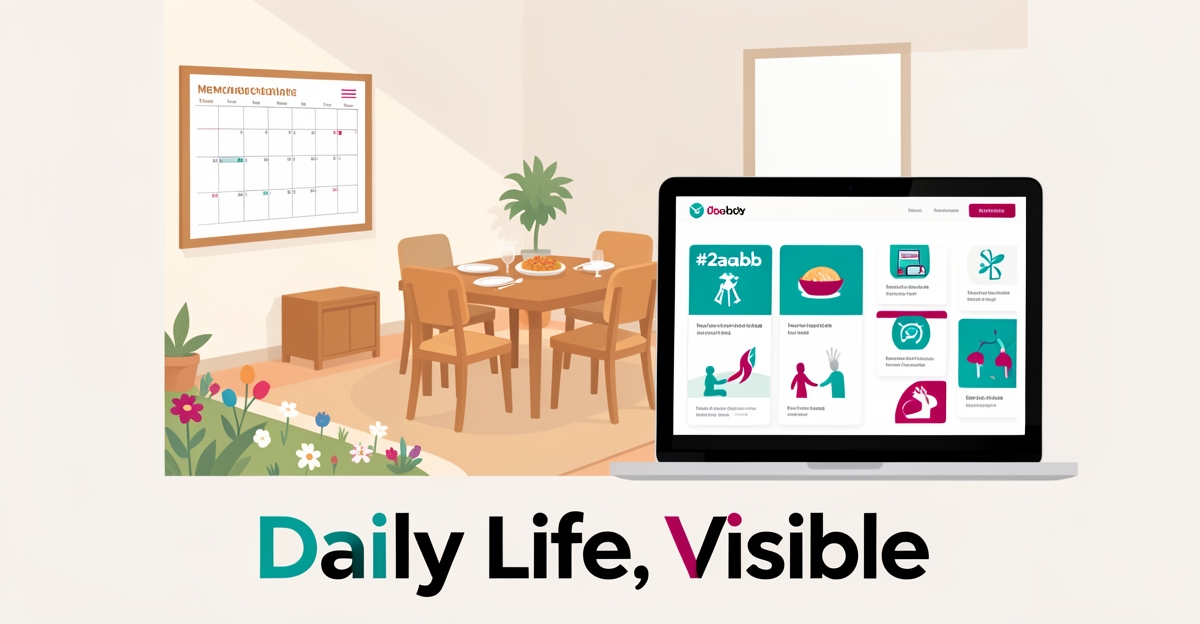
Key facts
- Families searching for memory care facilities see a **70%** zero-click rate in traditional searches, favoring AI-powered results according to McKnight's Senior Living.
- Memory care operators using AI-optimized content see up to **1%** click-through rates from AI summaries, as reported by Senior Housing News.
- AI search prioritizes **authenticity and structured expertise** over traditional SEO tactics for memory care websites.
- Replacing static 'amenities' pages with **dated activity calendars and meal photos** enhances AI discoverability.
- Operators embracing **authenticity in digital marketing** see improved visibility, per Senior Housing News.
WANT RESULTS LIKE THIS?
Imagine a system doing all of this for your local business — every day, without you.
We build local businesses a custom website with a team of AI behind it: every lead captured and followed up, new content published monthly,customers finding you on Google — live in 7 days.
- 85+ pages at launch
- Every lead followed up, automatically
- Your whole business on one screen
The Transparency Gap in Memory Care Websites
Families searching for memory care don't just want a list of services — they want to see what daily life actually looks like for their loved one. Yet most facility websites still rely on static brochure content that tells families nothing about a typical Tuesday morning or how staff handle a difficult afternoon. This transparency gap leaves families guessing and facilities invisible in the channels where decisions are now made.
The shift is already underway. Industry research shows that 70% of traditional searches result in zero clicks, while AI-powered search tools surface direct answers instead of links. For memory care operators, this means the old playbook — keyword-stuffed service pages and generic photo galleries — no longer reaches families at the moment they're deciding.
AI search prioritizes authenticity and structured expertise over marketing fluff. Operators like Heritage Communities report click-through rates around 1% from AI search summaries, making every structured data point count. Content attributed to real staff members, organized around daily rhythms — meals, activities, social moments — gives AI systems the credible signals they need to surface a community in response to "What does a day in memory care look like?"
- Static "amenities" pages replaced by dated activity calendars and meal photos
- Staff-authored insights on care philosophy replacing generic mission statements
- Local resource guides that answer family questions before they're asked
- Multimedia content showing real moments, not staged stock photography
At AI Business Sites, we build websites structured for this new reality — organizing content around daily life patterns that families actually search for, with AI-generated updates that keep activity calendars, meal highlights, and social event recaps current without manual effort. The result: a digital presence that reflects the care happening inside the building, not just the brochure sitting in the lobby.
AI-Driven Solution for Transparency and Visibility
AI-Driven Solution for Transparency and Visibility
In the evolving landscape of memory care, families seeking transparency into daily life and resident well-being are driving a shift towards AI-powered website solutions. AI Business Sites, with its custom website design and integrated AI platform, offers a tailored approach to enhance visibility and trust through structured discoverability, high-quality content, and localized optimization.
Structuring for AI Discoverability
Research highlights the importance of organizing content around daily activities, meals, and social events with clear authorship and mobile-friendly navigation. For example, a section titled "A Day in Memory Care" with FAQs and attributed to a staff expert, can significantly enhance trust. AI Business Sites crafts websites with fast-loading pages and intuitive design, ensuring AI systems can confidently surface this content. As noted by Laura Lepore of Discovery Senior Living, "We’re structuring content in ways AI systems can confidently surface..." to meet the new standards of AI search optimization.
Leveraging High-Quality, Educational Content
Developing comparative guides (e.g., "Assisted Living vs. Memory Care"), FAQs, and local resource pages enhances credibility. AI Business Sites' content engine generates monthly, SEO-optimized content, such as multimedia-rich pages highlighting daily life in memory care facilities. For instance, videos showcasing residents engaging in social events or testimonials from families can build authenticity. As 70% of traditional searches result in zero clicks, transitioning to AI-optimized content is crucial for visibility, as emphasized by McKnight's Senior Living.
| Content Strategy | Execution via AI Business Sites |
|---|---|
| Comparative Guides | AI-generated, locally optimized (e.g., "Memory Care in [City]") |
| Multimedia Content | Integrated videos and infographics showcasing daily life |
| Local Resource Pages | Automatically linked for enhanced discoverability |
Synergizing AI Optimization with Local SEO
Combining AI content strategies with location-specific optimization (e.g., "Memory Care Facilities in [City] with Daily Activities") boosts visibility. AI Business Sites monitors new KPIs, tracking qualified inquiries from both AI summaries and traditional search, ensuring a holistic approach to visibility. According to Senior Housing News, operators are now embracing authenticity in digital marketing, aligning with the shift towards AI search.
With AI Business Sites, memory care facilities can transition smoothly to an AI-driven solution, enhancing transparency, visibility, and ultimately, family trust in their daily operations and resident well-being.
Sources:
- Senior Housing News on AI search adoption
- McKnight's Senior Living on the shift from traditional SEO
- Senior Housing News on trends in memory care design
Local business: doing this the old way?
One system replaces the whole pile.
All of it — the website, the follow-up, the content, the leads — built and run for you for $1,497 + $497/mo. Month-to-month, and you own everything.
See what your build includesPractical Implementation for Memory Care Websites
Memory care families don’t just want a brochure-style website—they want a window into daily life. A static homepage with stock photos of smiling residents won’t cut it when parents are researching memory care options online at 2 a.m. Instead, your website must function as a living portfolio of resident experiences, updated in real time to reflect the rhythms of daily activities, meals, and social engagement that define life at your community. This isn’t just about aesthetics; it’s about trust, transparency, and AI discoverability.
AI search engines now prioritize authenticity and structured expertise over traditional SEO tactics. According to McKnight’s Senior Living, 70% of traditional searches end in zero clicks, forcing senior living operators to rethink content strategy. That’s why families increasingly turn to AI overviews for quick, reliable answers—especially when researching memory care. To meet this demand, your site must be built for AI, not just humans. AI Business Sites structures every page to surface in AI-generated summaries by organizing content around daily routines, meal programs, and therapeutic activities, all enriched with real-time updates and staff-authored insights.
Start with a modular activity dashboard that highlights today’s events, recent photos from group outings, and resident testimonials captured during morning coffee socials. Embed a live photo feed from secure resident areas (with privacy controls) to showcase spontaneous moments—like a resident painting during art therapy or a group singing session during music hour. These elements aren’t just visual; they signal to AI systems that your content is grounded in real, current experiences, not outdated marketing fluff. According to Senior Housing News, operators achieving this level of transparency see up to a 1% click-through rate from AI summaries—an improvement over the industry average.
Content must mirror the home-like environments now standard in modern memory care design. Use your AI assistant to generate weekly “A Day in Memory Care” recaps, automatically pulled from resident schedules, staff notes, and calendar integrations. These aren’t generic posts—they’re hyper-local, event-driven narratives that include:
- Detailed meal descriptions with dietary adaptations visible in photos
- Staff-led reflections on resident engagement during activities
- Real-time weather updates paired with outdoor walking group photos
- Family-submitted anecdotes (with consent) woven into weekly highlights
Combine this content with local SEO precision by embedding location-specific phrases naturally into each update—“Today’s morning stretch class in sunny Denver” or “Garden-to-table lunch featuring heirloom tomatoes from our community garden.” AI Business Sites automates this synergy: your AI content engine writes weekly blog posts grounded in your actual services, while the site’s built-in CRM tags leads from each region, ensuring your “Memory Care in [City]” pages rank for local intent queries like “best memory care near me with daily activities.”
Behind the scenes, use AI to auto-populate structured data—schema markup for events, FAQs about care plans, and resident testimonials marked up for voice search. This keeps your site discoverable whether families ask Google Assistant for “memory care with music therapy near me” or scroll through AI-generated summaries. The result? A website that doesn’t just exist—it runs itself, feeding AI systems with fresh, trustworthy content while your team focuses on what matters most: resident well-being.
Frequently Asked Questions
Why do memory care websites need to show daily activities instead of just listing services?
How can a memory care website help families trust the care being provided?
What types of content should a memory care website include to rank in AI search?
How often should a memory care website update its content to stay relevant?
What’s the biggest mistake memory care websites make when trying to attract families?
How can a memory care website improve its local search visibility?
From Brochure to Window: Your Website as a Daily Promise
The transparency gap in memory care isn't just a marketing problem — it's a trust problem. Families making life-altering decisions at 2 a.m. need more than stock photos and service lists; they need to see Tuesday's art therapy session, Wednesday's garden-to-table lunch, and how staff respond when a resident has a hard afternoon. AI search has made this transparency non-negotiable: 70% of traditional searches now end in zero clicks, while AI summaries surface only content grounded in structured, authentic daily life. The operators winning visibility aren't publishing more brochures — they're publishing dated activity calendars, staff-authored reflections, and real moments captured in real time. AI Business Sites builds websites structured for this reality, organizing content around daily rhythms that families actually search for and automating the updates that keep it current. Your website can either sit in the lobby gathering dust, or it can be the window families look through every day. The care happening inside your building deserves to be seen. Ready to close the transparency gap? Let's build a site that shows up when it matters most.
FOR local businesss — BUILT AND RUN BY US
Your website. Your content. Your leads. Your data.
$500 starts your build. Seven days later it's live — chat, booking, follow-up, and your Google presence all set up. Then we run it, every month. You do the work you actually get paid for.