
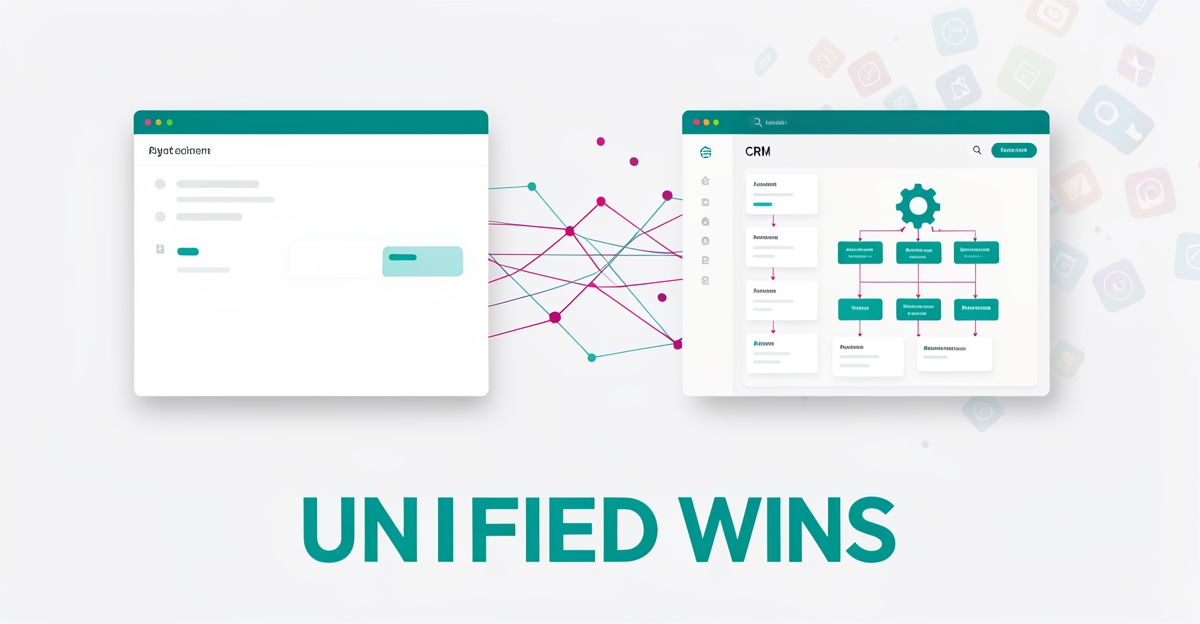
Key facts
- 72% of high-performing companies use integrated CRM and marketing automation, cutting lead response times from 42 hours to just 5 minutes according to industry benchmarks
- AI-driven predictive lead scoring and dynamic content personalization boost conversion rates by 20–30% and engagement by 40% per CRM automation research
- 65% of SMEs struggle with marketing tool integration, creating data silos that obscure the customer journey per market analysis
- Businesses using unified CRM and automation platforms report 62–2000% revenue growth and 875+ hours saved annually according to case studies
- Cloud-based all-in-one platforms dominate 75% of the marketing automation market, with SMEs driving demand for affordable, scalable solutions per market research
- Entry-level CRM automation platforms start at $12–$14/user/month, while enterprise solutions like Salesforce begin at $25/user/month per CRM software comparisons
- The global marketing automation market is projected to reach $36.97B by 2035, growing at 14.20% CAGR according to market research
WANT RESULTS LIKE THIS?
Imagine a system doing all of this for your local business — every day, without you.
We build local businesses a custom website with a team of AI behind it: every lead captured and followed up, new content published monthly,customers finding you on Google — live in 7 days.
- 85+ pages at launch
- Every lead followed up, automatically
- Your whole business on one screen
Why Disjointed Tools Are Costing You Leads and Time
In the quest for operational efficiency, many small business owners find themselves entangled in a web of disjointed tools—separate websites, CRMs, and automation software. This approach, however, comes with a steep price: lost leads, wasted time, and burgeoning costs. Research illuminates the pitfalls of this fragmented strategy and highlights the superiority of unified platforms.
The Pain of Data Silos and Slow Response Times
- 65% of SMEs struggle with integrating their marketing tools source, leading to data silos that obscure the customer journey.
- The average B2B response time to leads is a staggering 42 hours source, a delay that can cost you the lead entirely. In contrast, high-performing companies using integrated CRM and marketing automation respond in as little as 5 minutes, achieving 100x higher conversion rates.
The Financial and Productivity Toll
- Managing multiple subscriptions (website, CRM, automation, etc.) increases costs exponentially, with the average SME potentially spending upwards of $500-$1,000/month on disjointed tools.
- Time is money: Navigating between platforms for lead tracking, follow-up, and content management drains productivity. For instance, Longhouse, a marketing agency, saved 875 hours annually by switching to a unified platform source.
Unified platforms that seamlessly integrate website, CRM, and automation capabilities offer a clear escape from this quagmire:
- Centralized Data: Eliminates silos, providing a holistic view of customer interactions.
- Instant Lead Response: Automated systems ensure leads are engaged within minutes, not hours.
- Cost Efficiency: Replaces multiple subscriptions with a single, comprehensive solution.
- Unified Platforms Reduce Response Times from 42 hours to just 5 minutes, significantly boosting conversion rates source.
- 65% of SMEs face integration challenges with disjointed tools, highlighting the need for all-in-one solutions source.
- Switching to a unified platform can yield substantial time savings (e.g., 875+ hours/year for Longhouse) and revenue growth (up to 2000% as seen with AI bees) source.
By recognizing the drawbacks of disjointed tools and embracing the power of unified platforms, small business owners can reclaim lost leads, reduce operational overhead, and pave the way for scalable growth.
Next Step for Shop Owners: Evaluate providers based on their ability to deliver a seamless, all-in-one experience that streamlines operations and amplifies business outcomes.
The Unified Platform Advantage: What Research Proves Works
Business owners juggling multiple tools for their website, CRM, and marketing often find themselves overwhelmed by disconnected systems that slow down lead response and waste valuable time. Research shows that unified platforms combining these functions deliver measurable performance gains by eliminating data silos and streamlining workflows.
A key finding reveals that 72% of high-performing companies use integrated CRM and marketing automation systems, which reduces average lead response times from 42 hours down to just 5 minutes according to industry benchmarks. This dramatic improvement directly impacts conversion, as faster follow-up correlates with significantly higher engagement and sales readiness.
Beyond speed, AI-driven features within these platforms further amplify results. Platforms incorporating predictive lead scoring, dynamic content, and intelligent chatbots see 20–30% higher conversion rates compared to those relying on manual processes per sales automation research. These capabilities ensure leads are not only captured efficiently but also nurtured with personalized, timely interactions that build trust and move prospects through the funnel.
For small businesses scaling operations, the advantages extend to resource efficiency. Unified systems reduce the need for managing eight to ten separate subscriptions—such as website builders, email tools, and project platforms—by centralizing functions like lead tracking, automated follow-ups, and content generation per market analysis. This consolidation lowers operational complexity while improving data accuracy across teams.
Ultimately, choosing a provider that natively integrates website, CRM, and automation isn’t just about convenience—it’s a strategic move toward faster response, higher conversion, and sustainable growth. Business owners gain back hours each week previously lost to manual admin, allowing them to focus on service delivery and customer relationships instead of software management. AI Business Sites delivers this unified approach as part of its custom website builds, ensuring the platform works behind the scenes to support real business outcomes.
Local business: doing this the old way?
One system replaces the whole pile.
All of it — the website, the follow-up, the content, the leads — built and run for you for $1,497 + $497/mo. Month-to-month, and you own everything.
See what your build includesHow to Evaluate and Choose the Right All-in-One Provider
Choosing the right all-in-one provider starts with looking for a platform that truly unifies your website, CRM, and automation—so you're not juggling separate tools that don’t talk to each other. Research shows 72% of high-performing companies use integrated CRM-marketing automation, cutting lead response times from 42 hours to just 5 minutes and eliminating costly data silos according to industry research. This kind of seamless connection means every form submission, phone call, or email lands in one place, giving you a complete view of every customer interaction without manual data entry.
When evaluating providers, focus on non-negotiables like native automation depth and AI capabilities. Look for systems offering at least 25+ triggers (such as form submissions or email opens) and 20+ actions (like tagging leads or sending follow-ups), all manageable through a no-code drag-and-drop builder as highlighted in automation best practices. Equally important are AI-driven features: predictive lead scoring to prioritize high-intent prospects, dynamic content that adapts to user behavior, and chatbots that engage visitors 24/7—these have been shown to boost conversion rates by 20–30% and increase engagement by up to 40% per CRM automation studies.
Finally, prioritize transparent, SME-friendly pricing and real-time data sync. Avoid platforms with hidden fees or complex enterprise pricing models that require dedicated IT teams—instead, opt for solutions in the $12–$14/user/month range that scale with your business per CRM software comparisons. Ensure the provider offers pre-built integrations with tools like WhatsApp or Slack and guarantees real-time sync between your website, CRM, and email campaigns so your data is always current and actionable. AI Business Sites builds these capabilities directly into every custom website, so you get a platform that runs your business—not just hosts it.
Frequently Asked Questions
What’s the biggest problem with using separate tools for my website, CRM, and marketing automation?
How much time could I save by switching to a unified website and CRM platform?
Is it really worth paying for a unified platform, or is it cheaper to use separate tools?
What kind of AI features should I look for in a unified platform?
How do I know if a website provider’s CRM and automation features are actually good?
What’s the risk of choosing a platform that doesn’t have real-time data sync between my website, CRM, and automation tools?
Are unified platforms only for big businesses, or can small businesses benefit too?
Your Website Should Work as Hard as You Do
Choosing a website provider with built-in CRM and automation isn't just a tech decision — it's a growth decision. The research is clear: businesses using unified platforms cut lead response times from 42 hours to 5 minutes, eliminate the data silos that stall 65% of SMEs, and reclaim hundreds of hours each year otherwise lost to manual admin. AI-driven features like predictive lead scoring and dynamic content push conversion rates 20–30% higher, while a single subscription replaces the patchwork of tools draining your budget and focus. The next step is simple: evaluate providers on whether they deliver a truly integrated experience — native automation depth, transparent SME-friendly pricing, real-time data sync, and AI that actually executes work, not just suggests it. Your website should be the hardest-working asset in your business. If it's not capturing leads, following up automatically, and generating content while you focus on the job site or the client meeting, it's time for an upgrade. AI Business Sites builds custom websites that come with this entire operating system built in — so you get a site that doesn't just represent your business, it helps run it.
FOR local businesss — BUILT AND RUN BY US
Your website. Your content. Your leads. Your data.
$500 starts your build. Seven days later it's live — chat, booking, follow-up, and your Google presence all set up. Then we run it, every month. You do the work you actually get paid for.