
Key facts
- Mobile web investors aged 55+ decreased from 44% to 25% in two years, while the 35-54 group increased by 12 percentage points according to Comscore.
- Female mobile browser shoppers in brokerage increased from 40% to 53% in two years, highlighting the need for diverse, tech-savvy platforms per Comscore.
- 33% of 18-34 year olds have Robinhood accounts, indicating a strong preference for mobile, scalable brokerage solutions as noted by Comscore.
- Established brands like Fidelity and Charles Schwab are favored for their unified, comprehensive services, implying a preference for integrated platforms highlighted by NerdWallet.
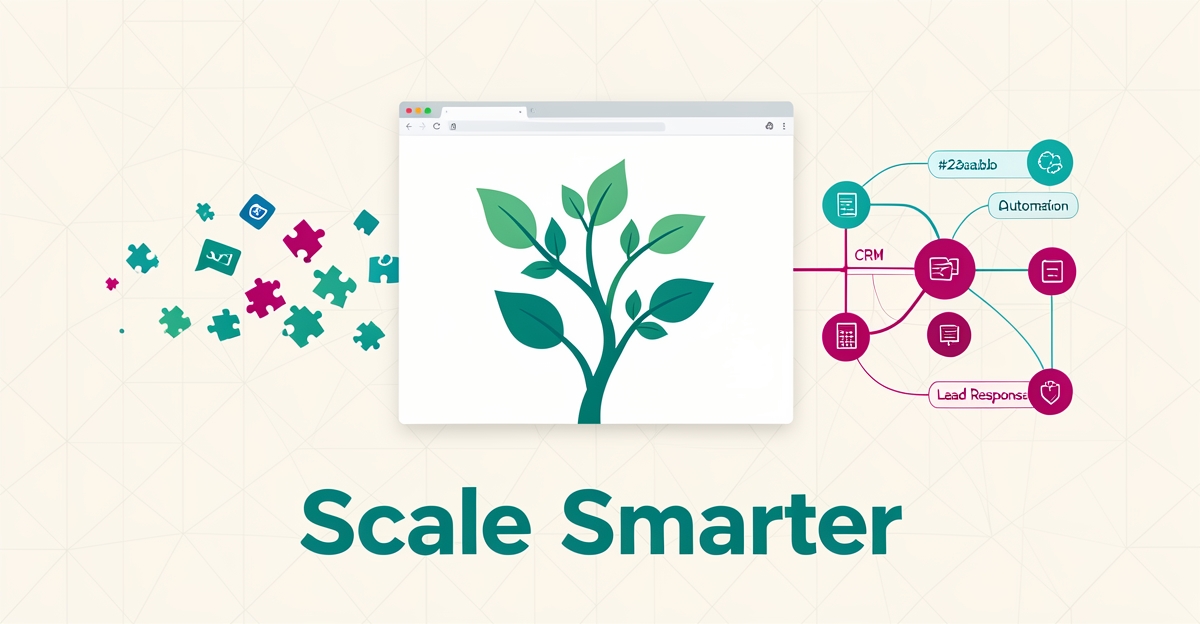
- Unified brokerage platforms reduce operational complexity by replacing 5-6 separate tools, streamlining operations for focused growth.
- Brokerages using unified platforms with instant lead response and automation can significantly reduce missed opportunities and enhance customer experience.
- Ownership of code, content, data, and domain is crucial for brokerages to maintain control and flexibility with their website platforms emphasized by Verified Market Research.
WANT RESULTS LIKE THIS?
Imagine a system doing all of this for your local business — every day, without you.
We build local businesses a custom website with a team of AI behind it: every lead captured and followed up, new content published monthly,customers finding you on Google — live in 7 days.
- 85+ pages at launch
- Every lead followed up, automatically
- Your whole business on one screen
The Hidden Cost of Fragmented Tools in Brokerage Operations
The Hidden Cost of Fragmented Tools in Brokerage Operations
In today's fast-paced brokerage landscape, managing multiple disconnected software subscriptions can lead to operational inefficiencies and missed opportunities. A recent shift in customer demographics toward mobile and younger users exacerbates these challenges. According to industry research Comscore's analysis, mobile web investors aged 55+ have significantly decreased from 44% to 25% over two years, while the 35-54 age group has seen a 12 percentage point increase. Moreover, female mobile browser shoppers have risen from 40% to 53% in the same period, highlighting the need for platforms that cater to diverse, tech-savvy audiences.
Fragmented systems fail to support the real-time lead response and scalability required by modern brokerages. A recent study highlighted by NerdWallet shows that established brands like Fidelity and Charles Schwab are favored for their comprehensive, unified services, implicitly suggesting that brokers value integrated platforms. Managing separate subscriptions for CRM, project tracking, and website management not only increases costs but also hampers the ability to respond promptly to leads across various channels (web forms, voice calls, etc.).
- Inconsistent Lead Management: Missed opportunities due to delayed responses across disparate channels.
- Operational Complexity: Increased overhead in managing multiple subscriptions with no unified insights.
- Scalability Issues: Difficulty in adapting to shifting demographics (e.g., the 33% of 18-34-year-olds with Robinhood accounts) without integrated, scalable solutions.
Given these challenges, brokers should prioritize unified website platforms that combine mobile optimization, CRM, automation, and professionally branded sites. Such platforms not only reduce operational complexity by replacing the need for 5-6 separate tools but also provide the scalability needed to cater to evolving customer demographics. For instance, a platform that automatically responds to leads, integrates project management, and generates content can significantly streamline operations, ensuring brokers focus on high-value tasks rather than managing software.
By embracing a unified approach, brokerages can ensure seamless, real-time interactions, capitalize on growing mobile and younger demographics, and ultimately, drive sustainable growth. Market analysis techniques recommended by Verified Market Research suggest defining clear business problems and measurable KPIs, which a unified platform can effectively address by offering a single, cohesive solution.
Why Unified Platforms Are the Strategic Choice for Modern Brokerages
Why Unified Platforms Are the Strategic Choice for Modern Brokerages
In today's evolving brokerage landscape, where customer demographics are shifting towards younger, more mobile, and increasingly female investors, the need for a streamlined, efficient online presence has never been more critical. Established brokerages are favoring comprehensive, all-in-one website solutions to reduce operational complexity, a trend supported by insights from NerdWallet and Verified Market Research.
Simplifying Complexity with Integrated Solutions
Brokers are opting for unified platforms that combine CRM, automation, lead response, and professionally branded sites. This approach aligns with proven decision-making frameworks for software adoption, which emphasize the importance of addressing specific business problems—such as managing multiple software subscriptions—with scalable, integrated solutions. For instance, integrated CRM and automation capabilities can significantly reduce the administrative burden, allowing brokers to focus on high-value tasks.
Key Statistics Driving the Shift:
- Demographic Shift: Mobile web investors aged 55+ decreased from 44% to 25% over two years, while female mobile browser shoppers increased from 40% to 53% (Comscore).
- Unified Platform Preference: Established brands like Fidelity and Charles Schwab are favored for their comprehensive services, implying a preference for unified, feature-rich platforms (NerdWallet).
- Decision-Making Insights: Brokerage software decisions involve defining clear business problems and measurable KPIs, highlighting the need for platforms that offer scalability and integration (Verified Market Research).
Benefits of Unified Platforms for Brokerages:
- Reduced Complexity: Replaces multiple subscriptions (e.g., CRM, automation tools, content writers) with a single, manageable system.
- Enhanced Customer Experience: Offers mobile optimization and features appealing to younger, female investors, aligning with shifting demographics.
- Scalability: Supports business growth with clear KPIs and scalable architecture, essential for adapting to future market shifts.
Actionable Insight for Brokers:
When evaluating website platforms, prioritize those that integrate lead automation, responsive mobile design, and unified operational tools. For example, a platform that automatically responds to leads, tracks interactions across all channels, and streamlines follow-up processes can significantly enhance efficiency and customer engagement. By doing so, brokers can capitalize on demographic trends, reduce operational overhead, and position their business for sustainable growth.
Embracing the Future with AI Business Sites:
AI Business Sites exemplifies this strategic approach, offering a custom website solution that integrates CRM, automation, and lead response capabilities out of the box. By consolidating multiple tools into one platform, brokers can simplify their operations, improve customer engagement, and own their entire online presence (code, content, data, and domain). This unified approach not only reduces complexity but also provides a foundation for scalable growth, aligning perfectly with the evolving needs of modern brokerages.
Local business: doing this the old way?
One system replaces the whole pile.
All of it — the website, the follow-up, the content, the leads — built and run for you for $1,497 + $497/mo. Month-to-month, and you own everything.
See what your build includesKey Features to Look for in a Scalable Brokerage Website Platform
Key Features to Look for in a Scalable Brokerage Website Platform
In today's evolving brokerage landscape, where mobile adoption is on the rise and demographics are shifting towards younger, more female investors, selecting the right website platform is crucial for growth. According to recent insights from Comscore, mobile web investors aged 55+ have decreased significantly to 25%, while the 35-54 age group has seen a 12 percentage point increase, highlighting the need for mobile optimization. Furthermore, female mobile browser shoppers now constitute 53% of the demographic, emphasizing the importance of an intuitive, appealing interface.
1. Instant Lead Response and Unified CRM Automation Brokers cannot afford to miss leads in a competitive market. A platform with instant, personalized lead response systems and built-in CRM automation is non-negotiable. For example, AI Business Sites' verified use cases show how automated lead follow-up sequences can significantly reduce missed opportunities, ensuring no lead falls through the cracks. As inferred from the business context, such integrated solutions streamline operations, a preference echoed by the favor towards comprehensive services like Fidelity and Charles Schwab.
2. Content Generation for Continuous Engagement A website that generates content automatically, tailored to the brokerage's services and optimized for local SEO, is essential for continuous customer engagement and search engine ranking. Monthly SEO content digests, as offered by some unified platforms, can keep brokerages ahead in the competitive online space.
3. Ownership of Code, Content, Data, and Domain Brokers should prioritize platforms where they own everything - code, content, data, and domain - to maintain control and flexibility as their business evolves, a key differentiator highlighted by AI Business Sites.
Key Features Checklist:
- Mobile Optimization: Responsive design catering to younger and female demographics (Comscore)
- Instant Lead Response & Unified CRM Automation: For streamlined lead management and follow-up
- Built-in Content Generation: For continuous SEO-optimized content creation
- Ownership of All Assets: Code, content, data, and domain for future flexibility
Why Unified Platforms? The preference for well-rounded brokers like Fidelity and Charles Schwab, as noted by NerdWallet, implicitly suggests the value in unified platforms that integrate multiple functionalities, reducing the complexity of managing separate subscriptions. This approach not only simplifies operations but also aligns with the market's shift towards comprehensive, scalable solutions.
By focusing on these key features, brokerages can ensure their website platform not only meets current demands but also scales with the evolving needs of their customer base and business operations.
How to Evaluate and Implement a Future-Ready Website Platform
Evaluating and implementing a future-ready website platform starts with understanding your brokerage’s current tech stack and identifying where fragmentation creates friction. Many brokers operate with disconnected tools—one for lead capture, another for CRM, a third for email marketing, and separate systems for scheduling or project tracking—resulting in duplicated data entry, missed follow-ups, and wasted time. According to research, brokerage decision-makers, including CXOs and procurement heads, should begin by defining clear business problems tied to platform limitations, such as slow lead response times or poor mobile performance, before selecting a solution. This diagnostic step ensures the chosen platform addresses real operational pain points rather than adding another layer of complexity.
To measure success, establish KPIs directly tied to lead conversion and response speed—metrics that reflect both efficiency and revenue potential. For example, track the percentage of leads contacted within five minutes of submission, as delays beyond this window significantly reduce conversion likelihood. Monitor mobile lead volume, given that 33% of investors aged 18–34 now use Robinhood and mobile web usage among 55+ investors has dropped from 44% to 25% over two years, signaling a urgent need for mobile-optimized experiences. Additionally, measure lead-to-client conversion rates and automation accuracy, such as the rate at which follow-up emails are sent without manual intervention. These KPIs provide a baseline for improvement and help justify investment in a unified system.
When transitioning, prioritize platforms that combine website, CRM, automation, content generation, and project tracking in a single owned environment—eliminating the need for 5–6 separate subscriptions. Apply TAM/SAM/SOM principles to assess scalability: define your total addressable market (TAM) as all local service brokers in your region, your serviceable addressable market (SAM) as those actively seeking digital transformation, and your serviceable obtainable market (SOM) as the subset you can realistically capture within 12–18 months. This framework ensures the platform supports growth without requiring costly re-platforming later. Look for solutions where you own the code, data, and domain—avoiding rented models that limit flexibility—as ownership enables long-term adaptability amid shifting demographics, such as the 53% female share of mobile browser shoppers and rising demand for instant, AI-assisted responses.
Implementation should follow a phased approach: begin with core website and lead capture, then layer in CRM and automation, followed by content and project management. Use built-in migration tools to import contacts and historical data, and train your team using guided workflows rather than dense manuals. Choose platforms with human-in-the-loop AI safeguards, allowing you to review automated actions before they reach clients—balancing efficiency with control. Ultimately, a future-ready platform isn’t just about technology; it’s about creating a self-sustaining system that captures leads, nurtures them automatically, and frees you to focus on high-value client relationships—turning your website from a static brochure into a growth engine that evolves with your brokerage.
Frequently Asked Questions
Why should I choose a unified website platform instead of using separate tools for CRM, scheduling, and content?
How important is mobile optimization for my brokerage website given current investor trends?
What features should I prioritize to capture and convert leads from younger, more diverse investors?
How do I evaluate whether a website platform will scale with my brokerage's growth?
Do I really own my website, content, and data with an all-in-one platform, or am I locked in?
Can a unified platform actually automate lead follow-up without losing the personal touch?
Your Website Should Work as Hard as You Do
This article has shown how fragmented tools drain brokerage efficiency—delaying lead responses, complicating operations, and limiting scalability amid shifting demographics toward mobile-savvy, younger, and increasingly female investors. Unified platforms solve this by integrating CRM, automation, lead response, and content generation into one owned system, reducing complexity while supporting growth. To move forward, audit your current tech stack for friction points, define clear KPIs like lead response time under five minutes, and prioritize platforms where you own your code, content, data, and domain. By choosing a solution that runs your business behind the scenes, you free up time to focus on what matters most: building client relationships. See how AI Business Sites helps brokers turn their website into a self-sustaining growth engine—learn more about our approach.
FOR local businesss — BUILT AND RUN BY US
Your website. Your content. Your leads. Your data.
$500 starts your build. Seven days later it's live — chat, booking, follow-up, and your Google presence all set up. Then we run it, every month. You do the work you actually get paid for.