
Key facts
- The global e-commerce automotive aftermarket is projected to grow from $147.6 billion in 2025 to $652 billion by 2035 at a 16.1% CAGR according to Market.us research.
- Digital channels influenced $174 billion in auto parts revenue in 2022, projected to reach $198 billion by 2025 per Hedges & Company data.
- North America holds a 33.3% share of the e-commerce automotive aftermarket, valued at $49.14 billion in 2025 per Market.us analysis.
- Way.com's marketplace connects auto repair shops to 11 million vehicle owners for customer acquisition according to Clean Fleet Report.
- Shop management software pricing ranges from $49/month for basic tools to $6,500/month for comprehensive suites like Shop-Ware's 'Beyond' tier per Clean Fleet Report.
- The average U.S. vehicle age reached 12.6 years, driving consistent demand for parts and service according to Market.us.
- Seamless QuickBooks Online integration is a make-or-break feature for shops scaling beyond a single location per CSI Accounting experts.
WANT RESULTS LIKE THIS?
Imagine a system doing all of this for your local business — every day, without you.
We build local businesses a custom website with a team of AI behind it: every lead captured and followed up, new content published monthly,customers finding you on Google — live in 7 days.
- 85+ pages at launch
- Every lead followed up, automatically
- Your whole business on one screen
The Digital Gap Costing Custom Auto Shops Leads and Revenue
The automotive aftermarket is exploding online, with global e-commerce projected to surge from $147.6 billion in 2025 to $652 billion by 2035 at a 16.1% compound annual growth rate. This digital shift already influences $174 billion in auto parts revenue, yet many custom auto shops still operate with disconnected tools that fail to capture this opportunity.
A basic website here, a scheduling app there, and a CRM that doesn’t talk to invoicing create blind spots where leads slip through unnoticed. When a customer books online but the shop misses the follow-up because the system isn’t connected, it’s not just a lost appointment—it’s revenue walking out the door. The true cost isn’t in software subscriptions alone, but in the inquiries that vanish because no single system tracks the full journey from first click to completed job.
This fragmentation forces owners to manually stitch together data from separate platforms, wasting time that should be spent under the hood or with customers. Without visibility into which marketing efforts actually drive booked jobs, shops continue investing in tactics that don’t work while missing the ones that do. The result is a constant cycle of playing catch-up instead of building predictable growth.
- Shops using integrated dashboards report faster lead response times and higher conversion rates by eliminating manual data transfer between systems
- Platforms with seamless accounting integration, like QuickBooks Online, provide real-time financial insights critical for scaling operations
- Customer acquisition features such as AI-powered receptionists capture leads outside business hours, directly addressing the $174 billion in digitally influenced parts revenue
When every tool operates in isolation, the business owner becomes the human API—constantly translating between systems instead of focusing on what they do best: building custom vehicles and serving clients. This operational drag doesn’t just slow growth; it actively leaks revenue that competitors with connected systems are capturing. The gap between online opportunity and offline execution isn’t just a technology problem—it’s a profit problem waiting to be solved.
What an Integrated Platform Actually Needs to Replace
Custom auto shops today need more than just a website — they need a system that actually runs the business. Research shows the global e-commerce automotive aftermarket is projected to grow from $147.6 billion in 2025 to $652 billion by 2035 at a 16.1% CAGR, driving demand for digital tools that keep pace with rising parts and service needs. For growing shops, juggling separate subscriptions for CRM, booking, invoicing, and accounting creates friction that slows response times and increases errors.
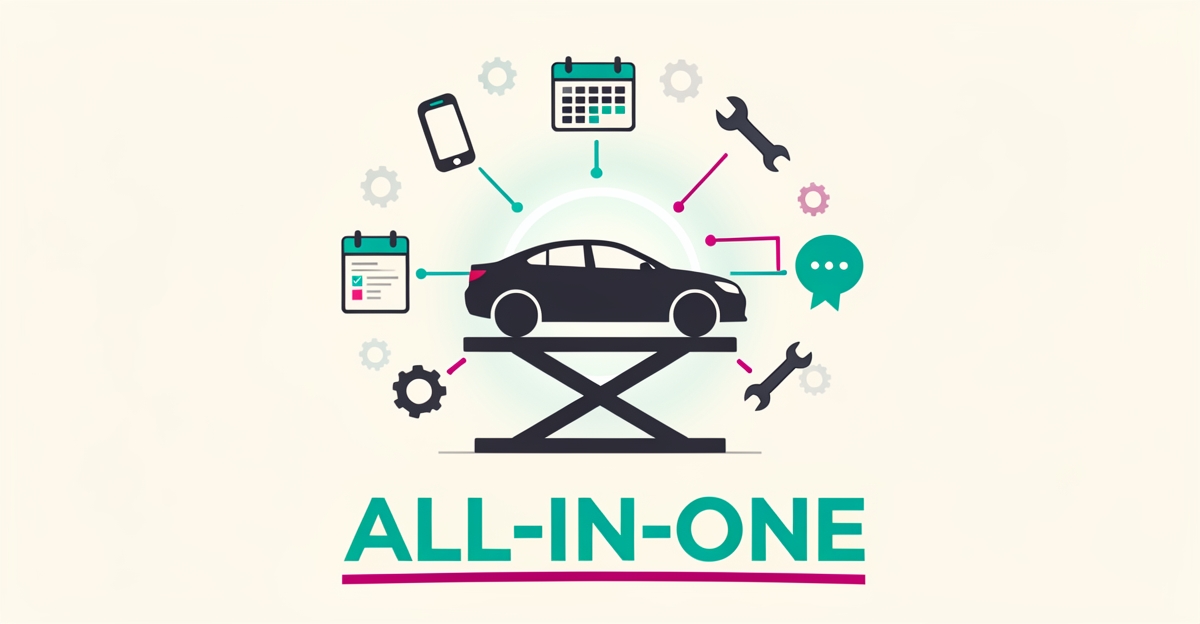
What an integrated platform actually needs to replace isn’t a wishlist — it’s the operational essentials proven by market leaders. At minimum, it must include a CRM with a visual pipeline to track every lead and job, 24/7 lead capture through web chat, phone, and forms, automated follow-up triggered by customer behavior, online appointment booking, digital vehicle inspections, invoicing, real-time inventory tracking, and seamless accounting integration — especially with QuickBooks Online. These aren’t nice-to-haves; they’re the core functions shops use daily to move cars through the bay and money through the books.
The industry is clearly shifting toward single-dashboard solutions like Shopmonkey, Tekmetric, and AutoLeap, which combine these capabilities to eliminate the need for multiple logins and manual data transfers. As noted in expert analysis, shops moving from basic to advanced software require seamless integration with accounting software for accurate financial insights — a critical factor as they scale. This sync isn’t just convenient; it’s often the make-or-break feature for shops aiming to grow beyond a single location or technician team.
Without accounting integration, even the most feature-rich platform forces owners to export data, reconcile discrepancies, and waste hours each week on manual bookkeeping — time better spent on customer service or bay efficiency. A true all-in-one system doesn’t just collect data; it connects it across every touchpoint, from the first web chat to the final invoice, so nothing falls through the cracks and the books always match the work done. For custom auto shops focused on sustainable growth, that level of operational unity isn’t optional — it’s the foundation.
Ownership vs. Access: Why Your Digital Assets Should Belong to You
When you stop paying for most shop management platforms, you don’t just lose access—you lose everything you’ve built. Your website, your lead history, your SEO rankings, even your domain often vanish because these systems are rented ecosystems, not owned assets. You’re essentially paying rent on a digital storefront where the landlord keeps the deed, the inventory, and the customer list when you leave. This creates a dangerous vulnerability as the aftermarket shifts toward first-party sales channels projected to reach $35 billion by 2030, making long-term control of your digital presence not just preferable, but essential for sustainable growth.
True ownership means having portable code you can move, exportable data you control, and a domain registered in your name—not tied to a provider’s ecosystem. When you own these assets, your investment compounds over time: content continues to rank, lead histories inform smarter marketing, and your SEO equity grows instead of resetting to zero with every platform switch. This is especially critical in an industry where digital influence already affects nearly $200 billion in annual auto parts revenue, and shops that retain full control of their digital footprint are better positioned to capture value as consumers increasingly research and book services online.
- Your website’s code and content remain yours to modify, host, or transfer without penalty
- Customer data, lead history, and communication logs stay in your possession for ongoing use
- Your domain name stays registered to your business, preserving brand consistency and search authority
- SEO equity from blogs, service pages, and backlinks accumulates rather than disappearing when you leave
- You avoid costly data migration projects or rebuilding lead pipelines from scratch when changing systems
Most platform comparisons overlook this fundamental issue, focusing instead on features or price while ignoring what happens when the relationship ends. But for a custom auto shop investing in its digital future, ownership isn’t a technical detail—it’s the foundation of long-term resilience. As the market evolves and direct-to-consumer channels expand, shops that own their digital assets will be the ones able to adapt, scale, and profit from the aftermarket’s digital growth without being locked into a vendor’s terms or losing years of accumulated value overnight. Your digital presence should work for you—not the other way around.
Local business: doing this the old way?
One system replaces the whole pile.
All of it — the website, the follow-up, the content, the leads — built and run for you for $1,497 + $497/mo. Month-to-month, and you own everything.
See what your build includesEvaluation Checklist: 7 Questions to Ask Before You Commit
Evaluation Checklist: 7 Questions to Ask Before You Commit
Choosing the right all-in-one platform for your custom auto shop is crucial in today's digitally driven market. With the global e-commerce automotive aftermarket projected to grow from $147.6 billion in 2025 to $652 billion by 2035 at a 16.1% CAGR, making an informed decision is vital. Here’s a practical evaluation checklist grounded in market research and trends:
Does it combine CRM, booking, and lead tracking in one dashboard? A platform that integrates these functionalities can significantly reduce operational complexity. For instance, a study by Market.us highlights the importance of streamlined operations in the automotive aftermarket, where integrated solutions are increasingly preferred.
Does it integrate with QuickBooks Online natively? Ensure the platform supports seamless financial tracking. As noted by CSI Accounting, seamless integration with accounting software like QuickBooks Online is crucial for accurate business insights, especially as shops scale.
Can it capture leads 24/7 without a human on duty? AI-powered receptionists can be a game-changer. Way.com's success with connecting shops to 11 million vehicle owners for customer acquisition demonstrates the value of always-on lead capture mechanisms.
Does it generate SEO content and location pages automatically? Given the digital influence on $174 billion in auto parts revenue in 2022, auto-generating SEO-optimized content can boost your online presence. Hedges & Company emphasizes the growing digital influence, underscoring the need for effective SEO strategies.
Is inventory management built for aftermarket supply chain complexity? With ongoing supply chain challenges, ensure the platform can handle parts tracking, vendor management, and stock visibility effectively. The market's $147.6B+ aftermarket parts market necessitates robust inventory solutions.
Do you own everything if you leave? In a market where digital assets are crucial, platforms offering total ownership of code, content, domain, and data provide long-term security—a factor surprisingly underdiscussed in current market analyses.
Is pricing transparent without enterprise-tier lock-in? Avoid platforms with hidden costs. The market offers a range of pricing tiers (e.g., from $49/month for basic tools to $6,500/month for comprehensive suites like Shop-Ware's "Beyond" tier), so clarity is key.
Actionable Insight for Custom Auto Shops: When evaluating, prioritize platforms that address your specific growth needs, whether through marketplace integrations, AI-driven lead capture, or robust inventory management. Given the industry's projected growth and the importance of digital transformation, choosing a platform that aligns with your strategic objectives is paramount.
For example, a platform that combines a unified dashboard with native QuickBooks integration, like those highlighted in comparative reviews by Clean Fleet Report, can significantly streamline operations and improve financial management. Additionally, the ability to automatically generate SEO-optimized content can enhance your online visibility, a critical factor in attracting the digitally influenced $174 billion in auto parts revenue.
By focusing on these key evaluation points, custom auto shops can make an informed decision that drives business growth and efficiency in a rapidly evolving market.
Statistics Highlighting Market Urgency:
- 16.1% CAGR in the global e-commerce automotive aftermarket from 2025 to 2035 (Market.us).
- $174 billion in auto parts revenue influenced by digital channels in 2022 (Hedges & Company).
- 33.3% North America share of the e-commerce automotive aftermarket in 2025 (Market.us).
Next Steps: From Fragmented Tools to a Website That Runs the Business
Most custom auto shops don't have a software problem — they have a fragmentation problem. The average shop pays for five to eight separate tools that don't talk to each other, leaving leads stranded in one system, appointments in another, and follow-up in a third. Meanwhile, digital influence on auto parts revenue hit $174 billion in 2022 and is projected to reach $198 billion by 2025, making a unified online presence essential, not optional.
Start by auditing every subscription you currently pay for. Map each one — website hosting, CRM, scheduling, email marketing, analytics, project tracking, document tools — to a single capability in an integrated platform. The goal isn't more software; it's a custom website that converts visitors, captures every lead, follows up automatically, and builds search authority monthly while you stay focused on the build.
- Test the AI assistant with real shop scenarios: a custom build inquiry at 10 PM, a dyno appointment booking, a follow-up on a stalled quote
- Verify it handles voice calls, web chat, and form fills in one unified inbox
- Confirm it generates proposals, sends newsletters, and publishes SEO content without you lifting a finger
- Check that you own the code, content, domain, and data — no renting your own assets
Shops using AI Business Sites replace that entire stack with one platform built on Next.js and React — the same stack powering Netflix and Shopify — so the site loads fast, ranks locally, and runs the business behind the scenes. The global e-commerce automotive aftermarket is growing at 16.1% CAGR toward $652 billion by 2035. Your website should be capturing that demand, not managing logins.
Frequently Asked Questions
Why is an all-in-one platform crucial for my custom auto shop's digital presence?
What key features should I look for in an all-in-one platform for my custom auto shop?
Why is owning my digital assets (code, content, domain, data) important for long-term sustainability?
How does the growth of the e-commerce automotive aftermarket impact my custom auto shop?
What are the consequences of using disjointed tools for my custom auto shop's operations?
How can an AI-powered receptionist benefit my custom auto shop?
Why is seamless accounting integration, especially with QuickBooks Online, critical for my shop?
Your Website Should Be Your Best Employee
The math is straightforward: custom auto shops are losing revenue to fragmentation while the digital aftermarket surges toward $652 billion by 2035. Every disconnected tool — separate CRM, booking app, invoicing software, analytics platform — is a handoff where leads fall through, follow-up stalls, and data gets lost. The shops pulling ahead aren't using more software; they're using one system that connects the full journey from first click to final invoice, with accounting that syncs automatically and digital assets they actually own. AI Business Sites builds custom websites on Next.js and React that do exactly that: capture every lead 24/7, follow up instantly, publish SEO content monthly, send newsletters, manage projects, and run the business behind the scenes — all while you keep the code, the content, the domain, and the data. You don't need another subscription stack to manage. You need a website that works as hard as you do. Ready to see what that looks like for your shop? Start with the 7-question checklist above and find out what's possible when your digital presence finally pulls its weight.
FOR local businesss — BUILT AND RUN BY US
Your website. Your content. Your leads. Your data.
$500 starts your build. Seven days later it's live — chat, booking, follow-up, and your Google presence all set up. Then we run it, every month. You do the work you actually get paid for.