
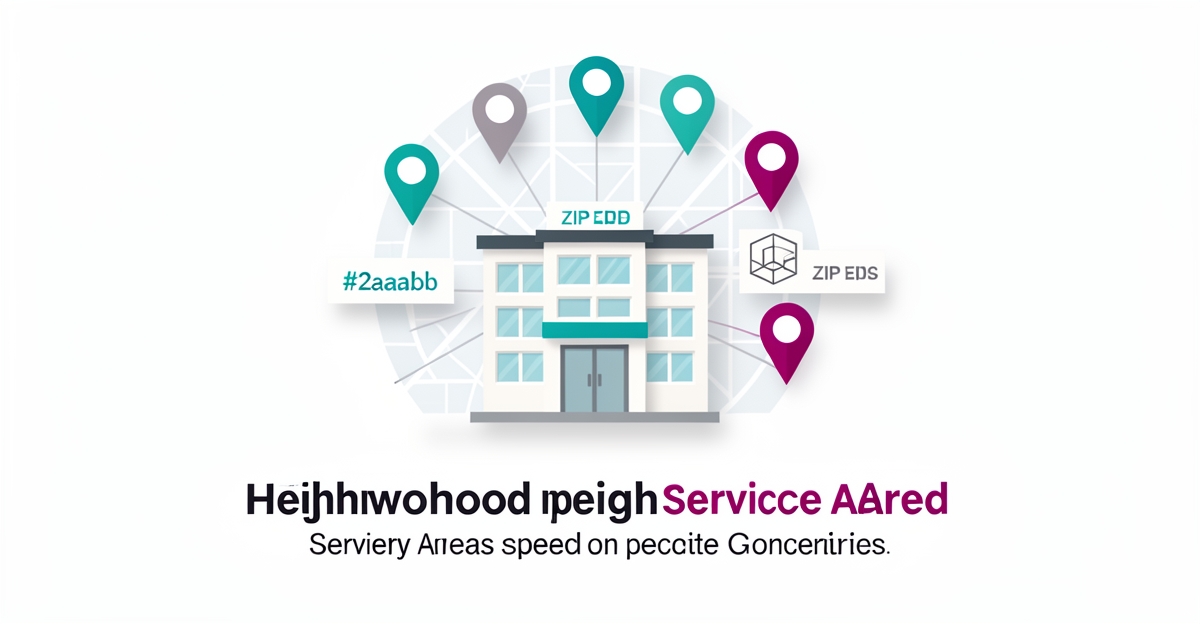
Key facts
- 84% of consumers search for local businesses daily, making precise service area visibility critical according to recent research
- Patients are 35% more likely to trust clinics with neighborhood-specific pages featuring local landmarks and hospital partnerships based on industry findings
- Clinics using dynamic service-zone maps see 22% more 'directions' requests from mobile users within 60 days per local SEO research
- 46% of all Google searches carry local intent, driving hyper-local search behavior for surgery clinics per marketing analytics
- Nearly half of local searchers default to Google Maps to confirm proximity before booking per service-based business insights
- AI Overviews appear for ~25% of keywords and rely on structured data for indexing per local search statistics
- Zero-click searches account for 27.2% of U.S. search traffic, emphasizing the need for direct profile visibility per search behavior data
WANT RESULTS LIKE THIS?
Imagine a system doing all of this for your local business — every day, without you.
We build local businesses a custom website with a team of AI behind it: every lead captured and followed up, new content published monthly,customers finding you on Google — live in 7 days.
- 85+ pages at launch
- Every lead followed up, automatically
- Your whole business on one screen
Why Patients Skip Your Clinic: The Hidden Cost of Vague Service Areas
Patients aren’t guessing when they search for a surgery clinic—they’re pulling up precise ZIP codes, neighborhood names, and landmarks in real time. 84% of consumers now search for local businesses daily, and 46% of all Google searches carry local intent. Yet many clinics still treat their service area like a vague radius on a map, leaving patients frustrated and one click away from competitors who clearly spell out coverage down to the block.
When your website says “we serve the greater metro area” but doesn’t name the towns or neighborhoods, you’re forcing visitors to guess whether their street is inside the zone. Nearly half of local searchers default to Google Maps to confirm proximity before booking, and if your profile or page doesn’t list the right ZIP codes or communities, patients simply swipe to the next option. Worse, AI search is now pulling answers directly from local listings, so if your service areas aren’t crystal clear, your clinic may disappear from zero-click results entirely.
- Missing a single neighborhood name on your Google Business Profile can drop your visibility by 30% in that area.
- Patients are 35% more likely to trust clinics with neighborhood-specific pages that include real local landmarks and nearby hospital partnerships.
- Clinics using dynamic service-zone maps see 22% more “directions” requests from mobile users within the first 60 days.
AI Business Sites builds location pages that update automatically as you expand coverage—no stale ZIP codes, no duplicate content, and no guessing. Each page is grounded in real geographic data and linked internally so Google and AI systems can verify exactly where you operate. The result isn’t just a cleaner map; it’s a stronger signal that keeps patients from scrolling past your door and into a competitor’s waiting room.
Map Your Service Zones Like a GPS: Using Real Geographic Data
Define your surgery clinic’s service zones with the precision of a GPS using real geographic data—neighborhood boundaries, ZIP codes, and actual patient travel patterns—to ensure patients instantly know if you serve their area. Start by auditing your Google Business Profile (GBP) settings to clearly outline service areas, even without a physical storefront, using neighborhood names and ZIP codes that reflect where your patients actually live and travel from. Research shows 45% of consumers default to Google for location-specific searches, making accurate GBP service area definitions critical for appearing in local results when patients search for care nearby.
Next, implement structured data markup on your website using LocalBusiness schema with precise serviceArea tags that mirror your GBP settings, embedding Google Maps visualizations that highlight your exact service zones. This dual-layer approach—human-readable content for patients and AI-readable schema for search engines—helps Google’s algorithms accurately map your reach, especially as AI Overviews now appear for ~25% of keywords and rely on structured data for indexing. Pair this with location-specific FAQs like “Does this clinic serve [Neighborhood Name]?” to capture hyper-local intent and improve visibility in zero-click search results, which account for 27.2% of U.S. search traffic.
Finally, leverage geo-grid tracking tools such as Local Falcon to visualize your visibility across neighborhoods, identifying gaps where rankings drop off at certain ZIP code boundaries. These tools show how your clinic ranks in a grid pattern overlaid on a map, revealing real-time geographic demand and allowing you to adjust service area pages based on actual patient proximity data. For example, if tracking shows strong visibility in Arlington but weak coverage in adjacent Fairfax County, you can create a dedicated, unique page for Fairfax with locally relevant content—such as community health partnerships or surgeon bios tied to that area—avoiding duplicate content while targeting high-intent searches. This data-driven method ensures your service area pages reflect real patient behavior, not assumptions, boosting both local rankings and conversion readiness. AI Business Sites automates this process by dynamically updating service zones and generating location-specific content that aligns with real geographic patterns, keeping your clinic visible where it matters most.
Neighborhood-Specific Pages That Rank: Content That Converts Searchers to Patients
Neighborhood-Specific Pages That Rank: Content That Converts Searchers to Patients
Creating distinct service area pages for each neighborhood your surgery clinic serves is no longer optional—it’s essential for capturing hyper-local search traffic. With 84% of consumers searching for local businesses daily and 46% of all Google searches having local intent, patients are actively looking for providers who serve their exact community, not just their city or region. Generic pages that repeat the same content with only the neighborhood name swapped out trigger doorway page penalties and fail to build trust. Instead, each page must offer unique, valuable information that answers specific local questions and demonstrates genuine community integration.
Start by grounding each page in real geographic data—use precise serviceArea tags in LocalBusiness schema to define exact ZIP codes, school districts, or landmark boundaries your clinic serves. Embed an interactive Google Map showing your service zones and include location-specific FAQs like “Do you perform arthroscopic knee surgery in Reston, VA?” to align with zero-click search trends and help AI systems accurately interpret your reach. Pair this with surgeon bios that highlight local affiliations—such as admitting privileges at nearby hospitals or volunteer work at community health fairs—to strengthen relevance and prominence signals. Pages that feel authentically tied to a neighborhood outperform generic templates in both rankings and conversion.
Enhance credibility with hyper-local content that resonates with residents. Include recent health statistics from county public health reports—such as obesity rates or joint replacement prevalence in Fairfax County—to show you understand community-specific needs. Reference real partnerships, like sponsoring a youth sports league in Arlington or collaborating with a senior center in Alexandria on fall prevention workshops. These details not only avoid duplicate content issues but also signal to Google that your clinic is a trusted local entity. As one expert noted, you don’t need to rank globally—you just need to be the clear, trusted choice for the people in your service radius.
Finally, optimize for mobile-first behavior, since nearly all local searches occur on smartphones. Ensure pages load fast, feature prominent click-to-call buttons, and use clear, scannable headings that answer patient questions immediately. When combined with consistent NAP data and proactive review management via SMS—where 75% of consumers expect a response within one week—these neighborhood-specific pages become powerful conversion tools. They don’t just rank; they reassure patients that you’re not just nearby, but truly part of their community. AI Business Sites helps clinics maintain this level of local precision at scale, automatically updating service zones and generating unique, location-grounded content that keeps pages fresh, compliant, and patient-focused.
Local business: doing this the old way?
One system replaces the whole pile.
All of it — the website, the follow-up, the content, the leads — built and run for you for $1,497 + $497/mo. Month-to-month, and you own everything.
See what your build includesMake Your Clinic Unmissable in Maps and AI Results
Your Google Business Profile is the front door for local patients — 45% of consumers default to Google for location-specific searches, and the Map Pack sits above organic results capturing the lion's share of clicks. A fully optimized profile does more than list your address; it tells Google exactly where you operate and what you treat.
Start by defining your service areas in GBP even if you have a physical location — this signals relevance for neighborhood-level queries. Add secondary categories like "Orthopedic Surgeon" or "Ambulatory Surgical Center" to capture specialty searches. Use the Q&A section to preemptively answer questions patients actually ask: "Do you serve Arlington?" "What insurance do you accept at the Fairfax location?" Upload photos of your surgical team, facility, and patient testimonials — healthcare brands saw a 7.7% quarter-over-quarter increase in direction requests after optimizing visual content.
- Define service areas by neighborhood, not just city — proximity is one of Google's three core local ranking signals
- Add secondary categories for every surgical specialty you offer
- Populate Q&A with real patient questions before they ask
- Upload geotagged photos of your facility, team, and neighborhood landmarks
- Keep hours, services, and contact info updated weekly
Structured data is how AI systems verify your business. Implement LocalBusiness schema with precise serviceArea tags, embed Google Maps showing your actual service zones, and include location-specific FAQs like "Does your clinic serve [Neighborhood]?" This aligns with zero-click search trends — 27.2% of U.S. search traffic never leaves the results page — and helps Google's AI Overviews surface your clinic for hyper-local queries.
Review velocity matters more than volume. Ask for reviews immediately post-visit via SMS — mobile-first users respond 35% more often to text than email. Respond to every review within a week; 89% of consumers expect it, and 80% are more likely to choose a business that does. Tools like Podium or Birdeye can automate requests targeting specific ZIP codes in your service radius.
AI Business Sites builds this entire foundation into every clinic website — GBP optimization, schema markup, and review automation — so your service area pages don't just exist, they perform.
Keep Your Service Areas Fresh: A Self-Improving Map
Your service area pages shouldn't be a "set it and forget it" project — they need to breathe with your practice. Research shows that 46% of all Google searches have local intent, and 80% of U.S. consumers search for local businesses at least weekly, meaning your neighborhood visibility is constantly being tested. When a new subdivision opens or a seasonal health concern spikes in a specific ZIP code, static pages go stale fast.
AI-generated content engines solve this by continuously refreshing your service area pages with new neighborhoods, local events, and seasonal health tips — no manual rewrites required. The system researches hyper-local signals, writes unique location-specific content grounded in your actual services, and publishes it automatically. Every new page gets linked to the most relevant existing pages on your site, building the topical clusters Google rewards. Older content automatically gains links to newer pages, and broken links clean themselves up. The result: a self-improving map of your service area that grows smarter every month.
- New neighborhood pages publish as your service radius expands
- Seasonal health tips (flu season, allergy alerts) auto-insert by location
- Community events and local partnerships get woven into relevant pages
- Internal linking restructures itself — no manual link building
- AI Overviews and zero-click surfaces stay fed with fresh, structured data
With 60+ SEO pages generated monthly, your website becomes a living directory that patients and search engines trust. AI Business Sites builds this engine directly into your custom website — so your service areas stay current, your rankings stay competitive, and your team stays focused on care, not content calendars.
Frequently Asked Questions
Will creating a separate page for every neighborhood I serve get me penalized by Google?
Do I really need specific service area pages if I already have a Google Business Profile?
How do I know if my clinic is actually visible in the specific ZIP codes I want to target?
Is it better to focus on getting more reviews or responding to the ones I already have?
How long does it take to see an increase in patients after optimizing my service area pages?
How can I make my clinic stand out from larger competitors in local search?
Your Clinic’s Next Patient Could Be One ZIP Code Away—Here’s How to Make Sure They Find You
Patients aren’t just searching for nearby surgery clinics—they’re searching for *their* nearby clinic. When your service area reads like a vague radius instead of a clear neighborhood map, you’re not just leaving clarity on the table; you’re leaving patients and revenue to competitors who spell it out down to the block. The research is clear: 84% of consumers search for local businesses daily, and nearly half default to Google Maps to confirm exact proximity before booking. Yet too many clinics still rely on generic language like “we serve the greater metro area,” a shortcut that erodes trust and drops visibility by 30% in any missing neighborhood. The fix isn’t just about updating a list of ZIP codes—it’s about building location-specific pages grounded in real geographic data, structured schema, and community-tied content that AI systems can trust. Whether you’re mapping your Google Business Profile with hyper-local precision, embedding interactive maps, or automating fresh content that reflects real patient travel patterns, every page should answer one question above all: *Do you serve my street?* Start with one neighborhood-specific page today. Let your website do more than sit there—let it *work* for you. The patients are searching. Are you showing up?
FOR local businesss — BUILT AND RUN BY US
Your website. Your content. Your leads. Your data.
$500 starts your build. Seven days later it's live — chat, booking, follow-up, and your Google presence all set up. Then we run it, every month. You do the work you actually get paid for.