
Key facts
- 75% of consumers expect personalized experiences according to Adobe's 2024 AI trends research
- 62% of consumers will leave brands that don’t deliver personalized experiences per Adobe's 2024 AI trends research
- Businesses using AI-powered personalization see 1.7x higher revenue growth based on case studies from successful startups
- 6.5% of new small businesses founded in 2025 adopted AI in their first month per JPMorgan Chase Institute data
- AI-powered recommendation engines can drive up to 35% of total e-commerce revenue as shown in startup case studies
- Generative AI automates repetitive content creation while maintaining brand consistency noted in Adobe's 2024 AI trends research
- AI enables real-time analysis of customer questions to dynamically surface relevant processing options per Adobe's 2024 AI trends research
WANT RESULTS LIKE THIS?
Imagine a system doing all of this for your local business — every day, without you.
We build local businesses a custom website with a team of AI behind it: every lead captured and followed up, new content published monthly,customers finding you on Google — live in 7 days.
- 85+ pages at launch
- Every lead followed up, automatically
- Your whole business on one screen
Why Static Websites Fail to Meet Modern Customer Expectations
Most small business websites still look the same today as they did ten years ago: static pages with fixed menus, generic content, and no way to adapt to who’s actually visiting. They serve the same message to everyone—whether the visitor is a halal restaurant owner looking for bulk beef cuts or a home cook searching for organic chicken—even though 6.5% of new small businesses now use AI to personalize experiences from day one. That’s a massive missed opportunity, especially when customers make it clear what they want.
Research shows 75% of consumers expect personalized experiences, and 62% will leave brands that don’t deliver. A website that can’t adjust to those needs isn’t just outdated—it’s costing your business leads every day. Static sites force visitors to dig through irrelevant options, waste time on pages that don’t answer their questions, and often leave without ever reaching out.
The problem isn’t just missed sales. It’s the friction built into every customer interaction:
- A butcher shop lists “beef” as a single option, even though some buyers need halal batches and others want pre-sliced cuts for bakeries.
- A specialty grocer highlights “organic” prominently, but doesn’t surface grass-fed or pasture-raised options when a restaurant owner lands on the page.
- A meat processor’s website shows the same homepage to every visitor, regardless of whether they’re a home chef, a food service buyer, or a retailer.
These aren’t minor oversights. They’re gaps in user experience that translate directly into lost revenue. The good news? Today’s AI makes it possible to turn a static website into a dynamic advisor, one that learns from each visitor’s needs and adjusts in real time. Instead of updating pages manually, businesses can let their site respond automatically—directing a restaurant owner to “halal beef for bulk orders,” a bakery to “pre-sliced beef for pastries,” or a family shopper to “organic chicken breasts” with no extra effort. A website shouldn’t just exist—it should act.
How AI Enables Real-Time Personalization of Processing Capabilities
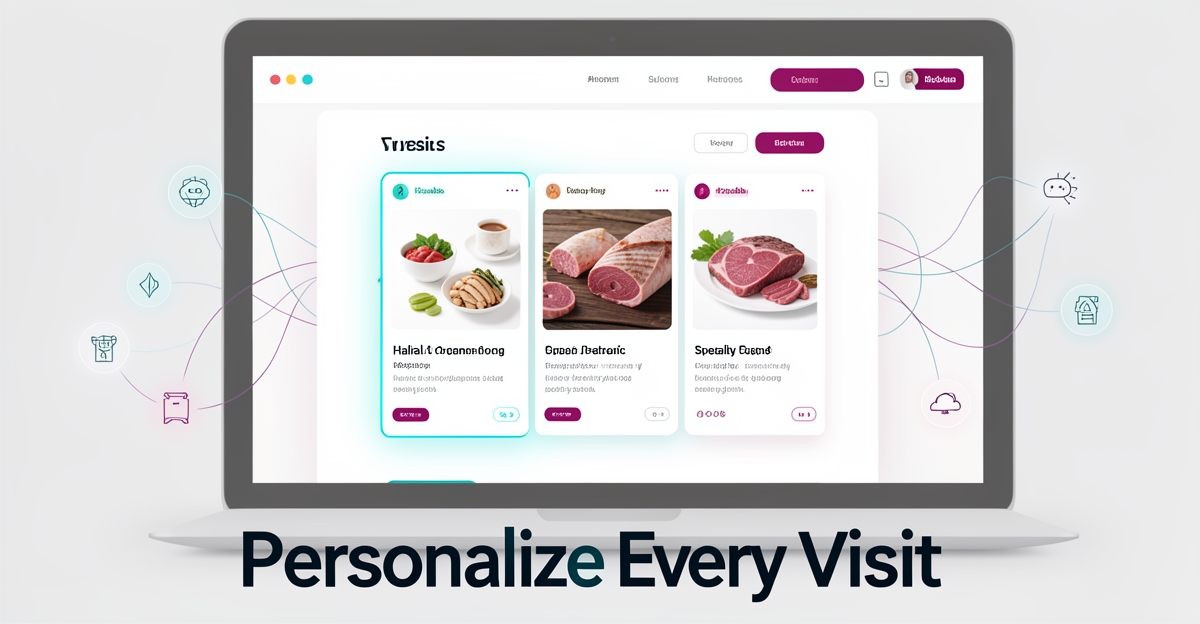
Most websites treat every visitor the same — showing the same processing options whether someone runs a bakery, a restaurant, or a specialty butcher shop. That static approach misses the nuance of what each customer actually needs.
AI changes this by analyzing customer inquiries in real time and dynamically surfacing the most relevant capabilities. When a bakery owner asks about portion control, the site can highlight "sliced beef for bakeries" automatically. When a restaurant operator="and" without anyone manually updating a page. According to Adobe's 2024 AI trends research, 75% of consumers now expect personalized experiences, and 62% will leave brands that fail to deliver.
Generative AI makes this responsiveness practical at scale. Instead of maintaining dozens of static service pages, the system creates tailored content on demand — matching processing options to the specific language and intent behind each inquiry. Adobe notes that generative AI excels at automating repetitive content creation while keeping output relevant and brand-consistent.
This capability matters especially for small businesses adopting AI early. JPMorgan Chase Institute data shows first-month AI adoption reached 6.5% for businesses founded in 2025 — a signal that newer operators expect their digital tools to adapt automatically.
- Real-time analysis of customer questions and search behavior
- Dynamic display of relevant processing options — halal, organic, specialty cuts
- Automatic content generation without manual page updates
- Continuous learning from every interaction to improve future matches
At AI Business Sites, we build this intelligence into the website itself — so the site responds to each visitor's needs the way a knowledgeable salesperson would, automatically and at any hour.
Local business: doing this the old way?
One system replaces the whole pile.
All of it — the website, the follow-up, the content, the leads — built and run for you for $1,497 + $497/mo. Month-to-month, and you own everything.
See what your build includesImplementing Dynamic Content with AI Business Sites’ Built-In Intelligence
Most websites treat every visitor the same—one-size-fits-all pages that force customers to dig for what matters to them. But when a halal butcher fields an inquiry from a bakery about sliced beef for pastries or a restaurant asks for bulk halal meat cuts, a generic page won’t cut it. Research shows 75% of consumers expect personalized experiences, and businesses that deliver them see up to 1.7x higher revenue growth. That expectation isn’t going away—it’s the new baseline.
AI Business Sites builds that baseline into every customer interaction from day one. The platform’s AI assistant doesn’t just answer questions—it learns from them. When a visitor asks about “organic chicken for meal prep,” the system doesn’t point to a static page; it surfaces the exact service, pricing, and even delivery options tailored to that need. Behind the scenes, the AI content engine converts those insights into action:
- Generative AI creates new service pages in minutes, matching the business’s actual offerings—whether it’s “halal meat for restaurants,” “organic beef for caterers,” or “pre-portioned specialty cuts for bakeries.”
- The AI doesn’t just publish content; it builds the site’s structure automatically. Every new page links to the most relevant existing ones, creating the topical clusters Google rewards with higher rankings.
- Older content gets fresh links to newer pages over time, so the site’s internal linking strengthens on its own—no manual cleanup required.
The system scales personalization without the business owner lifting a finger. A butcher shop in Halifax can serve customers across three provinces, each seeing tailored options based on their location, past inquiries, and even seasonal demand. When a Toronto bakery visits, the site highlights “pre-sliced beef for pastry dough”; when a Montreal restaurant checks prices, it emphasizes bulk halal cuts for menu planning. The AI doesn’t guess—it learns from real interactions and adapts in real time.
What makes this possible isn’t just AI—it’s a website built to run itself. Most small business sites gather dust until someone manually updates them; this one updates continuously, using customer behavior to refine its own messaging. The result? A site that doesn’t just exist—it grows with the business.
Frequently Asked Questions
Why does my current website feel like it's missing the mark with different types of customers?
How can a website automatically show the right processing options like 'halal' or 'sliced for bakeries' without me updating pages manually?
Is this kind of AI personalization only for big companies with technical teams?
Will an AI-powered website actually help me get more customers, or is it just a fancy feature?
What happens to my website's SEO when AI generates new pages automatically?
Do I lose control over what the AI shows customers on my website?
Your Website Should Work as Hard as You Do
A static website forces every visitor — whether they're a bakery needing pre-sliced beef or a restaurant sourcing halal cuts — through the same generic experience. That friction costs leads daily. AI changes the equation by turning your site into a dynamic advisor that analyzes inquiries in real time and surfaces the exact processing capabilities each customer needs, automatically. Generative AI creates tailored service pages without manual updates, while continuous learning sharpens every future interaction. The result is a website that doesn't just display information — it responds, adapts, and grows with your business. For small businesses ready to move beyond one-size-fits-all, the next step is simple: stop managing a website and start letting it work for you. AI Business Sites builds custom websites that handle this intelligence natively — answering questions, generating content, following up on leads, and optimizing itself continuously. See how a website that runs itself changes the way you do business at JPMorgan Chase Institute.
FOR local businesss — BUILT AND RUN BY US
Your website. Your content. Your leads. Your data.
$500 starts your build. Seven days later it's live — chat, booking, follow-up, and your Google presence all set up. Then we run it, every month. You do the work you actually get paid for.