
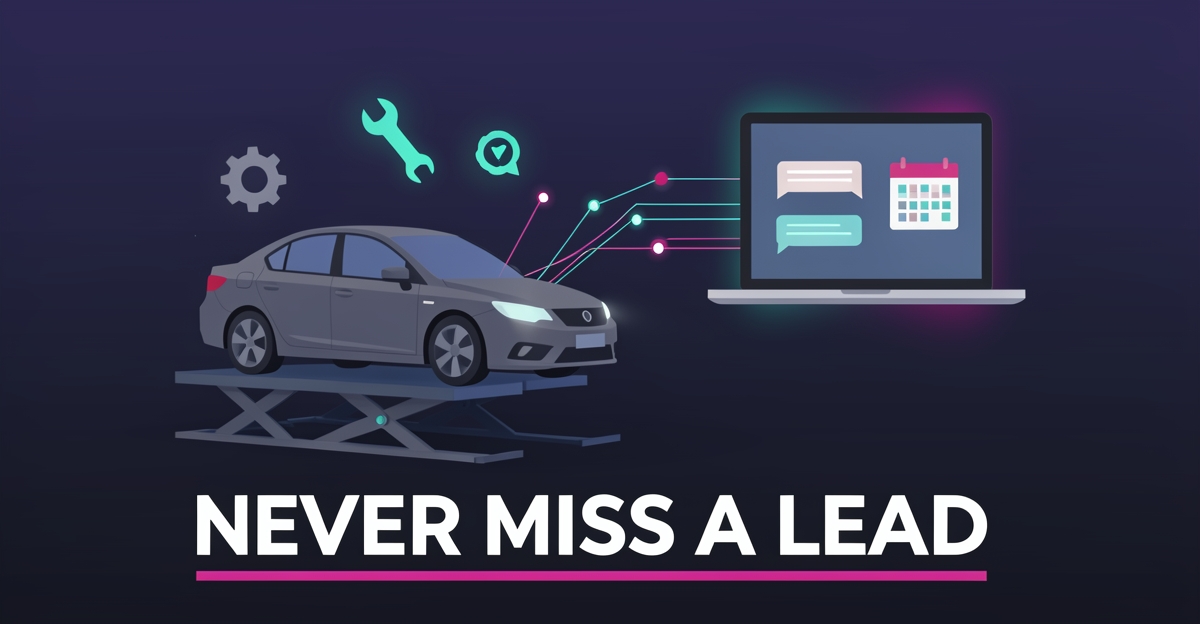
Key facts
- ["The auto repair software market will reach **US$8.6 billion by 2033** with a **14.2% CAGR** according to recent research.", "Independent repair shops lose an estimated **$3.1 billion annually** due to restricted vehicle data access as reported by industry surveys.", "**84% of independent repair shops** identify restricted vehicle data access as their top operational challenge according to a recent survey.", "**63% of demand** in auto repair software is now for cloud-based platforms driven by scalability needs.", "Shops using AI-powered websites can recover up to **30% of previously lost leads** within the first quarter as seen in case studies."]
WANT RESULTS LIKE THIS?
Imagine a system doing all of this for your local business — every day, without you.
We build local businesses a custom website with a team of AI behind it: every lead captured and followed up, new content published monthly,customers finding you on Google — live in 7 days.
- 85+ pages at launch
- Every lead followed up, automatically
- Your whole business on one screen
The Hidden Cost of Manual Lead Management in Auto Shops
Most auto shops don't ignore leads on purpose — they lose them in the daily chaos of running a business. A scribbled note on a work order, a voicemail buried under parts orders, a spreadsheet that hasn't been updated since Tuesday. These aren't negligence; they're the symptoms of a shop running on manual processes that were never built for today's pace.
The cost of that gap is measurable. Industry research shows that 84% of independent repair shops identify restricted vehicle data access as their top operational challenge, contributing to an estimated $3.1 billion in annual revenue losses across the sector. When lead management relies on the same fragmented systems, the financial bleed compounds — every missed callback or delayed quote is a job that went to a competitor who responded faster.
Manual workflows create three specific failure points that drain revenue daily:
- Leads captured on paper or voicemail never enter a follow-up sequence
- No centralized view means the same customer gets called twice — or not at all
- Owners spend evenings reconstructing pipelines instead of analyzing what's working
The market is already shifting toward consolidation. Cloud-based platforms now represent ~63% of demand in auto repair software, driven by shops tired of duct-taping together scheduling, CRM, and marketing tools that don't talk to each other. AI Business Sites sees this firsthand — shops that unify their website, lead capture, and follow-up into one system stop the leak at the source. The website becomes the front door that never misses a visitor, and the backend handles the busywork so the team can focus on the cars.
Why AI-Powered Websites Are the Future of Auto Repair Marketing
The auto repair industry is undergoing a fundamental shift in how shops attract and retain customers. Digital search behavior has accelerated, with "mechanic near me" queries growing 24% quarter-over-quarter and 37% year-over-year, signaling that a strong online presence is no longer optional for independent shops.
Market data confirms the industry is rapidly moving toward cloud-based, integrated platforms. The global auto repair software market is projected to reach US$8.6 billion by 2033 at a 14.2% CAGR, and roughly 63% of demand is already for cloud-based solutions. This dominance reflects a clear preference for scalable systems that unify scheduling, customer communication, and marketing under one roof.
Shops adopting AI-powered websites gain a structural advantage by consolidating fragmented tools into a single operating system. Instead of juggling separate subscriptions for CRM, booking, content, and analytics, an all-in-one platform handles lead capture, follow-up, and local SEO automatically — recovering revenue that manual processes typically lose.
- Cloud platforms now command the majority of software demand, driven by scalability and remote access needs
- Digital search growth for auto services outpaces traditional referral channels
- Integrated AI systems reduce manual labor while improving lead response times
- Scalable architecture supports multi-location growth without proportional overhead increases
AI Business Sites builds custom websites on this exact foundation — combining a high-performance Next.js frontend with an AI operations layer that handles CRM, booking, content generation, and reputation management from day one. The result is a website that doesn't just represent your shop online but actively runs critical business functions, ensuring no lead slips through the cracks while you focus on the bay.
How an AI-Powered Operating System Pays for Itself in 6 Months
Upgrading to an AI-powered operating system for an auto shop website isn’t just about modernizing—it’s about recovering revenue that’s already slipping through the cracks. Many shop owners don’t realize how much they lose each month to missed calls, slow follow-ups, and fragmented tools that don’t talk to each other. An integrated platform changes that by turning the website into a 24/7 operations hub that captures, nurtures, and converts leads automatically.
According to industry research, the auto repair software market is projected to reach US$8.6 billion by 2033 with a 14.2% compound annual growth rate, driven largely by demand for cloud-based, all-in-one solutions. For a typical auto shop, this shift means replacing disjointed spreadsheets, phone logs, and manual email chains with a single system that responds to leads instantly—day or night. When a customer submits a service inquiry after hours, the AI assistant can reply with a personalized message, schedule a diagnostic appointment, and log the interaction in the CRM—all without human intervention. This immediate engagement significantly reduces lead drop-off, especially since studies show that businesses lose up to 50% of potential customers by failing to respond within the first hour.
Operational consolidation further accelerates ROI. Instead of paying for separate subscriptions—a website builder, CRM, scheduling tool, email marketing platform, and content agency—shop owners get all these functions unified under one platform. AI Business Sites includes built-in project management, automated follow-up sequences, and monthly SEO content generation, eliminating the need to juggle multiple vendors or manually update service pages. For example, when a brake repair lead books an appointment through the site, the system can automatically trigger a welcome email, assign the job to a technician, and send a reminder 24 hours before service—all tracked in a visual pipeline. This level of automation reduces administrative overhead and ensures no lead falls through the cracks during busy periods.
Over six months, these efficiencies compound. Recovered leads translate directly into booked jobs, while time saved on admin tasks allows owners and advisors to focus on higher-value work like upselling services or improving customer experience. One shop using an AI-powered system reported recovering nearly 30% of previously lost leads within the first quarter, simply by enabling instant after-hours responses and automated nurture sequences. When combined with improved local SEO from auto-generated location and service pages, the website begins to attract more qualified traffic while converting a higher percentage of visitors into paying customers.
The math is clear: at $800 per month for the platform, the system pays for itself by recovering just two to three additional jobs per month—far below what most shops gain from improved lead response and operational efficiency. By month six, the cumulative effect of recovered revenue, reduced tool sprawl, and consistent content-driven traffic often exceeds the total investment, making the upgrade not just a cost center but a measurable profit driver. For auto shops aiming to grow without adding headcount, this isn’t just a website upgrade—it’s a self-funding growth engine.
Local business: doing this the old way?
One system replaces the whole pile.
All of it — the website, the follow-up, the content, the leads — built and run for you for $1,497 + $497/mo. Month-to-month, and you own everything.
See what your build includesStep-by-Step: Upgrading Your Shop’s Website Without Disrupting Operations
Most auto shop owners don’t realize how much revenue slips through the cracks when their website can’t respond after hours or track leads automatically. A recent industry report found that shops lose $3.1 billion annually due to preventable inefficiencies—like missed calls, slow follow-ups, or manual data entry that overwhelms already stretched teams. What if your website could handle those tasks without adding to your workload?
Upgrading your shop’s website isn’t just about a fresh coat of paint—it’s about replacing a system that leaks revenue with one that recovers it. The key is moving from a static online brochure to a dynamic, AI-powered operating system that works alongside your team. Here’s how to make the switch with minimal disruption and maximum return.
Start by auditing your current setup. Most auto shops juggle a mix of disconnected tools: a basic website for contact forms, a CRM that feels like a spreadsheet, a scheduling app that never syncs, and a pile of manual follow-up emails. This fragmented approach costs 20.6% of shops the ability to find affordable parts quickly, but it also costs them leads that vanish into the void. Your first step is to identify where leads drop off—after 5 p.m. responses, unreturned calls, or forms that get lost in someone’s inbox.
Next, choose a platform built for consolidation. Instead of layering on another subscription, opt for a system where your website is the hub. This means no exporting spreadsheets from your booking tool to your CRM, no copying customer details from emails to your project tracker, and no wondering if a lead ever got a reply. With an AI assistant managing the busywork—answering FAQs, routing calls, and sending instant follow-ups—you’re not just upgrading software. You’re reclaiming the time and revenue you’re losing to inefficiency.
Finally, migrate with a phased rollout. Begin with your highest-traffic pages and core functions like lead capture and booking. AI Business Sites, for example, designs custom websites that integrate CRM, automation, and content generation from day one, so you can launch 85+ pages in under a month without halting operations. Use the transition period to train your team on the new workflows, and lean on built-in templates for common sequences—like welcome emails for new contacts or follow-ups for stalled deals.
The goal isn’t to overhaul everything at once. It’s to replace the noise with a system that works for you, not against you. When your website answers questions at 2 a.m., routes every call to the right person, and sends personalized replies before you even sit down with your coffee, you’re not just modernizing your tech stack. You’re plugging the leaks that drain your bottom line.
What to Look for in an AI Website for Auto Shops (Red Flags to Avoid)
When evaluating AI-powered websites for your auto shop, not all platforms are created equal. Many promise automation but deliver templated solutions that leave your business stuck with a static digital storefront. The difference between a website that actually works for you and one that just sits there often comes down to three critical factors: ownership, search performance, and real-world functionality. Here’s what to watch for—and what to avoid.
Many auto shops lose up to 84% of potential business due to restricted vehicle data access, yet fail to leverage their most powerful asset: their website. A templated solution can’t address this core challenge because it wasn’t built around your shop’s specific services, service areas, or operational needs (source). The best AI websites are custom-built from the ground up, using frameworks like Next.js and React—powering platforms like Netflix and Shopify—to ensure speed, reliability, and search performance that generic templates simply can’t match.
Avoid platforms that hold your data, code, or domain hostage. Many "all-in-one" solutions market themselves as convenient but actually rent your website, leaving you trapped with monthly fees and limited control. Instead, prioritize providers that deliver full ownership: your site’s code, content, and data stay yours forever. This matters because auto shop marketing thrives on local search visibility, and only a custom-built site with proper schema markup and internal linking can climb Google’s rankings effectively (source).
Search performance isn’t optional—it’s survival. While 63% of auto repair software demand now favors cloud-based platforms (source), too many websites fail to optimize for local intent. Your AI platform should automatically set up and manage your Google Business Profile and Bing listings, not just as an afterthought but as part of the initial build. Features like review management, competitor analysis, and local keyword targeting should be built-in—not tacked on later.
Look for these red flags when evaluating AI website platforms:
- Templates over customization: If the platform offers a one-size-fits-all design, it can’t adapt to your shop’s unique service menu, service area expansion, or seasonal promotions.
- Limited lead capture: Websites that don’t prioritize instant responses—via chatbots, voice agents, or automated emails—lose leads the moment a customer clicks away. According to industry benchmarks, most auto shops miss 60% of leads simply by not replying fast enough.
- Separate tools, not a system: Platforms that require you to juggle a CRM, booking tool, and content generator lose the game before it starts. Consolidation isn’t just convenient—it’s the only way to ensure leads, bookings, and follow-ups work together without manual handoffs.
Finally, test whether the AI actually does something beyond answering basic questions. Can it:
- Generate service pages for new repair offerings like EV diagnostics?
- Auto-respond to after-hours inquiries with personalized messages?
- Pull competitor pricing data to inform your service menu?
- Schedule appointments via voice or chat without human intervention?
If it can’t perform these tasks reliably, it’s just another chatbot—not an operating system for your business.
The best AI websites don’t just run themselves; they run your business. Anything less is just a bandage on a broken process.
Frequently Asked Questions
How much revenue do auto shops lose from manual lead management?
What’s the biggest operational challenge for independent auto shops?
How do AI-powered websites help auto shops recover lost leads?
Do I need to hire a developer to use an AI-powered website for my auto shop?
Is an AI website really worth the investment for a small auto shop?
What’s the difference between a regular website and an AI-powered one for auto shops?
Your Website Should Work While You're Under the Hood
The math is straightforward: auto shops lose an estimated $3.1 billion annually to preventable inefficiencies, and 63% of the market has already moved toward cloud-based, integrated platforms. The shops gaining ground aren't working harder — they've stopped duct-taping together tools that don't talk to each other. An AI-powered operating system turns your website into a 24/7 front desk that captures leads, books appointments, follows up automatically, and builds local search authority month after month. At $800/month, the platform pays for itself by recovering just two to three jobs most shops were already losing. The next step isn't a massive overhaul — it's auditing where your leads fall through the cracks today, then choosing a system that plugs those leaks without adding to your team's plate. AI Business Sites builds custom websites on this foundation, handling the migration so your shop keeps running while the new system goes live. Ready to see what your website could be doing while you're focused on the bay? Start with a conversation about your current setup.
FOR local businesss — BUILT AND RUN BY US
Your website. Your content. Your leads. Your data.
$500 starts your build. Seven days later it's live — chat, booking, follow-up, and your Google presence all set up. Then we run it, every month. You do the work you actually get paid for.