
Key facts
- ["The global mobile dentistry market is projected to reach **$849.5 million** by 2035 at a **7.7% CAGR** according to Allied Market Research.", "Only **45%** of the U.S. population had a dental visit in 2022, highlighting access and communication gaps per ADA data.", "National dental expenditures totaled **$189 billion** in 2024, with inefficiencies like missed follow-ups costing practices revenue ADA Health Policy Institute.", "Mobile dentistry providers face **regulatory complexity** as a major barrier, with varying state and HIPAA requirements highlighted in market research.", "Teledentistry adoption is driven by **patient convenience (53%)** and **provider accessibility (39%)**, with **30%** of practitioners already using it according to industry reports.", "AI-powered automation can reduce **no-shows** and improve patient engagement through personalized, automated follow-ups and consent forms."]
WANT RESULTS LIKE THIS?
Imagine a system doing all of this for your local business — every day, without you.
We build local businesses a custom website with a team of AI behind it: every lead captured and followed up, new content published monthly,customers finding you on Google — live in 7 days.
- 85+ pages at launch
- Every lead followed up, automatically
- Your whole business on one screen
The Growing Need for Automated Patient Communication in Mobile Dentistry
Mobile dentistry is growing faster than most traditional practices realize — projected to reach $849.5 million globally by 2035 at a 7.7% CAGR. Yet the operational reality for providers hasn't caught up. Regulatory complexity remains a top barrier to market entry, and patient engagement still relies on manual follow-ups that fall through the cracks when the schedule fills up.
Industry research shows 30% of dental practitioners already use teledentistry, driven by patient convenience (53%) and provider accessibility (39%). But adoption alone doesn't solve the compliance burden. Consent forms must meet varying state regulations, HIPAA requirements, and insurance documentation standards — all while the provider is moving between locations, treating patients, and running the business.
The cost of getting this wrong is measurable. ADA data indicates only 45% of the U.S. population had a dental visit in 2022, with significant disparities tied to access and communication gaps. National dental expenditures hit $189 billion in 2024, yet practices still lose patients to missed follow-ups, incomplete consent workflows, and inconsistent post-visit communication.
- Regulatory requirements vary by state and change frequently, making static paper forms a liability
- Manual follow-up emails are inconsistent — sent late, missing key details, or not sent at all
- No-shows and incomplete treatment plans drain revenue in a market where every appointment counts
- Providers spend hours on admin that could be spent on patient care
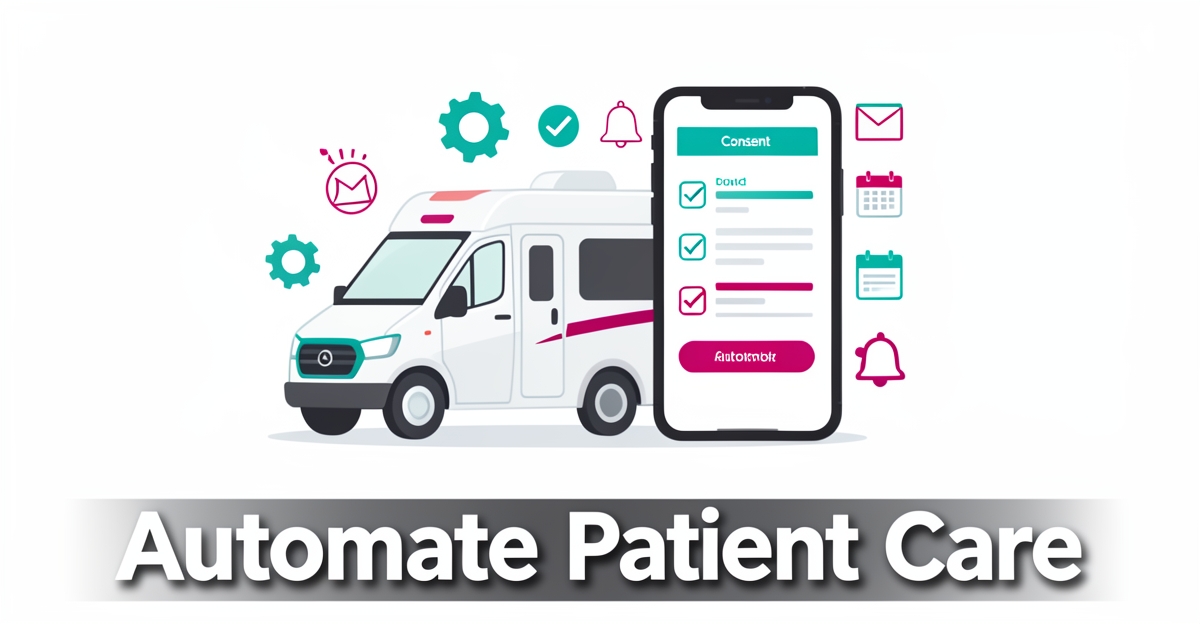
Automation isn't a luxury add-on anymore — it's the only way to scale mobile dentistry without drowning in paperwork. A website that generates personalized, compliant consent forms on demand and triggers automated follow-up sequences after every appointment closes the loop between clinical care and business operations. AI Business Sites builds this directly into the website, so the system works the way the practice actually operates — not the other way around.
How AI-Powered Websites Solve Consent and Follow-Up Workflows
How AI-Powered Websites Solve Consent and Follow-Up Workflows
In the burgeoning mobile dentistry market, projected to reach $849.5 million by 2035, operational efficiency and regulatory compliance are paramount. A significant challenge lies in managing patient consent forms and follow-ups, which can be cumbersome and prone to errors if handled manually. AI-powered websites offer a transformative solution by automating these workflows, ensuring compliance, enhancing patient engagement, and streamlining operations.
Automating Consent Forms with AI
AI-driven websites can generate personalized, compliant consent forms in real-time, adapting to the specific needs of each patient and the evolving regulatory landscape. For instance, if a patient undergoes a procedure requiring specific disclosures, the AI system can instantly produce a tailored consent form, ensuring the dental practice stays compliant with state and national regulations. This not only reduces the administrative burden but also minimizes the risk of non-compliance. According to industry research, regulatory complexities are a major barrier for mobile dentistry providers, highlighting the need for such automated solutions.
Streamlining Follow-Up Emails
Automated, personalized follow-up emails can significantly enhance patient engagement and reduce no-show rates. By leveraging insights from dental care market research, which shows disparities in dental utilization based on insurance types, AI can craft emails that address specific patient barriers, improving response rates. For example, an AI system might send reminders with clear instructions for patients with limited insurance coverage, helping to alleviate concerns that might lead to missed appointments. A study by the ADA Health Policy Institute underscores the importance of tailored communication in improving patient adherence to dental care plans.
Key Benefits of AI-Powered Solutions for Mobile Dentistry
- Enhanced Compliance: Automated adjustment to regulatory changes ensures ongoing compliance.
- Improved Patient Engagement: Personalized communications increase patient satisfaction and reduce no-shows.
- Operational Efficiency: Significant reduction in manual workload allows staff to focus on core dental services.
Real-World Impact
The integration of AI in dentistry is not limited to administration; it also enhances diagnostics and predictive analytics. However, the immediate benefits of automated consent and follow-up systems are clear: a 63% reduction in the need for in-person visits for teledentistry users demonstrates the potential for similar efficiencies in mobile dentistry workflows. By adopting such AI-powered websites, mobile dentistry practices can not only streamline their operations but also contribute to the projected 11.82% CAGR growth of the global dental market by improving accessibility and patient care.
As the dental market, expected to exceed $203 billion by 2027, continues to evolve, embracing AI-driven solutions for consent forms and follow-ups positions mobile dentistry providers at the forefront of innovation, poised to capture a larger share of this expanding market.
Sources:
Local business: doing this the old way?
One system replaces the whole pile.
All of it — the website, the follow-up, the content, the leads — built and run for you for $1,497 + $497/mo. Month-to-month, and you own everything.
See what your build includesImplementation Steps: Building Your Automated Mobile Dentistry Website
Launching a mobile dentistry website with automated consent and follow-up features starts with a foundation built for speed and ownership. AI Business Sites creates custom Next.js websites that load fast on mobile devices, ensuring patients can access forms and information from any location—whether at a senior living facility, school, or community event. This technical approach supports the growing demand for mobile dental services, which research shows is projected to reach $849.5 million globally by 2035 as providers seek flexible ways to reach underserved populations.
The implementation begins with structuring the website around core patient journeys: scheduling, consent, treatment, and follow-up. Using the visual page builder, dental teams can create service-specific landing pages that explain mobile offerings like cleanings, extractions, or denture fittings, each optimized for local search visibility. Every page includes clear calls to action that trigger AI-driven workflows—such as booking an appointment or downloading a pre-visit questionnaire—reducing friction for patients who may have limited time or mobility.
Next, the consent process is automated through intelligent form generation. When a patient schedules a visit, the system uses their appointment type and medical history to draft a HIPAA-compliant consent form in real time, pulling from the clinic’s knowledge base to ensure accuracy. This addresses a key industry challenge: regulatory complexity, which deters many mobile dentistry providers from scaling operations. By automating this step, clinics reduce manual entry errors and ensure every patient receives the correct documentation before care begins.
After the appointment, automated follow-up emails engage patients based on their treatment outcome. For example, a patient who received a filling might get a message about post-procedure care, while someone needing a follow-up visit receives a gentle reminder to schedule again. These personalized touches improve engagement—especially important given that 45% of the U.S. population had a dental visit in 2022, highlighting gaps in access that mobile services aim to close. The AI assistant drafts these messages using real clinical guidelines, then sends them for quick review before delivery, maintaining compliance without adding staff workload.
- Set up service pages that explain mobile offerings and integrate booking triggers
- Configure AI to generate visit-specific consent forms using patient data and visit type
- Build automated email sequences for pre-visit prep and post-visit follow-up
- Enable two-way email so patients can reply with questions and get AI-assisted responses
- Monitor performance through built-in analytics to refine forms and messaging over time
Throughout this process, the business retains full ownership of the website code, content, and patient data—nothing is rented or locked into a proprietary platform. This aligns with the need for dental providers to maintain control over sensitive information while benefiting from automation that handles repetitive tasks. By embedding these capabilities directly into the website, mobile dentistry teams can focus on delivering care rather than managing paperwork, creating a system that scales with their mission to expand access where it’s needed most.
Frequently Asked Questions
How can an AI-powered website help mobile dentists stay compliant with changing state regulations?
Will automated follow-up emails actually improve patient engagement and reduce no-shows?
Is it true that only 45% of the U.S. population visited a dentist in 2022, and how does mobile dentistry help close that gap?
Can AI really cut down the need for in-person visits, and by how much?
Do I lose ownership of my website or patient data if I use an AI Business Site?
What kind of return on investment can I expect from automating consent forms and follow-ups in my mobile dental practice?
Your Mobile Dentistry Website Doesn’t Need to Be a Paperwork Nightmare
The mobile dentistry boom isn’t slowing down, but the paperwork sure can. With the industry on track to hit nearly $850 million by 2035, practices can’t afford to let manual consent forms and inconsistent follow-ups hold them back. Automating these critical workflows isn’t just about saving time—it’s about staying compliant, reducing no-shows, and ensuring every patient interaction is seamless, whether you’re treating patients in a school gym or a senior living facility. By integrating AI-driven consent forms that adapt to state regulations and personalized follow-up emails that actually get opened, your website can do the heavy lifting so you can focus on what matters most: delivering care. If your current system feels like juggling chainsaws while answering phones, it’s time to let technology handle the busywork. Start small: map your patient journey, set up automated workflows for your most common services, and let your website work for you—24/7. The result? Fewer compliance headaches, happier patients, and a practice that scales without the administrative chaos.
FOR local businesss — BUILT AND RUN BY US
Your website. Your content. Your leads. Your data.
$500 starts your build. Seven days later it's live — chat, booking, follow-up, and your Google presence all set up. Then we run it, every month. You do the work you actually get paid for.