
Key facts
- Online therapy is projected to grow from $3.84B in 2024 to $14.10B by 2034, at a 14.3% CAGR according to Towards Healthcare.
- AI-driven search now influences local therapy discovery, requiring consistent NAP data and reviews for AI assistant recommendations per Semrush.
- Location pages now outperform generic blog posts for attracting local therapy clients, even without physical offices Semrush research confirms.
- Therapy location pages should contain >50% unique content per town to avoid being ignored by AI assistants and parents BrightLocal recommends.
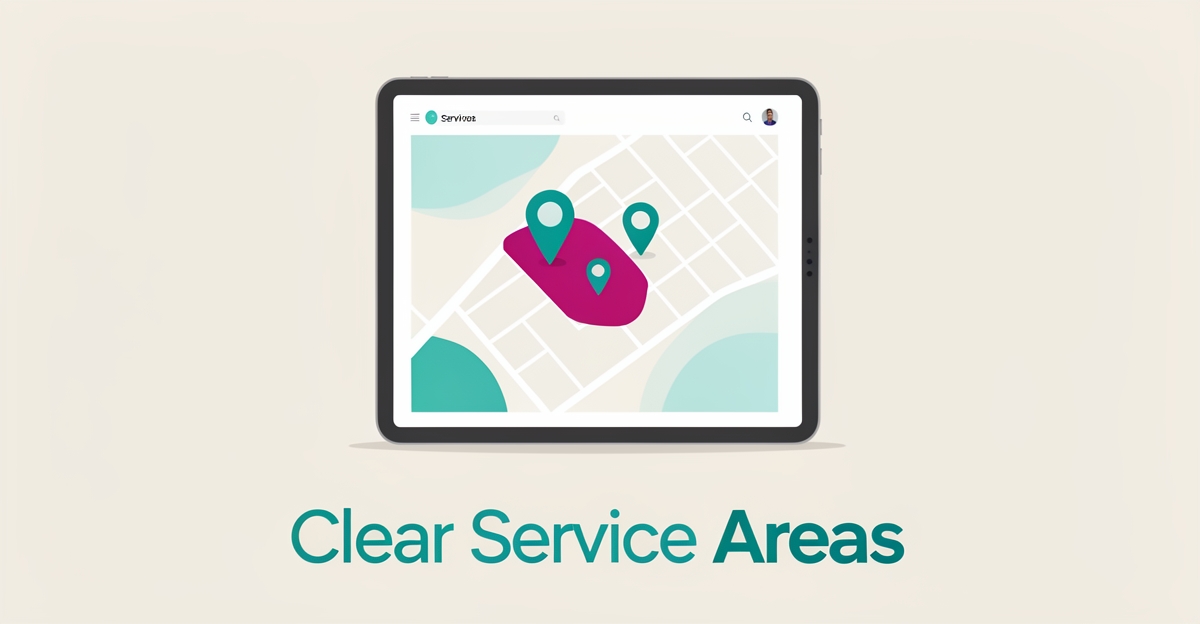
- Embedding service area maps (not just pins) improves parent scanning and SEO signals for therapy coverage Semrush advises.
- Mobile-first location pages must load in under 3 seconds with scannable design for parents searching on phones Semrush’s mobile-first indexing data.
- 80% of U.S. employers now integrate mental health resources, driving demand for clear therapy service communication reports Towards Healthcare.
- AI platforms can automate location page updates, but only if pages are built with unique, useful content first BrightLocal warns.
- Schema markup (LocalBusiness) helps search engines interpret therapy service locations more accurately for AI and traditional search Semrush explains.
- Consistent NAP data across your website, Google Business Profile, and citations builds trust for both parents and AI systems BrightLocal emphasizes.
WANT RESULTS LIKE THIS?
Imagine a system doing all of this for your local business — every day, without you.
We build local businesses a custom website with a team of AI behind it: every lead captured and followed up, new content published monthly,customers finding you on Google — live in 7 days.
- 85+ pages at launch
- Every lead followed up, automatically
- Your whole business on one screen
The Overload Dilemma: Why Clear Service Areas Matter for Therapy Services
The rapid expansion of therapy services into digital and multi-location models means providers now serve clients across broader geographic areas. With the online therapy market projected to grow from USD 3.84 billion in 2024 to USD 14.10 billion by 2034 at a 14.3% CAGR source, clear service area communication isn’t just a nicety—it’s a necessity for both trust and visibility.
Parents searching for therapy don’t have time for vague claims like “We serve the region.” Most scan quickly for three things: where you are, what you offer, and how to get in touch. When they land on a page crammed with unnecessary details, frustration sets in fast. The challenge grows when therapy services operate across multiple towns without a brick-and-mortar presence in each—how do you show reach without overwhelming visitors?
Service area clarity isn’t optional anymore. As AI-driven search reshapes local discovery, businesses must maintain consistent NAP data (Name, Address, Phone) and localized content to appear in AI Assistant recommendations and local search results source. According to SEO expert Noah Igler, location pages now outperform generic blog posts for attracting local clients—even when those pages don’t represent physical offices source.
So how do therapy services strike the balance?
- Dedicate one page per town or ZIP code, even without an office there. Each page should feel unique—think local pain points, accessibility info, or community-specific services.
- Embed an interactive service area map, not just a single pin. Parents need to visualize coverage instantly, and AI assistants rely on clear geographic signals source.
- Keep messaging scannable: bullet points, bold headers, and mobile-first design. Parents search on phones, and slow load times kill conversions.
- Match NAP details and hours across your website, Google Business Profile, and local citations. Inconsistent data breaks trust—and AI recommendations.
An AI platform can automate this work—generating pages, updating content in real time, and syncing with Google Business Profile—but only if the pages are built right to begin with. As BrightLocal warns, duplicative or thin pages not only hurt SEO but frustrate parents who need clear, trustworthy answers source. The key isn’t just visibility; it’s clarity that turns a search into a call or booking.
Science-Backed Solution: Structuring Service Area Content for Parents and AI
When parents search for therapy services, they’re often balancing care for their child with the practical demands of daily life—meaning their search journey must be fast, visual, and trustworthy. Research from BrightLocal confirms that location pages succeed only when they answer real user intent: Should this page exist? If it’s just a city name stuffed into a template, parents scroll past. But when it’s a page built for their town—with a map, clear hours, and a direct call-to-action—it becomes a tool they use. Therapy practices serving multiple areas can’t rely on a single “We serve X towns” page; they need dedicated, unique location pages that speak to each community’s needs.
The online therapy market’s explosive growth—from $3.84 billion in 2024 to a projected $14.10 billion by 2034, at a 14.3% CAGR—means providers are expanding beyond single offices to meet demand in rural and underserved areas. This shift makes geographic clarity non-negotiable. Parents searching for care aren’t browsing blogs; they’re scanning for where you are, what you offer, and how to get in touch. Semrush’s local SEO analysis shows that pages with embedded service area maps (not just office pins) help users visualize coverage instantly—critical for bottom-of-funnel decisions.
To build pages that work for both parents and search engines, follow this research-backed structure:
- Unique content per location: BrightLocal recommends over 50% of each page’s content should be location-specific—local pain points, staff bios, or accessibility details. Generic pages risk being ignored by AI assistants and parents alike.
- Embedded service area maps: Semrush advises replacing single-pin maps with full-area visuals so parents see coverage at a glance. This aligns with how AI assistants interpret geographic relevance in local search.
- Mobile-first design: With mobile-first indexing, every page must load in under 3 seconds and use large fonts. Parents aren’t scrolling on desktops—they’re confirming care options between appointments.
- Schema markup (LocalBusiness) to reinforce geographic data for search engines and AI tools.
- Consistent NAP (Name, Address, Phone) across your website, Google Business Profile, and citations—critical for trust signals in both traditional and AI-driven search.
AI platforms can automate this process—generating location pages in real time based on demand, updating content as hours change, and linking internally to services or FAQs. But automation only works on pages built for clarity first. As BrightLocal notes, AI-driven local SEO excels at maintenance, not creation. The foundation must be right: unique, useful, and scannable pages that parents can trust in seconds.
Local business: doing this the old way?
One system replaces the whole pile.
All of it — the website, the follow-up, the content, the leads — built and run for you for $1,497 + $497/mo. Month-to-month, and you own everything.
See what your build includesPractical Implementation: Steps to Automate and Optimize Therapy Service Area Pages
In a rapidly growing online therapy market projected to reach USD 14.10 billion by 2034 (growing at a CAGR of 14.3%), clear service area communication is no longer a nicety but a necessity for therapy providers serving multiple towns or states. Here’s how to leverage AI platforms to automate and optimize your therapy service area pages effectively:
- Action: Utilize an AI content engine (like that integrated with AI Business Sites) to create dedicated, unique location pages for each service area, ensuring >50% of the content is location-specific (e.g., local staff, community involvement).
-
Why It Works: Avoids SEO penalties for duplicate content and builds trust with parents scanning for relevant, trustworthy information (BrightLocal, https://www.brightlocal.com/learn/location-pages/).
-
Action: Embed interactive or static maps highlighting your entire service area (not just a pin) on each location page.
-
Why It Works: Parents can instantly visualize your coverage, and AI assistants favor clear geographic signals for local search recommendations (Semrush, https://www.semrush.com/blog/location-page-seo/).
-
Action:
- Design for mobile-first indexing with fast load times and scannable sections.
- Use schema markup (LocalBusiness) for structured data.
- Include location-specific FAQs targeting voice and AI snippets.
-
Why It Works: Aligns with how parents search (on phones, with voice commands) and how AI interprets site relevance (Semrush, https://www.semrush.com/blog/location-page-seo/).
-
Action: Leverage AI to:
- Automatically update hours, services, and FAQs in real time.
- Link internally to relevant service and blog pages.
- Sync with Google Business Profile (GBP) and local citations.
-
Why It Works: Reduces manual labor, ensures consistency, and enhances SEO by signaling a well-maintained site to search engines (Localo, https://localo.com/).
-
80% of U.S. employers now integrate mental health resources, driving demand for clear, accessible therapy service information (Towards Healthcare, https://www.towardshealthcare.com/insights/online-therapy-services-market-sizing).
- Location pages with unique content see better engagement and SEO performance, unlike generic or duplicated pages (BrightLocal).
- Create unique, AI-generated location pages for each service area with >50% custom content.
- Embed service area maps for instant visibility and SEO signals.
- Optimize all pages for mobile and AI search with schema markup and FAQs.
- Automate content updates, internal linking, and GBP synchronization with AI.
By following these steps, therapy services can ensure parents find clear, relevant information quickly, enhancing both user experience and local SEO visibility, all while leveraging AI to minimize manual workload. AI Business Sites, with its integrated AI content engine and automated SEO optimization, streamlines this process, allowing therapy providers to focus on delivering care rather than managing a complex online presence.
Frequently Asked Questions
Why do I need separate pages for each town if I don't have an office there?
How much unique content does each location page really need?
What's wrong with just listing all the towns I serve on one page?
Do I need an interactive map on every location page?
How can I keep all these pages updated without spending hours on it?
Is the online therapy market actually growing fast enough to justify this effort?
Turn Searches Into Bookings: Make Your Therapy Service Areas Instantly Clear for Parents
For therapy providers serving multiple towns, clarity in service area communication isn’t just about SEO—it’s about capturing parents who are ready to act. A vague “We serve the region” page overwhelms visitors and gets lost in AI-driven search. Instead, dedicate a unique location page to each town with mobile-first design, embedded service area maps, and location-specific details that answer real parent questions in seconds. Parents scan for three things: where you are, what you offer, and how to get in touch. When these answers are instantly visible and scannable, trust builds and conversions follow. Use AI platforms to automate the creation and updating of these pages, ensuring consistency across your website, Google Business Profile, and local citations. This isn’t about more software to manage—it’s about making your existing website work harder so you can focus on the care that matters. Start with one dedicated location page today and let parents find you without the guesswork.
FOR local businesss — BUILT AND RUN BY US
Your website. Your content. Your leads. Your data.
$500 starts your build. Seven days later it's live — chat, booking, follow-up, and your Google presence all set up. Then we run it, every month. You do the work you actually get paid for.