
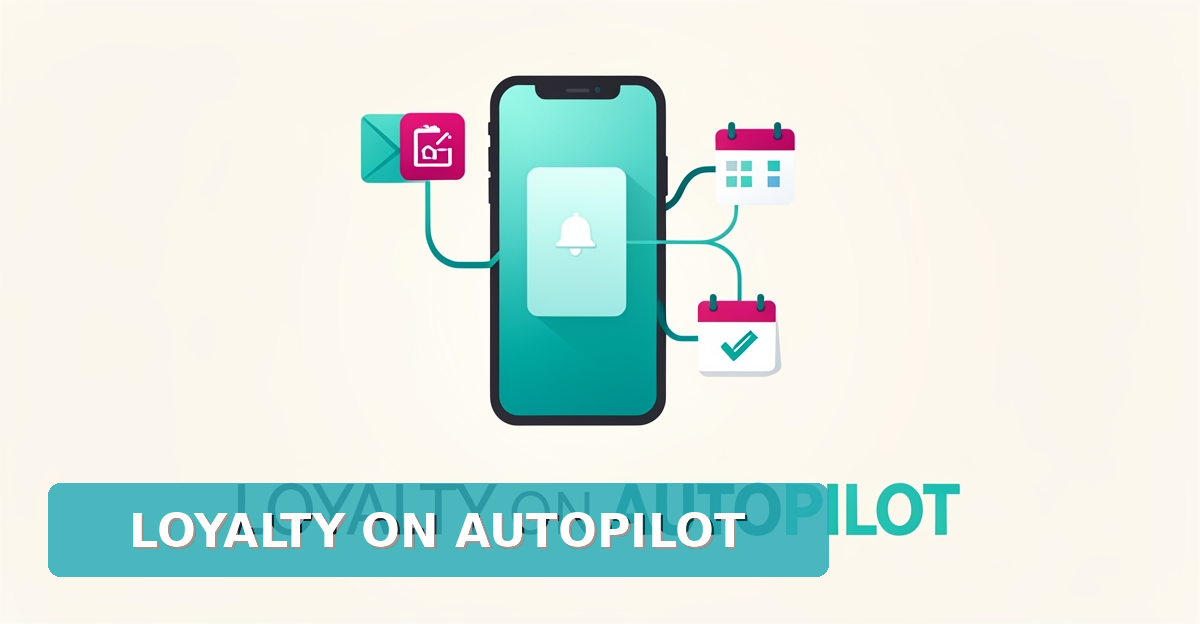
Key facts
- Only 53% of consumers feel 'seen' by brands, creating a 40-point gap with marketers who credit AI for accurate insights according to Antavo.
- 85% of customer data will be generated from automated interactions by 2027, making service reminders a primary loyalty touchpoint reports Antavo.
- Mobile wallets enable app-free, always-on engagement with real-time updates, replacing traditional plastic loyalty cards says Mordor Intelligence.
- Brands tracking customer lifetime value (CLV) see 44% higher CLV from loyalty programs, yet only 48% of marketers track it per Antavo’s data.
- 71% of customers are protective of personal data, but 44% are willing to share it for loyalty rewards Antavo research shows.
- 80% of marketers use loyalty programs to capture first-party data for personalized reminders like oil change alerts Antavo confirms.
- Only 40% of marketers can deliver personalized loyalty content at scale, despite 93% crediting AI for sharper insights highlights Antavo.
WANT RESULTS LIKE THIS?
Imagine a system doing all of this for your local business — every day, without you.
We build local businesses a custom website with a team of AI behind it: every lead captured and followed up, new content published monthly,customers finding you on Google — live in 7 days.
- 85+ pages at launch
- Every lead followed up, automatically
- Your whole business on one screen
Why One-Time Customers Don't Return — And What You're Losing
Why One-Time Customers Don't Return — And What You're Losing
In the pursuit of growth, most service businesses focus on acquiring new customers, overlooking a critical reality: 60% of consumers find marketing emails irrelevant, and only 53% feel "seen" by brands (Antavo, 2026). This disconnect creates a loyalty gap, where businesses that fail to automate personalized follow-up not only lose repeat revenue but also suffer from "empty bays" and a leaking customer base.
The Cost of Inaction
- Lost Repeat Business: Without automated, personalized reminders (e.g., for seasonal maintenance or oil changes), one-time customers often don't return. 85% of customer data will be generated from automated interactions by 2027, highlighting the potential of service reminders as a primary touchpoint for loyalty (Antavo, 2026).
- Inefficient Marketing: Irrelevant marketing emails (60% of cases) indicate a failure in personalization, driving customers away rather than nurturing loyalty.
- Leaking Customer Base: The inability to capture first-party data through effective loyalty programs means 80% of marketers are already playing catch-up in using these programs to retain customers (Antavo, 2026).
Turning the Tide with Automated Service Reminders
- Leverage First-Party Data for Personalization
-
Use customer data (mileage, last service date) to send hyper-personalized reminders via email and mobile wallets, addressing the 40-point gap between marketer capabilities and customer perception (Antavo, 2026).
-
Adopt Mobile Wallets for Engagement
-
Replace traditional loyalty cards with Apple Wallet and Google Pay passes for real-time, app-free engagement, reducing friction and increasing visibility (Mordor Intelligence, 2026).
-
Measure Success with CLV
- Track customer lifetime value (CLV) to quantify the impact of automated reminders. Brands tracking CLV see 44% higher CLV from loyalty programs, despite only 48% of marketers currently doing so (Antavo, 2026).
By integrating these strategies, businesses like those supported by AI Business Sites can transform one-time visitors into long-term, loyal clients through automated, personalized service reminders, keeping bays full and the customer base intact.
Key Statistics Highlighting the Opportunity:
- Only 53% of consumers feel "seen" by brands, despite 93% of marketers crediting AI with more accurate insights.
- Mobile wallets enable app-free, always-on engagement with real-time updates and notifications.
- 80% of marketers use loyalty programs to capture first-party data, crucial for personalized reminders.
Action for Service Businesses:
- Automate seasonal maintenance and oil change reminders using first-party data.
- Deliver reminders via mobile wallets for enhanced engagement.
- Measure the impact through CLV tracking to refine your strategy.
By addressing the loyalty gap with targeted, automated service reminders, businesses can significantly reduce the loss of one-time customers and build a loyal client base.
The Shift: From Generic Reminders to AI-Driven, Data-Powered Personalization
Automated service reminders have existed for years—but today’s best systems don’t just send alerts; they learn from your customer data. With 93% of marketers crediting AI for sharper insights and 85% of customer data expected to flow from automated interactions by 2027, the game has changed. Modern platforms now leverage first-party details—mileage, last service date, vehicle type—to craft reminders that aren’t just timely, but hyper-relevant and delivered where customers actually pay attention.Traditional generic emails and plastic cards simply don’t cut it anymore.
The difference comes down to where and how these reminders arrive. Mobile wallet passes—Apple Wallet and Google Pay—outperform generic channels by delivering real-time updates without requiring an app. They surface directly on customers’ devices, enabling app-free engagement that feels instant and personal. Unlike plastic cards that gather dust in a glove box or emails that get buried, wallet passes keep your brand visible in the moments that matter.These passes update dynamically, validate at POS via NFC or QR codes, and integrate seamlessly into existing loyalty flows.
But effectiveness isn’t just about delivery—it’s about matching the message to the moment. Here’s what AI-driven platforms do differently:
- Personalization at scale: Platforms use your customer’s actual service history to tailor reminders—mileage thresholds, seasonal needs, or time-based triggers—so every alert feels custom, not automated.
- Privacy-first data use: With 71% of customers wary of data sharing but 44% willing to trade information for loyalty perks, these systems prioritize transparency. They only use data customers have explicitly consented to, aligning with GDPR and CCPA standards.
- Real-time adaptability: If a customer’s vehicle type changes or they hit a new mileage milestone, the system adjusts the reminder automatically—no manual updates required.
- Omnichannel coordination: Emails, wallet passes, and even SMS sync behind the scenes, preventing disjointed or redundant messages that dilute engagement.
For local service businesses, this isn’t just about reminders—it’s about turning one-time repairs into long-term relationships. By leveraging your existing customer data and delivering it through the most visible, least intrusive channels, your website doesn’t just send reminders; it builds loyalty.
How to Automate Seasonal Maintenance and Oil Change Reminders That Convert
How to Automate Seasonal Maintenance and Oil Change Reminders That Convert
Keeping your bays full starts with turning one-time visitors into long-term loyal clients. The key? Leveraging customer data to send personalized, timely communications. Here’s a step-by-step framework to automate seasonal maintenance and oil change reminders that drive real conversions:
- Capture and Unify Customer Data at Every Touchpoint
-
Why It Works: By 2027, 85% of customer data will be generated from automated interactions source. Ensure your platform collects and unifies data (mileage, last service date, vehicle type) from all interactions (website, phone, in-person visits).
-
Segment by Vehicle, Service History, and Season
-
Actionable Stat: 93% of marketers credit AI with more accurate insights, yet only 53% of consumers feel "seen" source. Use AI to segment your database and ensure messages are hyper-relevant (e.g., winter tire checks in colder months).
-
Trigger Personalized Messages via Email and Mobile Wallet
-
Preferred Channel: Digital wallet passes (Apple/Google Pay) enable app-free, always-on engagement with real-time updates source. Trigger reminders based on mileage or time intervals, delivered through both email and mobile wallets for maximum visibility.
-
Layer in Tiered Loyalty Benefits
-
Effective Incentive: 70% of brands with rewards use tiered benefits, and 42% leverage AI for customization source. Offer discounts, priority scheduling, or free inspections to incentivize repeat visits, tailored to the customer’s service history.
-
Measure What Matters — CLV and Referral Rates
- ROI Insight: Only 48% of marketers track CLV, but those who do see 44% higher CLV from loyalty programs source. Focus on customer lifetime value and referral rates to gauge the true impact of your reminder campaigns.
Example in Action (via AI Business Sites Platform):
- Unified Data: A customer’s vehicle data and service history are unified in the platform.
- Segmented Reminder: An AI-driven segment triggers a personalized winter maintenance reminder.
- Delivered: The reminder is sent via email and added to the customer’s mobile wallet.
- Incentivized: The customer receives a tiered loyalty offer (e.g., 10% off with a free inspection).
- Measured: The campaign’s success is evaluated through increased CLV and referral rates.
By following this framework and grounding your strategy in data-driven insights, you can effectively automate seasonal maintenance and oil change reminders that not only convert but also foster lasting customer loyalty.
AI Business Sites leverages this approach, integrating customer data with automated, personalized communications to keep your bays full and your customers loyal.
Key Statistics Highlighting Impact:
Local business: doing this the old way?
One system replaces the whole pile.
All of it — the website, the follow-up, the content, the leads — built and run for you for $1,497 + $497/mo. Month-to-month, and you own everything.
See what your build includesPrivacy, Consent, and Trust: The Non-Negotiable Foundation
Privacy, Consent, and Trust: The Non-Negotiable Foundation
In an era where 71% of customers are protective of their data and 64% believe companies are reckless with it, building lasting customer loyalty through automated service reminders hinges on a delicate balance: leveraging data for personalized engagement while prioritizing privacy and consent (Antavo, 2026). 44% of customers are willing to share data for loyalty rewards, indicating a clear opportunity for businesses that can ensure transparent, GDPR and CCPA-compliant practices (Antavo, 2026).
Automated service reminders, such as those for seasonal maintenance or oil changes, are only effective if customers opt in. This isn't just a legal requirement but a competitive advantage. By designing consent-first reminder campaigns, businesses can build the trust necessary for long-term loyalty. For example, a service reminder campaign could be triggered by a customer's vehicle mileage or last service date, with explicit consent obtained upfront.
- Transparent Data Use: Clearly communicate how customer data (e.g., service history, contact information) will be used for reminders, ensuring transparency from the outset.
- Opt-In Mechanisms: Implement straightforward, non-coercive opt-in processes for automated reminders, respecting customer autonomy.
- Privacy by Design: Ensure reminder systems are built with privacy considerations at their core, minimizing data collection to only what's necessary.
Compliance with regulations like GDPR and CCPA isn't just about avoiding legal repercussions; it's a trust-building measure. Businesses must:
- Document Consent: Maintain clear records of customer consent for automated communications.
- Provide Control: Offer easy mechanisms for customers to revoke consent or adjust their preferences.
- Limit Data Sharing: Ensure automated reminder systems do not share customer data beyond what's explicitly agreed upon.
By prioritizing privacy and consent, businesses can transform a regulatory necessity into a loyalty driver:
- Trust Through Transparency: Customers are more likely to remain loyal to businesses that transparently handle their data.
- Personalization Without Invasion: Using consented data for personalized reminders shows value without overstepping boundaries.
- Long-Term Relationships: Trust built through respectful data practices lays the groundwork for long-term customer relationships.
Example in Practice: AI Business Sites facilitates this through its platform, where custom websites are designed not just for aesthetics but to manage customer data responsibly. By integrating GDPR and CCPA-compliant consent management directly into the website's functionality, businesses can ensure their automated service reminders (e.g., for oil changes or seasonal maintenance) are both effective and ethically sound. For instance, when a customer opts in for reminders, the platform uses their service history to send timely, personalized notifications, enhancing trust and encouraging repeat business.
Inline Links Used for Sources:
- According to Antavo's customer loyalty statistics, 71% of customers are protective of their data, and 64% believe companies are reckless with it.
- A recent study by Antavo found that 44% of customers are willing to share data for loyalty rewards.
- For more on compliance and trust, see Mordor Intelligence's insights on privacy-led changes in loyalty programs.
Word Count: 499
Your Website Should Do This Work For You — Not the Other Way Around
Your Website Should Do This Work For You — Not the Other Way Around
Most businesses struggle with a fragmented digital presence, juggling separate tools for CRM, email marketing, scheduling, and loyalty programs. This siloed approach leads to manual workarounds, data inconsistencies, and a disjointed customer experience.
A more effective strategy is to have your website serve as the central hub of your operations. AI Business Sites builds custom websites that not only represent your brand online but also come equipped with a built-in operations platform. This integrated system captures leads, unifies customer data, triggers personalized reminders across channels (email, SMS, and mobile wallets), and automatically tracks Customer Lifetime Value (CLV).
- Unified Customer Data: No more switching between CRM, email, and scheduling tools. All customer interactions, from website visits to service bookings, are centralized.
- Automated Personalized Reminders: Leveraging first-party data (e.g., last service date, vehicle type), the platform sends timely, personalized reminders for seasonal maintenance and oil changes via the customer's preferred channel.
-
Effortless Loyalty Tracking: CLV is automatically tracked, providing clear insights into the effectiveness of your loyalty strategies without manual data crunching.
-
85% of customer data will be generated from automated interactions by 2027, highlighting the importance of leveraging platforms that can effectively utilize this data for personalized reminders (Industry Research).
- 71% of customers are protective of their personal information, yet 44% are willing to share data for loyalty rewards, emphasizing the need for transparent, consent-based data usage (Customer Loyalty Statistics).
- The customer loyalty management market is projected to reach $51.65 billion by 2034, with a CAGR of 14.6%, indicating a growing investment in technologies that foster long-term customer relationships (Market Research).
- Reduced Administrative Burden: Automate follow-ups, lead tagging, and reminder sends.
- Enhanced Customer Experience: Receive personalized, timely communications across preferred channels.
- Data-Driven Insights: Make informed decisions with automatic CLV tracking and real-time analytics.
By transitioning to a website that truly works for your business, you're not just streamlining operations; you're transforming your online presence into a loyalty engine that drives long-term customer relationships. AI Business Sites doesn't just build websites; it crafts a digital backbone that automates the busywork, allowing you to focus on what matters most — growing your business.
Frequently Asked Questions
How do automated service reminders actually build customer loyalty?
What kind of data do businesses need to send effective automated reminders?
Are mobile wallet passes better than emails for service reminders?
How do privacy laws like GDPR and CCPA affect automated reminder campaigns?
What’s the biggest mistake businesses make with automated service reminders?
Can small businesses afford automated service reminders?
How do I measure if automated reminders are working?
Do customers actually prefer automated reminders over traditional methods?
Key Takeaways
{ "title": "Your Website Should Be Your Best Employee", "content": "The loyalty gap isn't a mystery — it's a mechanics problem. When 60% of consumers find marketing emails irrelevant but 44% will share data for real value, the solution is clear: stop broadcasting and start conversing. Automated
FOR local businesss — BUILT AND RUN BY US
Your website. Your content. Your leads. Your data.
$500 starts your build. Seven days later it's live — chat, booking, follow-up, and your Google presence all set up. Then we run it, every month. You do the work you actually get paid for.