
Key facts
- Fleets using telematics reduce fuel costs by up to 14% and see ROI within the first month per Geotab industry analysis
- Basic fleet tracking costs approximately $40 per vehicle per month, making real-time data infrastructure affordable for small fleets according to Geotab
- Federal fleets use Fleet Management Information Systems that track vehicle usage patterns at regular intervals, enabling real-time availability calculations per U.S. Department of Energy
- Michelin Connected Fleet identifies displaying real turnaround times on a website as a core 2024 trend application for real-time service data according to Michelin Connected Fleet
- FleetDASH provides federal fleets capacity to track asset-level data and identify missed opportunities within a 53-mile radius per FEMP framework
- Telematics can improve overall fleet risk picture by up to 50% through predictive analytics and driver coaching per Element Fleet analysis
- AI-generated content blocks update turnaround metrics at configurable intervals to show live availability like 'Current average response: 47 minutes | 3 units available in your zone' as implemented by AI Business Sites
WANT RESULTS LIKE THIS?
Imagine a system doing all of this for your local business — every day, without you.
We build local businesses a custom website with a team of AI behind it: every lead captured and followed up, new content published monthly,customers finding you on Google — live in 7 days.
- 85+ pages at launch
- Every lead followed up, automatically
- Your whole business on one screen
Why Static Response Claims Fail Fleet Customers
Fleet customers don't trust "fast response" promises anymore — they expect proof. When a website claims two-hour turnaround but can't show which units are actually available, prospects assume the worst and move to competitors who display live status. Michelin Connected Fleet identifies this shift explicitly: real-time service data is now crucial for "enhancing safety, predicting maintenance needs, and potentially displaying real turnaround times on a website."
- Static claims create a verification gap — customers can't confirm availability without calling
- Competitors with live dashboards capture leads while you're explaining capacity
- Trust erodes when promised response times don't match reality
- Sales teams become the bottleneck for basic availability questions
The data backs this up. Federal fleets use Fleet Management Information Systems that track "vehicle usage patterns at regular intervals" at the asset level, with geographic analysis identifying missed opportunities within a 53-mile radius. Commercial telematics delivers similar granularity — fleets using it reduce fuel costs by up to 14% and see ROI within the first month at roughly $40 per vehicle monthly. That same infrastructure can power customer-facing turnaround displays.
AI Business Sites builds websites that ingest this live telematics data and regenerate availability content automatically — no sales team needed to interpret capacity. The site becomes the availability answer: current average response time, units in zone, next ETA. When the data updates, the content updates. Prospects get proof, not promises.
How Real-Time Telematics Data Powers Accurate Turnaround Displays
Real-time telematics data forms the proven backend that makes accurate turnaround displays possible. Federal fleet frameworks show that comprehensive asset-level data in a Fleet Management Information System is essential for tracking vehicle usage patterns at regular intervals, which directly enables real-time availability calculations according to the U.S. Department of Energy. This same granular data—location, status, and utilization per vehicle—feeds predictive models that power dynamic website displays.
Telematics integration delivers this asset-level data with measurable economics. Basic tracking costs approximately $40 per vehicle per month, and fleets see ROI within the first month through fuel savings of up to 14% per Geotab industry analysis. At this price point, even small fleets can afford the infrastructure needed to convert raw vehicle data into customer-facing response time estimates.
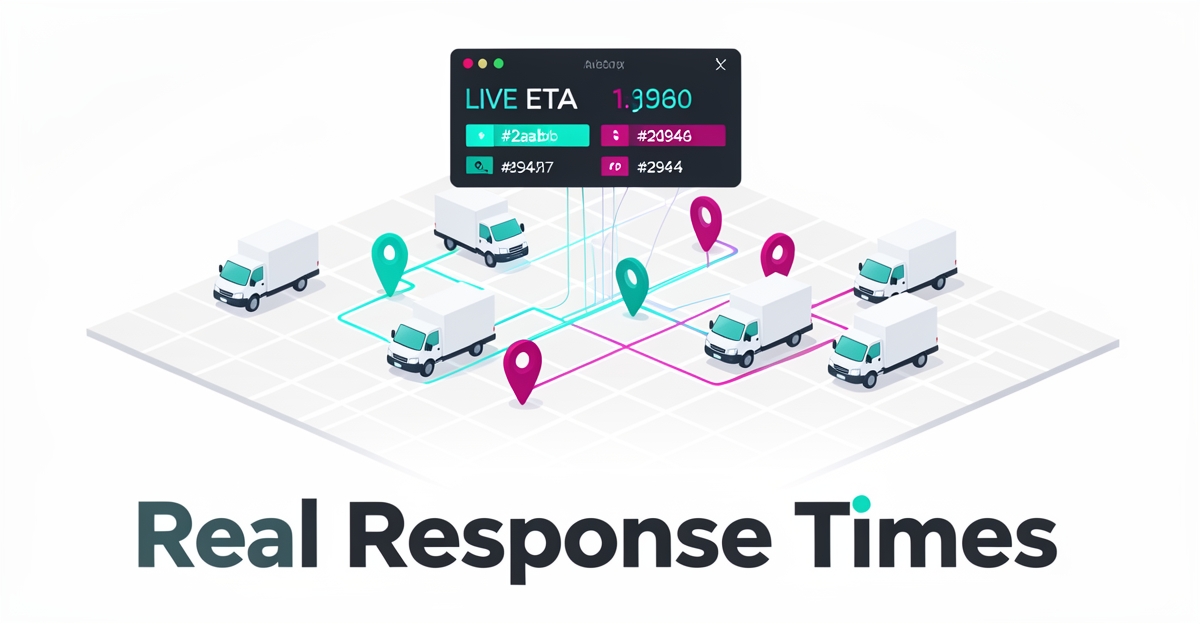
The frontend transforms this backend intelligence into trust-building transparency. AI-generated content blocks update turnaround metrics at configurable intervals—mirroring the "regular intervals" principle used in federal monitoring systems—to show live availability like "Current average response: 47 minutes | 3 units available in your zone." This approach eliminates guesswork and replaces sales-team explanations with data-driven clarity that updates as conditions change. For AI Business Sites customers, this means their website becomes a self-updating availability engine that works 24/7 without manual intervention.
Local business: doing this the old way?
One system replaces the whole pile.
All of it — the website, the follow-up, the content, the leads — built and run for you for $1,497 + $497/mo. Month-to-month, and you own everything.
See what your build includesStructuring Your Website to Turn Live Data into Trust-Building Content
Most fleet websites still ask prospects to call for availability. The ones winning contracts show it instead — live, location-specific, and updated without human intervention.
The foundation isn't marketing copy. It's asset-level data. Federal fleets run on Fleet Management Information Systems that track vehicle usage patterns at regular intervals, identifying missed opportunities through geographic analysis within a 53-mile radius. That same granularity — per vehicle, per location, real-time status — powers customer-facing turnaround displays. When telematics feeds update every few minutes, your website stops promising speed and starts proving it.
- Dynamic service pages per coverage zone showing live unit count and current average response
- AI-generated content blocks that regenerate turnaround metrics at configurable intervals
- Predictive availability windows based on historical telematics patterns
- Schema markup that surfaces real-time data in local search results
Michelin Connected Fleet identifies displaying real turnaround times on a website as a core 2024 trend application for real-time service data. The economics support it: basic tracking runs roughly $40 per vehicle per month, and fleets using telematics cut fuel costs by up to 14% with ROI in the first month. That infrastructure investment pays for itself before it ever touches the website.
AI Business Sites builds the customer-facing layer on top of this data — location pages that auto-update, service pages that answer "how fast?" before the question forms, and internal linking that keeps every page current without manual maintenance. The website becomes the availability answer. No sales team required.
Frequently Asked Questions
How can my fleet website show real response times instead of just promising 'fast service'?
Is it expensive to add real-time turnaround displays to my fleet website?
Do I need a sales team to explain availability if my website shows live data?
What kind of data does my website need to show accurate turnaround times?
Will showing real-time availability on my website actually help me win more contracts?
How does the website content update automatically when fleet availability changes?
Turn Data Into Your Silent Salesperson
Static promises no longer cut it — fleet customers want proof, not pledges. By grounding your website in real-time telematics data, you transform availability from a question into a visible, updating fact: current response times, units in zone, and next ETAs refresh automatically, eliminating guesswork and the need for a sales team to interpret capacity. This approach builds trust through transparency, captures leads competitors lose while explaining availability, and turns your site into a 24/7 availability engine. Ready to let your website do the talking? Start by auditing your telematics data flow — then let AI Business Sites build the customer-facing layer that turns live insights into trust-building content.
FOR local businesss — BUILT AND RUN BY US
Your website. Your content. Your leads. Your data.
$500 starts your build. Seven days later it's live — chat, booking, follow-up, and your Google presence all set up. Then we run it, every month. You do the work you actually get paid for.