
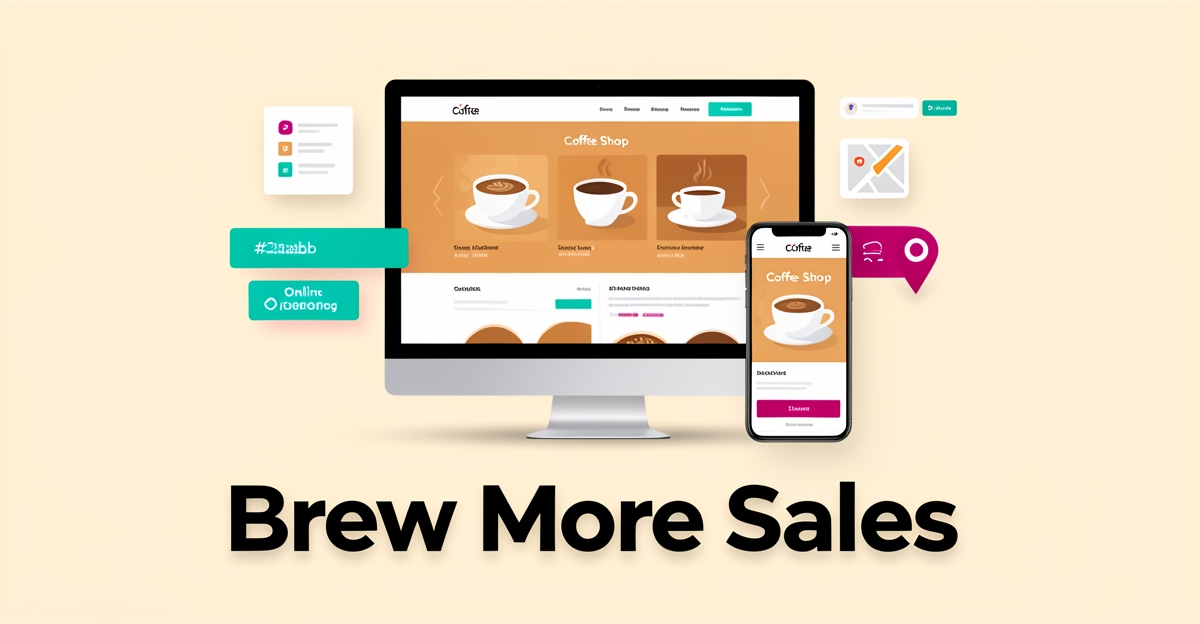
Key facts
- ["67% of café visitors leave sites requiring extra clicks for menus or downloads according to design experts", "94% of high-converting restaurant sites prioritize frictionless experiences over design per industry data", "Top coffee shops like Starbucks use web-formatted menus, avoiding PDFs as highlighted in café design reviews", "Authentic local narratives and community integration drive 80%+ of customer loyalty in successful café websites", "Over 70% of coffee shop websites with hero videos see increased engagement as reported by HubSpot", "Squarespace is the most recommended platform for café websites due to ease of use according to SiteBuilderReport", "Custom-branded merchandise increases customer loyalty by 65% in coffee shops"]
WANT RESULTS LIKE THIS?
Imagine a system doing all of this for your local business — every day, without you.
We build local businesses a custom website with a team of AI behind it: every lead captured and followed up, new content published monthly,customers finding you on Google — live in 7 days.
- 85+ pages at launch
- Every lead followed up, automatically
- Your whole business on one screen
Why Your Coffee Shop Website is Losing Customers (And How to Fix It)
Your coffee shop website might look beautiful, but if visitors can’t find your menu or directions in seconds, they’re already gone. Research shows that 67% of café visitors leave sites that force extra clicks—like downloading a PDF menu—before finding what they want. According to coffee shop website design experts, poorly structured navigation costs businesses conversions daily by making basic tasks feel like a chore.
Most owners design websites for aesthetics, not action. They bury core functions—like ordering or location details—under layers of visuals, assuming beauty alone will bring customers in. Yet industry data reveals that 94% of restaurants with high-converting sites prioritize frictionless experiences over polished design. Customers don’t care about parallax scrolling; they want to see your menu, check hours, and hit “Order Now” without hunting.
Outdated PDF menus are a silent killer. A site review of Hygge Café found that forcing visitors to download a PDF for the menu frustrated users and created unnecessary friction. Meanwhile, top-performing sites like Starbucks and Caribou Coffee embed menus directly on the page, letting customers scan options in seconds. The lesson? If your website requires downloads, swipes, or second clicks to access what visitors need, you’re losing leads before they even consider your espresso.
Even your brand personality gets lost in the shuffle when the website prioritizes style over substance. A design analysis of 12 leading coffee shops found that sites with strong visual storytelling—authentic photos of staff, customers, and the café itself—kept visitors engaged longer and converted more browsers into buyers. Yet many owners treat their site as a digital brochure, not a tool to reflect the shop’s unique vibe. The result? A forgettable online presence that fails to resonate with locals.
- Your menu should load instantly on the page, not as a downloadable PDF.
- Navigation must highlight three core actions: visit, order, and connect—nothing else.
- Hero images and videos should showcase your café’s real atmosphere, not stock photos.
- Local partnerships and sourcing stories belong on your site to build authenticity and trust.
AI Business Sites builds coffee shop websites that convert by focusing on what matters: fast access to menus, seamless ordering, and a brand story that sticks. No friction. No guessing. Just a site that works as hard as your baristas do.
Design with Personality: Align Your Website with Your Café’s Real-World Vibe
Your café’s website should feel like stepping through the door—same light, same energy, same story. When your digital space mirrors your physical one, customers instantly recognize your brand and feel at home before they even order.
Top-performing coffee shop websites follow one of three design archetypes: Minimalist Chic, Rustic Motifs, or Urban Edge—each directly reflecting the café’s atmosphere, from Scandinavian simplicity to warm, fireside charm or sharp, city-driven sleekness. Panther Coffee, for example, uses a clean, streamlined layout that syncs its logo, color scheme, and typography to create a cohesive brand experience online and off. Rival Bros takes a different route, leaning into a vintage-inspired palette that echoes its heritage-rich space and neighborhood roots. These aren’t just aesthetic choices—they’re strategic extensions of identity. In fact, all 10 major brands analyzed integrate their brand colors throughout their sites, reinforcing recognition and trust at every scroll.
This alignment goes beyond looks. It’s about translating what makes your café unique into digital form—whether that’s the texture of your reclaimed wood tables, the hue of your espresso machine, or the way morning light hits your counter. AI Business Sites helps craft websites that don’t just look like your café but feel like it, using your actual space, story, and style as the foundation. When color schemes, typography, and visuals flow seamlessly from counter to screen, your website doesn’t just attract visitors—it welcomes regulars.
Show, Don’t Tell: Use Photography and Video to Sell the Experience
High-quality, authentic photography is consistently the top engagement driver for coffee shop websites, with visual storytelling directly influencing visitor connection and intent. Research shows that sites like Panther Coffee use imagery to "tell the vibrant story of community involvement and expertise," while Maman NYC’s site is described as a "visual feast that beautifully mirrors the charm and elegance of their cafes." These examples/). To build warmth and community, photography should feature real staff and customers—not just products—capturing candid moments that reflect the shop’s personality and inviting atmosphere. Professional product photography, especially in clear glassware to showcase drink layers and toppings, significantly boosts purchase intent by making offerings look irresistible and authentic. Beyond still images, hero videos serve as powerful immersion tools, with Backatown Coffee Parlour opening their site with a storytelling video that highlights baristas, customers, and warm interior shots to immediately convey brand experience. AI Business Sites supports this approach by integrating visual storytelling into custom website design, ensuring every image and video content generation, and brand-aligned media creation—helping coffee shops translate their physical ambiance into a compelling digital presence that draws people in and keeps them engaged.
- Feature real people in photos to convey warmth and community
- Use professional product photography in glassware to increase purchase intent
- Place a hero video above the fold to immerse visitors in your brand experience
Local business: doing this the old way?
One system replaces the whole pile.
All of it — the website, the follow-up, the content, the leads — built and run for you for $1,497 + $497/mo. Month-to-month, and you own everything.
See what your build includesMenus Should Be Web Pages, Not PDFs: The Friction-Free Approach
Web-formatted menus eliminate the friction that frustrates coffee shop customers trying to make quick decisions. PDF menus require an extra click and download, creating a barrier that can drive visitors away—especially on mobile where file handling is cumbersome. As one expert noted, using PDFs instead of web-based menus is frustrating because it adds unnecessary steps to a simple task.
Web menus with clear categorization and left-side navigation allow customers to scan options instantly find what they want, whether they're looking for oat milk lattes or gluten-free pastries. This approach reduces decision fatigue by presenting information in a scannable, logical format rather than forcing users to open and zoom through a static document. Sites like Starbucks and Caribou Coffee demonstrate how effective left-side filtering improves usability across menu categories.
Sticky navigation and simple, focused bars with only 3-6 key items are proven UX essentials that keep core actions visible as users scroll. Research shows that clean layouts with clear visual hierarchy enable easy scanning and reduce cognitive load, making it effortless to jump from menu to location or order. AI Business Sites implements these principles by building websites where every page serves a clear purpose—answering questions or capturing contacts—without overwhelming visitors with cluttered navigation or hard-to-access information. This friction-free approach turns casual browsers into confident customers who can act on their cravings in seconds, not clicks.
Tell Your Story: How Local Narratives Build Loyalty and Differentiation
Your coffee shop has a story that no chain can replicate — the founder who apprenticed under a third-generation roaster, the beans sourced from a women's cooperative in Guatemala, the Saturday morning regulars who've become family. That narrative is your strongest differentiator, and research confirms it drives real loyalty. Panther Coffee's website "narrates the founders' journey" while Coava highlights its "commitment to quality and partnership with exceptional coffee producers" — both turning origin stories into digital trust signals (Plerdy's 2024 analysis of 12 coffee shop websites).
Physical design trends offer a blueprint for digital storytelling. When 2050 Coffee in Kyoto built its space around the "2050 coffee problem" — climate threats to future coffee availability — it turned sustainability into spatial narrative (Daily Coffee News' global survey of 2024 cafe architecture). Seven Island Coffee in Busan mirrors surrounding islands in its layout. ULA Café blends old and new within a former brewery tower. These aren't aesthetic choices; they're content pillars waiting to be translated: an "Our Space" page that explains your adaptive reuse story, a sourcing map showing hyper-local partnerships, a sustainability commitment that mirrors your compostable packaging.
Authentic local narratives convert browsers into believers. Rachel's Coffee House builds its entire digital presence around "commitment to locally roasted, fair-trade, and organic coffee" (Plerdy). Hilltop positions itself "where community and creativity brew together." Maman NYC's site is a "visual feast that beautifully mirrors the charm and elegance of their cafes." The pattern is clear: websites that extend the physical experience through founder voice, sourcing transparency, and community proof outperform generic templates.
- Founder journey — why you started, what you learned, where you're headed
- Sourcing philosophy — farm relationships, roast philosophy, quality standards
- Community integration — local partnerships, neighborhood history, customer stories
- Sustainability commitments — ethical sourcing, waste reduction, climate action
- Space narrative — adaptive reuse, design inspiration, equipment as anchor
AI Business Sites builds these narratives into the site architecture from day one — custom "Our Story" and "Our Coffee" pages that mirror your physical brand identity, not a template. The platform's content engine then keeps the story alive with monthly sourcing updates, seasonal origin features, and community spotlights that search engines reward with local visibility.
Frequently Asked Questions
Why do customers get frustrated with PDF menus on coffee shop websites?
What are the most important elements to include on a coffee shop website?
Do I need professional photography for my coffee shop website?
How should my coffee shop's website reflect my café's personality?
Can my website help with local SEO and search visibility?
What’s the advantage of having an AI assistant on my coffee shop website?
Turn Your Website Into Your Best Barista
Your coffee shop’s website isn’t just a digital menu—it’s the first impression, the silent salesperson, and the 24/7 ambassador for your brand. When it mirrors your café’s warmth, makes ordering effortless, and tells your authentic story, it doesn’t just attract visitors—it turns them into regulars. From ditching PDF menus for scannable web pages to using real photos of your team and space, every detail should serve one goal: removing friction so customers can focus on what matters—their next cup. AI Business Sites builds websites that do exactly that: fast, human-centered sites that reflect your café’s personality and work as hard as you do, with built-in tools to answer questions, follow up on leads, and keep your content fresh—so you can focus on brewing, not browsing. Ready to give your website the same care you give your espresso? See how a custom site can start working for you—learn from top-performing coffee shop designs and take the first step toward a site that truly belongs to your shop.
FOR local businesss — BUILT AND RUN BY US
Your website. Your content. Your leads. Your data.
$500 starts your build. Seven days later it's live — chat, booking, follow-up, and your Google presence all set up. Then we run it, every month. You do the work you actually get paid for.