
Key facts
- 92% of search queries are long-tail
- 88% of consumers prefer businesses responding to all reviews according to Search Engine Land
- Google Business Profile allows a maximum of 20 service areas per listing as noted by Whitespark
- SALPs fill the Google Local Pack/Maps visibility gap for Service Area Businesses Whitespark highlights
- AI can auto-generate region-specific content for high-intent long-tail keywords
- Responding to all reviews increases consumer likelihood of using a business by 88% Search Engine Land reports
- GBP limitations force Service Area Businesses to hide addresses, impacting local search visibility Whitespark study shows
WANT RESULTS LIKE THIS?
Imagine a system doing all of this for your local business — every day, without you.
We build local businesses a custom website with a team of AI behind it: every lead captured and followed up, new content published monthly,customers finding you on Google — live in 7 days.
- 85+ pages at launch
- Every lead followed up, automatically
- Your whole business on one screen
The ENT Service Area Visibility Gap
The ENT Service Area Visibility Gap
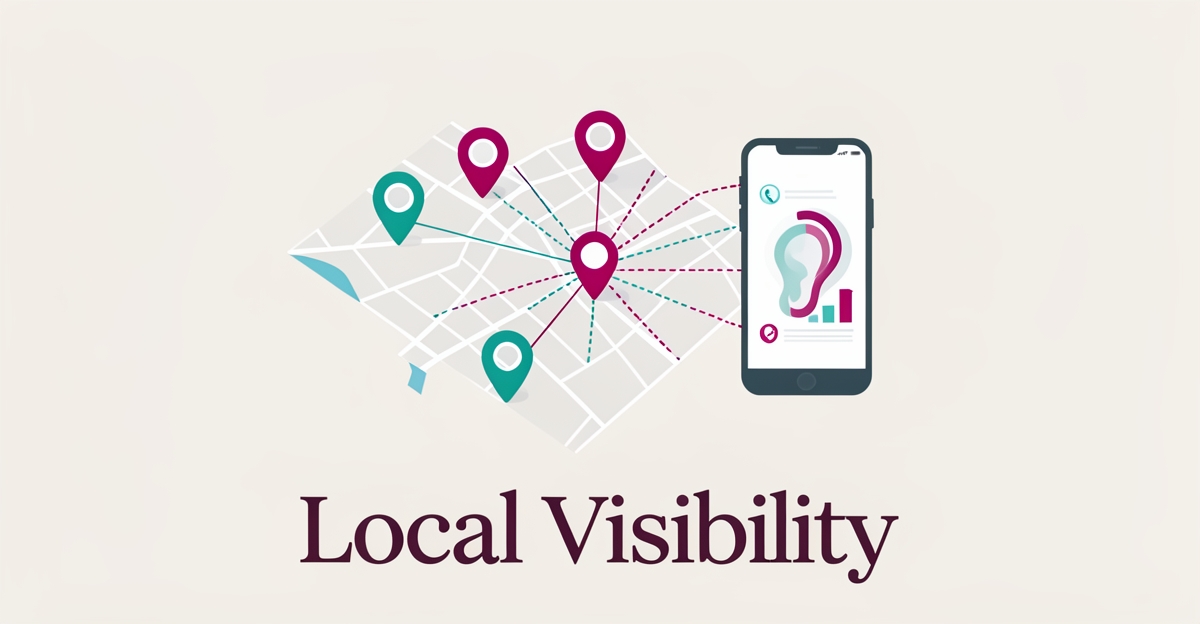
ENT practices face a peculiar challenge in the digital landscape: effectively communicating their geographic service areas to potential patients. This visibility gap stems from the inherent limitations of Google Business Profile (GBP) for Service Area Businesses (SABs), which are required to hide their business addresses, thus impacting their local search visibility. A study by Whitespark highlights that SABs, like many ENT practices, struggle with Google Local Pack/Maps visibility due to these constraints (Whitespark).
The Google Business Profile (GBP) Conundrum
While GBP is crucial for local SEO, its design doesn't fully cater to SABs. For instance, GBP allows a maximum of 20 service areas per listing, which can be restrictive for practices with broader coverage (Whitespark). This limitation can lead to a mismatch between the actual service area of an ENT practice and what's visible to potential patients online.
The Solution: Service Area Landing Pages (SALPs) Backed by AI
To bridge this gap, Service Area Landing Pages (SALPs) have emerged as a best practice, especially when leveraged with AI-driven content generation. Miriam Ellis of Whitespark emphasizes that SALPs should be customer-centric, addressing top questions and benefits, aligning with Google's Helpful Content Guidelines (Whitespark). AI can play a pivotal role in:
- Auto-generating region-specific content with high-intent long-tail keywords, enhancing discoverability.
- Optimizing GBP listings to link to a primary SALP, directing users to detailed service area information.
- Developing hyperlocal content strategies that resonate with the target audience, such as creating location-specific pages for each ENT service offered.
Key Statistics Highlighting the Need
- 92% of search queries are long-tail, indicating high intent, which SALPs can effectively target (Search Engine Land).
- 88% of consumers are more likely to use a business that responds to all reviews, underscoring the importance of integrated review management strategies (Search Engine Land).
The Path Forward for ENT Practices
Given these insights, ENT practices can overcome the service area visibility gap by:
- Leveraging AI for Local SEO and Content Generation to create targeted, high-quality content.
- Optimizing GBP and Creating SALPs that are customer-centric and comprehensive.
- Prioritizing Local SEO Tactics such as NAP consistency, hyperlocal content, and proactive review response.
By embracing these strategies, ENT practices can significantly enhance their service area visibility, driving more patient calls and solidifying their online presence. AI Business Sites, with its integrated AI content engine and local SEO expertise, can be a valuable ally in this endeavor, helping practices navigate and succeed in the complex local search landscape.
AI-Powered Solution for Enhanced Local SEO
AI is reshaping how local businesses appear in search, and ENT practices that embrace these tools gain a measurable edge. According to Search Engine Land, 92% of search queries are now long-tail keywords — high-intent phrases like "pediatric ENT specialist in Westchester County" that generic content simply misses. AI-driven platforms can research, write, and publish region-specific pages targeting these exact queries at scale, grounding every paragraph in your actual services and service areas rather than recycling generic templates.
- Auto-generate location pages for every city and neighborhood you serve
- Create service-specific content tied to local search intent
- Build topical clusters with automatic internal linking
- Publish fresh, optimized content monthly without manual effort
This approach directly addresses the visibility gap Service Area Businesses face on Google. As Whitespark notes, Service Area Landing Pages (SALPs) are essential for organic visibility when a Google Business Profile (GBP) hides your address — and GBP listings are limited to just 20 service areas. AI Business Sites builds these SALPs into every website at launch, then expands them continuously through an AI content engine that researches local competitors, identifies high-value keywords, and publishes new pages that are automatically linked to your existing service and location content.
The impact compounds when paired with GBP optimization. Research from Search Engine Land shows that 88% of consumers are more likely to use a business that responds to all reviews — a signal Google weighs heavily in local rankings. AI tools can monitor reviews, analyze competitor sentiment, and draft responses that maintain your voice while strengthening your local standing. Combined with hyperlocal content, consistent NAP data, and citation management, this creates a self-reinforcing loop: better content drives more visibility, more visibility brings more reviews, and active review management pushes rankings higher.
Local business: doing this the old way?
One system replaces the whole pile.
All of it — the website, the follow-up, the content, the leads — built and run for you for $1,497 + $497/mo. Month-to-month, and you own everything.
See what your build includesPractical Implementation: 7 Actionable Strategies for ENT Websites
Practical Implementation: 7 Actionable Strategies for ENT Websites
Optimizing your ENT practice's website for service area visibility is crucial for attracting more patient calls. Leveraging AI, local SEO tactics, and strategic page creation can significantly enhance your online presence. Here's how to put these strategies into action:
ENT practices often struggle to clearly communicate their service areas, leading to missed patient calls. By addressing this gap with data-driven approaches, you can improve visibility and attract more patients.
Utilize AI tools to auto-generate region-specific content targeting long-tail keywords, which account for 92% of search queries and indicate high intent. For example, AI can create location-specific blog posts highlighting ENT services in specific cities, such as "Summer Allergy Tips for New York City Residents" or "How to Manage Sinus Pressure in Denver's High Altitude."
- Example: Use AI to craft location-specific blog posts (e.g., "ENT Services in [City Name]") highlighting your practice's expertise.
- Source: Search Engine Land
Ensure your GBP is accurate and linked to a primary Service Area Landing Page (SALP). Develop customer-centric SALPs following Whitespark's 20-element template to fill the GBP visibility gap for Service Area Businesses (SABs).
- Tip: Link your GBP to a SALP to enhance visibility, as SABs face inherent Google Local Pack/Maps visibility challenges.
- Source: Whitespark
Focus on NAP (Name, Address, Phone Number) consistency across directories, create hyperlocal content, and respond to all reviews (with 88% of consumers more likely to use a business that does so).
- Statistic: Responding to all reviews can increase the likelihood of consumer engagement by 88%.
- Source: Search Engine Land
Use AI tools for automatic citation building and management to ensure consistency and reduce errors, enhancing your local SEO footprint.
- Benefit: AI streamlines citation management, reducing the risk of inconsistencies that harm SEO.
Create content that subtly incorporates keywords, provides stronger contextual signals, and loads faster, as highlighted by BrightEdge as key for top-ranking pages.
Use AI to generate multiple SALPs efficiently, each targeting a specific service area, to overcome the GBP's 20 service area limit.
- Limitation: GBP allows a maximum of 20 service areas; AI-generated SALPs can extend your reach.
- Source: Whitespark
Utilize AI analytics to track the performance of your SALPs and content, adjusting strategies based on data to continuously improve patient call rates.
- Approach: Let data guide your optimizations for sustained improvement.
By integrating these actionable strategies, ENT practices can significantly enhance their service area visibility, driving more patient calls and solidifying their online presence. AI Business Sites can support this process with custom, AI-driven website solutions tailored for local SEO success.
Frequently Asked Questions
Why do ENT practices struggle with local search visibility on Google?
What is the primary limitation of Google Business Profiles for ENT practices with broad service areas?
How can ENT practices effectively target high-intent search queries with their content?
Why are Service Area Landing Pages (SALPs) crucial for ENT practices, and what should they include?
How does responding to all reviews impact an ENT practice’s local search standing?
Can AI truly automate and enhance local SEO efforts for ENT practices, and how?
Key Takeaways
{ "title": "From Visibility to Value: Unlocking Patient Calls for ENT Practices", "content": "ENT practices can now bridge the critical service area visibility gap by leveraging AI-driven strategies, optimizing Google Business Profiles (GBPs), and creating customer-centric Service Area Landing Pages
FOR local businesss — BUILT AND RUN BY US
Your website. Your content. Your leads. Your data.
$500 starts your build. Seven days later it's live — chat, booking, follow-up, and your Google presence all set up. Then we run it, every month. You do the work you actually get paid for.