
NEWS.AR—AI Website Design & Marketing

Your Missed Calls Are Funding Your Competitors: Why Small Businesses Lose Leads They Never Knew They Had

The caller you couldn't answer didn't leave a message. They called the next business on Google. Here's what that costs you, and how a 24/7 AI-run website closes the gap.

AI Website Design & MarketingOctober 31, 2026
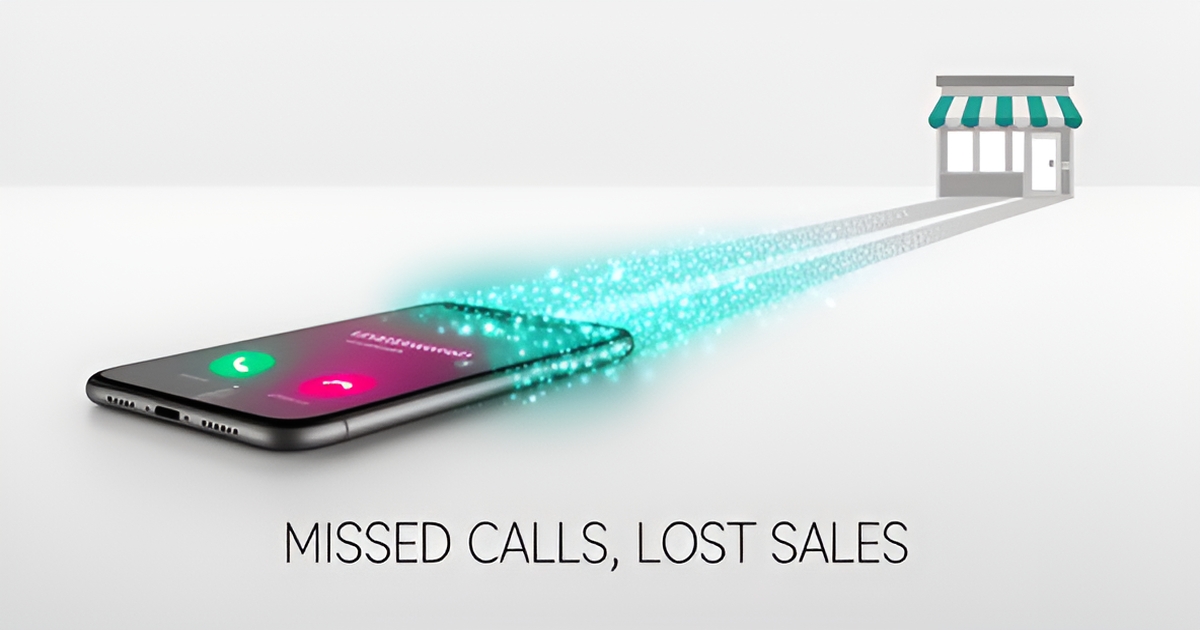
Flat illustration of an unanswered ringing smartphone with glowing lead dots drifting toward a distant competitor, symbolizing lost business from missed calls.

TL;DR

Most callers who hit voicemail never leave a message; they call the next business on Google, which makes missed calls the most expensive hidden cost in local service businesses.

Key points

  • 01Most callers won't leave a voicemail; they simply move on to the next listing, so a missed call is usually a lost sale.
  • 02Speed of response decides who wins the job: the first business to answer meaningfully usually gets the work.
  • 03A website that just sits there as a brochure doesn't capture the leads your phone misses.
  • 04A done-for-you AI platform can answer, follow up, quote, and book around the clock without the owner learning new software.
  • 05Done-for-you models like AI Business Sites ($497/month, setup currently waived, live in 7 days) bundle the website, follow-up, quoting, and invoicing into one system the client owns.

You're on a ladder, under a sink, or elbow-deep in a customer's HVAC unit, and your phone rings. You can't answer it. Two hours later you check your voicemail and there's nothing there. No message. No callback number. No lead. That caller didn't wait for you. They dialed the next plumber, electrician, or salon on Google, and that business answered. If you've ever wondered where your leads go, this is usually it: they go to whoever picked up.

The voicemail is dead. Most callers won't use it.

The behavior change is simple and brutal. A decade ago, a caller who reached voicemail would leave a message. Today, most people hang up and keep dialing. They're searching on a phone with five other businesses listed right below yours, and calling the next one takes four seconds. Nobody waits, and nobody leaves a voicemail for a business they found ten seconds ago. The result is that your missed-call problem doesn't show up in any report. You don't see the lead you never received. The only evidence is a quieter phone than you'd expect and a competitor who seems suspiciously busy. If you're a trade, a clinic, a restaurant, or any business where work happens away from a desk, you're structurally in the zone where calls get missed. The question isn't whether it's happening. It's how much it's costing you every month.

Speed decides who wins the job

When a customer calls five businesses in a row, the first one that answers meaningfully usually gets the work. Even when they do leave a message or fill out a form, the clock is running. If you call back the next day, you're often calling to hear "we already booked someone." Fast follow-up is the whole game. This is also where most small businesses quietly fail on their websites. A contact form that emails you overnight, with no instant reply, produces the same outcome as voicemail: the prospect moves on. What actually converts is an immediate response, at any hour, that answers the question and captures the contact. That's not a design problem. It's a systems problem. The businesses winning these leads have something answering 24/7: on the phone, on the site, in chat, and by email, with every conversation flowing into one place where follow-up actually happens.

The brochure website can't help you

Most small-business websites are brochures. They look fine, they list services, and they do nothing when a prospect shows up at 9 p.m. on a Sunday. No one answers. No one captures the lead. No one follows up. Meanwhile, the owner is paying separately for a booking tool, a review tool, a field-service app, a newsletter, and maybe a notetaker subscription, and none of them talk to each other. That stack costs real money every month and still doesn't solve the original problem: the call that came in while you were working. The fix isn't a prettier brochure. It's a website that behaves like a system: chat that answers from your own documents, a voice agent visitors can talk to right in the browser, forms that create a lead and trigger a branded reply within seconds, and an inbox where every conversation lands so nothing slips. If it also drafts the quote from the call, books the job, sends the invoice, and requests the review after payment, you've closed the entire loop that most owners run by hand.

What a done-for-you AI platform actually looks like

This is the model behind services like AI Business Sites, built by AIQ Labs. Instead of selling you software to learn, they build and run the whole thing: a custom website with 85+ pages live within 7 days of kickoff, an AI assistant managing the business through conversation, a CRM with automated lead follow-up, 14+ SEO content pieces published every month, and the field-service loop from quote to invoice to review request included. Pricing is one flat $497 per month, month-to-month, with the $1,497 setup fee currently waived for a limited number of new businesses each month. There's no contract, and the client owns everything: the code, the content, the data, the domain. If they leave, they get a full export and a GitHub repo in their name. The pitch is built around a specific insight about owners in trades and local services: they're not afraid of AI because they don't want it, they're afraid of learning another piece of software. So the AI is the interface. You say "draft a quote for yesterday's call" or "which invoices are unpaid" and it happens. The dashboard exists for review; conversation is how you run it. Phone answering, if you want a dedicated number the AI answers 24/7, is an add-on at $199 per month. The website's voice agent, which talks to visitors in their browser, is included.

What to look for if you're evaluating this kind of system

Whether you look at AI Business Sites or any competitor, hold the options to a few practical tests. First, does it answer after hours, on the site and on the phone, from your actual business documents rather than generic scripts? Second, does every conversation become a lead in a CRM, with instant follow-up you don't have to remember to send? Third, does it close the operational loop: quote, approval, scheduling, invoice, payment, review request? Fourth, who owns the assets? If the answer is the vendor, you're renting your own business presence. Fifth, is it month-to-month? A provider willing to let you cancel anytime is a provider confident in the work. And sixth, is it managed? Someone has to keep the system running, teach it your business, and publish the content. If that someone is you, you've bought a technical project, and free tools are only free if your time is.

Conclusion

The leads you lose to voicemail never appear on a report, which is exactly why the problem persists for years. But the pattern is predictable: the caller who can't reach you calls the next listing, and the business that answers first gets the job. A website that answers, follows up, quotes, and books around the clock closes that gap, and a done-for-you platform means you don't have to build or babysit it yourself. If you're curious what that looks like for your trade, AI Business Sites offers a demo, and under the current offer your first monthly payment starts the build with the setup fee waived. Either way, stop measuring your marketing by what you spend on it. Start measuring it by how many rings it takes before a customer hears a voice.