
TL;DR
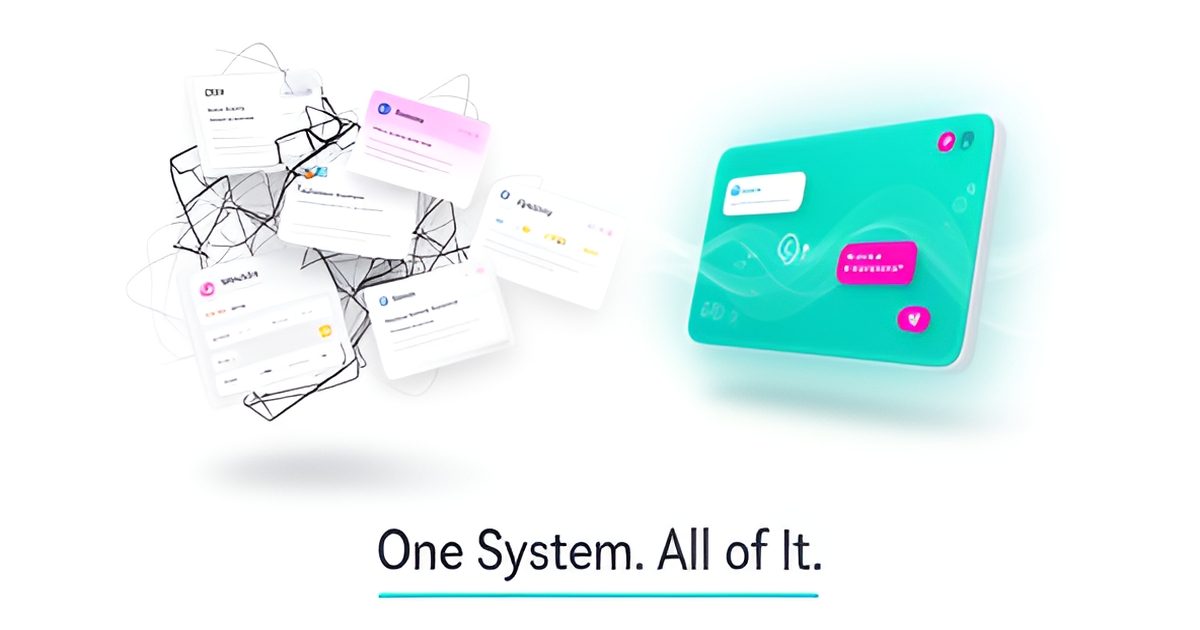
Small service businesses now juggle six to ten subscriptions that charge per seat and gate basic features behind add-ons, and a new category of done-for-you AI platforms is consolidating the entire stack into one managed system.
Key points
- 01Field-service apps like Jobber and Housecall Pro charge per seat and put reviews, e-signature, and pipelines behind paid add-ons, while the website still has to be bought separately.
- 02A new category, the AI business operating system, bundles the website, CRM, content engine, chat and voice agents, quoting, and invoicing into one managed monthly service.
- 03AI-citation share of voice across ChatGPT, Perplexity, and Google AI Mode is becoming a search metric alongside traditional Google and Bing rankings.
- 04Ownership matters: month-to-month platforms that hand over code, content, and data remove the lock-in risk that per-seat vendors rely on.
- 05The pitch for AI-averse owners isn't more features, it's a conversational interface where you talk to the system instead of learning it.
If you run a trade, a clinic, a salon, or a restaurant, you've probably noticed something odd about your software bill. The field-service app charges per seat. The review tool is an add-on. E-signature is another add-on. The website came from somewhere else entirely, the booking tool from a fourth vendor, and the meeting notetaker bills each person monthly for notes that never leave its own app. None of them talk to each other, and every one of them assumes you have time to learn the interface.
The per-seat tax on small business
The consolidation play: one system instead of ten
Search is changing, and content engines are adapting
The learning-curve problem, and why conversation is the answer
What to check before you switch
Conclusion
The per-seat era made sense when software replaced paper. It makes less sense when an AI system can do the quoting, the follow-up, the content, and the bookkeeping as one connected workflow. For owners who quote and schedule work for a living, the question in 2026 isn't which subscription to add next. It's how many you can subtract, and whether what replaces them actually closes the loop from first call to paid invoice. The platforms that answer that question with one flat price, real ownership, and a conversational interface are the ones worth a demo.