
NEWS.AR—AI Website Design & Marketing

Pipedrive Just Cut 70% of Its Estonian Workforce. The Lesson for Small Businesses Isn't About Layoffs.

Pipedrive was profitable and still cut 70% of its Estonian workforce to rebuild around AI. The shift from record-keeping software to software that does the work is coming for your business too.

AI Website Design & MarketingNovember 3, 2026
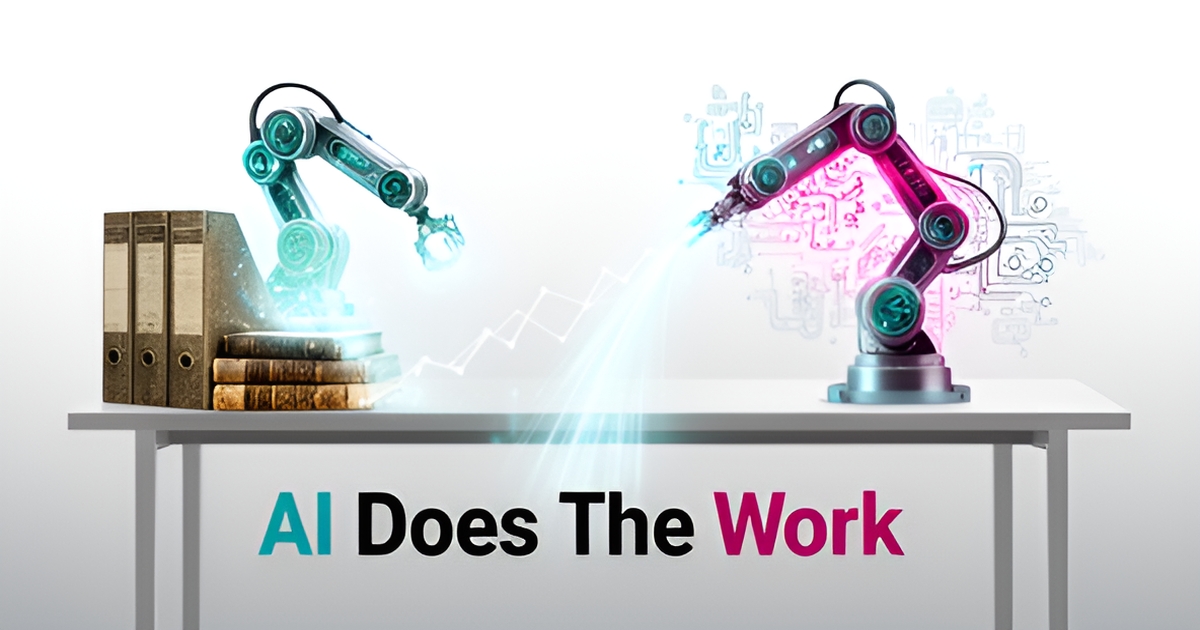
Flat illustration of record-keeping folders transforming into AI automation, with the headline AI Does The Work.

TL;DR

Pipedrive's drastic restructuring shows that even profitable software companies can't survive the shift from record-keeping tools to AI that actually does the work, and small businesses relying on traditional CRMs should take note.

Key points

  • 01Pipedrive announced 267 job cuts in Estonia, roughly 70% of its local workforce, alongside office closures in Lisbon and Prague.
  • 02The company was profitable: €237 million in revenue and €32.7 million in operating profit in 2025, proving profitability doesn't protect against AI-driven market shifts.
  • 03Customers now expect software to automate sales activity, not just record it, and Pipedrive is racing to build an AI-native platform called Nova.
  • 04Declining organic search traffic and rising paid acquisition costs mean traditional content marketing is losing effectiveness for everyone, including your business.
  • 05Small business owners should ask whether their software does the work or just stores the data; done-for-you AI systems close that gap without a technical project.

Last week, Pipedrive did something that should get the attention of every small business owner who pays for software by the month. The Estonian CRM company, a genuine tech success story with over 100,000 business customers across 180+ countries, announced it was cutting 267 jobs in Estonia. That's about 70% of its 380-person Estonian workforce. Offices in Lisbon and Prague are closing too. After 16 years of steady growth, one of Europe's best-known software firms is tearing itself down to rebuild around AI. Here's the part most coverage missed: this isn't a story about a failing company. It's a story about what happens to profitable, well-run businesses when customer expectations change underneath them. And if you run a small business, the same pressure is aimed at you.

A Profitable Company That Still Had to Reinvent Itself

The numbers make the restructuring startling. Pipedrive pulled in €237 million in revenue in 2025 with €32.7 million in operating profit. That's a healthy, profitable software business by any measure. It hit unicorn status in 2020, the same year Vista Equity Partners took a majority stake. If a company with that balance sheet decides its existing model can't carry it forward, the problem isn't money. It's the market. CEO Paulo Cunha was blunt about it: the traditional growth model was failing. Organic website traffic, the channel that built Pipedrive's customer base through years of content marketing and search visibility, has been declining sharply. Paid advertising costs keep climbing. And customers have started asking something uncomfortable of a company whose product records sales activity: why doesn't the software just do the work? Pipedrive's answer is Nova, an AI-native sales platform, plus continued investment in the core CRM. Cunha pushed back on the framing that this is about replacing people with AI, calling it a strategic redesign forced by the competitive environment. Fair enough. But when a redesign costs 70% of your home-country engineering and support staff, the redesign is the strategy.

From Recording to Doing: The Shift That Broke the Old CRM Model

Traditional CRM software was built to be a filing cabinet with workflows. You enter the contact, you log the call, you drag the deal across the pipeline. The software remembers everything and does almost nothing. That model worked for years because the alternative, software that actually executes tasks, didn't exist. Now it does, and expectations have flipped. Customers expect software to draft the follow-up email, update the record from a call transcript, recommend the next action, and handle routine work without being told. Pipedrive saw this coming and is rebuilding around it. But here's the thing: the same shift applies to the plumbing company, the dental clinic, and the restaurant down your street. When a customer calls and nobody answers, they don't leave a voicemail anymore. They call the next business on Google. When a quote sits unanswered for three days, the deal is usually gone. Software that records those failures after the fact is a very expensive diary. Software that answers the call, drafts the quote, sends the reminder, and requests the review is a different category of product entirely.

The Acquisition Problem Nobody Escapes

There's a second lesson in the Pipedrive story that hits small businesses harder than the software angle. Pipedrive grew on organic search. People typed 'best CRM for small business' into Google, found Pipedrive's content, and signed up. That engine is dying. Organic traffic is down across the software industry, paid costs are up, and buyers increasingly ask AI assistants like ChatGPT and Perplexity for recommendations instead of searching. A company with a full marketing team and a decade of published content is struggling to adapt to that. Now think about a small business owner trying to do the same thing alone, in the evenings, after a full day on job sites or in the chair. The content never gets written. The Google Business Profile goes stale. The reviews never get requested because there's always a customer in front of you. And the local competitors who do show up consistently in search and in AI answers take the calls. This is the quiet crisis behind the loud one. The businesses that win locally over the next few years will be the ones that show up when a customer asks an AI assistant for a recommendation, and that takes consistent, well-structured content published on a real website you own.

Why 'Done For You' Is the Model That Survives This

Pipedrive's restructuring is, at its core, an admission that bolting AI onto existing software isn't enough. The company isn't adding a chatbot to its CRM. It's rebuilding as an AI-native platform where the AI does the sales work. That's the right instinct, and it maps directly onto what small business owners should be shopping for. Ask a hard question about your current stack: does any piece of it actually do the work, or do you do the work and it stores the results? If you're paying for a CRM, a scheduler, a review tool, an email platform, and a website that just sits there, you're running the software instead of the software running the business. The alternative looks like this: a website with a voice agent that talks to visitors in their browser, an AI assistant that drafts the quote from a call transcript and sends it for one-tap approval, invoices that chase themselves with day-3, day-7, and day-14 reminders, review requests that go out automatically after payment, and a content engine that publishes keyword-targeted pages every month without you writing a word. This isn't hypothetical. Our platform at AI Business Sites includes that entire loop in the $497 monthly plan, plus an SEO team that tracks your rankings and your AI-citation share of voice, files a weekly report, and steers the content accordingly. You talk to it, in plain language, and it handles the rest. If you sell things, we build the ordering in, with payments flowing straight into your own Stripe account.

What to Do With This

If you're on a traditional CRM or a stack of per-seat subscriptions, you don't need to panic, but you should audit. Three questions cover it. First, when a lead comes in at 9pm, does anything happen before you see it the next morning? If the answer is no, you're losing leads to whoever answers first. Second, when was the last time your website published something new? If it's been more than a few weeks, you're invisible to both search engines and AI assistants. Third, if you cancelled every subscription tomorrow, would you own anything, or does it all evaporate? Ownership matters when vendors are this unstable. Pipedrive's customers will be fine; the product keeps running. But the episode is a reminder that the software layer beneath your business can shift under you fast. Build on systems where you own the code, the content, the domain, and the data, and where the vendor keeps you by doing the work rather than by locking you in.

Conclusion

Pipedrive was profitable, established, and loved by its customers, and it still had to gut its own operating model because the definition of good software changed. The lesson for a small business isn't to follow the tech news. It's to recognize that the same expectation shift is already at your front counter: customers want answers instantly, quotes fast, follow-up that never drops, and a business that shows up everywhere they look. The businesses that meet those expectations with AI doing the back-office work will take the customers from the ones still typing data into filing-cabinet software. If you'd rather have the system built and run for you than take on a technical project, that's exactly what we do. Cancel anytime, leave with everything, and let the work keep you.