NEWS.AR—AI Website Design & Marketing

One Company, Four Countries, One Day: What Templated Content at Scale Really Looks Like

One template, four countries, one day. A Vancouver readiness company just showed how localized content at scale works, and a syndicated stock comparison showed how it goes wrong. Here's what small businesses can take from both.

AI Website Design & MarketingNovember 2, 2026
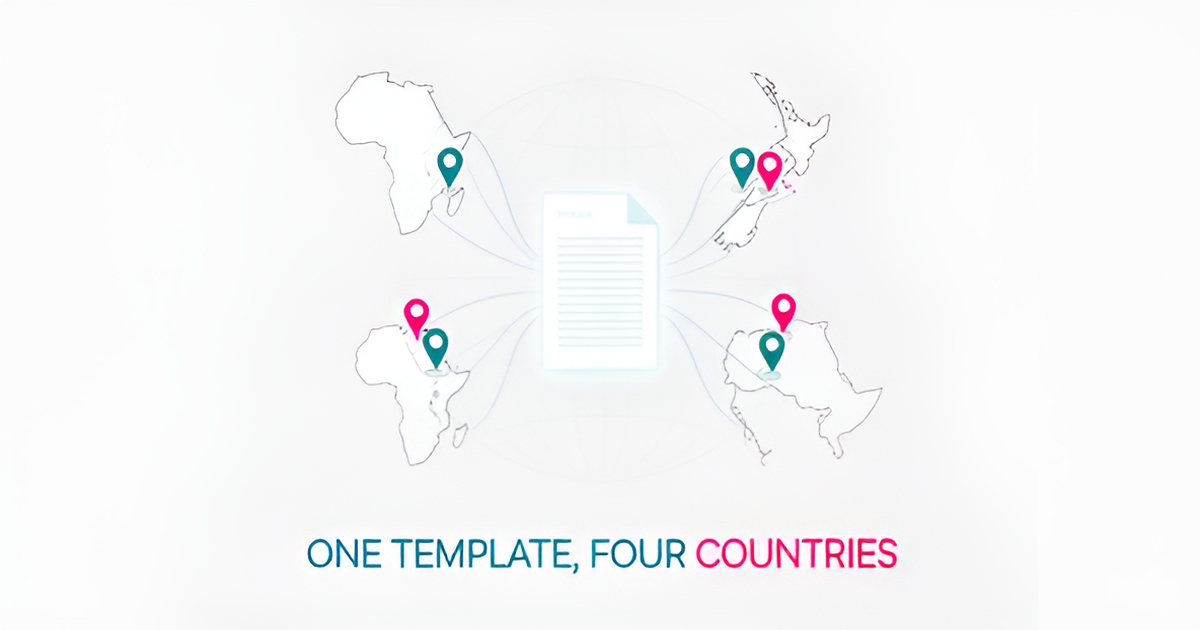
Flat illustration of one document template connecting to four country map outlines with teal and magenta location pins, symbolizing localized content at scale.

TL;DR

A four-country press release campaign and a formulaic stock comparison show both the power and the pitfalls of templated content, and small businesses can run the good version of this playbook without hiring a content team.

Key points

  • 01A Vancouver readiness company published localized press releases in Kenya, New Zealand, South Africa, and Trinidad and Tobago on the same day, all from one template.
  • 02The campaign worked because each piece was anchored to real local data: flood advisories, government surveys, and disaster statistics.
  • 03Syndicated comparison content, like a recent TDS vs. SpaceX piece, shows how easily 'X vs Y' pages get published without verification.
  • 04Small businesses can run localized, keyword-targeted content at scale with an AI content engine, publishing 14+ pieces per month.
  • 05The difference between content that builds trust and content that erodes it comes down to verification and citations.

On November 1, 2026, a small household-readiness company called Bunkerise, based in Vancouver, published press releases in four countries on the same day. One went to Kenya, where the meteorological department had placed 39 counties on flood alert. One went to New Zealand, citing a government survey showing 89% of people believe household self-sufficiency matters but fewer than half have acted. One went to South Africa, referencing the Eastern Cape floods that left thousands homeless. One went to Trinidad and Tobago, tied to official rainy-season guidance. Same company, same core message, four markets, 24 hours. If you run a small business, there's a lesson in here for you, and it's bigger than emergency kits.

Why the four-country campaign worked

Strip away the subject matter and look at the machinery. Bunkerise took one core message, 'plan first, shop later,' and localized it four times. Each version opened with a real, verifiable local hook. The Kenya release mentioned landslide zones near the Aberdares. The New Zealand release leaned on the National Emergency Management Agency's own survey data. The South Africa piece referenced the June 2025 severe weather that was later classified as a national disaster. Nobody in Nairobi reads a press release about Vancouver's earthquake risks, so the company didn't send them one. This is the whole trick behind multi-market content: one engine, many local editions. Each piece targets the keywords and concerns of a specific audience, and each one earns credibility by being grounded in that audience's reality. It's also exactly the kind of operation that used to require an agency retainer and a PR distribution contract. A one-product company just ran it across four countries in a day.

The flip side: comparison content without a fact-checker

The same week offered a counterexample. A syndicated financial site published a head-to-head comparison of Telephone and Data Systems and SpaceX, complete with revenue figures, price-to-earnings ratios, and analyst price targets. The numbers were specific: TDS revenue of $1.23 billion against SpaceX's $18.67 billion, a P/E of 11.44 against 518.15. But the piece was formulaic content marketing, and it showed the cracks of the genre. The company description was truncated mid-sentence. The framing treated a stock listing's extreme multiples as a like-for-like comparison without explaining why they aren't comparable. Nobody verified anything beyond pulling a data feed. Readers notice. Comparison pages have become one of the most common content formats on the web precisely because buyers search for them: 'X vs Y,' 'X pricing,' 'X alternatives.' That search traffic is real, and it converts, because someone typing 'Jobber vs Housecall Pro' is usually hours from a purchase decision. But the format has been flooded with unverified filler, and that flood is an opportunity for businesses willing to hold themselves to a higher standard.

What this means for a small business owner

Here's the connection to your business, and it's a practical one. The two biggest content challenges for any small business are volume and trust. Volume, because Google rewards sites that publish consistently, and 14 or more targeted pieces a month will outrank a blog that went quiet in March. Trust, because a single wrong price or invented claim on your site can undo a year of reputation building. Bunkerise solved the volume problem with a template and a distribution network. The financial comparison site solved volume too, and lost on trust. A small business can now solve both at once. This is what an AI content engine does when it's built properly: research agents gather source material, writers draft, verification agents check every claim and citation, and nothing publishes until it passes. When our engine builds comparison pages for a client, every price gets deterministically re-verified against its source. If a number can't be confirmed, the page says 'Contact for pricing' instead of inventing one. That's a boring sentence, but it's the difference between a page that helps you close deals and a page a prospect screenshots to mock you.

How to run the localized playbook yourself

You don't need to publish in four countries, but the same structure applies to four service areas or four neighboring towns. Start with your core message, the thing your business actually does. Then build one page per market you serve, each anchored to local reality: the neighborhoods you work in, the specific problems that market has, the local search terms people actually type. A plumber serving three towns needs three location pages, each with real local specifics, and a service page per offering, and honest comparisons of the options buyers are weighing. Done by hand, that's weeks of writing. Done with a content engine, it's a monthly output of 8 blog posts, 4 service or location pages, and 2 comparison guides, each keyword-targeted, each internally linked, each with a featured image. The Bunkerise campaign also shows the discipline side of the equation. Every release positioned the company's guides as a bridge to official guidance, never a replacement for it. That honesty is a feature. Your content should do the same: say what you know, cite where it came from, and don't pretend to be something you're not.

The takeaway: consistency beats brilliance, verification beats both

The most interesting number in the Bunkerise story isn't in any of the releases. It's the New Zealand survey stat buried inside one of them: 89% of people believe preparedness matters, fewer than half have done anything about it. The gap between knowing and doing is where both emergency planning and content marketing live. Every business owner knows they should be publishing consistently. Almost none do, because it requires a system, and systems require either staff hours or software babysitting. The businesses that close the gap are the ones that stop treating content as a series of heroic one-off efforts and start treating it as a pipeline: research, draft, verify, publish, measure, repeat. The four-country campaign and the sloppy stock comparison are the same genre. One was executed with local grounding and honest framing. One was cranked out from a template with a broken description. Your customers can tell the difference, and increasingly, so can search engines and AI assistants, which now cite sources when they answer questions about your industry. Be the source worth citing.

Conclusion

A one-person readiness company just demonstrated that templated, localized content can reach four countries in a day without an agency. A syndicated finance site demonstrated that publishing without verification is a fast way to look careless. Small businesses sit in the middle of these two examples, and the tools to run the good version, a content engine that researches, writes, verifies, and publishes on schedule, are no longer reserved for companies with marketing departments. If you serve multiple towns or multiple service lines, the multi-market playbook is yours to run. The only real question is whether your content pipeline can tell the truth at scale. Ours can, and it's part of what we build into every site: 14+ verified, keyword-targeted pieces every month, done for you, live in 7 days. If you want to see what that looks like for your business, start your build or book a demo. We'll show you the system running before you commit to anything.