NEWS.AR—AI Website Design & Marketing

Enterprise AI Just Got a Report Card. Small Businesses Should Read It Too.

Enterprises are done experimenting with AI. A new report ahead of The AI Summit New York shows what comes next, and small business owners should pay attention to every trend in it.

AI Website Design & MarketingOctober 21, 2026
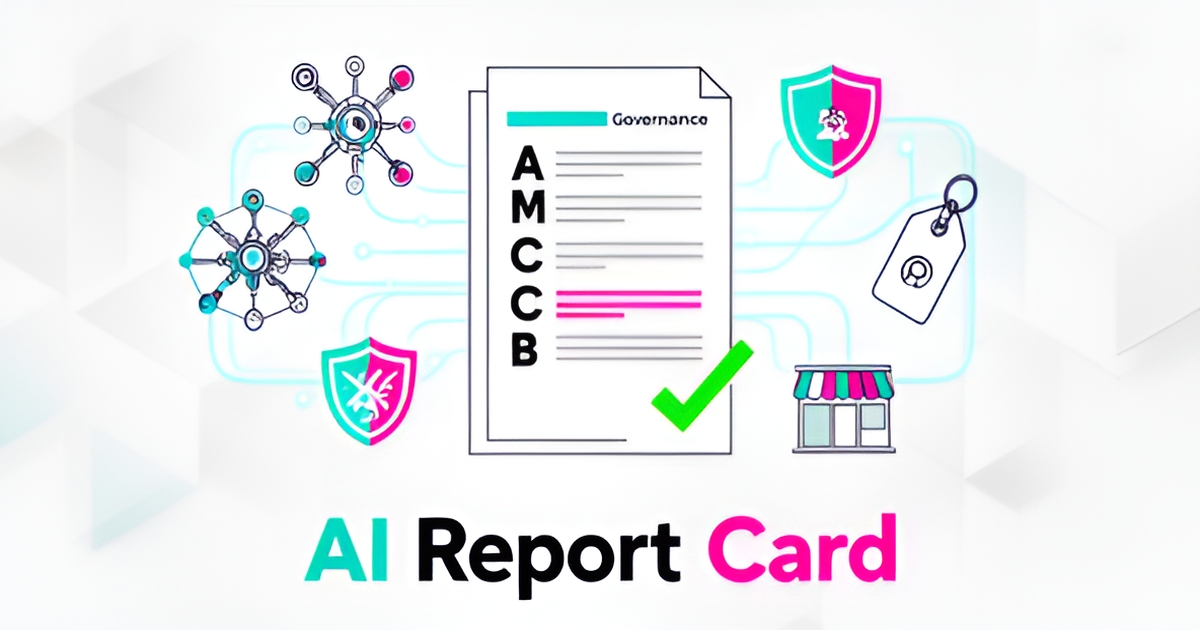
Flat illustration of a graded AI report card surrounded by icons for agentic systems, governance, and pricing, with the headline 'AI Report Card'.

TL;DR

A new report from The AI Summit New York shows enterprises shifting from AI experiments to measurable results, and the same reckoning is coming for small businesses that bought tools instead of outcomes.

Key points

  • 01A pre-summit report from The AI Summit New York (December 9-10, 2026) identifies 10 enterprise AI trends, led by agentic systems and governance
  • 02Enterprises are now judged on measurable returns, not pilot projects, and small businesses face the same question
  • 03More capable AI requires more human oversight, which is why approval queues and transparency matter at every business size
  • 04Infrastructure and compute costs are pushing companies toward flat, predictable pricing over metered subscriptions
  • 05Small business owners can act on these trends now by demanding proof of work from any AI system they buy

Every October, the enterprise AI world starts publishing its predictions for the year ahead. This week, organizers of The AI Summit New York released a report called "AI in Action: From Experimentation to Enterprise Value," ahead of the December 9-10 event at the Javits Center. It lays out ten trends expected to shape AI adoption heading into 2027. Most small business owners will never read it. That's a mistake, because the questions enterprises are wrestling with right now are the same ones that will land on Main Street within months. How do you know if AI is actually making you money? Who's watching the systems you've put in charge of customers? And where, exactly, does your data live? The report's central theme is a shift from experimentation to value. Companies have spent two years running pilots. Boards and CFOs now want numbers. If you run a plumbing company, a clinic, or a restaurant, that question is coming for you too, whether or not anyone hands you a report about it.

The Five Trends Worth Your Attention

The report highlights five of its ten trends, and each one has a small-business translation. First, agentic and multi-agent systems. Enterprises are moving past chatbots that answer questions toward AI that plans, executes, and completes work across a business. If that sounds abstract, consider what it looks like in a service company: one agent researches, another writes, another verifies, another publishes. That's not a future state. It's how a modern content engine works right now, running a weekly loop of measuring rankings, targeting keywords, editing pages, and reporting results. Second, governance. The report frames it bluntly: the question has shifted from "can we deploy AI" to "can we trust and account for it." Enterprises are building risk classifications, monitoring systems, and human oversight into everything. Small businesses rarely use that vocabulary, but the need is identical. When an AI drafts a quote or replies to a review, someone should be able to see what it did and approve it before it goes out. Third, edge AI and smaller models running locally for routine tasks. Fourth, sovereign AI, meaning companies want their data and models on infrastructure they control. Fifth, compute economics: chips, energy, and data center capacity have become the constraint on AI growth, and those costs now show up on profit-and-loss statements rather than buried in IT budgets. Notice a pattern in trends three through five. They're all about control and cost. Enterprises are tired of renting capability by the meter from someone else's cloud. Keep that in mind for the pricing discussion below.

The Autonomy Paradox, Explained for People Who Fix Things for a Living

Trends one and two are really one idea wearing two hats. The more autonomous your AI becomes, the more oversight it needs. Enterprises call this TRiSM, short for trust, risk, and security management. It sounds like a compliance department's dream, but the underlying logic is simple and applies to a five-person HVAC company just as much as to Disney. Here's the practical version. If an AI system sends emails, quotes jobs, or answers your phone, you need three things: a queue where you can review what it's about to do, a record of what it already did, and the ability to undo a mistake. Anything less, and you've handed your customer relationships to software nobody is watching. The good news is that this doesn't require a governance committee. A single approval inbox where drafted emails, review replies, and blog posts wait for your sign-off, each tagged with a confidence score, does most of the work. The point isn't bureaucracy. The point is that you stay the boss of your own AI, which is exactly what the enterprise report is asking for, just at a scale one person can manage from their phone.

Your AI Stack Is a Meter Running

The fifth trend, infrastructure economics, deserves the most attention from small business owners, because it's the one already draining their bank accounts. If data centers and compute are expensive enough to show up on enterprise P&Ls, guess where those costs get passed down? Into per-seat software licenses, per-person notetaker subscriptions, metered video calls, and per-platform social media tools. A typical service business in 2026 might pay for field-service software by the seat, pay extra for e-signature and review features, pay separately for a scheduler, pay per user for meeting notes, and still not have a website that does anything. The enterprise response to this is predictable pricing and owned infrastructure. The small business response should be the same instinct. Before you add another subscription, ask what the total monthly cost of your entire AI and software stack is, and what you'd actually lose if you cancelled half of it. There's also an ownership angle hiding in the sovereignty trend. Enterprises want to know where their data lives and who can touch it. You should too. Your leads, your content, your booking records, and your customer list are assets. If the tool that holds them can hold them hostage, you don't own your business's memory, you're renting it. Ask any vendor a simple question: if I leave tomorrow, what do I walk away with? If the answer is "nothing," that tells you everything.

The 2027 Predictions That Actually Matter to You

Kristin Myers, chief digital officer at Northwell Health, offered a forward look in the report: continued advances in agentic AI, falling costs, AI embedded into existing platforms, market consolidation, and rising importance of regulation and security as autonomy grows. She flagged workforce transformation as potentially the biggest shift of all, with AI fluency becoming a core skill. Translate each of those to a small business and the picture gets concrete. Agentic advances mean the systems that can actually do work, not just chat, will keep getting better. Falling costs mean the gap between what enterprises pay and what small businesses can afford is shrinking fast. Embedded AI means the standalone AI app you signed up for may get absorbed into something else, another reason to favor systems built around your business rather than around a feature. Consolidation means fewer vendors, which cuts both ways: simpler choices, less leverage. And workforce transformation? Here's where small businesses have an advantage nobody talks about. Enterprises have to retrain thousands of people. You have a team of five. But there's an even better answer than training: buy AI that doesn't require learning. The owners winning with AI right now aren't the ones taking prompt-engineering courses on weekends. They're the ones who can say "quote the Smith job" or "what did I miss today?" and get an answer. The interface is a conversation. The learning curve is zero.

A Checklist for the Year Ahead

The report's framing question, how organizations convert AI investment into measurable results, is the question every buyer should ask in 2027, at any budget. Before you spend another dollar on AI for your business, demand proof of work: Does it capture leads from day one, and follow up within seconds instead of hours? Does it produce something measurable every month, like new pages ranking in search or posts published on a schedule? Does it close a loop, from quote to job to invoice to review request, without you pushing each step? Does it show you what it did, in a report you can actually read? And can you leave with everything if it doesn't work out? Wayne Filin-Matthews, a senior AI executive at Disney and an ambassador for the summit, made a point worth repeating: in 2026, most organizations are still working on the gap between ambition and production. Most small businesses haven't started. That's not an insult, it's an opportunity. The tools that enterprises are standardizing on, agent teams, human oversight, transparent reporting, are available at small-business prices right now. The owners who close that gap first will spend 2027 compounding the results while their competitors are still deciding whether AI is a fad. It isn't. The enterprises already settled that question. Now it's your turn to ask it, and to get an answer you can measure.

Conclusion

The AI Summit New York report is written for people who run billion-dollar portfolios, but its core message fits on a sticky note above any small business owner's desk: stop experimenting, start measuring. AI that can't show you what it did, prove what it earned, and hand you the keys when you leave isn't a system, it's a subscription habit. The trends shaping 2027 point toward AI that works visibly, reports weekly, and answers to a human. Demand that from whatever you buy, whether the vendor is a Fortune 500 software company or a team that builds your website and runs the whole thing for you. The businesses that ask for proof will be the ones with results to show for it.