
NEWS.AR—AI Website Design & Marketing

AI Assistants Are the New Front Page: Why Small Businesses Need Chatbot Visibility, Not Just Google Rankings

When customers ask ChatGPT for the best local business in your trade, do you come up? AI-citation visibility is becoming the successor to Google rankings, and most small businesses aren't tracking it yet.

AI Website Design & MarketingNovember 15, 2026
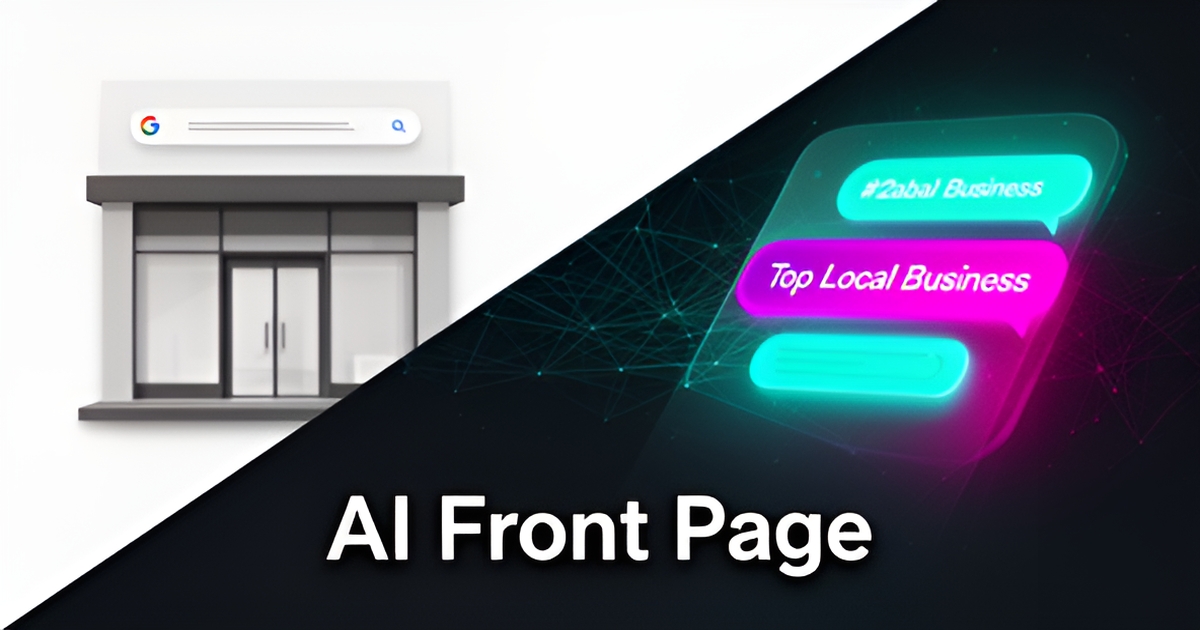
Illustration of a small business storefront connecting to an AI chatbot interface, representing AI-citation visibility and front page presence in AI assistants, with brand color accents and minimalist composition.

TL;DR

AI assistants like ChatGPT and Perplexity are becoming the first place customers look, and small businesses now need to track whether they get recommended there, not just where they rank on Google.

Key points

  • 01A growing share of customer questions now start in AI assistants rather than a Google search results page.
  • 02AI-citation tracking measures how often a business gets recommended by ChatGPT, Perplexity, Google AI Mode, Gemini and Brave, relative to competitors.
  • 03Traditional SEO signals still matter, but structured, fact-checked content and speakable schema improve the odds an AI assistant cites you.
  • 04Most small businesses have no way to measure AI visibility, so the gap between leaders and laggards is widening quietly.
  • 05AI Business Sites includes an SEO Growth Engine in its $497/month plan that tracks both traditional rankings and AI citations weekly.

Here's a question most small business owners haven't been asked yet: when a potential customer types "who's the best HVAC company near me" into ChatGPT or Perplexity, does your business come up? If you're like most owners, you have no idea. You probably check your Google ranking occasionally, you know roughly how your reviews look, and that's the extent of your visibility work. But the way people find local businesses is splitting in two, and the second channel is growing fast enough that ignoring it is becoming a real competitive risk.

Search behavior is shifting under your feet

For two decades, being findable meant one thing: showing up on Google. You optimized your site, collected reviews, and watched your position in the search results. That model still works, and it still matters. But ask yourself how the people around you look things up now. A lot of them open an AI assistant first, ask a plain-language question, and act on the answer. When the assistant names three local plumbers, that's the shortlist. If you're not on it, you never even hear about the missed lead. This is what some in the industry are calling AI-citation share of voice: how often an AI assistant recommends your business, and how that compares to your competitors. It's the successor metric to page position, and unlike a Google ranking, you can't easily check it by typing your own query once. Recommendations vary by question phrasing, by model, and by the sources each assistant pulled from.

Why AI assistants pick certain businesses

AI assistants don't rank pages. They synthesize answers from the content they can find, and they favor sources that make the answer easy to verify: clear service descriptions, consistent business facts, structured data markup, and content that directly answers the questions customers actually ask. That's why structured, well-organized websites with genuine depth tend to get cited more often than thin five-page brochure sites. There's also an emerging technical angle. Schema markup formats like "speakable" are designed specifically so voice assistants and AI tools can lift clean, quotable answers from a page. A business with 85 well-structured pages answering real questions has far more surface area for an AI assistant to cite than a competitor with a homepage and a contact form. None of this replaces traditional SEO. Google still drives enormous traffic to local businesses, and the fundamentals of ranking haven't been thrown out. What's changed is that ranking is now only half the visibility picture.

The measurement problem

Here's where small businesses get stuck. Tracking your Google rank is easy enough; there are dozens of tools for it. Tracking whether ChatGPT mentioned you this week is something else entirely. It requires querying multiple AI platforms on a regular schedule, comparing the results against a competitor list, and logging changes over time. For an owner running jobs all day, that's not happening. This is a genuine gap in the market right now. The businesses that know their AI-citation numbers can fix problems early: if the assistant keeps recommending a competitor, you can look at why and adjust your content. The businesses that don't know are competing blind in a channel they can't see. Some platforms have started building this tracking directly into their offerings. AI Business Sites, for example, includes what it calls an SEO Growth Engine in its $497/month managed plan, which monitors rankings on Google and Bing alongside AI-citation share of voice across ChatGPT, Perplexity, Google AI Mode, Gemini and Brave, then reports weekly on both. Whether you use a managed service or piece together your own monitoring, the point is the same: you can't improve what you don't measure, and this channel is measurable now.

What actually moves the needle

If you want AI assistants recommending your business, the work looks a lot like good SEO done more thoroughly. First, answer real questions in writing. Every service you offer deserves its own page, written the way a customer would ask about it. Second, keep your business facts identical everywhere: name, address, phone, hours, service areas. Assistants cross-check sources, and inconsistencies make them hedge. Third, publish consistently. A site that adds fresh, relevant content every month signals that it's alive and authoritative; a site untouched since 2023 doesn't earn the same confidence. Fourth, structure your content so machines can parse it: proper headings, schema markup, clear pricing and service descriptions where possible. This is also why some businesses are turning to done-for-you systems rather than doing it themselves. Producing 14 or more targeted content pieces a month, each with proper markup and internal links, is a production workload, and most owners will never sit down to do it. The realistic options are hiring an agency, building an internal process, or using a platform that automates the pipeline. What matters is that the output exists and keeps coming.

Conclusion

The shift to AI-assisted discovery isn't a future trend to watch; it's happening in your customers' pockets right now. The businesses getting recommended by ChatGPT and Perplexity today are the ones with deep, structured, current content and someone paying attention to the numbers. Start by asking the assistants about your own business and your top three competitors. If you like what you hear, keep doing what's working. If you don't, treat it like a ranking problem: measurable, fixable, and worth addressing before your competitors figure it out first.