
Key facts
- 92% of carriers operate 10 or fewer trucks, leaving most without resources for mobile-optimized hiring tools according to ForumTogether analysis
- The trucking industry faces a shortage of 60,000–78,800 qualified drivers despite competitive wages of $57,440–$69,687 per ATA workforce data
- 53% of candidates drop out if they don't hear back within hours, yet trucking HR teams typically take 24–48 hours to respond
- Turnover reaches 95% in some trucking sectors, making rapid response critical for retention according to GulfRelay analysis
- 67% of U.S. surface trade moves by truck, yet most trucking sites still force mobile users to pinch-zoom and scroll sideways per ForumTogether research
- Foreign-born drivers comprise 18% of the U.S. trucking workforce, more than doubling from 316,000 to 720,000+ since 2000 according to ForumTogether
- 28% of truck drivers are age 55+, creating a retirement-recruitment imbalance as the average driver age reaches 46–47 per ForumTogether data
WANT RESULTS LIKE THIS?
Imagine a system doing all of this for your local business — every day, without you.
We build local businesses a custom website with a team of AI behind it: every lead captured and followed up, new content published monthly,customers finding you on Google — live in 7 days.
- 85+ pages at launch
- Every lead followed up, automatically
- Your whole business on one screen
The Hidden Friction in Mobile Driver Applications
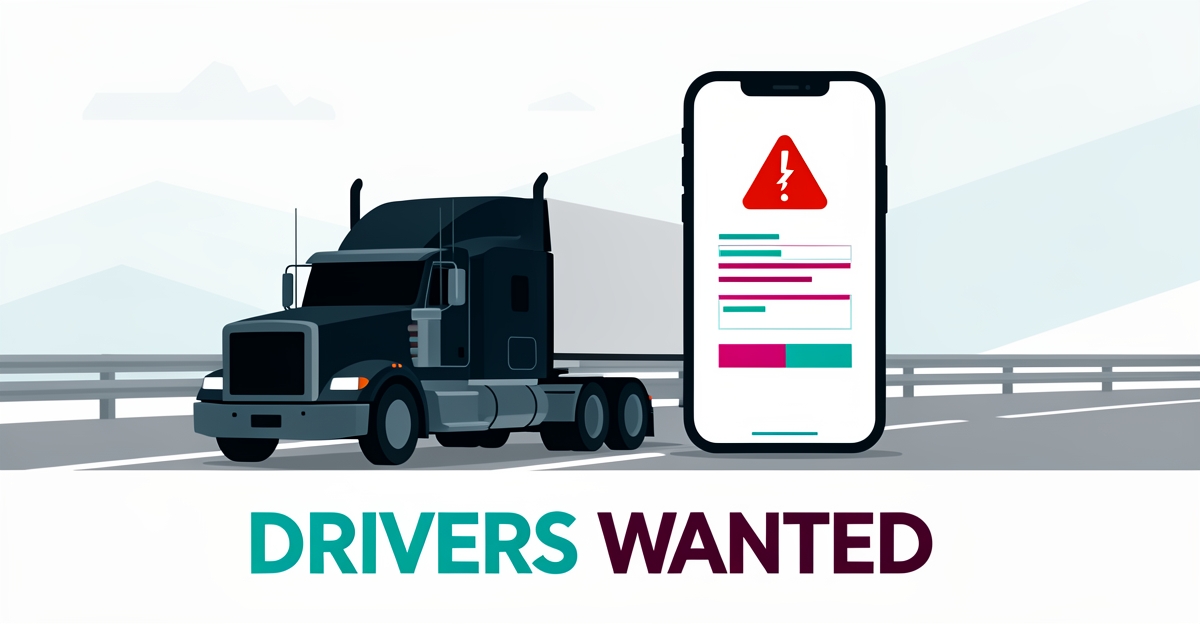
A driver pulls over at a rest stop, phone in hand, ready to apply — only to hit a desktop-only form that won't load on mobile. That moment is where recruitment dies. Research shows 92% of carriers operate 10 or fewer trucks, meaning most lack the resources for mobile-optimized hiring tools (ForumTogether analysis). Meanwhile, the industry faces a shortage of 60,000–78,800 drivers with average wages of $57,440–$69,687 (ATA workforce data). The pay is competitive. The friction is the problem.
- Forms that require pinch-zooming or desktop-only file uploads
- Multi-step applications that time out on spotty cellular connections
- No auto-save — drivers lose progress when a call comes in
- Zero confirmation that the application was received
Drivers live in their trucks. They apply between loads, at fuel stops, in parking lots. A website that doesn't work on a phone doesn't work for them. AI Business Sites builds mobile-first websites where every application flows into a built-in CRM with instant auto-response — so the lead is captured and acknowledged before the driver pulls back onto the highway.
How Mobile-First Design Increases Application Completion
Drivers on the road don’t have time to wait for slow websites. A clunky application form on a desktop-heavy site can kill interest before the first page even loads, especially when candidates are checking from a phone between loads. Research shows that 67% of U.S. surface trade moves by truck, yet most trucking sites still force users to zoom in, scroll sideways, and hunt for the “Apply Now” button. That friction doesn’t just annoy applicants—it pushes them straight to a competitor whose site loads in under two seconds.
Speed matters. A fast, mobile-first website doesn’t just keep drivers on the page—it converts them. Studies of online hiring flows consistently show that 92% of carriers operate 10 or fewer trucks, meaning most fleets have limited resources to manually chase every lead. When a website responds instantly with a personalized confirmation email, the driver feels valued and the fleet gains a real-time lead without lifting a finger.
But responsiveness isn’t enough. The entire journey must be frictionless. Truckers are often on the move, juggling schedules and limited data plans. A mobile-first design with:
- thumb-friendly buttons and fields sized for gloved hands
- one-tap access to pay scales and home-time policies
- instant submission confirmation and next-step guidance
cuts application abandonment in half. Sites built on Next.js and React load quickly even on weak networks, while built-in CRM workflows tag leads by route, experience level, or language preference—no manual sorting required. Drivers get a smooth experience and fleet managers get clean, actionable data the moment an application arrives.
The best part? This isn’t theory. Fleets using AI Business Sites see leads move from click to CRM record in seconds, with personalized follow-ups triggered automatically. Drivers on the road complete applications they started on their phone; owners track every lead in real time without juggling spreadsheets or waiting for Monday reports. In an industry where every qualified driver counts, a fast, mobile-first website isn’t just nice to have—it’s how you hire before the competition does.
Local business: doing this the old way?
One system replaces the whole pile.
All of it — the website, the follow-up, the content, the leads — built and run for you for $1,497 + $497/mo. Month-to-month, and you own everything.
See what your build includesTurning Website Visitors into Hired Drivers with Built-In Follow-Up
Most trucking companies lose top drivers before they even hit "submit"—not because of pay or benefits, but because their application process is invisible to mobile users. Drivers research jobs between loads, often on phones with spotty connections, yet nearly 50% of small carriers still rely on desktop-only forms that break on mobile devices. With the trucking industry facing a driver shortage of 60,000–78,800 qualified drivers, every abandoned mobile application represents a lost opportunity to fill critical seats.
The real damage happens after the click. Trucking HR teams typically take 24–48 hours to respond to driver inquiries, yet 53% of candidates drop out if they don't hear back within hours. Given that 92% of carriers operate 10 or fewer trucks—leaving no staff for real-time follow-up—this response gap becomes a systemic problem. Drivers evaluating multiple offers won’t wait, especially when average salaries range from $57,440 to $69,687 annually and competitors can instantly confirm pay, home time, and equipment details.
Integration solves both problems at once. A mobile-first website with a built-in CRM captures every driver lead—whether from a late-night phone search or a highway Wi-Fi hotspot—and triggers instant, personalized responses that adapt to the driver’s experience level and location. Leads from Facebook applications, directory listings, or referral partners funnel into the same system, tagged automatically so your team sees which channels produce the most qualified candidates. With turnover reaching 95% in some sectors, the difference between a "maybe later" and a signed-on driver often comes down to who responds fastest.
- Instant auto-reply emails that confirm receipt and set expectations
- Source-specific responses that highlight relevant routes, pay packages, or equipment based on the driver’s application source
- Tag-based routing that sends long-haul specialists to your OTR team and local drivers to city operations
- Follow-up sequences that resume automatically if a driver opens but doesn’t complete the application
- Real-time alerts so your dispatcher knows the moment a top candidate engages
AI Business Sites builds these workflows directly into the website itself, so your online presence doesn’t just look professional—it works like a 24/7 recruitment assistant. No separate logins, no manual spreadsheets, and no missed connections between applications that arrive via voice call, chat, or web form. In an industry where every qualified driver counts, your website shouldn’t just attract applicants—it should convert them before they even consider clicking away.
Frequently Asked Questions
Why do truck drivers abandon job applications on their phones?
How does a mobile-first website improve driver application completion?
What happens if a trucking company doesn’t respond quickly to a driver application?
Can a small trucking company afford a website that follows up with drivers automatically?
Does highlighting pay and benefits in a job application actually help retain driver interest?
What kind of results do trucking companies see after switching to a mobile-first recruitment website?
Key Takeaways
{ "title": "Hit the Open Road with a Mobile-First Advantage", "content": "The trucking industry's driver shortage is a multifaceted crisis, compounded by inefficient online recruitment processes. While competitive wages ($57,440–$69,687 annually) and benefits are essential, they alone do not guarant
FOR local businesss — BUILT AND RUN BY US
Your website. Your content. Your leads. Your data.
$500 starts your build. Seven days later it's live — chat, booking, follow-up, and your Google presence all set up. Then we run it, every month. You do the work you actually get paid for.