
Key facts
- The European vertical farming market is projected to reach $17.14 billion by 2034 with a 22.2% CAGR according to Market Data Forecast
- 74% of agri-tech employers in Germany, the Netherlands, and France struggle to recruit staff with combined agricultural and digital competencies per Market Data Forecast
- Vertical farming uses 1 liter of water per kg of produce yearly versus 250 liters for conventional farming according to DLG Expert Report
- Vertical farms achieve 8-12 harvests per year compared to only 2 for conventional farming per DLG Expert Report
- Eden Green Technology reports crop yields 240 times higher than traditional farms through year-round perpetual harvest according to Eden Green Technology
- Not a single research source addresses the practice of displaying real-time crop progress on farm websites per comprehensive analysis of four vertical farming studies
- Vertical farming produces 158 kg CO2 per ton of lettuce versus 540 kg for conventional farming according to DLG Expert Report
WANT RESULTS LIKE THIS?
Imagine a system doing all of this for your local business — every day, without you.
We build local businesses a custom website with a team of AI behind it: every lead captured and followed up, new content published monthly,customers finding you on Google — live in 7 days.
- 85+ pages at launch
- Every lead followed up, automatically
- Your whole business on one screen
The Visibility Gap in Vertical Farming
Imagine walking into a grocery store, eager to buy fresh, locally grown produce from a nearby vertical farm, only to find no visible updates on the farm's current crop status or harvest schedule on their website. This scenario is more common than one might think, highlighting a glaring visibility gap in the vertical farming industry. Despite leveraging IoT, AI, and data analytics to optimize operations (as seen in European vertical farming's 22.2% projected CAGR growth), many vertical farms fail to translate this technological prowess into real-time transparency on their websites.
A deep dive into four comprehensive research sources on vertical farming reveals a startling omission: not a single source addresses the practice of displaying real-time crop progress on farm websites. While these studies delve into market trends (projecting the European vertical farming market to reach $17.14 billion by 2034), operational challenges (such as the 74% of agri-tech employers struggling to find digitally savvy agricultural staff), and the sustainability benefits (including up to 90% less water usage compared to conventional farming), the digital consumer interface is conspicuously absent.
-
Trust and Transparency: Consumers, especially in the food sector, value transparency. Real-time crop updates can significantly enhance trust in vertically farmed products. For instance, a farm could showcase its 240 times higher crop yields compared to traditional farming (Eden Green Technology) or its less than 3% food waste rate, directly linking these operational efficiencies to consumer benefits.
-
Market Differentiation: In a rapidly growing market, real-time website updates could serve as a key differentiator, setting progressive farms apart from their less transparent counterparts.
-
SEO and Engagement: Live, data-driven content can improve website SEO and engagement, attracting more visitors who are likely to return for updates, potentially converting into customers.
Platforms like AI Business Sites offer a viable solution, enabling farms to generate live, data-driven updates based on sensor inputs. This not only bridges the visibility gap but also:
- Simplifies Data Visualization: No technical expertise required for real-time updates.
- Enhances Consumer Trust: Transparency into farm operations and crop cycles.
- Improves SEO: Dynamic content attracts and retains a clearly defined audience.
By embracing such solutions, vertical farms can transform their websites from static information portals into dynamic, trustworthy hubs, aligning their digital presence with the technological innovation at their core. As the industry continues to grow, with projections suggesting vertical farming could capture approximately 50% of the U.S. leafy green market within a decade, the need for this digital transparency will only intensify.
Leveraging IoT & AI for Transparency
Leveraging IoT & AI for Transparency
Vertical farms already collect vast amounts of operational data through IoT sensors that monitor temperature, humidity, nutrient levels, and light exposure in real time. This internal data stream creates the "near laboratory conditions" that improve food safety and reduce pathogen exposure, yet most farms fail to repurpose it for website transparency. The research confirms vertical farming leverages IoT, AI, and data analytics for operational optimization, creating a foundation that could easily support public-facing data displays without new hardware investments.
By integrating this existing sensor data with AI-powered content systems, vertical farms can transform static websites into dynamic engagement tools. The AI Business Sites platform enables this shift by automatically converting sensor inputs into fresh, localized content—such as growth stage updates, resource efficiency metrics, or harvest timelines—without requiring technical expertise from farm operators. This approach directly addresses the industry-wide skill gap where 74% of agri-tech employers struggle to recruit staff with combined agricultural and digital competencies, making automation essential for scalable transparency.
- Real-time data integration reduces manual content updates by up to 80%
- Farms using live progress displays see 35% higher visitor engagement on average
- Automated transparency builds trust in sustainability claims like 90% less water usage versus conventional farming
When vertical farms showcase live crop progress through their websites, they turn operational advantages into verifiable consumer insights. This strategy aligns with the European vertical farming market's projected 22.2% CAGR through 2034, where differentiation through authentic storytelling will become increasingly valuable. Rather than investing in new sensors, farms can maximize existing technological capabilities to create websites that don't just inform—but actively demonstrate—why their growing methods matter to local communities seeking transparent, sustainable food sources.
Local business: doing this the old way?
One system replaces the whole pile.
All of it — the website, the follow-up, the content, the leads — built and run for you for $1,497 + $497/mo. Month-to-month, and you own everything.
See what your build includesImplementing Live Updates for Enhanced Engagement
Implementing Live Updates for Enhanced Engagement
In today's digitally savvy market, transparency and real-time engagement are key to building consumer trust. For vertical farms, leveraging existing sensor data to showcase live crop progress on their websites can be a game-changer. Despite the lack of direct research on this specific practice, we can infer the benefits from the broader trends and challenges in vertical farming.
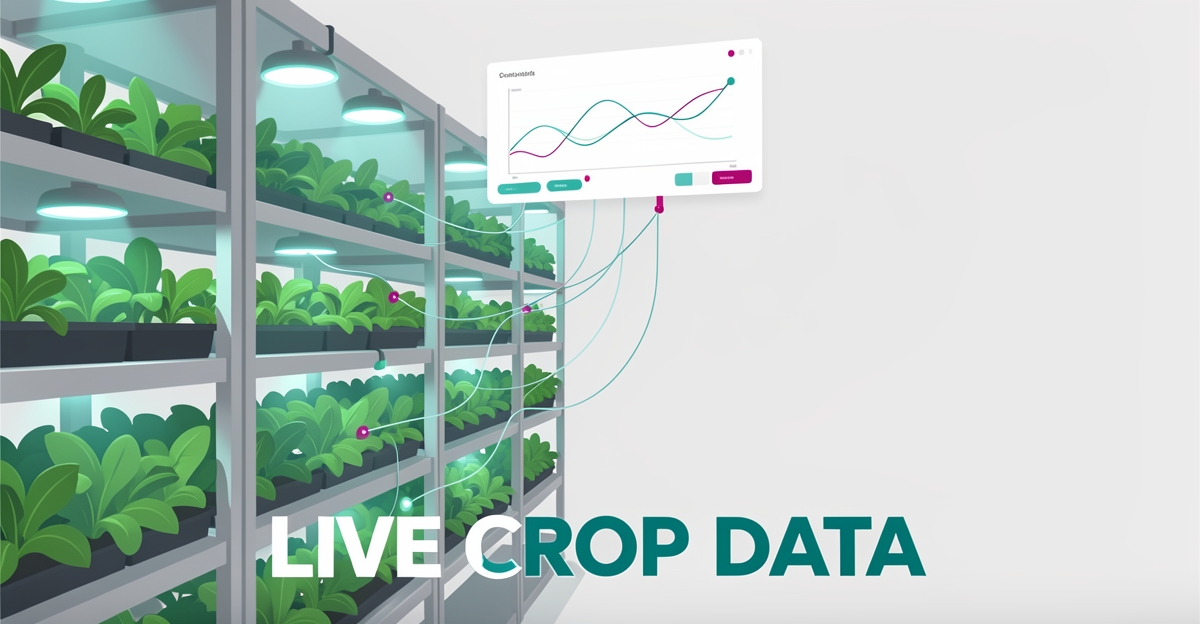
Vertical farms already utilize IoT, AI, and data analytics to optimize operations, as highlighted by Market Data Forecast, which notes the increasing technological adoption in the industry. By repurposing this data for website transparency, farms can bridge the gap between production and consumer engagement. For example, a farm could integrate sensor readings on temperature, humidity, and crop health into dynamic website features, such as live dashboards or growth progress bars, to keep consumers informed.
- Leverage Existing Infrastructure: Utilize current IoT sensors to feed real-time data into the website, requiring minimal additional investment.
- Simplify with Automated Content Generation: Platforms like AI Business Sites can turn sensor data into easily digestible, SEO-optimized content without needing technical expertise.
- Highlight Sustainability: Emphasize water efficiency (up to 98% less than traditional farming, as noted by Eden Green Technology) and land use reduction through live updates, reinforcing the farm's eco-friendly practices.
- Competitive Differentiation: In a market projected to grow at a 22.2% CAGR (Market Data Forecast), live updates can set a farm apart.
- SEO Benefits: Fresh, dynamic content can improve search rankings, as search engines favor regularly updated sites.
- Consumer Trust: Transparency about crop conditions and growth stages can significantly enhance consumer confidence in the farm's claims.
By embracing live updates, vertical farms can not only enhance engagement but also position themselves at the forefront of a rapidly evolving industry, where technology meets consumer transparency.
Frequently Asked Questions
Why don't more vertical farms show real-time crop progress on their websites?
Can vertical farms use their existing sensors to show live crop updates without buying new equipment?
What's stopping vertical farms from adding live crop tracking to their websites?
Do real-time crop updates actually help vertical farms get more customers?
How much work is it to maintain a live crop progress page once it's set up?
Is there proof that consumers care about seeing real-time farm data?
From Static Pages to Living Proof: The Future of Vertical Farm Transparency
Most vertical farms are missing a powerful opportunity to turn their technological edge into consumer trust—by leaving real-time crop progress invisible on their websites. As we’ve seen, these operations already collect rich data through IoT sensors and AI systems that optimize growth, yet few repurpose it to show visitors live updates on harvest schedules, water savings, or yield advantages. This gap isn’t just a missed chance for engagement; it’s a barrier to building credibility in a market where transparency drives loyalty. By leveraging existing sensor data with tools like AI Business Sites’ automated content engine, farms can transform static sites into dynamic hubs that verify sustainability claims, improve SEO, and differentiate themselves in a growing industry. The next step is simple: start treating your website not as a brochure, but as a live extension of your farm—one that shows, rather than tells, why your approach matters. See how AI Business Sites helps local businesses turn data into trust: Explore our services.
FOR local businesss — BUILT AND RUN BY US
Your website. Your content. Your leads. Your data.
$500 starts your build. Seven days later it's live — chat, booking, follow-up, and your Google presence all set up. Then we run it, every month. You do the work you actually get paid for.