
Key facts
- One Bizzflo customer saved at least 40 hours monthly by automating just Groupon bookings across 16 lanes according to their testimonial
- The shooting range market is projected to grow from $2.58B in 2025 to $4.09B by 2034 per industry analysis
- 75% of sports organizations already use management software but few have adopted lead follow-up automation research shows
- 40% of gun clubs worry about secure data handling, especially older members who prefer paper methods survey data reveals
- Ranges typically duct-tape together 6+ disconnected tools creating zero unified data for lead follow-up industry experts note
- Software costs consume about 10% of annual revenue for many volunteer-driven ranges operators report
- Mobile 4G is near unusable at many rural ranges making cloud-based solutions unreliable users confirm
WANT RESULTS LIKE THIS?
Imagine a system doing all of this for your local business — every day, without you.
We build local businesses a custom website with a team of AI behind it: every lead captured and followed up, new content published monthly,customers finding you on Google — live in 7 days.
- 85+ pages at launch
- Every lead followed up, automatically
- Your whole business on one screen
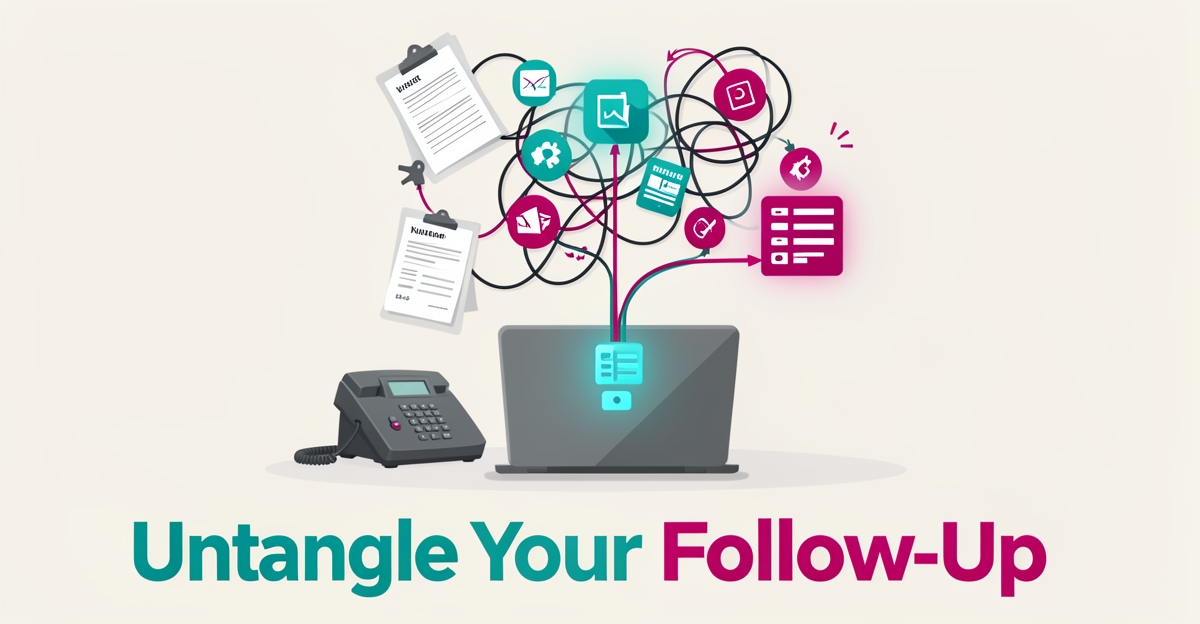
The 'Frankenstack' Problem: Why Phone Calls Dominate Lead Follow-Up
The 'Frankenstack' Problem: Why Phone Calls Dominate Lead Follow-Up in Shooting Ranges
Imagine a shooting range where every lead, from website inquiries to phone calls, is seamlessly tracked, responded to, and nurtured—all without lifting a finger. Yet, despite the existence of integrated CRM and marketing automation platforms specifically designed for shooting ranges (like Bizzflo and ManageMemberships), most ranges still rely on manual phone calls for lead follow-up. The culprit behind this reliance is what industry insiders call the "Frankenstack" problem.
The Frankenstack: A Barrier to Automation
The term "Frankenstack" describes the common practice of "duct-taping together" a myriad of disconnected tools—a booking tool, a waiver tool, a membership platform, a POS, a marketing tool, and possibly a door access system. This fragmentation results in "zero unified data," as aptly described by Jon Klem, founder of ManageMemberships. When a member's payment fails, the door access system doesn't lock. When a member hasn't visited in 90 days, the marketing tool has no idea. Critically, lead data is scattered across non-communicating tools, making automated follow-up impossible.
Quantifying the Cost of Fragmentation
The inefficiency of this approach is starkly illustrated by Bizzflo's customer, Article II, who saved at least 40 hours a month by automating just their Groupon bookings. Extrapolating this to lead follow-up across all channels, the hours lost to manual phone calls are staggering. For instance, if automating one channel saves 40 hours, manual follow-up for all web leads could represent hundreds of lost hours annually, directly impacting revenue and competitiveness.
Structural Barriers to Adoption
Four significant barriers prevent shooting ranges from adopting unified, automated lead follow-up solutions:
- Cost Barrier: Software costs, often around 10% of annual revenue, are unsustainable for many ranges.
- Volunteer Dependency: Ranges rely on volunteers who quickly burn out from learning multiple systems.
- Rural Connectivity Issues: Near-unusable mobile 4G in many areas makes cloud-based solutions less appealing.
- Data Privacy Concerns: 40% of clubs worry about secure data handling, especially for older members who prefer traditional methods.
A Solution in Sight: Unified Platforms
Platforms like AI Business Sites offer a holistic alternative, integrating lead capture, CRM, automation, and communication into one system. By addressing the structural barriers head-on:
- Unified Billing: Replaces multiple subscriptions with a single, manageable cost.
- Simplified Interface: Reduces volunteer training burdens.
- Offline-Capable AI Voice Agents: Works seamlessly in areas with poor connectivity.
- Owned Data Solutions: Offers on-premise or tightly secured cloud options to alleviate privacy concerns.
Breaking the Frankenstack Cycle
For shooting ranges to move beyond manual phone follow-up, the industry must shift towards unified, automated platforms. By acknowledging and directly addressing the Frankenstack problem and its associated barriers, ranges can finally leverage technology to respond to leads instantly, personalize follow-ups, and grow their business without the operational tax of fragmentation.
According to industry research, 75% of sports organizations already use management software, yet few have adopted the automation needed for efficient lead follow-up, highlighting a critical gap in the current market landscape.
Key Takeaways:
- The "Frankenstack" of disjointed tools prevents unified lead data and automation.
- Fragmentation costs ranges hundreds of hours annually in manual follow-up.
- Unified platforms like AI Business Sites address cost, complexity, connectivity, and privacy barriers.
By embracing integrated solutions, shooting ranges can break free from the Frankenstack, leveraging automation to enhance lead follow-up, reduce operational burdens, and drive business growth.
The Hidden Cost of Fragmentation: Quantifying the Loss
Most shooting ranges don’t choose phone follow-up — they’re forced into it by fragmented systems. When lead data lives in separate tools for booking, waivers, and marketing, there’s no unified view to trigger automated responses. The phone becomes the only reliable way to bridge those silos, turning what should be instant digital follow-up into a manual, time-consuming process.
This fragmentation carries a steep operational cost. One Bizzflo customer reported saving at least 40 hours per month by automating just their Groupon booking process, according to their testimonial. If automating a single lead source frees up that much time, manually following up on all web leads via phone likely consumes hundreds of hours annually — time that could be spent on instruction, range maintenance, or growing the business.
The cost of fragmentation shows up in predictable ways: delayed responses that let leads go cold, inconsistent messaging that confuses prospects, and staff burnout from repetitive admin work. For ranges already operating on thin margins and relying on volunteers, these inefficiencies aren’t just inconvenient — they directly impact revenue and sustainability. Addressing them requires more than adding another tool; it demands a platform where lead capture, follow-up, and communication are built in from the start.
Unified Solution: How AI-Powered Websites Close the Gap
The technology to automate lead follow-up isn't missing — it's trapped inside a fragmented stack. Platforms like Bizzflo already market CRM and marketing automation built specifically for shooting ranges, complete with email and SMS drips, behavioral triggers, and landing pages for FOID and safety forms. One customer, Article II, reported saving 40+ hours per month just by automating Groupon bookings across 16 lanes. But that efficiency only exists when the data lives in one system.
Most ranges don't have that luxury. As Jon Klem of ManageMemberships describes it, the average indoor range is "duct-taping together a booking tool, a waiver tool, a membership platform, a POS, a marketing tool, and maybe a door access system" — creating zero unified data. When a visitor fills out a form on the website, that lead sits in a silo. The marketing tool doesn't know they exist. The CRM can't trigger a follow-up. The phone becomes the only bridge that works.
- Lead capture, CRM, and automation native to the website — not bolted on
- Instant, personalized auto-response to every form, chat, call, and booking
- Visual automation builder with 25+ triggers and 20+ actions — no code required
- AI voice agent that answers the phone over standard lines, no 4G needed
- One platform replacing 8–10 separate subscriptions
AI Business Sites takes a different architectural approach: the website is the platform. Built on Next.js and React, each custom site comes with an embedded operations layer that handles lead capture, two-way email, CRM pipelines, document generation, and content publishing — all talking to the same database. When a lead arrives, the system responds instantly, tags the contact, and moves them through a pipeline automatically. The business owner steps in only when judgment is needed. For ranges in rural areas where mobile 4G is near unusable, the AI voice add-on works over standard phone lines. And because the business owns the code, the content, and the data — nothing is rented — the privacy concerns that stall 40% of clubs never become a blocker. The Frankenstack doesn't need more bridges. It needs a foundation that was never fragmented to begin with.
Local business: doing this the old way?
One system replaces the whole pile.
All of it — the website, the follow-up, the content, the leads — built and run for you for $1,497 + $497/mo. Month-to-month, and you own everything.
See what your build includesAddressing Shooting Range-Specific Barriers to Adoption
Most shooting ranges don’t choose phone follow-up because they prefer it—they rely on it because their tools don’t talk to each other. As one industry observer put it, ranges are “duct-taping together a booking tool, a waiver tool, a membership platform, a POS, a marketing tool, and maybe a door access system… You’re not buying software. You’re buying bridges to nowhere.” This fragmentation means lead data lives in silos: a web form fill might land in the booking tool, but the marketing tool has no idea it happened, making automated follow-up technically impossible. The phone becomes the only reliable way to bridge those gaps manually.
This structural barrier is compounded by four industry-specific challenges that slow technology adoption. First, cost is a major hurdle—many ranges report spending about 10% of annual income on software, a figure described as “not sustainable” for volunteer-driven operations. Second, reliance on volunteers creates burnout when systems require steep learning curves; as one Reddit user noted, “the last thing you need is software that requires a computer science degree to operate.” Third, rural connectivity undermines cloud-dependent tools, with mobile 4G described as “near unusable” at many remote ranges. Finally, data privacy concerns are widespread—40% of clubs worry about secure handling of member data, particularly among older members who “don’t want their personal data or phone numbers collated” online and prefer paper methods.
AI Business Sites addresses these barriers through its unified website-and-platform model. Instead of adding another subscription to an already fragmented stack, the platform replaces what would otherwise be 8–10 separate tools—website, CRM, automation, content, scheduling, analytics, document generation, project management, newsletter, and media—into one owned system. This reduces cost complexity to a single predictable bill, minimizes volunteer training with one intuitive interface, and keeps data under the range’s control. For rural operations with spotty connectivity, the optional AI voice agent works over standard phone lines—no 4G needed—capturing leads and triggering instant follow-ups without relying on broadband. And because the business owns its data and infrastructure, ranges can address privacy concerns directly, avoiding third-party cloud collation that worries older members.
By consolidating tools and designing for real-world constraints, the platform turns lead follow-up from a manual phone chore into an automated, reliable process—without asking for shooters.
Implementation Roadmap: Transitioning to Automated Lead Follow-Up
The gap between "management software" and actual lead follow-up automation is where most ranges get stuck. Industry data shows 75% of sports organizations use management software, yet platforms like Bizzflo still position CRM drips, behavioral triggers, and landing page capture as differentiators — meaning the automation layer is missing from the typical stack. A unified website platform solves this architecturally: lead capture, CRM, and follow-up sequences live in one system, not across six disconnected tools.
Start by auditing what you actually have. Map every place a lead enters your business — web forms, phone calls, walk-ins, Groupon redemptions, event sign-ups — and note which tool captures each one. The "Frankenstack" problem means your booking tool, waiver system, POS, and marketing platform likely don't share data, so a lead who fills a web form never triggers an automated sequence. Identify the primary "source of truth" you want — ideally your website — and plan migration from there.
- Consolidate lead capture onto your website with forms, chat, and voice that feed one CRM
- Build a new lead welcome sequence that fires instantly — email, SMS, or both — personalized by source
- Add behavioral triggers: no booking within 48 hours → follow-up; visited pricing page twice → offer; 90 days inactive → re-engagement
- Route hot leads (phone callers, high-intent form fills) to staff alerts; nurture the rest automatically
- Measure response time, conversion by source, and sequence performance weekly
One Bizzflo customer automated Groupon booking alone and reclaimed 40+ hours monthly — proof that a single unified workflow compounds fast. AI Business Sites builds this automation into the website itself: the AI assistant captures leads from chat, voice, and forms; the visual automation builder handles tagging, sequences, and alerts with 25+ triggers and 20+ actions; and the CRM tracks every touchpoint without a separate login. You don't add another subscription — you replace the stack with a website that runs your follow-up for you.
Frequently Asked Questions
Why do most shooting ranges still rely on phone calls to follow up with leads instead of using automated email or text?
What is the 'Frankenstack' problem and how does it hurt shooting ranges?
How much time can a shooting range actually save by automating lead follow-up?
What are the main reasons shooting ranges haven't adopted automated lead follow-up even though the technology exists?
Can automated lead follow-up work at a rural shooting range with poor internet connectivity?
How does a unified website platform solve the lead follow-up problem differently than adding another software tool?
The Phone Doesn't Have to Be Your CRM
The shooting range industry's reliance on phone calls for lead follow-up isn't a preference — it's a symptom. When lead data is scattered across booking tools, waiver systems, POS platforms, and marketing software that don't speak to each other, the phone becomes the only reliable bridge between silos. But that bridge comes at a steep cost: hundreds of hours annually spent on manual follow-up that could be automated, delayed responses that let leads go cold, and volunteer burnout from managing a Frankenstack of disconnected tools. The technology to fix this exists. Platforms like Bizzflo have demonstrated that automating even a single channel like Groupon bookings can reclaim 40+ hours per month. The real barrier isn't capability — it's architecture. A unified website platform that embeds lead capture, CRM, automation, and AI voice directly into the site eliminates the fragmentation at its root, works over standard phone lines where 4G fails, and keeps data under the range's control. For ranges ready to stop duct-taping tools together and start following up automatically, the next step is simple: audit where your leads actually enter your business today, and ask whether your website is capturing them — or just displaying your hours. One range saved 40 hours a month automating just one lead source; imagine what a unified system could do for all of them.
FOR local businesss — BUILT AND RUN BY US
Your website. Your content. Your leads. Your data.
$500 starts your build. Seven days later it's live — chat, booking, follow-up, and your Google presence all set up. Then we run it, every month. You do the work you actually get paid for.