
Key facts
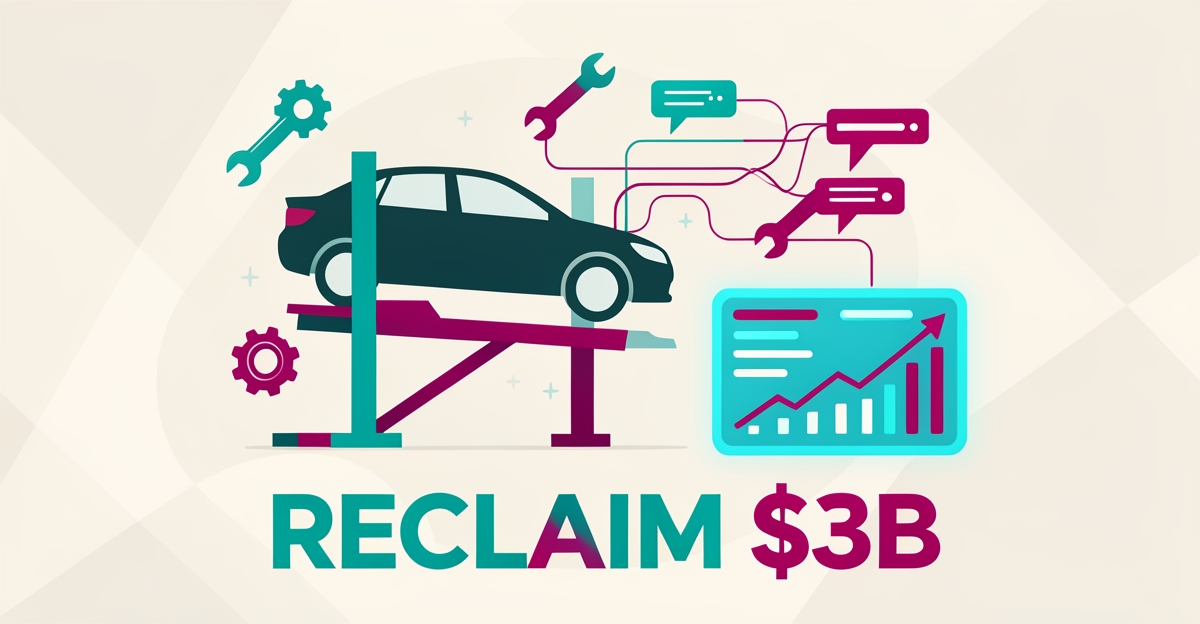
- Independent repair shops lose $3.1 billion annually due to workflow inefficiencies and data restrictions according to the Auto Care Association.
- 63% of independent repair shops face daily or weekly workflow challenges that stall jobs and frustrate customers per industry survey data.
- Manual job tracking costs shops $1,500 to $6,000 per invoice in unbilled labor hours based on a documented case study.
- One repair shop doubled its revenue and grew from 5 to 11 technicians in a year after implementing automated tracking per the Kordis case study.
- 51% of independent shops send 1–5 vehicles monthly to dealerships due to data access restrictions according to the Auto Care Association.
- Shops using AI automation see functional results within two weeks and technician adaptation in just three days per Orderry implementation data.
- 84% of independent repair shops cite vehicle data access as their number one business issue per the Auto Care Association survey.
WANT RESULTS LIKE THIS?
Imagine a system doing all of this for your local business — every day, without you.
We build local businesses a custom website with a team of AI behind it: every lead captured and followed up, new content published monthly,customers finding you on Google — live in 7 days.
- 85+ pages at launch
- Every lead followed up, automatically
- Your whole business on one screen
The Hidden Cost of Manual Job Tracking
The Hidden Cost of Manual Job Tracking
Repair shops relying on spreadsheets, phone calls, and manual follow-ups face staggering financial and operational losses. According to industry research, these losses stem from unbilled labor, missed leads, and delayed payments, costing the industry a staggering $3.1 billion annually (Auto Care Association Survey).
Manual tracking leads to significant labor leakage, with $1,500 to $6,000 lost per invoice due to unbilled hours (Kordis Case Study). This leakage often results from poor time tracking and delayed invoicing, highlighting the need for real-time job logging.
- 63% of independent repair shops face daily/weekly workflow challenges, leading to missed opportunities and customer dissatisfaction (Auto Care Association Survey).
- Delayed payments, often due to inefficient invoicing processes, further exacerbate cash flow issues. Automated systems can mitigate these losses by ensuring timely updates and notifications.
Implementing an AI-integrated website with real-time job tracking and automated follow-ups can reclaim revenue and improve efficiency. Key benefits include:
- Automated Status Updates: Reducing inbound status-check calls and improving customer satisfaction (Orderry AI Automation).
- AI-Generated Follow-Ups: Preventing lost repeat business through proactive communication.
- Mobile Access for Real-Time Updates: Enabling technicians and managers to update job statuses from the field (Orderry Workflow Best Practices).
By addressing the root causes of inefficiency, repair shops can turn manual job tracking's hidden costs into reclaimed revenue and improved customer satisfaction. For instance, a shop that implemented automated tracking doubled its revenue within a year by reducing unbilled hours and streamlining follow-ups (Kordis Case Study).
AI Business Sites, with its custom-built websites featuring integrated AI assistance for job tracking and follow-ups, offers a tailored solution for repair shops to overcome these challenges, ensuring visibility, efficiency, and profitability in their daily operations.
How AI Tracking Turns Workflow Gaps Into Revenue
Most repair shops don't lose jobs because of bad work — they lose them in the gaps between intake and completion. Missed handoffs, unclear ownership, and jobs that quietly stall create revenue leaks that compound daily (Orderry Workflow Best Practices). An AI-integrated website closes those gaps by logging every job order automatically — whether it comes from a web form, a phone call, or an online booking — and updating statuses in real time so nothing falls through the cracks.
The numbers back this up. 63% of independent repair shops face daily or weekly repair difficulties because of workflow inefficiencies (Auto Care Association Survey). Meanwhile, $1,500–$6,000 per invoice evaporates in unbilled labor hours that manual tracking simply misses (Kordis Case Study). When a website automatically logs jobs, pushes status updates to customers, and flags overdue work, those leaks stop.
AI Business Sites builds this tracking directly into the website itself — no separate software to duct-tape together. The system captures leads from every channel, moves them through a visual pipeline, and sends personalized follow-ups without anyone lifting a finger. Technicians update job status from their phones. Customers get proactive notifications: "Your car is ready for pickup." The office stops fielding status-check calls. And when a deal closes, a project spins up automatically with the right template and assignee — no manual handoff required (Orderry AI Automation).
- Job orders logged instantly from web forms, calls, and bookings
- Real-time status updates pushed to customers automatically
- Overdue work flagged before it becomes a cash-flow problem
- Post-service follow-ups that drive repeat business and reviews
Shops using this approach see fewer no-shows, faster invoicing, and reclaimed revenue from labor that used to go unbilled. The best-run shops communicate before they're asked — and an AI-integrated website makes that automatic (Chronogram).
From Chaos to Control: A 30-Day Automation Plan
From chaos to control: a 30-day plan to stop losing jobs—and start keeping every dollar
Before the first invoice slips through the cracks and before a single call becomes a no-show, your shop can run like clockwork. Research shows repair shops lose $1,500–$6,000 per invoice to unbilled labor and delayed payments, while 63% struggle daily with workflow gaps that let jobs fall through the cracks (Auto Care Association Survey). The fix isn’t another hire—it’s an AI-integrated website that handles call logs, job statuses, and customer follow-ups automatically, so nothing slips past you.
Week 1: turn every call and booking into a tracked job Start by giving your website a voice and memory. A custom-built site with built-in AI transcription logs every call automatically, pulling problem descriptions, urgency cues, and booking details into a live job order—no manual notes, no missed details (Orderry AI Automation). Pair that with online booking that drops new jobs straight into your workflow and tags each lead by service type and urgency, so high-value repairs get routed first.
- Call transcription converts every voicemail and on-hold conversation into structured job data you can review in your CRM dashboard.
- Real-time job logging starts the moment a customer books or describes their car’s issue—no double entry across spreadsheets and sticky notes.
- Tagging automation sorts leads by repair type and priority, so your team sees what matters before the phone rings again.
Week 2: keep customers informed and money flowing Automated status updates let customers track progress without calling your shop, cutting inbound status-check calls while raising satisfaction scores. Pair that with financial alerts that flag stalled invoices and overdue payments, so your cash flow never stalls behind the work (Orderry Workflow Best Practices).
- Proactive notifications send the moment a job starts, parts arrive, or it’s ready for pickup—no more “Is my car done?” calls.
- Financial alerts ping you the second an invoice ages past terms, so you can reach out before the balance slips.
- Follow-up sequences nudge leads who didn’t book immediately, turning potential no-shows into confirmed appointments with a click.
By day 30, your shop moves from reactive to predictable: every job logged, every customer updated, and every dollar tracked—without another late invoice or lost lead.
Local business: doing this the old way?
One system replaces the whole pile.
All of it — the website, the follow-up, the content, the leads — built and run for you for $1,497 + $497/mo. Month-to-month, and you own everything.
See what your build includesThe Real ROI: What Shops Gain When They Stop Losing
The numbers shift fast once the gaps close. Shops that move from scattered spreadsheets to a single automated system see invoices go out the same day the job finishes, not three weeks later when someone remembers to check. Technicians stop losing billable hours to phone tag and start logging time against the right ticket in real time. One case study documented a shop doubling revenue and growing from five to eleven technicians in a year after plugging the leakage that manual tracking hid (Kordis Case Study).
- Reclaimed labor hours that were previously spent chasing status updates and re-entering data
- Faster invoicing cycles that cut payment delays from weeks to days
- Higher retention from automated follow-ups that bring customers back for the next service
- Fewer no-shows because reminders and confirmations run without anyone lifting a finger
The research shows 63% of independent shops wrestle with daily or weekly workflow breakdowns that stall jobs and frustrate customers (Auto Care Association Survey). When an AI-integrated website logs every job order, status change, and customer touchpoint automatically, those breakdowns disappear. The AI assistant answers questions, books appointments, and follows up on leads at 2 a.m. the same way it does at 2 p.m. — no missed calls, no forgotten emails. That consistency is what turns a one-time repair into a repeat customer who refers their neighbor.
One System to Replace the Chaos of 10 Tools
Repair shops lose thousands every month—not because they do bad work, but because their systems can’t keep up. Without a single place to track jobs, schedule follow-ups, or manage customer conversations, critical details slip through the cracks. According to industry research, 63% of independent repair shops struggle with workflow gaps on a daily or weekly basis, leading to lost business and frustrated customers.
The problem isn’t just inefficiency—it’s revenue leakage. When jobs aren’t logged in real time, invoices get delayed, labor goes unbilled, and repeat customers slip away. Research shows shops lose $1,500 to $6,000 per invoice to unbilled hours alone (Kordis Case Study). Across the industry, these gaps add up to $3.1 billion in annual losses for independent repair shops (Auto Care Association Survey).
The solution isn’t adding more tools—it’s replacing the chaos with one system that does it all. An AI-powered website from AI Business Sites consolidates scheduling, CRM, email, project management, and content creation into a single platform. No more juggling logins, no more missed follow-ups, and no more revenue slipping through the cracks.
- Real-time job tracking: Every booking, call, and email is logged automatically—no more manual spreadsheets or double entries.
- Instant customer updates: Automated notifications keep customers informed, reducing status-check calls and improving satisfaction.
- Seamless handoffs: Jobs move smoothly from booking to completion to invoicing, with no gaps in communication.
- Two-way email and chat built in, so every conversation stays in one place—no more lost messages or forgotten leads.
- AI handles routine tasks, like sending follow-ups or drafting responses, while you focus on the work that matters.
Most repair shops don’t need more software—they need one system that works for them. With everything in one place, you reclaim lost revenue, reduce frustration, and keep your shop running smoothly.
Frequently Asked Questions
How much money do repair shops actually lose from manual job tracking?
Is it true that most shops struggle with daily workflow problems?
Can an AI-integrated website really replace all the separate tools we're using now?
How fast can we get automated job tracking up and running?
Will technicians actually use a mobile system for updating job statuses?
What kind of results do shops see after automating their job tracking and follow-ups?
Stop Losing Revenue to the Gaps
The data is clear: repair shops lose thousands every month not because of poor work, but because of silent workflow gaps—missed handoffs, unbilled hours, and delayed follow-ups that erode profitability and frustrate customers. With 63% of independent shops struggling daily and up to $6,000 leaking per invoice, the cost of inaction is too high to ignore. An AI-integrated website from AI Business Sites closes those gaps by automatically logging every job, updating customers in real time, and ensuring no lead or dollar slips through the cracks. The result? Faster invoicing, higher retention, and reclaimed revenue—all from a system that runs itself so you can focus on the work that matters. If you're ready to turn chaos into control, start by assessing where your current process is losing time and money. Then, see how a single, smart website can handle the busywork while you grow your business. Learn more about how AI-powered automation is helping shops like yours thrive: AI automation for auto repair shops.
FOR local businesss — BUILT AND RUN BY US
Your website. Your content. Your leads. Your data.
$500 starts your build. Seven days later it's live — chat, booking, follow-up, and your Google presence all set up. Then we run it, every month. You do the work you actually get paid for.