
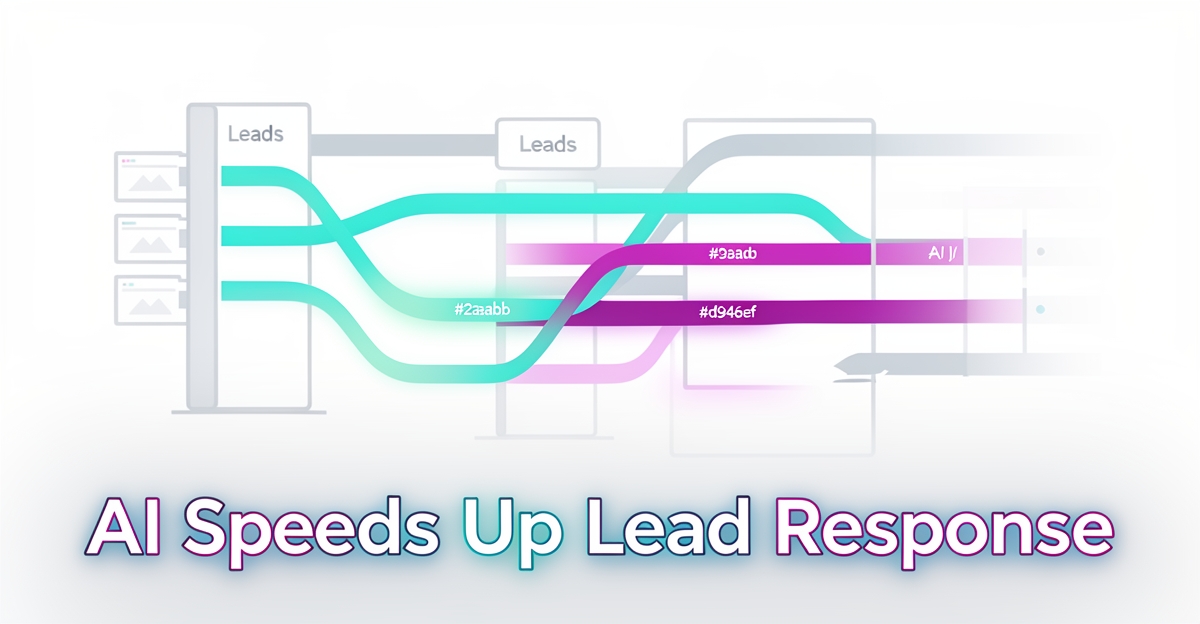
Key facts
- Leads contacted within 5 minutes have a 32% close rate, dropping to 12% after 24 hours according to research
- Construction firms lose 10–30% of annual revenue due to slow lead response times per industry data
- 78% of customers buy from the first company to respond to their inquiry based on sales studies
- AI reduces lead response times from 47 hours to under 5 minutes, an 8x improvement as demonstrated by automation
- Firms responding within 5 minutes are 21x more likely to qualify leads than those waiting 30+ minutes per lead qualification research
- AI-powered proposal generation cuts estimating time from 6+ hours to 45 minutes according to construction AI case studies
- Only 23% of B2B firms respond to leads within 5 minutes, creating a major competitive gap based on response time benchmarks
WANT RESULTS LIKE THIS?
Imagine a system doing all of this for your local business — every day, without you.
We build local businesses a custom website with a team of AI behind it: every lead captured and followed up, new content published monthly,customers finding you on Google — live in 7 days.
- 85+ pages at launch
- Every lead followed up, automatically
- Your whole business on one screen
The 5-Minute Rule: Why Speed Beats Everything in Lead Capture
The 5-Minute Rule: Why Speed Beats Everything in Lead Capture
In the highly competitive pipeline construction industry, the adage "time is money" couldn't be more accurate. For companies in this sector, responding to leads swiftly is not just beneficial—it's crucial for capturing and converting potential clients. A stark reality check comes from research highlighting that leads contacted within 5 minutes have a 32% close rate, plummeting to 12% for those contacted after 24 hours source. This "5-Minute Rule" underscores the critical importance of speed in lead follow-up, a challenge that AI-driven automation is uniquely positioned to solve.
The Cost of Delay
- Missed Opportunities: Construction firms, including those in pipeline construction, lose between 10% to 30% of potential annual revenue due to slow response times and inconsistent follow-ups source.
- Competitive Disadvantage: In a sector where 78% of customers buy from the first company to respond source, delays can literally mean losing deals to competitors.
- Industry-Specific Urgency: Pipeline construction queries are often time-sensitive and high-value, making prompt responses even more critical. For example, a delayed response to a safety compliance inquiry can lead to a lost opportunity, as the client may opt for a quicker-responding competitor.
AI: The Game-Changer for Pipeline Construction Leads
- Instant Responses Guaranteed: AI assistants integrated into custom websites (like those built by AI Business Sites) can respond to inquiries in under 5 minutes, every time, without human oversight source.
- Personalization at Scale: Unlike generic auto-responses, AI can be trained on a company’s knowledge base to provide context-aware, personalized follow-ups, whether it's a query about project timelines or safety protocols.
- Multi-Channel Support: From website chats to phone calls, AI voice agents ensure no lead is missed, regardless of the contact method preferred by pipeline operators.
Key Statistics Driving the Urgency for AI Adoption in Pipeline Construction:
- 32% Close Rate for leads responded to within 5 minutes source
- 10-30% Annual Revenue Loss for construction firms due to slow responses source
- 78% of Customers buy from the first responder source
Conclusion
For pipeline construction companies, embracing AI-driven lead follow-ups is no longer a strategic choice but a necessity. By leveraging AI to adhere to the "5-Minute Rule," these firms can significantly boost conversion rates, reduce revenue loss, and stay ahead of the competition. With AI Business Sites' integrated platform, pipeline construction companies can ensure instant, personalized responses, predictive lead scoring, and automated follow-ups, all while maintaining the human touch through reviewable AI-drafted communications.
Next Step for Pipeline Construction Firms: Implement AI-powered lead response systems to transform your sales pipeline's efficiency and profitability. Start by piloting an AI assistant on your website and measuring the impact on response times and conversion rates.
How AI Turns Slow Leads into Closed Deals (Without Extra Work)
How AI Turns Slow Leads into Closed Deals (Without Extra Work)
Pipeline construction firms often miss out on high-value leads due to slow follow-ups, a critical flaw in the competitive construction industry. However, AI-driven automation can transform this weakness into a competitive advantage. Here’s how AI capabilities, like those integrated into AI Business Sites, ensure instant, personalized follow-ups without requiring extra human effort:
1. Instant Responses Across Channels
- Website Chat & Voice Agents: AI assistants on websites and voice agents for phone calls respond to inquiries in under 5 minutes, a timeframe where leads have a 32% close rate compared to just 12% for responses after 24+ hours (Optif.ai). This immediate engagement is crucial for high-intent leads, such as those requesting safety compliance documents or project estimates.
- Automated Emails: Source-specific, personalized emails are sent automatically, ensuring no lead is left unaddressed, regardless of the time of inquiry.
2. Predictive Lead Scoring for Prioritization
- AI-Driven Scoring: Leads are scored based on project size, budget, location, and urgency, allowing sales teams to focus on high-value opportunities first. For example, a lead from a major pipeline operator inquiring about a large project would be prioritized over a smaller, less urgent query.
- Real-Time Alerts: High-scoring leads trigger immediate notifications, ensuring timely human intervention.
3. Seamless CRM Integration and Automation
- Unified Platform: Leads from all sources (web, phone, email) are funneled into one CRM, with automated follow-ups triggered by lead behavior or pipeline stage AI Business Sites.
- Visual Automation Builders: Easy-to-use tools for setting up custom workflows, such as moving leads through the pipeline based on email opens or form submissions.
4. Personalization Without Human Overhead
- Knowledge Base Training: AI is trained on the company’s specific services (e.g., safety compliance, project timelines), ensuring responses are always relevant and accurate.
- Human-in-the-Loop Review: For critical communications, AI drafts are reviewed by humans before sending, balancing speed with personal touch.
Key Statistics Highlighting AI’s Impact:
- Response Time Advantage: AI reduces response times from an average of 42-47 hours to under 5 minutes, an 8x improvement (Optif.ai).
- Conversion Rate Boost: Firms responding within 5 minutes see a 21x higher qualification rate than those waiting 30 minutes (Kixie).
- Revenue Protection: Construction firms can prevent losing 10-30% of annual revenue due to slow responses by adopting AI SynthMind Solutions.
Actionable Takeaway for Pipeline Construction Firms: Implement AI-driven lead follow-up systems to:
- Achieve instant, personalized responses across all lead sources.
- Prioritize leads based on potential value using AI scoring.
- Automate workflows within your CRM for efficiency.
By doing so, you can significantly improve conversion rates, protect revenue, and outpace competitors in the competitive pipeline construction sector.
Pipeline-Specific Use Cases: Where AI Adds Immediate Value
Pipeline firms often watch high-intent leads slip away before they even get a chance to respond. The difference between a lead that converts and one that fades can come down to minutes—businesses that contact leads within five minutes have a 32% close rate, compared to just 12% for those waiting 24 hours or longer. AI-driven automation closes that gap entirely by turning every follow-up into an instant, personalized interaction, even when your team is in the field. Here’s how it works in four critical areas of pipeline operations.
Safety compliance requires regular check-ins, but manual reminders often fall behind schedule. An AI assistant on your website or in your CRM can automatically send safety protocol updates to returning leads and flag overdue documents before they become a liability. Construction firms lose between 10% and 30% of annual revenue to slow responses and inconsistent follow-ups, a gap AI fills by ensuring every compliance email lands in a client’s inbox within moments of a scheduled deadline. The system can even draft and send reminders in the exact tone and format your clients expect, reducing the risk of missed deadlines and improving audit readiness.
Project estimate requests demand quick, accurate responses to stay competitive. AI can generate branded estimates from your knowledge base in minutes, pulling real-time pricing data and project parameters directly from your CRM. AI photo-to-scope tools cut estimating time from six hours to just 45 minutes, allowing your team to respond to bids faster than competitors still working through spreadsheets. The AI doesn’t just create the document—it schedules follow-ups, tracks open estimates, and nudges clients who haven’t yet approved or declined a proposal, ensuring nothing slips through the cracks.
Bid management thrives on consistency, but human teams often struggle to stay on top of every open opportunity. An AI-driven pipeline automates the entire workflow, tagging high-value bids, routing them to the right manager, and triggering alerts when action is needed.
- Automated bid alerts flag stalled deals before they age out of contention
- AI-generated proposals pull from your real pricing and materials databases, maintaining accuracy
- Follow-up sequences adapt based on client behavior, sending tailored messages when bids are reviewed or ignored
Lead prioritization is where speed and insight combine to make a real impact. AI doesn’t just respond faster—it identifies which leads deserve attention first. By analyzing project size, budget, location, and urgency, the system ranks leads so your team focuses on the ones most likely to convert. Firms that respond within five minutes are 21 times more likely to qualify leads than those waiting 30 minutes. For pipeline operators requesting safety audits or project estimates, that difference can mean the difference between winning a contract and losing it to a competitor who answered first.
Local business: doing this the old way?
One system replaces the whole pile.
All of it — the website, the follow-up, the content, the leads — built and run for you for $1,497 + $497/mo. Month-to-month, and you own everything.
See what your build includesMeasuring ROI: What to Track Before and After AI Automation
If your pipeline firm is still measuring success by "how many leads we got" instead of "how many we actually turned into paying jobs," you're tracking the wrong thing. Response speed is the silent killer of pipeline contracts—yet most firms don’t realize they’re bleeding revenue until the quarterly report lands. The difference between a $500,000 bid and a lost opportunity often comes down to a single follow-up sent within five minutes instead of five hours.
Data shows that leads contacted within five minutes convert at 32%, while those left waiting over 24 hours drop to just 12%. That’s a 2.6x swing in close rates based solely on response timing. AI automation flips that failure point into a competitive edge by turning every lead source—website forms, voice calls, even after-hours chats—into instant, personalized engagement. The platform behind AI Business Sites websites handles the busywork: it tags high-priority leads by project size and urgency, sends branded safety compliance reminders or project estimates automatically, and even drafts follow-up emails reviewed by humans before delivery.
To prove the value, track these four metrics before and after going live:
- Response time to first contact – Compare your average delay today against the near-instant responses AI delivers. Firms using AI cut response times from 47 hours to under five minutes, an 8x improvement.
- Lead-to-meeting conversion – Track how many inquiries turn into site visits or calls. AI’s predictive scoring surfaces the 20% of high-intent leads most likely to convert.
- Deal stage velocity – Measure how quickly leads move from "inquiry" to "proposal sent." AI’s automated workflows eliminate days of manual handoffs.
- Revenue recovered per month – Use a free calculator like Optif.ai’s tool to quantify how much faster responses add to your bottom line.
Watch for common pitfalls: relying on generic auto-replies, ignoring human review on AI-drafted content, or letting automation run unchecked without tracking performance. Even the best systems need calibration—review your AI’s drafts weekly and adjust tone or offer based on what actually closes deals. Construction firms lose 10–30% of annual revenue to slow responses; AI isn’t just a time-saver, it’s a revenue-recovery engine disguised as a follow-up tool.
Getting Started: 3 Must-Do Steps to Deploy AI Follow-Ups Today
You’ve already invested in a custom website to capture leads—now it’s time to put that website to work. The difference between a lead that converts and one that slips away often comes down to speed. If your response time stretches past a few hours, you’re leaving money on the table. The good news? You don’t need a dedicated sales team to match the speed of AI.
Start by installing an AI assistant on your website that answers visitor questions instantly, day or night. This isn’t a chatbot stuck with scripted replies—it pulls from your own knowledge base, so responses feel personalized and accurate. No more missed opportunities after hours.Your AI assistant can also trigger automatic follow-ups, like sending a project estimate within minutes of a form submission or scheduling a safety compliance call.
Next, train your AI on the details that matter most to pipeline clients. Upload your safety protocols, pricing guides, and project timelines so the AI can respond with real expertise. Set up rules so high-value leads—say, a pipeline operator requesting an audit—get routed to your senior team immediately.
Finally, integrate your AI with your workflow. Use a visual automation builder to tag leads by project size, location, or urgency. Trigger next steps automatically: send a branded proposal within an hour, follow up on open bids, or alert you only when your attention is needed. No spreadsheets. No missed hand-offs.Behind the scenes, the system handles the busywork while you focus on closing deals.
- Deploy an AI assistant on your website to answer queries instantly and send immediate responses.
- Train the AI on your safety protocols, pricing guides, and project timelines to ensure accurate replies.
- Use automation to tag leads by value and trigger next steps—proposals, follow-ups, alerts—without manual effort.
Response time makes the difference. Firms contacting leads within five minutes convert at 32%, while those waiting over 24 hours close at just 12%. AI closes that gap by acting instantly. Your website can do more than collect leads—it can start building trust before a human even picks up the phone.
Frequently Asked Questions
How much faster can AI respond to leads compared to manual follow-up in pipeline construction?
What is the impact on conversion rates when pipeline construction firms respond to leads within 5 minutes versus waiting 24+ hours?
Can AI really personalize follow-ups for pipeline construction leads without sounding generic or robotic?
How much revenue do pipeline construction firms typically lose due to slow lead responses, and can AI help recover it?
Is it worth investing in AI for lead follow-ups if our pipeline firm already gets a decent number of leads?
What specific pipeline construction tasks can AI automate beyond just answering initial inquiries?
The Clock Is Ticking — And AI Just Bought You More Time
Pipeline construction doesn't wait for business hours, and neither do the operators deciding who gets the contract. The data is unforgiving: leads contacted within five minutes close at 32%, while those left waiting 24 hours drop to just 12%. That gap isn't a metric — it's millions in revenue walking to a faster competitor. AI doesn't just close the speed gap; it eliminates the trade-off between fast and personal. Your website can now answer safety compliance questions at midnight, generate a branded estimate before your estimator finishes coffee, and flag the high-value bid that needs your attention today — not next week. The firms already using this aren't experimenting. They're winning. If your current process relies on someone remembering to follow up, you're not in the lead business — you're in the hope business. Start by putting an AI assistant on your site this week. Measure the response time. Watch the conversion rate. The math has already been done: 32% vs. 12% is the difference between growing and guessing.
FOR local businesss — BUILT AND RUN BY US
Your website. Your content. Your leads. Your data.
$500 starts your build. Seven days later it's live — chat, booking, follow-up, and your Google presence all set up. Then we run it, every month. You do the work you actually get paid for.