
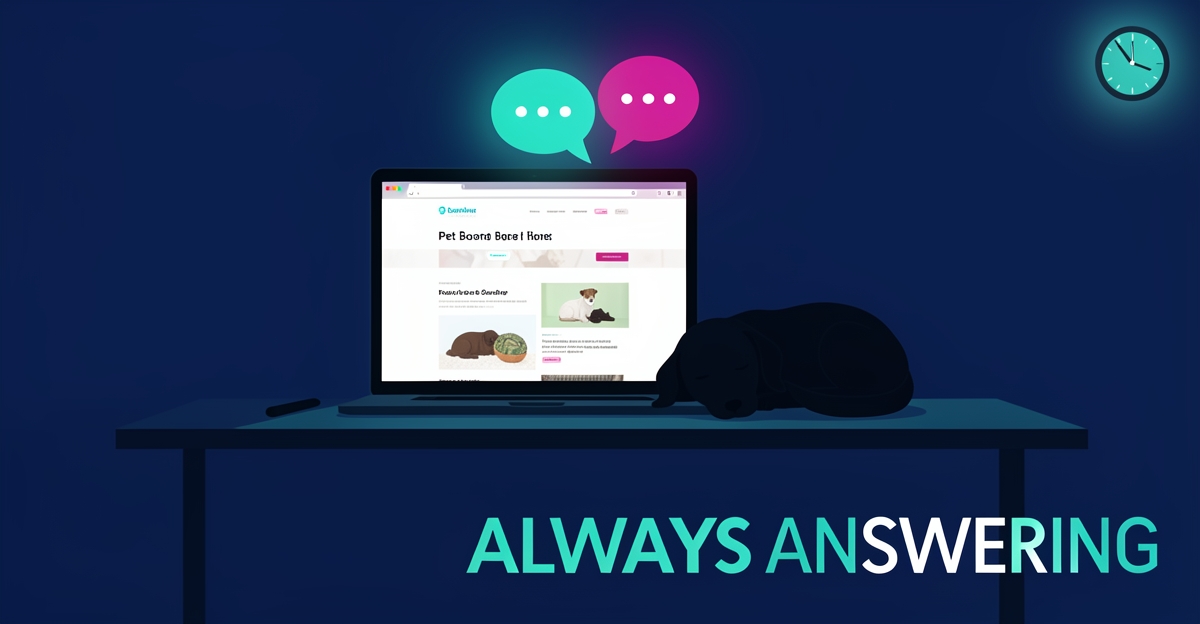
Key facts
- The North American pet boarding market will nearly double from $6.4 billion to $11.9 billion by 2035 according to industry research.
- 80% of pet boarding clients lose trust when they encounter incorrect or outdated information online per marketing research.
- Facilities simply don't have enough staff to answer every phone call confirms industry analysis.
- Manual communication breaks down as volume grows, causing double bookings and inconsistent client updates reveals operational analysis.
- AI integration saves 15-30 hours of administrative labor weekly for pet boarding facilities shows comparative research.
- Over 99% of people check reviews before choosing a pet boarding service notes marketing research.
- Conversational AI web agents will be ubiquitous across pet boarding websites by 2026 predicts industry analysis.
WANT RESULTS LIKE THIS?
Imagine a system doing all of this for your local business — every day, without you.
We build local businesses a custom website with a team of AI behind it: every lead captured and followed up, new content published monthly,customers finding you on Google — live in 7 days.
- 85+ pages at launch
- Every lead followed up, automatically
- Your whole business on one screen
The High Cost of the 'Call for Pricing' Gap
The phone rings at 8 p.m. A prospective client wants to know if their anxious rescue dog can have a midday check-in. No one answers. By morning, they've booked elsewhere. This scenario plays out daily across the $6.4 billion North American pet boarding market, where industry research shows facilities simply "don't have enough staff to answer the phone every time it rings."
The friction isn't new — it's just getting expensive. As the market expands toward $11.9 billion by 2035, consumer expectations for real-time communication have outpaced the hybrid patchwork most facilities run on: scheduling software for bookings, paper forms for check-ins, and phone trees for everything else. Operational analysis confirms these manual processes "break down as volume grows, causing double bookings and inconsistent client updates" — with some pet owners receiving regular updates while others get forgotten during busy periods.
The trust cost is measurable. Marketing research finds that 80% of clients lose trust when they encounter incorrect or outdated information online, and over 99% check reviews before choosing a service. In an industry where roughly half of consumers trust online reviews as much as personal recommendations, a missed answer isn't just a lost booking — it's a reputation risk that compounds.
- Staffing gaps leave phones unanswered during peak hours and after hours
- Manual communication becomes inconsistent as client volume grows
- After-hours call centers lack access to kennel software and business-specific knowledge
- Websites without instant answers drive high bounce rates and lost trust
AI Business Sites builds websites that close this gap by embedding an AI assistant trained on your actual policies, pricing, and safety protocols — answering common questions instantly, 24/7, without adding headcount. The assistant lives on your site, remembers returning visitors, and funnels every interaction into a single system so nothing falls through the cracks. When a facility can answer "What's your check-in time?" or "Is my dog's bordetella current?" at midnight on a Sunday, they don't just save a booking — they earn the trust that keeps clients coming back.
Why Manual Communication Fails at Scale
Most pet boarding facilities don't ignore inquiries by choice — they're caught in a hybrid operation trap. They use specialized software like PetExec or Gingr for scheduling and vaccination tracking, but still rely on staff to answer every phone call, email, and website chat manually. Research shows this model works for single-location facilities with under 50 daily appointments, but breaks down as volume grows, causing double bookings and inconsistent client updates where some pet owners receive regular photos while others get forgotten during busy periods.
- Staffing gaps mean facilities don't have enough staff to answer the phone every time it rings
- After-hours call centers use receptionists who don't know the business or have access to kennel software
- Manual communication consumes 10-20 hours weekly at $15-25/hour for routine inquiries
- Inconsistent updates erode trust — 80% of clients lose trust when they encounter incorrect information
The vulnerability is structural: a prospective client visits a boarding website at 10 PM with questions about pricing, check-in times, or vaccination requirements. The website has the information buried in a PDF or FAQ page, but no one is there to answer. That visitor doesn't wait — they move to a competitor whose site responds instantly. With the North American pet boarding market growing from $6.4 billion to $11.9 billion by 2035, facilities that solve this communication gap capture disproportionate market share. AI Business Sites builds websites with AI assistants that answer these questions 24/7 using the facility's actual policies and real-time kennel data — turning the website from a static brochure into a responsive front desk that never clocks out.
Bridging the Gap with an Intelligent Website
Bridging the Gap with an Intelligent Website
The pet boarding industry's rapid growth, projected to reach $11.9 billion by 2035 source, contrasts with a glaring issue: most boarding websites fail to provide instant answers to common client inquiries. The solution lies in websites that do more than just exist online—they actively work to address these gaps.
Enter the intelligent website, equipped with AI assistants and voice agents, designed to offer 24/7 coverage. These aren't just chatbots; they're powered by business-specific knowledge bases that integrate seamlessly with kennel management software. This integration ensures accuracy, whether answering questions about pricing, pet safety protocols, or check-in times, or even verifying vaccination records in real-time.
Reducing Administrative Burden, Enhancing Client Experience
-
AI-Powered Efficiency: By automating responses to frequent inquiries, AI assistants reduce administrative labor by 15-30 hours weekly source. This not only streamlines operations but also ensures no lead is missed after hours.
-
Voice Agents for Comprehensive Coverage: AI voice agents handle after-hours and overflow phone calls, accessing the same knowledge base and kennel software as web chatbots. This ensures consistent, informed interactions, whether through the website or by phone.
-
Proactive Communication for Trust: Automated workflows send personalized updates (e.g., daily boarding updates with photos, pre-arrival checklists) based on client preferences, building trust and reducing the 80% client trust loss from incorrect online information source.
Key Advantages of Intelligent Pet Boarding Websites
- 24/7 Instant Responses to common questions, reducing bounce rates.
- Integration with kennel software for Real-Time Accuracy on vaccinations, appointments, and more.
- Significant Labor Savings (15-30 hours/week) through automation.
Embracing the Future of Pet Boarding Websites
As the industry shifts towards more integrated solutions, planning for Omni-Channel AI Integration within the next 12 months is crucial. This involves unified platforms handling all communication channels, with human-in-the-loop approvals for outgoing communications. Given the predicted ubiquity of conversational AI web agents by 2026 source, investing in intelligent websites is not just a solution to current gaps but a strategic move for long-term competitiveness.
By bridging the gap with intelligent, AI-driven websites, pet boarding facilities can transform their online presence from a static page into a dynamic, client-centric tool that works around the clock to build trust, reduce labor, and drive growth.
Local business: doing this the old way?
One system replaces the whole pile.
All of it — the website, the follow-up, the content, the leads — built and run for you for $1,497 + $497/mo. Month-to-month, and you own everything.
See what your build includesMoving Beyond the Basic Chatbot
Moving Beyond the Basic Chatbot: Unlocking Real-Time, Personalized Interactions for Pet Boarding Websites
In the rapidly growing North American pet boarding market (projected to reach $11.9 billion by 2035 with a 6.2% CAGR), many websites fail to provide instant answers to common client questions, leading to missed opportunities and frustrated users. The root causes are clear: staffing gaps, manual communication breakdowns, and the inability of basic chatbots to access real-time kennel data.
From FAQs to Integrated Systems
Basic chatbots, like SmithAI chat recommended for Wix sites, can answer general questions about policies and pricing. However, the future lies in integrating these chatbots with kennel management software (e.g., PetExec, Gingr) to provide personalized, real-time answers. For instance, an integrated AI can inform a client, "Yes, your dog's bordetella vaccination is up to date" or "Your next available boarding slot is next Friday," directly accessing the kennel's database.
Key Statistics Highlighting the Need for Integration:
- 80% of clients lose trust if they encounter incorrect or outdated online information source.
- AI integration can save 15-30 hours of administrative labor weekly by automating routine communications source.
- The pet boarding market's 6.2% CAGR underscores the growing demand for technology-driven services source.
Actionable Steps to Elevate Your Pet Boarding Website:
- Deploy a Business-Specific AI Chatbot: Load with FAQs on pricing, policies, and check-in times to address the top 20 client questions instantly.
- Integrate with Kennel Software: Ensure real-time access to vaccination records, appointment history, and staff notes for personalized responses.
- Add an AI Voice Agent for After-Hours: Capture leads and provide 24/7 service, integrating with your knowledge base and software.
Looking Ahead: The Era of Omni-Channel AI
Within the next 12 months, expect the rollout of Omni-AI Agents that seamlessly integrate phone, SMS, email, social media, and website interactions, all fueled by real-time kennel data. By 2026, conversational AI web agents will be the norm, revolutionizing how pet boarding websites engage with clients. Planning for this future now is crucial for staying competitive.
AI Business Sites understands the importance of integrating technology to enhance customer experience and operational efficiency. By moving beyond basic chatbots and embracing integrated, real-time systems, pet boarding facilities can significantly improve client trust and retention, setting a new standard in the industry.
Implementing a 'Run-Itself' Client Experience
The gap between what pet owners expect and what most boarding websites deliver isn't a technology problem — it's a staffing reality. Facilities simply "don't have enough staff to answer the phone every time it rings," and manual communication "becomes inconsistent as your client base grows," with some pet owners forgotten during busy periods.
A run-itself client experience starts by consolidating the fragmented tools that create these gaps. Instead of a chatbot here, a CRM there, and a separate email platform, one system handles the busywork: answering questions instantly with your actual policies and pricing, tagging every lead by source, and following up automatically — whether the inquiry comes through web chat, a phone call, or a booking form.
- An AI assistant lives on your site 24/7, trained on your specific knowledge base — not generic scripts — so visitors get accurate answers about check-in times, vaccination requirements, and safety protocols immediately
- Every interaction lands in one place with instant, personalized email responses sent automatically, so no lead cools while you're caring for pets
- A visual automation builder handles tagging, pipeline movement, and follow-up sequences behind the scenes, alerting you only when human judgment is actually needed
- The system remembers returning visitors and callers, so conversations build on history instead of starting over
This is exactly how AI Business Sites approaches the problem: we build your website, and we build it to run your business with you. The admin platform underneath handles the daily busywork — answering, tagging, following up — so your website becomes a lead-capture engine that works while you're focused on the animals. Industry research shows AI operating systems can save 15-30 hours of administrative labor weekly, and smart pet facility management systems learn each client's communication preferences — some want daily updates, others only emergency contact — personalizing frequency automatically.
Frequently Asked Questions
Why do most pet boarding websites fail to answer client inquiries instantly?
What is the estimated cost of missed opportunities due to unattended inquiries in the pet boarding industry?
How do manual communication processes affect pet boarding facilities as they scale?
What percentage of clients lose trust due to incorrect or outdated online information?
How can pet boarding facilities reduce administrative labor hours through technology?
What is the projected timeline for the ubiquity of conversational AI web agents in the pet boarding industry?
Key Takeaways
{ "title": "Your Website Should Work While You Sleep", "content": "The gap between what pet owners expect and what most boarding websites deliver isn't a technology problem — it's a staffing reality. Facilities simply don't have enough people to answer every call, and manual communication breaks
FOR local businesss — BUILT AND RUN BY US
Your website. Your content. Your leads. Your data.
$500 starts your build. Seven days later it's live — chat, booking, follow-up, and your Google presence all set up. Then we run it, every month. You do the work you actually get paid for.