
Key facts
- Three farm management platforms — Heirloom, Farmable, and Orchard.ai — already track harvest data in real time for thousands of growers across 100 to 10,000+ acre operations according to Heirloom, Farmable, and Orchard.ai
- Heirloom serves "thousands" of small-scale farmers managing diversified crops as of November 2023 per their platform data
- Farmable's Pro plan costs $399 per year per farm and includes automated reports and audit-ready documentation per their pricing page
- Orchard.ai processes farm data overnight with next-morning turnaround for operations ranging from 100 to 10,000+ acres per their platform specs
- Jean-Martin Fortier observes that diversified production complexity causes many growers to "struggle to succeed, burn out or fail" — making website updates a casualty of peak season per Heirloom's founder
- Farmable user Fiona Grigg of Zest Macadamia confirms: "We don't run any other system, and I don't even keep my book anymore" — trusting digital tools for operations per farmer testimonial
- Orchard.ai supports seven crop types including apple, blueberry, cherry, and citrus across global operations per their crop coverage
WANT RESULTS LIKE THIS?
Imagine a system doing all of this for your local business — every day, without you.
We build local businesses a custom website with a team of AI behind it: every lead captured and followed up, new content published monthly,customers finding you on Google — live in 7 days.
- 85+ pages at launch
- Every lead followed up, automatically
- Your whole business on one screen
The Data Exists — It Just Doesn't Reach Your Website
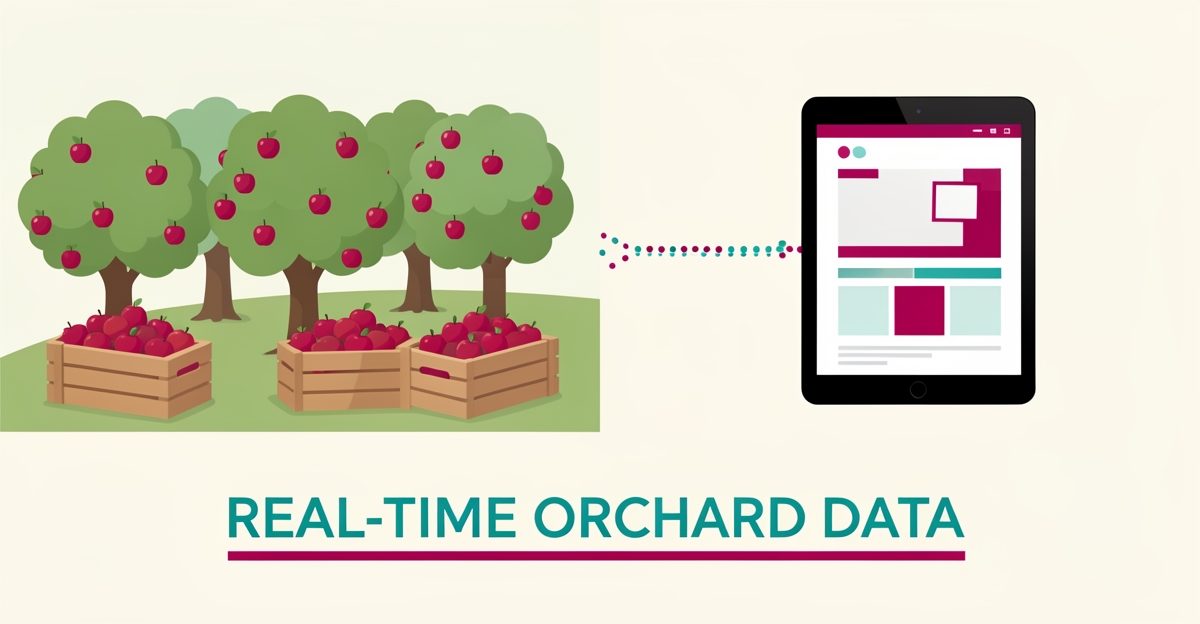
The data exists — it’s just trapped behind field walls. While platforms like Heirloom, Farmable, and Orchard.ai already track harvest progress, bin counts, and crop status in real time for thousands of growers across 100 to 10,000+ acre operations, this operational intelligence never reaches your website. It’s a documented industry silo: the sophisticated harvest tracking lives on the farm management side, while your public-facing site stays frozen in a “call for availability” loop — no matter what’s ripening in the fields.
Three platforms confirm this split. Farmable tracks harvest bin labels, field activities, and GPS-mapped work in real time, yet its own site still requires manual updates when inventory changes. Orchard.ai processes 100–10,000+ acre orchards overnight for decision-making, but its product pages don’t auto-populate availability. Heirloom supports “thousands” of small-scale farmers managing diversified crops, yet its documentation stops at the field gate. The result? Customers visit a page that might say “strawberries coming soon” while the bins are already overflowing — or worse, marked “sold out” while fresh fruit sits waiting.
- Harvest data is captured in field tools, but it doesn’t auto-update the “what’s available today” section on your website
- Farmers report burnout when juggling manual website updates alongside peak-season operations
- Existing platforms confirm real-time data exists — they just don’t feed it to the customer-facing web presence
Behind the scenes, operational tools already do the heavy lifting. Farmable’s mobile app logs spray tank calculations, harvest bins, and audit-ready reports in real time, while Orchard.ai turns overnight data processing into next-day decisions. Heirloom’s platform scales to “thousands” of small farms, yet none of these solutions push that live data to a website’s availability module. The disconnect isn’t a lack of information — it’s a lack of an automated bridge.
That’s where the workflow breaks. When a customer lands on your site after a 20-minute drive, they want to know if the cherries are still there — not to call the farm, wait, and hope someone answers. A website that doesn’t reflect real-time availability doesn’t just lose clicks — it loses trust at the moment of highest intent. The platforms exist to track the harvest; your website should exist to sell it.
Peak Season Is When Manual Updates Break Down
Peak harvest season is when orchards are busiest—and when the cracks in static websites become impossible to ignore. Jean-Martin Fortier highlights how diversified production complexity leads to grower burnout, pushing website maintenance to the back burner. Farmable users confirm they rely on mobile tools daily, yet no grower has time for manual updates between bin counts and customer pickups. The outcome? Visitors see "strawberries available" days after the field is picked clean, eroding trust and pushing customers toward competitors who update their sites in real time.
The problem isn’t a lack of harvest data—it’s that the data stays locked inside operational tools. Orchard.ai processes post-harvest data overnight for farms ranging from 100 to 10,000+ acres, while Farmable tracks harvest bin labels and activities in real time. Yet none of these systems sync automatically to public-facing websites, leaving availability status stuck in the past. Fortier’s observation that growers abandon secondary tasks during peak season applies directly to website updates—when labor is scarcest, manual intervention fails.
- Farm management platforms like Farmable and Orchard.ai already track harvest data in real time—yet customer-facing websites remain frozen in static snapshots.
- Growers burn out under operational complexity, making manual website updates a task they simply can’t prioritize during harvest peaks.
- Farmable users trust mobile tools for daily operations, but no grower has bandwidth to manually update a website between customer pickups and harvest checks.
For orchards, a website that can’t reflect current availability isn’t just outdated—it’s a liability. Customers don’t want yesterday’s news; they want to know what’s available right now. A site that updates automatically from harvest logs eliminates the manual bottleneck entirely. That’s where platforms like AI Business Sites bridge the gap, pulling live data to keep availability status accurate without a single manual edit. The result? Higher trust, fewer lost customers, and a website that works as hard as the orchard itself.
Dynamic Content Blocks That Update From Harvest Logs
The data already exists in your harvest logs — bin counts, variety readiness, field-by-field yield — but it stops at the farm office door. Farm management platforms like Orchard.ai process overnight data for operations spanning 100 to 10,000+ acres, while Farmable tracks harvest bin labels and field activities in real time across thousands of farms. Yet none of these systems push that intelligence to the one place customers actually look: your website.
Dynamic content blocks solve this by turning operational thresholds into automatic website signals. When bin count exceeds zero, the "Pick-Your-Own Open" badge appears. When it hits zero, the block switches to "Check Back Next Week" — no manual toggle, no forgotten update, no disappointed visitor driving home empty-handed. A dedicated "What's Available Today" page marked up with schema captures high-intent searches like "u-pick near me" and "farm stand hours" the moment they happen.
- Bin count > 0 → "Pick-Your-Own Open" displays automatically
- Bin count = 0 → "Check Back Next Week" replaces it instantly
- Variety-level readiness feeds individual crop cards
- Schema markup signals real-time availability to search engines
Jean-Martin Fortier notes that diversified production complexity drives growers to "struggle to succeed, burn out or fail" — and website maintenance is the first casualty of peak-season overwhelm (Heirloom). AI Business Sites bridges this gap by ingesting harvest log data directly into the website's content layer, updating blocks automatically so operational data becomes a conversion asset without daily attention. The same pipeline can auto-generate weekly harvest-update posts and variety spotlight pages, building topical authority while you focus on the orchard.
Local business: doing this the old way?
One system replaces the whole pile.
All of it — the website, the follow-up, the content, the leads — built and run for you for $1,497 + $497/mo. Month-to-month, and you own everything.
See what your build includesAuto-Generated Harvest Updates Build SEO Authority While You Work
Orchard websites often fall silent during peak season, leaving customers guessing what’s ripe for picking. This gap isn’t due to lack of data — farm management platforms like Farmable and Orchard.ai already capture harvest logs, bin counts, and crop progress in real time, with Orchard.ai processing data overnight for farms ranging from 100 to 10,000+ acres. The issue is that this operational intelligence rarely flows to the public website, where timely updates directly influence visitor decisions.
When harvest data stays siloed in backend tools, orchards miss a critical opportunity to build topical authority and trust. The AI Business Sites platform closes this loop by transforming live harvest feeds into dynamic website content — not just availability blocks, but also weekly 'Harvest Update' blog posts and variety spotlight pages that generate themselves. These auto-generated pieces target long-tail queries like “when are Honeycrisp apples ready in Nova Scotia” or “best time to pick blueberries this week,” creating internal linking structures that Google rewards with stronger local rankings.
Farmers using platforms like Farmable report replacing paper books and multiple systems with trusted digital tools, proving confidence in automated reporting for compliance and operations. Extending that same reliability to customer-facing content means no writer time is spent researching, drafting, or publishing updates — the platform handles it end-to-end from the same data driving field decisions. As a result, the website evolves with the season, answering visitor questions before they’re asked and reinforcing the orchard’s relevance in local search results without adding to the owner’s workload.
One System Replaces the Patchwork of Tools Orchards Juggle Today
The average orchard juggles five or six disconnected tools just to get through the season — field operations in Farmable or Orchard.ai, the website on WordPress or Wix, leads in a CRM, email in Mailchimp, scheduling in Calendly. None of them talk to each other. When harvest data sits in one system and the website lives in another, "available now" becomes a manual update that never happens during the busiest weeks.
Farm management platforms already track this data in real time. Heirloom serves thousands of small-scale farmers managing diversified production complexity. Farmable processes harvest bin labels and field activities with automated reporting. Orchard.ai handles farms from 100 to 10,000+ acres with overnight data turnaround for crops including apple, blueberry, cherry, and citrus. The information exists — it just never reaches the customer.
- Harvest logs update the website automatically — no manual edits during peak season
- Availability inquiries become CRM leads instantly
- New crop announcements trigger newsletters without extra work
- An AI assistant answers "when are peaches ready?" questions 24/7
The website becomes the operational hub, not a separate marketing expense. AI Business Sites consolidates the patchwork into one system where field data flows directly to the pages customers actually visit. The same platform that generates ongoing SEO content and manages local search presence also ingests harvest data, captures leads, and runs the newsletter — replacing what would otherwise be eight to ten separate subscriptions.
Frequently Asked Questions
Why doesn't my orchard website show real-time fruit availability when farm management platforms already track harvest data?
Is it really that hard to keep my website updated during peak harvest season?
How can dynamic content blocks automatically show what's available without me updating anything?
Will auto-generated harvest updates actually help my search rankings?
I already use Farmable/Orchard.ai/Heirloom — do I need another tool to fix my website?
What happens when a customer drives 20 minutes to my farm based on outdated website info?
Key Takeaways
```json { "title": "Turn Your Harvest Data into Your Best Sales Tool—Without Lifting a Finger", "content": "The gap between the data your orchard already tracks and what your customers see online isn’t just frustrating—it’s costing you sales. Every day your website shows outdated availability, y
FOR local businesss — BUILT AND RUN BY US
Your website. Your content. Your leads. Your data.
$500 starts your build. Seven days later it's live — chat, booking, follow-up, and your Google presence all set up. Then we run it, every month. You do the work you actually get paid for.