
Key facts
- People read healthcare content 5 grade levels below their education level, making jargon-heavy mental health sites harder to understand for 78% of visitors.
- Harvard’s MRCT Center found poor communication leads to missed appointments and low service utilization across healthcare.
- Cleveland Clinic’s AI Scribe reduced documentation time by 2 minutes per appointment and 14 minutes daily per clinician across 1 million patient encounters.
- Cleveland Clinic’s AI Scribe is used by 4,000+ physicians across 80+ specialties.
- Maryland’s 2024 Plain Language Initiative requires all public communications to be 'simple, accessible, and easy to read,' setting a new healthcare communication standard.
- Idaho’s 2024–2028 Health Strategic Plan includes plain language as a core strategy to 'strengthen trust and improve customer experience.'
- The Plain Writing Act of 2010 mandates clear federal healthcare communication, with states like Maryland and Idaho expanding requirements for patient-facing content.
WANT RESULTS LIKE THIS?
Imagine a system doing all of this for your local business — every day, without you.
We build local businesses a custom website with a team of AI behind it: every lead captured and followed up, new content published monthly,customers finding you on Google — live in 7 days.
- 85+ pages at launch
- Every lead followed up, automatically
- Your whole business on one screen
The Hidden Cost of Unclear Service Explanations
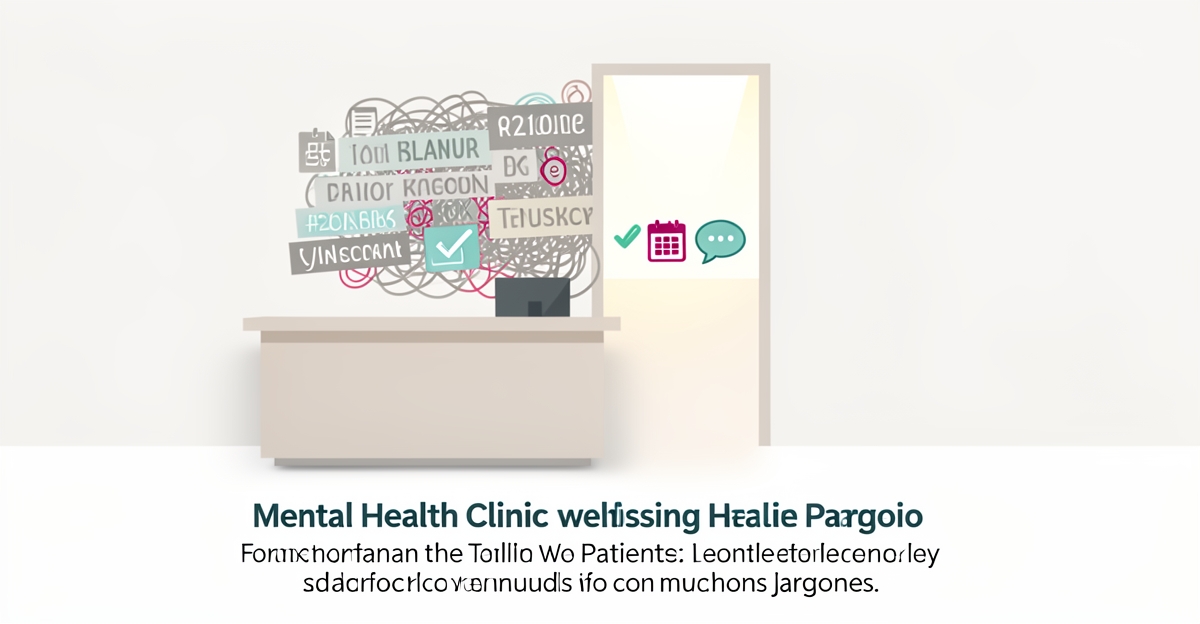
Mental health clinics often overlook a crucial aspect of their online presence: the clarity of their service explanations. Jargon-heavy websites can confuse potential patients, leading to missed appointments and lost revenue. Research underscores the importance of plain language in healthcare communication, with significant implications for mental health services.
According to the MRCT Center at Harvard, people read approximately 5 grade levels below their education level, highlighting the need for simplicity in healthcare explanations. This principle is echoed in the NIH's Plain Language guidance, which emphasizes that clear communication saves time, money, and improves patient understanding. For mental health clinics, this means that complex terms and descriptions can deter patients from seeking care, directly impacting conversion rates and revenue.
The Cleveland Clinic's successful deployment of AI Scribe, which generates plain language after-visit summaries for over 1 million patient encounters, demonstrates the effectiveness of clear communication in healthcare. While focused on post-visit care, this approach illustrates how plain language can enhance patient confidence and utilization of services. If applied to pre-service explanations, clinics could significantly reduce misunderstandings about available treatments.
-
Missed Appointments and Low Conversions: Though specific mental health website metrics are scarce, the MRCT Center links poor communication to missed appointments and low service utilization across healthcare. Mental health clinics likely face similar challenges, with jargon acting as a barrier to engagement.
-
Readability Gap: With patients reading 5 grade levels below their education level, clinics using complex language risk alienating a significant portion of their potential clientele.
-
Institutional Recognition: The Plain Writing Act of 2010 and recent state initiatives (e.g., Maryland's Plain Language Initiative) underscore the growing importance of clear communication in healthcare, implying a future where plain language is not just beneficial but mandatory.
- Adopt Plain Language Principles: Use everyday words, active voice, and logical organization to explain services, as recommended by healthcare communication best practices.
- Test with Real Patients: Ensure readability across varying literacy levels, given the 5-grade level readability gap.
- Leverage AI for Content Generation: Draw from examples like Cleveland Clinic's AI Scribe to maintain plain language content efficiently.
By addressing the clarity of their service explanations, mental health clinics can mitigate the hidden costs of patient confusion, improve conversion rates, and enhance overall service utilization. As Governor Wes Moore of Maryland aptly frames it, plain language is not just about accessibility but also about equity in healthcare access.
For clinics looking to overhaul their online presence, solutions like those offered by AI Business Sites, which generate accessible, jargon-free content, can be a pivotal step towards clearer communication and improved patient engagement. By integrating such strategies, mental health clinics can ensure their websites not only attract visitors but also confidently convert them into patients.
The Power of Plain Language: Research-Backed Solution
The moment someone lands on your mental health clinic’s website, they should feel understood—not confused by jargon. Research shows that plain language isn’t just a nicety; it’s a necessity for patient comprehension and trust. In healthcare, clear communication reduces barriers to care, and the data backs this up. A study from the MRCT Center at Harvard found that people read approximately five grade levels below their education level, meaning a college graduate typically reads at an 11th-grade level. Yet many mental health websites still rely on clinical terms like “cognitive behavioral therapy” or “intensive outpatient program” without ever explaining what these actually mean in practice.
Government mandates are catching up to this reality. The federal Plain Writing Act of 2010 requires clear communication in all public-facing documents, and states like Maryland and Idaho have gone further. In July 2024, Maryland launched the Plain Language Initiative through executive order, ensuring that all public communications are “simple, accessible, and easy to read.” Meanwhile, Idaho’s 2024–2028 Strategic Plan for Health and Welfare includes plain language as a core strategy to build trust and improve customer experience. These aren’t just suggestions—they’re shaping how healthcare services must communicate to meet modern expectations.
The impact of unclear language goes beyond frustration. It directly affects patient behavior. According to the MRCT Center, healthcare organizations that prioritize plain language see better patient understanding, fewer missed appointments, and higher engagement with services. Even patients with higher literacy prefer straightforward, meaningful information that’s easy to act on. That’s because confusion doesn’t just slow people down—it makes them hesitate to book a session, follow through with treatment, or even trust the provider in the first place.
So what does this look like in practice?
- Use active voice and everyday words to explain services like “talk therapy” instead of “psychotherapy,” or “support groups” instead of “psychoeducational workshops.”
- Break down complex terms with short definitions or analogies—like comparing “exposure therapy” to gradually facing a fear in small, manageable steps.
- Organize key information first, answering the patient’s most urgent questions: What will happen? How long will it take? What does this cost?
- Test content with real patients, not just readability scores. A test score might say your text is “readable,” but until you see it click with someone who’s anxious or overwhelmed, you won’t know for sure.
At AI Business Sites, we’ve seen how clinics that simplify their messaging not only retain more patients—they convert more web visitors into booked appointments. A well-written service page doesn’t just inform; it reassures. And in mental health, that reassurance is the first step toward healing.
Local business: doing this the old way?
One system replaces the whole pile.
All of it — the website, the follow-up, the content, the leads — built and run for you for $1,497 + $497/mo. Month-to-month, and you own everything.
See what your build includesImplementing Plain Language for Mental Health Services: A Step-by-Step Guide
Mental health clinics often lose patients and revenue due to jargon-heavy websites that fail to clearly explain their services, leading to confusion, missed appointments, and low conversions. By adopting plain language principles, clinics can significantly improve patient understanding and engagement. Here’s how to implement plain language, leveraging AI, patient testing, simplified terminology, and compliance with governmental standards:
Inspired by Cleveland Clinic's AI Scribe, which has been used by over 4,000 physicians to generate clear after-visit summaries for 1 million patient encounters, mental health clinics can utilize AI content systems to produce accessible, jargon-free blog posts and service pages. For example, AI can transform complex descriptions of therapies like "cognitive behavioral therapy" into understandable explanations, directly addressing patient confusion.
Recognizing that people read approximately 5 grade levels below their education level, clinics should test website content with patients of varying literacy levels. This ensures service explanations are genuinely understandable, reducing the likelihood of missed appointments due to confusion.
Complex mental health terms can be simplified using glossaries or visual aids, as recommended by the MRCT Center at Harvard. For instance, defining "psychotherapy" in plain language or illustrating the process of a therapy session can make services more accessible to potential patients.
Align websites with the Plain Writing Act of 2010 and emerging state initiatives (like Maryland’s Plain Language Initiative) to ensure transparency and accessibility, positioning clinics ahead of growing compliance expectations.
- AI-Powered Content Generation: Utilize AI tools (like those used by AI Business Sites for automated content) to craft clear, concise service descriptions, reducing the administrative burden on staff.
- Patient Feedback Loops: Regularly test and refine content with patient groups to ensure clarity and effectiveness, mirroring the success of Cleveland Clinic’s AI-driven patient summaries.
- Plain Language Workshops: Offer in-house training to ensure all staff understand and can communicate services in plain language, enhancing consistency across all patient interactions.
By following these steps, mental health clinics can transform their websites into patient-centric resources, directly addressing the hidden costs of unclear communication and improving both patient outcomes and revenue through enhanced understanding and engagement. As seen with Cleveland Clinic’s AI Scribe, which reduced documentation time by 2 minutes per appointment, the integration of AI for plain language can also streamline internal processes, freeing up staff to focus on patient care.
Key Statistic Highlight: Cleveland Clinic's AI Scribe has been adopted by over 4,000+ physicians, documenting 1 million patient encounters, showcasing the scalable impact of AI in improving patient communication through clear, patient-facing summaries. This approach can similarly enhance mental health service websites.
Overcoming the Implementation Hurdle with AI-Driven Solutions
The problem isn’t just unclear websites—it’s the work required to keep them clear. Mental health clinics know jargon-free communication matters, but producing consistent, patient-friendly content at scale is the real hurdle. Most teams lack the time, staff, or writing expertise to maintain a steady stream of accessible blog posts, service pages, and FAQs that answer the questions potential clients actually ask. Without this foundation, even the best-intentioned website struggles to convert visitors into patients.
The solution is already in motion elsewhere in healthcare. At Cleveland Clinic, ambient AI tools like AI Scribe are transforming how providers document and explain care—generating patient-facing summaries that reduce documentation time by 2 minutes per appointment and 14 minutes daily per clinician, while powering over 1 million patient encounters with plain language clarity. The same principle applies to your website: AI doesn’t just automate content creation; it ensures every page speaks to patients in terms they understand, without requiring your team to become copywriters or SEO specialists.
Here’s how AI-driven platforms like AI Business Sites bridge the gap between knowing what to write and actually publishing it:
- Built-in research and drafting: The AI engine starts with your services and service areas, then researches what patients search for—like "how to prepare for couples therapy" or "what to expect in trauma treatment." It drafts posts, service pages, and location pages grounded in real patient questions, not generic templates.
- Automated plain language refinement: The system flags jargon and complex terms, replacing them with everyday words based on readability standards proven in healthcare contexts. It structures content to prioritize essential information upfront, mirroring the "findable, understandable, and usable" approach mandated by organizations like the MRCT Center.
- Consistent internal linking: Every new post links to relevant existing pages automatically, reinforcing topical authority without manual effort. Over time, the site’s internal structure improves organically—just as Google rewards with higher rankings when content is logically organized and easy to navigate.
- Ongoing maintenance: The AI doesn’t just publish; it refreshes older posts, adds new internal links as content expands, and even removes dead links. Think of it as a self-updating library where every page stays current and discoverable.
The result? A website that runs itself—answering patient questions, ranking for local searches, and converting visitors without constant manual updates. For clinics drowning in the overhead of content creation, this means fewer missed appointments and stronger trust. Because as the NIH notes, communicating clearly isn’t just about compliance; it’s about saving time and money while ensuring no one gets left behind.
Turn Confusion Into Connection: How Clear Language Grows Your Mental Health Practice
Mental health clinics can’t afford to lose patients to jargon they don’t understand. When a website relies on terms like “intensive outpatient program” or “cognitive behavioral therapy” without explanation, potential clients walk away—along with the revenue they represent. Research confirms that people read five grade levels below their education level, so a college graduate may struggle to parse medical language. When patients can’t easily grasp what you offer, they’re less likely to book appointments, follow through with care, or trust your practice. The result? Missed opportunities, empty slots, and a website that does more harm than good. The solution isn’t just rewriting copy—it’s building a system that keeps your messaging clear, accessible, and consistently patient-centered. By adopting plain language, testing content with real clients, and leveraging tools like AI-driven content generation, you transform confusion into confidence. Patients who understand your services are patients who choose your care. Learn how AI Business Sites delivers websites that don’t just look professional—they perform, converting visitors into booked appointments with minimal effort on your part.
FOR local businesss — BUILT AND RUN BY US
Your website. Your content. Your leads. Your data.
$500 starts your build. Seven days later it's live — chat, booking, follow-up, and your Google presence all set up. Then we run it, every month. You do the work you actually get paid for.