
Key facts
- Lumber yards lose over 50% of sales due to post-delivery silence, particularly among mid-tier ($50k-$500k/year) customers according to NRLA
- Pro-oriented lumber yards achieved 62% revenue growth in 2021 versus 28% for retail-oriented per BPI Marketing
- Over 60% of lumber yards offer online bill checking, yet 80% fail to use it for follow-up per Webb Analytics
- Mid-tier customers (spending $50k-$500k/year) represent over 50% of many lumber yards' sales but are frequently neglected per NRLA
- AI-powered follow-up systems drove a 825% new customer acquisition spike for Evanston Lumber as reported by SalesJack
WANT RESULTS LIKE THIS?
Imagine a system doing all of this for your local business — every day, without you.
We build local businesses a custom website with a team of AI behind it: every lead captured and followed up, new content published monthly,customers finding you on Google — live in 7 days.
- 85+ pages at launch
- Every lead followed up, automatically
- Your whole business on one screen
The Silent Gap: What Happens After the Delivery Leaves
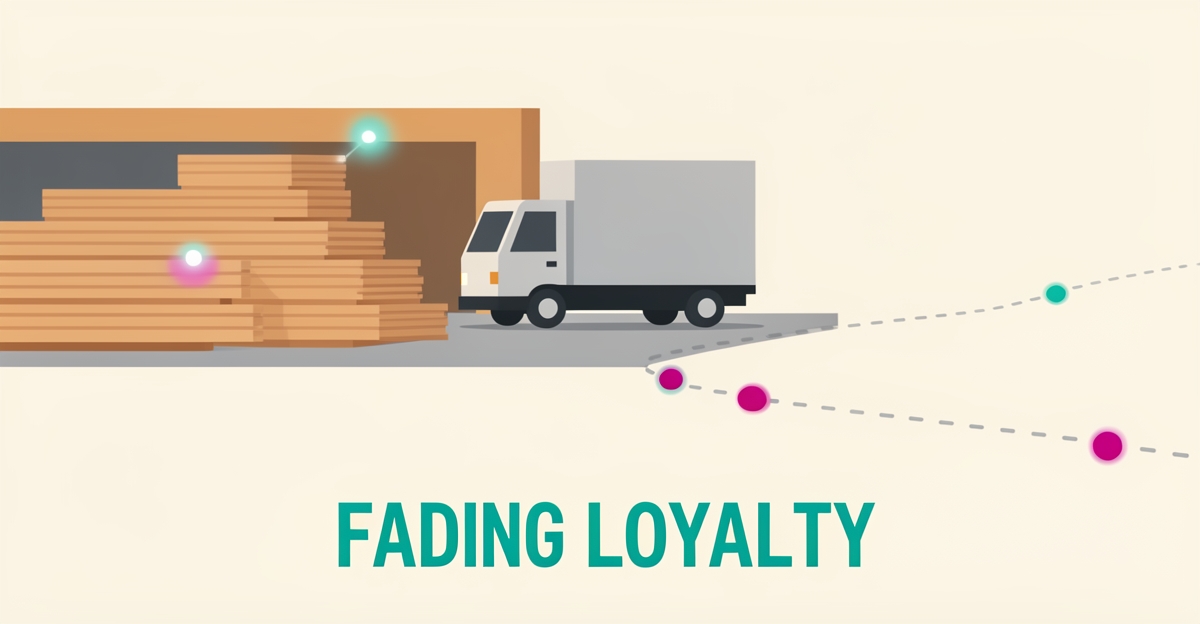
The delivery truck pulls away, the invoice gets filed, and then — silence. That post-purchase quiet is where most lumber yards lose the customers they fought hardest to win. Research shows that failing to follow up after a delivery or order is the primary driver of lost engagement, especially among mid-tier buyers spending $50k–$500k annually who collectively represent over 50% of sales for many yards but receive the least attention according to industry analysis.
The numbers tell a stark story. Pro-oriented dealers who prioritize relationship follow-up achieved 62% revenue growth in 2021, while retail-oriented yards saw just 28% per Webb Analytics data. Yet most yards still treat the delivery as the finish line instead of the starting point for the next order. Over 60% of dealers now offer online bill checking and nearly 40% provide BOPIS services per recent adoption surveys, but those digital pipes sit idle after the transaction closes.
- No automated check-in after a framing package drops
- No personalized follow-up based on order type or project phase
- No trigger when a mid-tier customer goes 30 days without ordering
- No system to turn a single delivery into a recurring relationship
AI Business Sites builds websites that close this gap automatically — triggering personalized follow-up messages based on order type, customer location, and service history so the conversation never stalls after the truck leaves. The technology exists. The customer data exists. What's missing is the systematic connection between them.
Digital Tools Exist—But They’re Not Doing the Work
Lumber yards have made real progress on the digital front, but many still miss the chance to turn that infrastructure into lasting customer relationships. Over 60% of lumber dealers now offer online bill checking and payment options, and nearly 40% provide BOPIS services—adoption rates that have climbed significantly year-over-year. Yet these tools are often used only to complete transactions, not to build ongoing engagement.
The data shows yards already collect the information needed for smarter follow-up: order type, customer location, and service history. What’s missing is a system that automatically turns those details into personalized outreach after a delivery or purchase. Without that layer, even the most advanced digital tools remain transactional, leaving mid-tier customers—who spend $50k-$500k annually and represent over half of many yards’ sales—feeling overlooked after the first visit.
This gap isn’t about lacking technology; it’s about not using what’s already there to stay connected. AI Business Sites helps bridge that divide by embedding automated, personalized follow-up directly into the website platform. When a customer places an order or schedules a pickup, the system can trigger tailored messages based on their history and behavior—keeping the relationship active without adding work for the team. It’s not just about having the tools; it’s about letting them do the work of retention.
What High-Performing Yards Do Differently
What High-Performing Yards Do Differently
Top-performing lumber yards are redefining customer engagement by shifting their revenue mix from low-margin lumber to higher-value categories—a change that demands ongoing conversation, not one-off transactions. According to industry research, leading yards have reduced lumber sales from approximately 50% to 30% of total revenue while expanding doors, windows, and millwork, which carry margins of 30–50% compared to lumber’s 20–25%. This strategic pivot requires consistent touchpoints to guide customers toward complementary products and services, turning single purchases into long-term relationships.
Automated, AI-triggered follow-up systems are proving essential to this evolution. By personalizing outreach based on order type, customer location, and service history, yards can nurture mid-tier clients—those spending $50k–$500k annually—who collectively represent over half of many yards’ sales but are frequently overlooked. Evanston Lumber exemplifies this approach, achieving an 825% surge in new customer acquisition after implementing AI-powered follow-up, while PARR Lumber generated $500,000 in new sales within six months through similar automation.
These results highlight how technology, when integrated thoughtfully, supports rather than replaces human connection. AI Business Sites enables this shift by embedding intelligent follow-up directly into a lumber yard’s website—automating personalized messages after deliveries or orders without requiring manual effort. The system uses real-time data from the CRM to trigger relevant communications, such as suggesting millwork upgrades after a lumber delivery or checking in on a door installation timeline. This keeps the conversation going, deepens trust, and gradually shifts the sales mix toward higher-margin offerings.
For yards aiming to grow beyond transactional interactions, the path forward lies in systematizing engagement. When follow-up isn’t about replacing relationships—it’s about ensuring no opportunity to strengthen them slips through the cracks. By automating the right message at the right time, lumber yards can turn first-time visitors into loyal, high-value customers who return not just for lumber, but for the full suite of products and services that drive profitable, long-term growth.
Local business: doing this the old way?
One system replaces the whole pile.
All of it — the website, the follow-up, the content, the leads — built and run for you for $1,497 + $497/mo. Month-to-month, and you own everything.
See what your build includesBuilding a Follow-Up System That Runs Without You
Most lumber yards have the digital infrastructure—online billing, BOPIS, real-time inventory—but treat it as a transactional endpoint instead of a relationship starter. The gap isn't technology; it's what happens after the delivery truck pulls away.
A systematic follow-up system changes that by triggering personalized messages based on what actually happened: delivery completion, order type, customer tier, and service history. Instead of a generic newsletter, a builder who just received framing lumber gets a different message than a remodeler picking up millwork. Mid-tier customers spending $50k–$500k annually—who collectively represent over 50% of sales for many yards—finally get the attention they've been missing.
- Delivery confirmation that asks about job-site conditions, not just satisfaction
- Reorder prompts timed to project phases, not calendar dates
- Product recommendations based on actual purchase patterns
- Proactive check-ins for customers who haven't ordered in their typical cycle
The key is human-in-the-loop safety. Every automated draft pauses for review before it reaches a customer, so sales teams stay in control of tone and timing. Integration with existing CRM and ERP systems means no duplicate data entry and no disconnected conversations—the follow-up lives where the relationship already lives.
Real deployments show a 4–6 week implementation window with measurable results visible within 90 days. One yard grew new customer acquisition by 825% and another drove $500,000 in new sales in six months after putting this system in place. The website captures the order, triggers the follow-up, and keeps the relationship alive—without adding another tool to manage.
From First Order to Long-Term Contractor Partner
The delivery truck pulls away. The invoice is paid. And for most lumber yards, that's where the relationship ends. Research shows that failing to follow up after a delivery or order is the primary reason yards lose customer connection after the first visit — a gap that persists even as digital infrastructure adoption accelerates across the industry.
Over 60% of lumber dealers' customers can now check and pay bills online, nearly 40% offer BOPIS services, and online inventory checking adoption reached 29.8% in 2021. Yet these tools remain largely transactional. The yards winning long-term contractor loyalty are the ones using that same infrastructure to trigger personalized follow-up based on order type, customer location, and service history — not just to process payments.
- Stop ignoring mid-tier spenders ($50k–$500k annually) who collectively represent over 50% of many yards' sales
- Activate the digital infrastructure you already own — online billing, BOPIS, inventory portals — for proactive outreach
- Automate the follow-up that humans forget: post-delivery check-ins, reorder reminders, project-specific product suggestions
Pro-oriented dealers serving 90%+ professional builders achieved 62% revenue growth in 2021 versus 28% for retail-oriented outlets. The difference isn't product selection — it's systematic engagement. High-performing yards have shifted lumber sales from roughly 50% to 30% of revenue while growing higher-margin categories like doors, windows, and millwork (30%–50% margins versus lumber's 20%–25%). That shift only works when contractors trust you enough to spec your products on every job.
AI Business Sites builds websites that handle this follow-up automatically — triggering the right message after a delivery, flagging a mid-tier customer who hasn't ordered in 30 days, or surfacing a cross-sell opportunity based on past project types. The yard that follows up after the delivery is the one the builder calls for the next job.
Frequently Asked Questions
Why do lumber yards typically lose customers after the first visit?
What percentage of sales do mid-tier customers represent for many lumber yards?
How do pro-oriented lumber dealers differ in revenue growth compared to retail-oriented ones?
What is the primary reason for lost customer engagement after the first visit in lumber yards?
How can lumber yards effectively leverage their existing digital infrastructure for customer engagement?
What are the margins for lumber versus higher-margin categories like doors, windows, and millwork?
Key Takeaways
{ "title": "From Silent Gaps to Lasting Connections", "content": "The post-purchase silence plaguing most lumber yards is not a inevitability, but an opportunity. By acknowledging the critical gap in follow-up engagement, particularly with mid-tier customers who drive over 50% of sales, yards ca
FOR local businesss — BUILT AND RUN BY US
Your website. Your content. Your leads. Your data.
$497 starts your build — your first month's payment, not a deposit. Seven days later it's live — chat, booking, follow-up, and your Google presence all set up. Then we run it, every month. You do the work you actually get paid for.