
Key facts
- 77% of businesses faced major supply chain disruptions in the past year according to logistics experts.
- Real-time tracking is now a qualification threshold for shippers, not just a differentiator.
- Logistics cyber incidents surged 61% in 2025—a nearly 1,000% increase since 2021 with ransomware driving 44% of breaches.
- Major carriers like Averitt Express publish detailed case studies with named clients and quantified outcomes, such as 75% LTL mileage reduction or $90,000+ in savings as industry-standard proof.
- Shippers vet cybersecurity posture as rigorously as fleet capacity due to $3.98M average breach costs in transportation.
- Crisis response track record—like maintaining rates during hurricanes—becomes a permanent trust asset for logistics partners.
- 70% of organizations reported at least one material third-party cyber incident in the past year, making vendor security a direct trust concern.
WANT RESULTS LIKE THIS?
Imagine a system doing all of this for your local business — every day, without you.
We build local businesses a custom website with a team of AI behind it: every lead captured and followed up, new content published monthly,customers finding you on Google — live in 7 days.
- 85+ pages at launch
- Every lead followed up, automatically
- Your whole business on one screen
The Shifting Trust Landscape in Logistics: Beyond Price
The old playbook — compete on rate, win on price — has quietly collapsed. Shippers now rank visibility and communication above pricing, a shift accelerated by the fact that 77% of businesses faced significant supply chain disruptions in the past year. "Trust me, it's on the truck" no longer survives the first vetting call.
- Real-time tracking, temperature monitoring, and chain-of-custody documentation are now qualification thresholds, not differentiators
- Cybersecurity posture — uptime guarantees, MFA on vendor portals, disaster recovery — is evaluated as rigorously as fleet capacity
- Crisis response track record (who showed up during Hurricanes Helene and Milton) becomes a permanent trust asset
- Named, quantified case studies replace generic testimonials as the industry-standard proof format
The data backs this up: logistics cyber incidents surged 61% in 2025 and nearly 1,000% since 2021, with ransomware driving 44% of breaches and an average cost of $3.98M in transportation. Shippers implicitly vet a partner's entire digital supply chain — EDI hubs, SaaS platforms, carrier portals — because 70% of organizations suffered a material third-party cyber incident last year. A static "about us" page cannot carry that weight.
Major carriers like Averitt Express and Covenant Logistics have already adapted, publishing detailed case studies that name clients (KICKER, SalonCentric, Marine Corps supply chain) and quantify outcomes: 75% LTL mileage reduction, 325 tons of waste eliminated, $90,000+ in savings, armed escorts for high-value freight. This "challenge → solution → measurable result → technology proof" format is what shippers now expect to find on any dispatch partner's website.
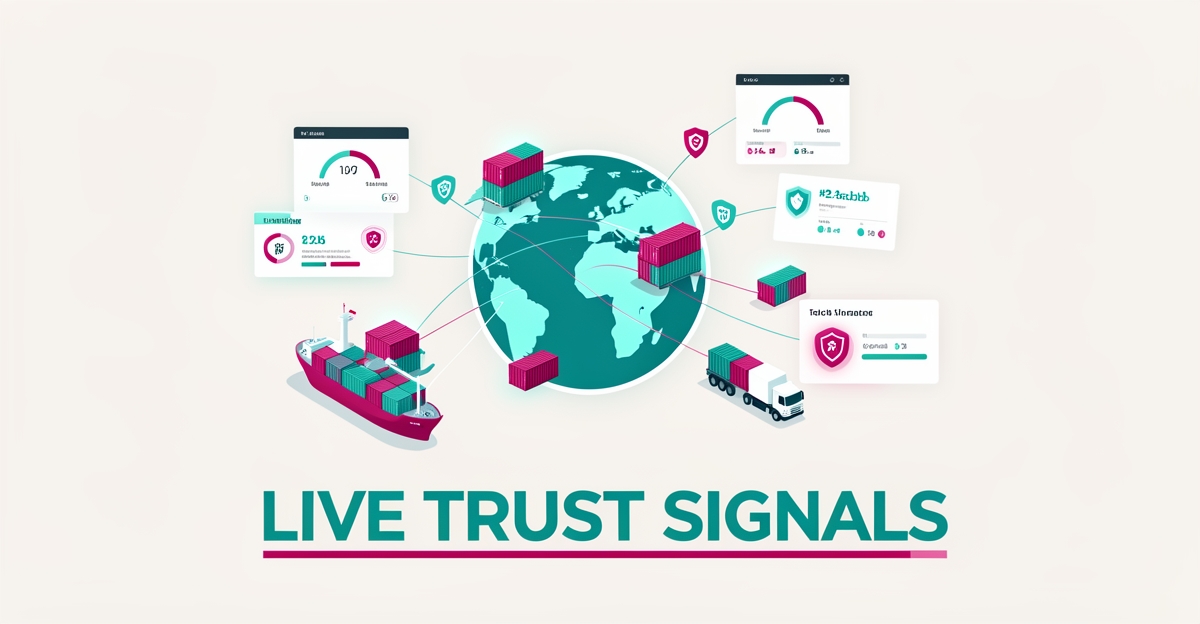
For smaller owner-operators, the challenge is surfacing these signals without a marketing department. AI Business Sites addresses this by automatically collecting post-project feedback, structuring it into the industry-standard case study format, and publishing a living library of quantified proof — alongside live project updates, on-time delivery rates, and exception handling metrics fed directly from dispatch systems. The website becomes a trust dashboard that updates itself, meeting the shipper's baseline expectation: "when everyone sees the same information in real time, trust naturally follows."
The Solution: Automated Trust Signals for Logistics Websites
The 77% of businesses that faced major supply chain disruptions in the past year aren’t just looking for a dispatch partner who promises reliability—they want proof that it’s already happening. That proof lives on your website, updated in real time without lifting a finger. Small owner-operators can now match the trust signals of billion-dollar fleets by letting their website do the heavy lifting. AI Business Sites builds exactly that capability into every custom logistics website, turning static pages into living proof of operational trust.
Every page becomes a trust-building moment. The site automatically displays live project updates with real-time tracking integration, on-time delivery rates, and exception handling metrics pulled directly from your dispatch or TMS system. Shippers see the same information they’d get from a Fortune 500 partner—without the enterprise price tag. According to logistics experts, when everyone sees the same data in real time, trust naturally follows.
Projects become live reviews the moment they close. Instead of manually curating static testimonials, the system automatically collects post-job feedback and structures it into the format shippers expect: named client, specific challenge, quantified result, and the technology used to solve it. Averitt Express and Covenant Logistics rely on this exact format to win new business, and now owner-operators can too—without hiring a content team.
Security posture isn’t just a checkbox anymore. The site surfaces cybersecurity badges, uptime guarantees, and third-party audit results automatically, reflecting the 61% jump in logistics cyber incidents since last year. Shippers evaluate your digital resilience as rigorously as your fleet capacity, and your website should prove it’s airtight.
Crisis response isn’t a one-time story—it’s a permanent trust asset. The platform logs every instance where your team maintained rates, found alternate routes, or absorbed costs during disruptions, turning reactive heroics into proactive credibility. According to logistics providers who weathered recent hurricanes, the memory of who stood by partners during trials endures long after the emergency.
- Live trust dashboards pull real-time data from your systems and display it where shippers look first: your website.
- Automated case studies turn every closed project into a quantified proof point, matching the format used by Averitt Express and Covenant Logistics.
- Cybersecurity badges update automatically, addressing the 61% surge in logistics cyber incidents and the $3.98M average breach cost.
- Crisis response logs turn reactive wins into permanent credibility, as documented by logistics providers after recent storms.
Local business: doing this the old way?
One system replaces the whole pile.
All of it — the website, the follow-up, the content, the leads — built and run for you for $1,497 + $497/mo. Month-to-month, and you own everything.
See what your build includesImplementing Live Trust Signals: A Step-by-Step Guide
Shippers don’t just want promises—they want proof. When 77% of businesses faced supply chain disruptions last year, trust became the only currency that mattered. Shippers no longer choose partners based on price alone; they demand real-time visibility, cybersecurity resilience, and documented crisis response—all of which must appear live on your website to compete. Here’s how to turn your site into a 24/7 trust-building machine.
Start with a Live Trust Dashboard that pulls directly from your operations. Shippers expect "live tracking, temperature monitoring, and chain-of-custody documentation" to know their freight is in safe hands. Display on-time delivery rates, exception handling metrics, and real-time tracking integration—no manual updates required. This mirrors how major carriers like Averitt Express and Covenant Logistics showcase quantified results (75% LTL mileage reduction, $90,000+ savings) to build credibility.
Next, automate your case studies into dynamic, named-client proof points. Industry leaders use detailed, quantified results to prove their worth—like SalonCentric’s 325 tons of annual waste reduction or armed escorts for high-value freight. Your website platform should:
This replaces generic testimonials with the industry-standard proof format shippers scan for.
Security can’t be an afterthought. With logistics cyber incidents up 61% in 2025 and ransomware involved in 44% of breaches, shippers vet your digital resilience as rigorously as your fleet capacity. Display security certifications (SOC 2, ISO 27001), uptime guarantees, MFA enforcement on portals, and disaster recovery RTO/RPO—all updated automatically from your security stack. This addresses the unspoken risk in your digital supply chain: a breach at your SaaS provider can cascade across your entire network.
Crisis response is the ultimate trust litmus test. Shippers remember who stood by them during hurricanes Helene and Milton—not because of marketing, but because of proven performance under pressure. Create a "Partner Reliability" section that logs instances like:
This becomes a durable trust asset that grows more valuable with each logged event.
Finally, turn sustainability and compliance into live, verifiable badges. Showcase real-time emissions tracking, driver safety scores, CTPAT certification status, and blockchain traceability links—all fed automatically from your systems. With cargo theft losses exceeding $359 million in 2026 and fraud schemes growing more sophisticated, shippers need to see tangible proof of your security posture, not just claims.
Your website isn’t a static brochure—it’s your round-the-clock reputation engine. By automating these trust signals, even a solo owner-operator can compete with well-funded logistics giants by proving capability in real time.
Frequently Asked Questions
What are logistics shippers actually looking for now that price isn’t the top factor?
How do cybersecurity risks affect my ability to win logistics contracts?
Do I really need live case studies on my website to compete with big carriers?
Can a small owner-operator really match the trust signals of billion-dollar fleets?
What’s the easiest way to start building trust signals on my website without a marketing team?
How do shippers react to a partner that helped them during a crisis like a hurricane?
Your Website Is Your Silent Sales Rep: How Automated Trust Signals Win More Shipper Contracts
The old playbook is dead. Today, shippers don’t just want a dispatch partner—they want a partner who proves it in real time. From live tracking to crisis response logs, your website must evolve from a static brochure into a 24/7 trust dashboard that shippers scan before ever picking up the phone. The data is clear: 77% of businesses faced supply chain disruptions last year, and those disruptions have rewritten the rules of engagement. Shippers now vet partners on cybersecurity posture, real-time visibility, and documented crisis response—all of which must appear live on your website to compete. Major carriers like Averitt Express and Covenant Logistics have already mastered this with quantified case studies and live project updates, but owner-operators don’t need a marketing team to match their credibility. By automating trust signals—live dashboards, automated case studies, cybersecurity badges, and crisis response logs—your website can become the silent sales rep that builds credibility while you focus on operations. Start with a live trust dashboard that pulls from your dispatch system to display real-time tracking, on-time delivery rates, and exception handling metrics. Then let automation turn every closed project into a quantified case study that names clients and measures outcomes. The result? A website that works as hard as you do, winning trust and contracts without lifting a finger.
FOR local businesss — BUILT AND RUN BY US
Your website. Your content. Your leads. Your data.
$500 starts your build. Seven days later it's live — chat, booking, follow-up, and your Google presence all set up. Then we run it, every month. You do the work you actually get paid for.