
Key facts
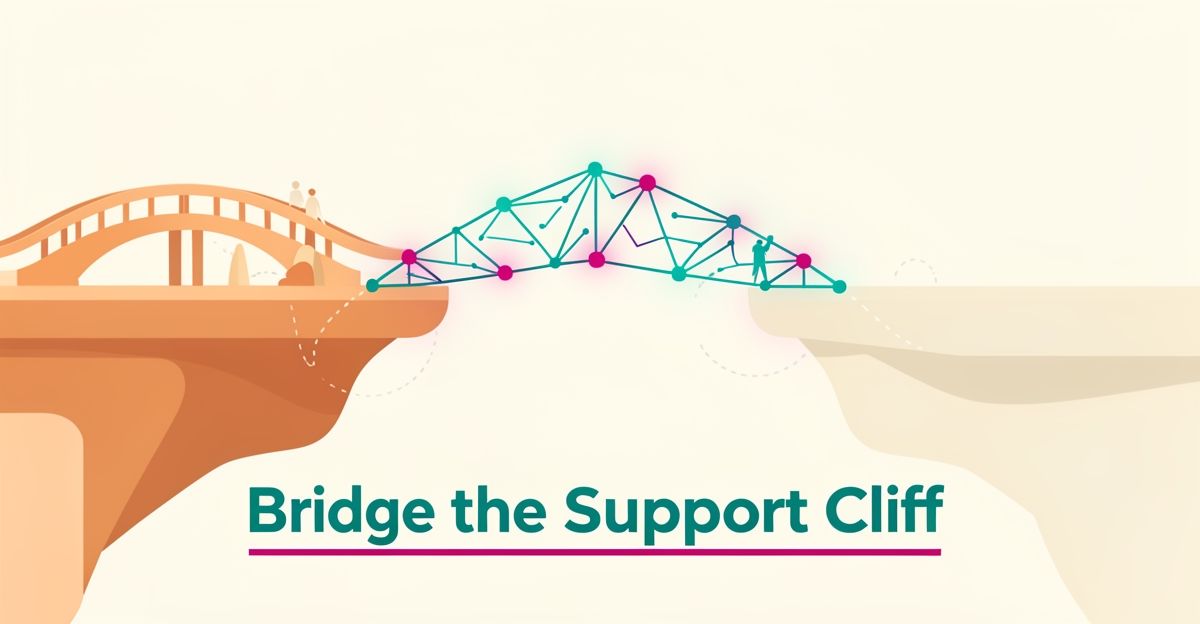
- Only 17% of college students with learning disabilities receive accommodations, creating a 'support cliff' after high school according to NCLD.
- 94% of K-12 students with learning disabilities get accommodations, but just 17% do in college, leaving families adrift reports NCLD.
- Only 37% of students with disabilities disclose their condition to colleges, signaling widespread uncertainty or lack of support per BestColleges research.
- IDEA has never met its 40% funding promise, worsening inconsistent support and eroding family trust in disability centers states NCLD.
- Empathy-driven, two-way communication—not expertise—is the cornerstone of building trust and retention in disability centers Edutopia reports.
- Black and Hispanic students with learning disabilities face greater gaps in reading/math proficiency than White peers, deepening systemic inequities NCLD highlights.
- AI-driven monthly check-ins can replicate the 'human touch' of a caseworker, ensuring families never feel forgotten Edutopia advises.
- Nonbinary undergraduates report a 54% disability rate compared to 22% of women and 18% of men, requiring tailored outreach BestColleges data shows.
WANT RESULTS LIKE THIS?
Imagine a system doing all of this for your local business — every day, without you.
We build local businesses a custom website with a team of AI behind it: every lead captured and followed up, new content published monthly,customers finding you on Google — live in 7 days.
- 85+ pages at launch
- Every lead followed up, automatically
- Your whole business on one screen
The Silent Exodus: Why Families Disengage After K-12
The stark reality facing learning disability centers is alarming: while 94% of K-12 students with learning disabilities receive accommodations source, a mere 17% continue to receive such support in college. This precipitous drop-off is not merely a reflection of transitioning to higher education but a symptom of a broader, more systemic issue—one that leads to a silent exodus of families from learning disability centers.
At the heart of this problem lies the chronic underfunding of the Individuals with Disabilities Education Act (IDEA), with Congress never meeting its promised 40% funding commitment source. This shortfall translates into inconsistent service quality, eroding the trust of families who feel abandoned as their children transition out of K-12. The 37% college disclosure rate for students with disabilities source further underscores a pattern: families do not leave because services fail outright but because support vanishes at critical transition points.
-
Inconsistent Support: The abrupt end of Individualized Education Programs (IEPs) after K-12 leaves families without a structured support system, contributing to disengagement.
-
Lack of Proactive Engagement: The shift from proactive, mandatory accommodations in K-12 to opt-in, self-disclosed support in college catches many families off guard, with only 37% of students disclosing their disabilities source.
AI-driven solutions offer a promising pathway to re-engaging families and providing continuous support:
- Automated Monthly Check-Ins:
- Personalized Progress Updates: Utilize AI to send tailored, monthly emails highlighting a child’s progress, reinforcing the center’s ongoing investment in the family’s well-being.
-
Example: AI Business Sites’ automation capabilities can be leveraged to schedule and personalize these check-ins, ensuring consistency without adding manual labor.
-
AI-Powered Voice Support:
- 24/7 Accessibility: Deploy AI voice agents to handle after-hours inquiries, ensuring families receive immediate support and never feel neglected.
-
Capture Missed Opportunities: Automatically respond to and capture leads from missed calls, converting potential disengagement into re-engagement opportunities.
-
Data-Driven Engagement Strategies:
- Identify At-Risk Families: Use AI analytics to flag families showing signs of disengagement and trigger targeted, empathetic outreach campaigns.
- Hyper-Personalization: Segment families based on their unique needs (e.g., disability type, educational stage) and deliver content (e.g., blog posts, newsletters) that addresses their specific challenges.
The exodus of families from learning disability centers after K-12 is not inevitable. By acknowledging the systemic gaps in support and leveraging AI to fill these voids, centers can transition from reactive service providers to proactive, compassionate partners for families. Through automated follow-ups, enhanced accessibility, and personalized engagement—all facilitated by integrated AI solutions like those offered by AI Business Sites—learning disability centers can redefine their role in the lives of families, ensuring support is not just present but felt at every critical juncture.
Communication Gaps That Feel Like Abandonment
Communication Gaps That Feel Like Abandonment
When families of children with learning disabilities navigate the post-K-12 landscape, they often encounter a stark reality: the loss of structured Individualized Education Programs (IEPs) and dedicated caseworkers. This abrupt end to proactive support can leave families feeling abandoned, a sentiment exacerbated by the lack of regular, empathetic communication from learning disability centers. According to Edutopia, empathy-driven, two-way communication—not mere expertise—is the cornerstone of building trust and retention source.
The disconnect is further compounded by cultural and linguistic barriers that standard outreach efforts frequently overlook. For instance, non-English speaking families may struggle to engage with centers that do not provide translated materials or bilingual support staff. Moreover, the stigma associated with learning disabilities—where students are often viewed as "less capable"—can intensify disengagement when centers fail to maintain a visible, supportive presence between crises.
Statistics Highlighting the Gap:
- Only 17% of college students with learning disabilities receive accommodations source, underscoring the support cliff families face.
- 37% of students with disabilities report their condition to colleges source, indicating widespread uncertainty or lack of support.
- 94% of K-12 students with learning disabilities receive accommodations, dropping to just 17% in college source, highlighting the abrupt loss of structured support.
How AI Bridges the Communication Chasm:
- Automated, Personalized Touchpoints:
- AI-driven monthly check-ins and progress updates can replicate the "human touch" of a caseworker, ensuring families never feel forgotten.
-
Example: AI Business Sites’ automation builder can send personalized emails (e.g., "Here’s your child’s progress update and how to prepare for the next semester").
-
Overcoming Barriers with Inclusive Communication:
- AI-powered translation services can ensure all families, regardless of linguistic background, receive and understand critical updates.
-
Segmented CRM approaches allow for tailored outreach based on a family’s specific needs, cultural background, and the child’s disability type.
-
Proactive Engagement to Combat Stigma:
- Data-driven interventions identify and engage disengaged families, demonstrating a center’s commitment to each child’s potential.
- Example: Flagging families inactive for 30+ days for targeted, empathetic outreach (e.g., "We’ve missed you—here’s a resource to support your child’s transition").
By integrating AI into their communication strategies, learning disability centers can transform perceived abandonment into consistent, compassionate care, ultimately enhancing family retention and trust. AI Business Sites, with its integrated automation and personalized communication tools, offers a tailored solution for small businesses to close these gaps seamlessly.
How AI-Driven Follow-Ups Rebuild the Safety Net
The first sign a family is losing trust isn’t silence—it’s the slow fade of one unanswered email, one skipped check-in, one birthday card left unopened. For learning disability centers, that quiet drift often starts after a child leaves K-12 support behind. While 94% of students with learning disabilities receive accommodations in school source, just 17% do so in college—a “support cliff” that leaves families feeling abandoned and centers struggling to hold onto them source. AI doesn’t replace the human heart of care; it rebuilds the safety net families need to stay connected.
At the heart of every retention breakdown is inconsistency. Parents walk away when communication feels scattered, when progress updates arrive only after they’ve already started searching elsewhere, or when their child’s next milestone disappears into a black box of unreturned calls and generic newsletters. The Parent Center Hub’s framework for family engagement underscores this truth: structured, predictable touchpoints aren’t optional—they’re the foundation of trust source. AI acts as the invisible hands that keep those touchpoints alive.
- Monthly check-ins triggered by your child’s latest progress snapshot, not your calendar.
- Personalized emails that reference their child’s specific milestones—because “we miss you” lands harder than “here’s a newsletter.”
- Escalation paths that gently nudge disengaged families toward human support before silence turns into goodbye.
Behind the scenes, AI Business Sites’ automation builder turns these touchpoints into a seamless workflow. A family’s last progress report triggers an email two days later with tailored resources. A missed appointment books a follow-up before the parent even realizes they slipped through the cracks. And when a parent finally responds—even months later—their history is already in view, so every conversation picks up where the last one ended. It’s not about replacing a caseworker; it’s about giving every family the same dedicated attention, scaled across hundreds of families without adding a single hour of manual work.
For learning disability centers, consistency isn’t just protocol—it’s proof. When families see their child’s journey reflected in every automated update, when they feel seen even in the busywork, the safety net stops fraying. AI doesn’t care for them. But it makes sure no one is ever forgotten.
Local business: doing this the old way?
One system replaces the whole pile.
All of it — the website, the follow-up, the content, the leads — built and run for you for $1,497 + $497/mo. Month-to-month, and you own everything.
See what your build includesContent That Keeps Families Oriented Through Transitions
When families of children with learning disabilities graduate from K-12, they often face a silent cliff—not a cliff of ability, but of support. Research shows that while 94% of K-12 students with learning disabilities receive accommodations source, only 17% continue receiving structured support in college source. This abrupt shift leaves families adrift in a system that assumes they already know how to navigate complex accommodations, funding gaps, and institutional inertia. The result? A quiet exodus—families stop engaging not because they’re unhappy, but because they don’t know what comes next.
The awareness gap is wider than it seems. Only 37% of college students with disabilities disclose their condition to institutions source, suggesting many families feel unsupported or unaware of available resources after high school. Without clear guidance during transitions like college applications, vocational training, or gap-year planning, frustration builds. A family might attend one meeting, receive a pamphlet, and then disappear—not because the center failed, but because the next step was never communicated with enough clarity or consistency.
This is where an AI content engine becomes more than a tool—it’s a silent ally. By publishing monthly guides such as "Navigating College Accommodations" or "Signs Your Teen Needs Updated Support," centers can turn one-off interactions into ongoing touchpoints. Each guide answers a specific, high-friction question families face post-graduation—topics like securing academic adjustments or advocating for workplace accommodations. These aren’t generic blog posts; they’re SEO-optimized resources built to rank for the exact searches families are conducting after their child leaves high school.
The magic happens in the links. Every new guide auto-links to existing service pages and prior guides—"Here’s how to request accommodations at community college" links to "What to Do When Your IEP Ends"—creating a self-reinforcing knowledge hub. Google rewards this structure with higher rankings over time source, while families find answers faster. Meanwhile, behind the scenes, an AI assistant can draft follow-up emails like:
"Hi [Family], I noticed you downloaded our college transition guide. Would you like our template for requesting accommodations? I’m happy to walk you through it."
Systems like these don’t just retain families—they make them feel seen. For centers running on tight budgets, it’s the difference between one conversation and a decade of trust.
From Reactive to Proactive: A Retention System That Runs Itself
Families often disengage from learning disability centers not because of a lack of care, but because support feels inconsistent after K-12 ends. Only 17% of students with learning disabilities receive accommodations in college, creating a "support cliff" that erodes trust in long-term services source. Meanwhile, just 37% of college students with disabilities report their condition to institutions, signaling that many families feel unsupported or unaware of available resources source. These gaps leave centers struggling to maintain connection when families need continuity most.
An operational retention system can change this dynamic by replacing fragmented tools with one platform that runs itself. A voice agent captures after-hours calls, ensuring no inquiry goes unanswered—even outside business hours. The CRM then segments families by need, such as disability type, cultural background, or educational stage, enabling hyper-personalized outreach. Automation delivers timed touchpoints like monthly progress updates or check-in emails, while the AI content engine continuously publishes educational resources on topics like navigating college accommodations or advocating for support. Together, these tools create a steady stream of engagement that feels human, not robotic.
Behind the scenes, analytics flag disengagement early—such as families who haven’t opened emails or attended meetings in 30+ days—triggering targeted win-back campaigns before attrition becomes irreversible. This consolidation means center directors spend less time juggling software and more time on high-value interactions, like collaborative IEP meetings or personalized family consultations. When families feel seen through consistent, empathetic communication, they’re more likely to stay, refer others, and sustain the center’s mission—turning retention from a challenge into a strength.
Frequently Asked Questions
Why do so many families stop working with learning disability centers after high school?
How can a small center possibly keep up with monthly check-ins for every family?
Will automated emails feel impersonal to families who are already feeling abandoned?
What about families who don't speak English or face cultural barriers to engagement?
How do we know if a family is quietly disengaging before they're gone for good?
Can AI really help with the transition to college when only 37% of students disclose their disability?
Building a Future Where No Family Is Left Behind
The journey from K-12 to college shouldn’t mean losing support—yet for too many families, it does. With 94% of students receiving accommodations in school but only 17% in college, and just 37% disclosing their needs, the gap isn’t about ability—it’s about continuity. AI doesn’t replace the heart of care; it amplifies it. Through automated check-ins, personalized content, and 24/7 voice support, learning disability centers can turn silence into connection, ensuring families feel seen at every step. AI Business Sites helps make this possible by building websites that don’t just exist—they actively work to retain trust, reduce missed opportunities, and keep engagement consistent without adding to your workload. If you’re ready to stop the exodus and start building lasting relationships, explore how your website can become your most reliable team member.
FOR local businesss — BUILT AND RUN BY US
Your website. Your content. Your leads. Your data.
$500 starts your build. Seven days later it's live — chat, booking, follow-up, and your Google presence all set up. Then we run it, every month. You do the work you actually get paid for.