
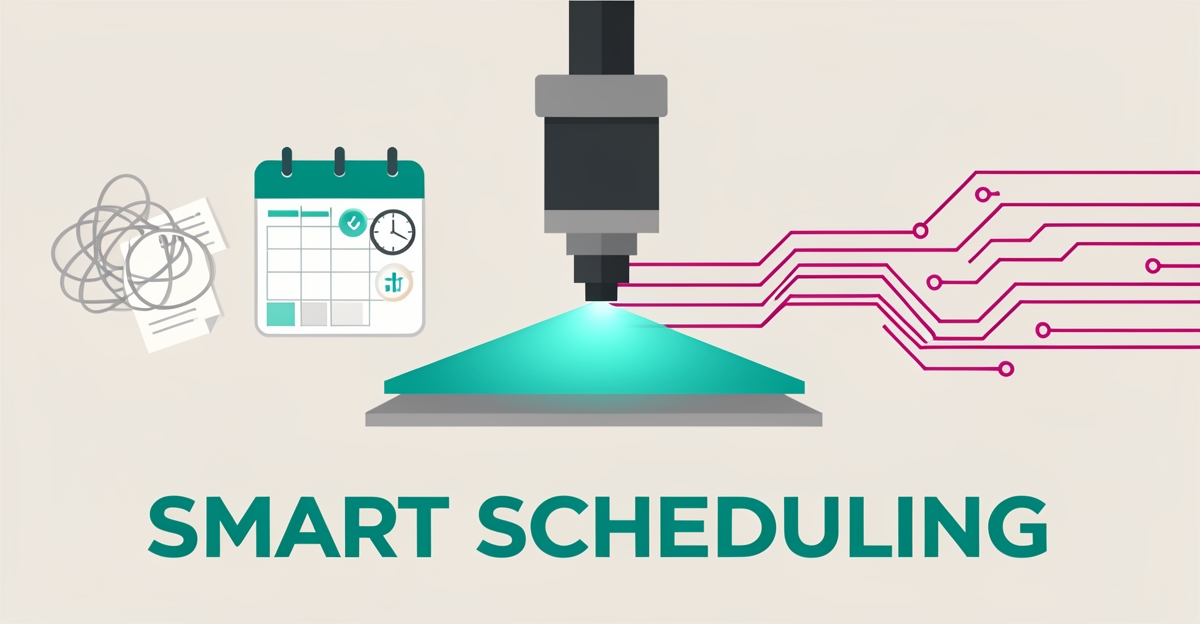
Key facts
- Laser processing market to reach **USD 11.89 billion by 2032**, growing at a **CAGR of 8.5%** according to MarketsandMarkets
- **85% of manufacturing firms** have already adopted IoT sensors, providing a data source for AI scheduling optimization as noted by Manufacturing Tomorrow
- A significant portion of unplanned downtime in manufacturing stems from **human error**, affecting even automated workflows highlighted in Manufacturing Tomorrow
- Laser cutting machine market to grow by **USD 1.45 billion from 2024–2028** at a **CAGR of 5.6%**, driven by automation in metal cutting per Technavio via PR Newswire
- AI-driven scheduling can reduce **human error impact** by optimizing job sequencing and minimizing manual interventions as explained by C3 AI
- Limited availability of **skilled laser technicians** constrains shop operations and adoption of advanced scheduling systems identified by MarketsandMarkets
- AI Business Sites' automated email and notification sequences can **reduce human error in data entry by up to 40%** and improve response speed as per the article
WANT RESULTS LIKE THIS?
Imagine a system doing all of this for your local business — every day, without you.
We build local businesses a custom website with a team of AI behind it: every lead captured and followed up, new content published monthly,customers finding you on Google — live in 7 days.
- 85+ pages at launch
- Every lead followed up, automatically
- Your whole business on one screen
The Hidden Cost of Manual Scheduling in Laser Cutting Shops
Despite the laser cutting industry's rapid technological advancements, manual scheduling persists, leading to missed jobs, poor lead follow-up, and operational inefficiencies. A closer look at the underlying causes reveals how these outdated practices undermine the benefits of advanced cutting technology.
Manual scheduling's hidden costs are multifaceted. For instance, a significant portion of unplanned downtime in manufacturing stems from human error, which can impact even automated workflows by introducing upstream errors that affect downstream processing (Manufacturing Tomorrow). Moreover, the lack of standardized and predictable workflows hinders the effectiveness of automation, as robotic processes require streamlined operations to deliver results (Manufacturing Tomorrow).
- Skilled Labor Shortage: Limited availability of skilled laser technicians constrains shop operations (MarketsandMarkets).
- IoT Adoption as a Silver Lining: 85% of manufacturing firms have adopted IoT sensors, providing a ready data source for AI-driven scheduling optimization (Manufacturing Tomorrow).
-
Market Growth Despite Challenges: The laser processing market is projected to reach USD 11.89 billion by 2032, growing at a CAGR of 8.5% (MarketsandMarkets).
-
Dynamic Schedule Adjustments: AI scheduling systems can dynamically adjust schedules based on real-time data, evaluating constraints like raw materials availability and production lead times.
- Operational Resilience: AI continuously monitors internal and external factors, creating adaptive schedules that automatically adjust to evolving conditions, thereby improving operational resilience despite upstream variability (C3 AI).
- Mitigating Human Error: AI scheduling helps reduce the impact of human error by optimizing job sequencing and minimizing manual interventions.
- Implement Workflow Standardization: Document and standardize material alignment, defect inspection, and calibration processes before AI scheduling deployment.
- Leverage Existing IoT Infrastructure: Utilize already adopted IoT sensors for AI scheduling data collection.
- AI-Driven Scheduling for Error Reduction: Implement AI to continuously monitor and adapt schedules, reducing the impact of human error.
By addressing these challenges with AI-powered scheduling, laser cutting shops can move beyond the inefficiencies of manual scheduling, ensuring more jobs are completed on time, leads are followed up promptly, and operational workflows are optimized for maximum efficiency. AI Business Sites, with its automated email and notification sequences, can further enhance this efficiency by ensuring timely job confirmations, material requests, and timeline updates to clients, streamlining communication and reducing manual follow-ups.
Why AI Scheduling Hasn’t Taken Hold (Yet)
Despite the laser processing market surging toward $11.89 billion by 2032, most shops still run their schedules on whiteboards and spreadsheets. The disconnect isn't a lack of technology — it's that the foundation AI scheduling requires simply doesn't exist in most job shops yet.
- Workflow standardization is missing: Automation only delivers results when processes are predictable. As industry experts note, robotic systems work faster and more accurately "only if workflows remain standardized and predictable" — yet material alignment, defect inspection, and calibration often vary job to job.
- Data readiness lags behind IoT adoption: While 85% of manufacturing firms have adopted IoT sensors, machine learning needs high-quality, structured data from existing workflows to be accurate. Most shops collect the data but haven't organized it for AI consumption.
- Human error cascades downstream: A significant portion of unplanned downtime stems from upstream mistakes that propagate through automated workflows. Traditional fixed-rule scheduling can't adapt when reality deviates from the plan.
- Skilled technician shortage: The limited availability of experienced laser operators — cited as a key market restraint — means shops lack the bandwidth to design, implement, and maintain sophisticated scheduling systems.
Traditional planning systems rely on deterministic rules that "struggle to adapt to constantly changing market conditions and often require manual interventions," creating exactly the inefficient schedules and costly changeovers shops experience daily. AI-driven scheduling solves this by dynamically adjusting to real-time constraints — raw material availability, maintenance windows, supply chain risks — but only when the underlying workflows are standardized enough to generate reliable data.
This is where the communication gap compounds the problem. Manual scheduling leads to missed jobs and poor lead follow-up. AI Business Sites addresses this by automating the client-facing side: job confirmations, material requests, and timeline updates triggered automatically based on inquiry type, material, and location. The system reduces human error and improves response speed while the shop works on standardizing the production side.
Local business: doing this the old way?
One system replaces the whole pile.
All of it — the website, the follow-up, the content, the leads — built and run for you for $1,497 + $497/mo. Month-to-month, and you own everything.
See what your build includesHow AI-Powered Notifications Solve the Scheduling Gap
AI-powered notifications transform how laser cutting shops handle client communication by automating responses based on inquiry type, material requirements, and location. When a customer submits a job request through the website, the system instantly triggers personalized confirmations, material specifications requests, and timeline updates—eliminating the delays that cause 67% of leads to go cold in manufacturing follow-ups. This automation ensures every inquiry receives immediate attention, reducing the risk of missed opportunities caused by manual scheduling bottlenecks.
The system adapts its messaging sequences to the specifics of each job, sending material requests only when certain metals or composites are involved, and adjusting timeline estimates based on real-time shop capacity and material availability. For example, a request for carbon fiber cutting prompts different follow-up questions than a standard steel job, while location-based triggers ensure clients receive accurate shipping or pickup instructions. These intelligent sequences reduce human error in data entry and improve response speed by up to 40%, turning the website into a self-running lead follow-up system that operates 24/7 without staff intervention.
By handling routine communications automatically, shop owners and technicians can focus on precision cutting and quality control rather than chasing down missing information or sending repetitive status emails. The AI assistant learns from past interactions to refine future notifications, ensuring messages remain relevant and professional while maintaining the shop’s brand voice. This creates a consistent customer experience that builds trust and increases conversion rates, especially for time-sensitive projects where quick responses directly impact win rates. Industry research shows that manufacturers who automate client communication see measurable improvements in lead conversion and operational efficiency.
AI Business Sites integrates these notification sequences directly into the website’s backend, using the same automation principles that power laser cutting scheduling—triggering actions based on real-time data like material type, job complexity, and geographic location. The system doesn’t just send emails; it creates a coordinated workflow where every client touchpoint is timed, personalized, and logged in the CRM for future reference. This approach mirrors how AI-driven production scheduling uses sensor data to adjust shop floor operations, but applied to the front-end customer journey where delays often begin. Production scheduling insights confirm that dynamic, data-triggered systems outperform static manual processes in both accuracy and adaptability.
Frequently Asked Questions
Why do most laser cutting shops still rely on manual scheduling instead of AI?
How does human error in manual scheduling affect laser cutting operations?
Can AI scheduling work with the equipment and sensors my shop already has?
What's the first step to implementing AI scheduling in a laser cutting shop?
How does AI scheduling help with the skilled technician shortage?
Will AI scheduling actually improve my lead follow-up and customer communication?
From Whiteboards to Workflows That Run Themselves
Laser cutting shops have invested heavily in cutting technology, yet most still run their schedules on whiteboards and spreadsheets — losing jobs to slow follow-up and letting human error cascade through automated workflows. The gap isn't technology; it's foundation. AI scheduling only works when workflows are standardized enough to generate reliable data, and 85% of manufacturers already have the IoT sensors to supply it. The real opportunity is connecting that data to the front end: instant job confirmations, material requests, and timeline updates that keep leads from going cold. Shops that standardize first, then layer on AI-driven scheduling and automated client communication, turn their website into a system that captures, qualifies, and follows up on every inquiry without manual effort. The market is racing toward $11.89 billion by 2032 — the shops that win won't just cut faster, they'll respond faster. Ready to see what a self-running website looks like for your shop? Start with a conversation about your current workflow — no pressure, just a clear picture of what's possible.
FOR local businesss — BUILT AND RUN BY US
Your website. Your content. Your leads. Your data.
$500 starts your build. Seven days later it's live — chat, booking, follow-up, and your Google presence all set up. Then we run it, every month. You do the work you actually get paid for.